
Reviewed · HISTORICAL TOURS
Rabbis, Writers and Radicals: Montreal Jewish History Walking Tour
Montreal’s Jewish past is written into its streets. This two-hour walking tour follows Jewish life through the Plateau and Mile End, linking immigration, religion, politics, literature, and neighborhood change in a compact English-language outing. At $24.03 per person, it offers a low-cost way to place Montreal’s Jewish story within the city around you.
I like the small maximum of 20 people, which should make it easier to hear and ask questions, and I like the focus on walking rather than sitting through a museum lecture. Guides such as Vivien, Serafina, Hannah, and Sofia have been praised for their warmth and clear explanations. The main drawback is uneven presentation: some guides speak quickly, and a few sections can feel like separate facts rather than one smooth story.
I would choose this tour if you want history tied to actual streets and buildings, not only displays behind glass. Just bring comfortable shoes, pay close attention to the meeting address on your ticket, and remember that the walking tour does not begin at the museum building.
In This Review
- Key points to know before you book
- Following Jewish Montreal through the Plateau and Mile End
- What the opening section sets up
- Saint-Laurent Boulevard and the visible remnants
- Padlock laws, class divisions, and political disagreement
- Writers, rabbis, and the human side of the story
- Why the two-hour length works, and where it falls short
- Meeting point, walking effort, and museum timing
- Is $24.03 a fair price?
- Who will enjoy this walk most?
- Should you book Rabbis, Writers and Radicals?
- FAQ
- Where does the tour begin?
- Where does the tour end?
- Does the tour begin at the Museum of Jewish Montreal?
- How long does the experience last?
- What language is the tour offered in?
- How much does the tour cost?
- Is hotel pickup included?
- How large is the group?
- Is the tour suitable for families?
- Can I cancel for a full refund?
Key points to know before you book
- Two neighborhoods, one compact route: The walk connects the Plateau and Mile End, two important areas in Montreal’s Jewish story.
- Jewish life beyond synagogue history: Expect discussion of rabbis, writers, radicals, Ashkenazic immigrants, class divisions, anti-Zionist Jews, and the old padlock laws.
- Guides make the difference: Serafina, Sofia, Vivien, and Hannah have all been praised for their warmth, clarity, and ability to answer questions.
- A history-first experience: The tour is better for learning than for dramatic monuments or grand interiors.
- A manageable two-hour walk: It suits families and many older adults, but you should have moderate physical fitness.
- Museum visit sold separately: The walk ends at 5220 Saint-Laurent Boulevard, while the museum’s exhibitions have their own opening days and hours.
Following Jewish Montreal through the Plateau and Mile End
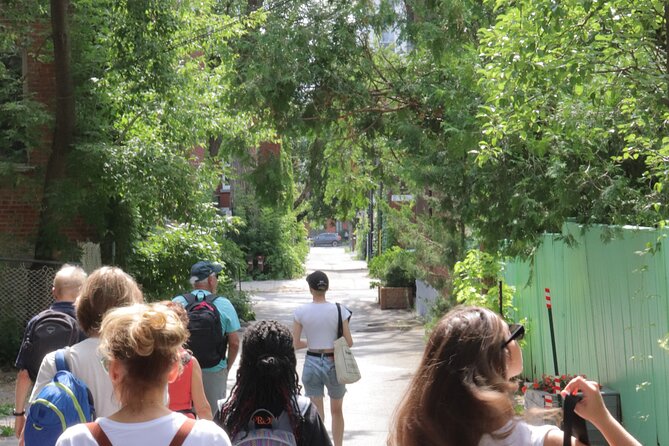
The tour begins in the Plateau and finishes in Mile End, with the route using Saint-Laurent Boulevard as its main thread. That matters because you are not simply being handed dates and names. You are seeing the areas where Jewish Montreal developed, changed, and gradually left traces behind.
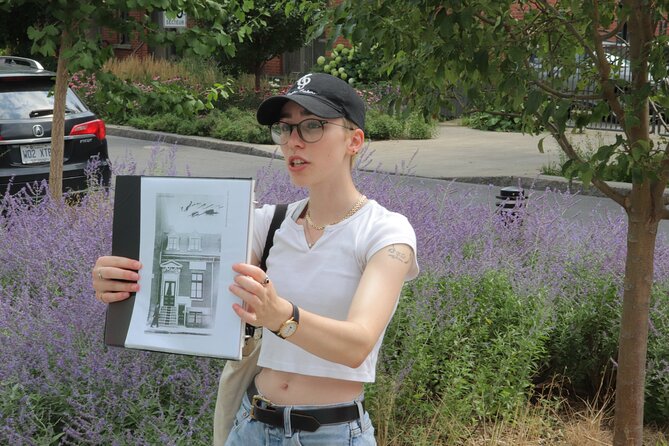
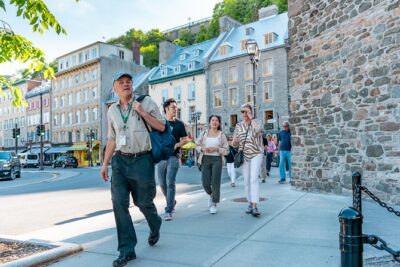
The tour is supplied by the Museum of Jewish Montreal, but this experience is a neighborhood walk rather than a museum tour. You will spend the time outdoors, moving through streets that once held a larger Jewish population and listening to the guide explain what happened there.
That setting gives the tour its best quality. Montreal’s Jewish past is not presented as a sealed-off subject. It is placed beside the current shops, apartments, restaurants, and traffic of Saint-Laurent Boulevard. The contrast helps you understand that communities change, even when the street names and buildings remain.
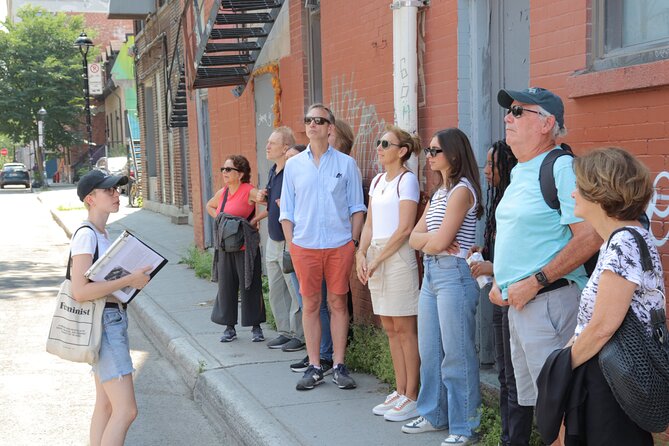
You should keep your expectations in the right place. This is not a parade of famous landmarks. Some locations are remnants, altered buildings, or places whose importance is explained through photographs and historical accounts. If you want a grand synagogue interior or a long museum visit, this will feel modest. If you like connecting ordinary streets to larger events, the route has more to offer.
More Walking Tours in Montreal
- The Original Old Montréal Walking Tour by Guidatour
★ 4.5 · 2,217 reviews - Old Montreal Small-Group Walking Tour | Max 10 | by MTL Detours
★ 5.0 · 2,088 reviews - Montréal: The Original Old Montréal Walking Tour
★ 4.8 · 911 reviews
What the opening section sets up
The first part introduces Montreal’s Jewish community and the immigrant experience that shaped the Plateau and Mile End. The tour’s title points to three strands of that story: religious leaders, literary voices, and political radicals.
The focus includes the original Ashkenazic Jewish immigrants who helped form the area’s early Jewish life. You can expect attention to how people built institutions, worked, worshiped, wrote, argued, and adapted to Montreal. The strongest guides give this material a human shape rather than treating it as a list of organizations.
I especially like this kind of beginning because it helps you understand why the neighborhood matters before the route moves into individual details. A street corner means more once you know who lived nearby and what pressures shaped daily life.
Still, the tour’s success depends heavily on the guide. Some sessions have been praised as thorough and clear, covering a surprising amount in just over two hours. Other sessions have felt more like a history lecture, with a guide relying closely on notes or a book. You should expect solid subject matter, but not every guide will tell it with the same ease.
Saint-Laurent Boulevard and the visible remnants
Saint-Laurent Boulevard is an effective route for this subject. The tour begins around 4129 Boulevard Saint-Laurent and ends farther north at 5220 Boulevard Saint-Laurent, taking you through the Plateau and Mile End.
The exact meeting information needs care. The supplied details give 4129 Boulevard Saint-Laurent as the start and 5220 Boulevard Saint-Laurent as the end, while another note says the tour begins and ends at 4040 Boulevard Saint-Laurent. Because of that mismatch, I would rely on the address printed on your confirmed ticket and check it before setting out. Do not simply head to the museum at 5220 Saint-Laurent expecting to meet the group there.
As you walk, the guide uses the street itself as evidence. You might see surviving traces of Jewish institutions or places that require photographs to show what once stood there. One criticism of the tour is that some sights are not especially striking without the explanation. That is fair. The value lies in the context, not always in the building directly in front of you.
This is also why the walking pace matters. Hannah was praised for keeping a slow pace suitable for older adults without making the tour drag. That balance is useful on a route where you need time to look, listen, and connect one point with the next.
Padlock laws, class divisions, and political disagreement
The most distinctive material concerns the subjects that complicate a simple community story. The padlock laws and anti-Zionist Jewish movements are two examples that give the tour more edge.
The padlock laws are worth special attention because they reveal how government policy affected social and religious life. The reference to anti-Zionist Jews also shows that Jewish Montreal was never politically uniform. A good guide can use these subjects to challenge the easy assumption that one community shared one viewpoint.
Class divisions are another useful theme. The story was not the same for wealthy and poor Jewish residents, and the area’s social history becomes more interesting when those differences are made clear. One weakness noted about the tour is that these themes could be developed at greater length. If your interest is labor, class, political movements, or Jewish responses to Zionism, ask questions when the subject comes up.
I would also ask the guide to connect each topic back to the street you are standing on. The tour is strongest when a law, argument, or social divide explains a visible part of the neighborhood. It is less satisfying when an interesting fact arrives without a clear link to the route.
Still Montreal, at a slower pace:
- Montreal: Guided Bus Tour
★ 4.4 · 3,064 reviews - Montreal: Hop-On Hop-Off Double-Decker Bus Tour
★ 4.1 · 2,760 reviews - From Montreal: Quebec City and Montmorency Falls Day Trip
★ 4.5 · 2,669 reviews - Montreal Mile End Authentic Food Tour with 7 Delicacies Tastings
★ 5.0 · 2,598 reviews
Writers, rabbis, and the human side of the story
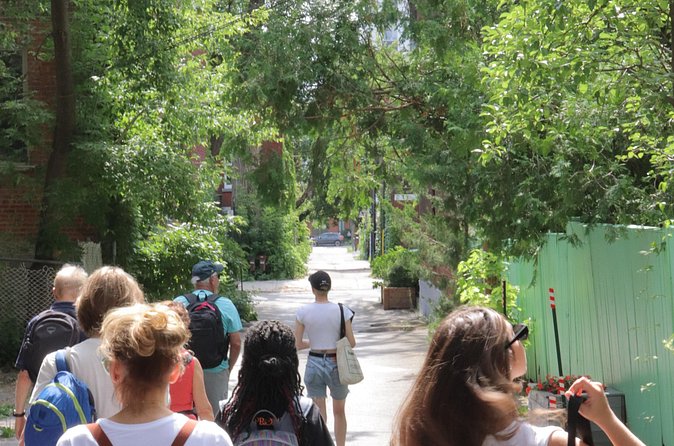
The literary and religious parts of the tour help keep the walk from becoming only a political timeline. Rabbis represent the institutions and traditions that held the community together. Writers show how people expressed identity, conflict, memory, and ambition in a changing city.
The supplied information does not promise a long list of famous authors or detailed interior visits, so I would not book this expecting a literary pilgrimage. Instead, think of the writers as part of the wider story of Jewish Montreal. Their presence helps you consider how language, faith, work, and public debate shaped the neighborhood.
The guides who receive the strongest praise do more than recite prepared material. Serafina was described as friendly, attentive, and open to other people’s experiences. Sofia was praised for enthusiasm and a strong command of the subject. That personal exchange can make the walk feel less like a classroom and more like a conversation.
There is one practical issue for anyone who is not comfortable in English. The tour is offered in English, and one guide was noted for speaking very quickly. Another session worked patiently with a participant who did not speak English well, but that level of adaptation may vary. If you need a slower delivery, say so at the start.
Why the two-hour length works, and where it falls short
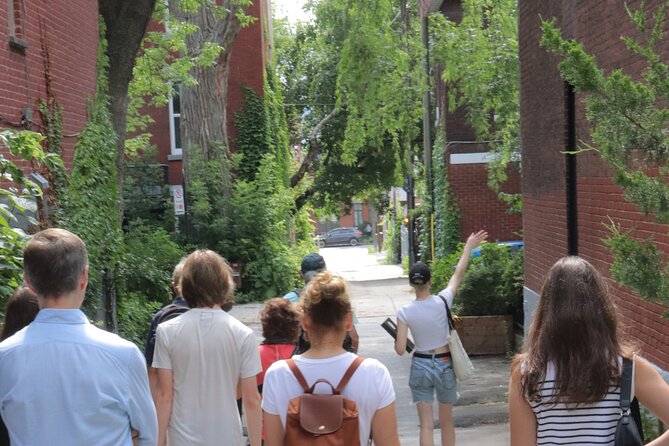
Two hours is a sensible length for a neighborhood history walk. I can usually absorb a focused story in that time without losing interest, and the route gives you a useful introduction before you explore more of Montreal on your own.
The limited time also forces choices. You will get a broad account of Jewish life, but you should not expect every date, major event, building, and social movement to receive equal attention. Some people have wanted more precise dates and a stronger explanation of major turning points.
That tradeoff is important. This is an overview with selected themes, not a full academic course. The best experience comes when you treat the walk as a framework. Afterward, you will have a better sense of what to notice in the neighborhood and which subjects deserve more reading.
The maximum group size is 20. That is not a private tour, but it is more workable than a large coach group. A smaller group should make it easier to hear the guide and ask questions, though the outdoor setting can still create sound problems. One criticism was that several people had trouble hearing, and some suggested amplification.
Meeting point, walking effort, and museum timing
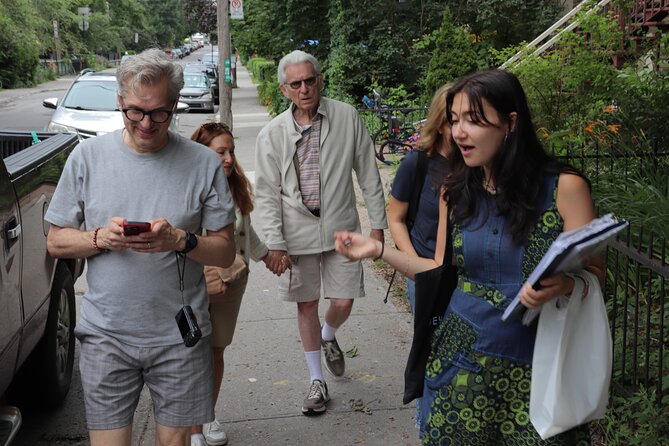
You should plan this as a point-to-point walk, not a round trip. The route begins and ends at different locations around the Plateau and Mile End, according to the tour information, so you may need to arrange your next activity from the ending point rather than return to where you started.
The official end is listed at 5220 Boulevard Saint-Laurent, the address of the Museum of Jewish Montreal’s exhibitions. The walking tour itself does not include hotel pickup or drop-off. Public transportation is nearby, which is helpful because you do not need a car for this experience.
The tour requires a moderate level of physical fitness. I would wear comfortable shoes and be ready to walk outdoors for about two hours. The experience is described as family-friendly, and a guide has been praised for stopping when needed and being considerate of walking limitations. Still, anyone who needs frequent rests should tell the guide early.
The museum’s exhibitions are a separate part of the visit. The building at 5220 Saint-Laurent is open Thursday through Sunday, with Monday openings added beginning in late May 2024 according to the supplied information. Check the museum’s current schedule before planning to enter after the walk, since the tour and exhibition hours do not automatically match.
Is $24.03 a fair price?
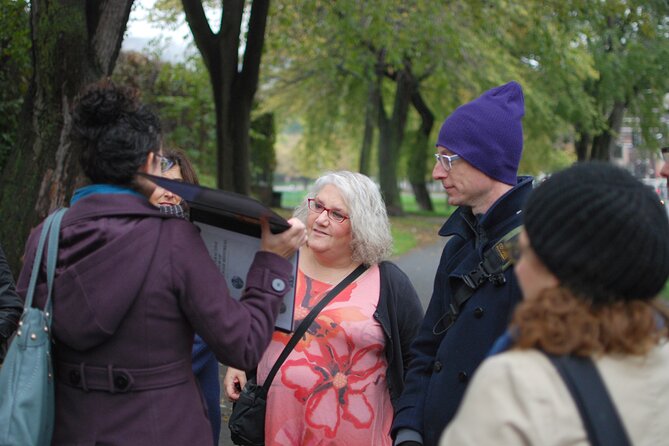
At $24.03 per person, I consider this a reasonable price for a two-hour guided walk in a major city. You are paying for a local guide and a focused introduction to a subject that is easy to miss if you explore the Plateau and Mile End without context.
The value is highest if you are curious about Montreal’s Jewish community, immigrant neighborhoods, local politics, or the way old institutions leave traces in a modern city. It is also a useful first activity if you plan to visit the museum afterward.
The value drops if you want a highly visual sightseeing tour. The route contains historical remnants, but not every stop will look impressive on its own. You are paying for interpretation, and the quality of that interpretation depends on how clearly the guide organizes the story.
The booking pattern suggests planning ahead. The tour is booked about nine days in advance on average, so I would not assume you can wait until the last morning during a busy Montreal visit. Confirmation arrives within 48 hours, subject to availability.
Who will enjoy this walk most?
I would recommend it to you if you enjoy local history, Jewish history, immigration, religious life, literature, or political debate. It suits couples, solo visitors, families with older children, and anyone who prefers a compact outing on foot.
It is also a good choice if you want more than a general Montreal overview. The tour gives you a specific community story and shows how it fits into the Plateau and Mile End.
I would hesitate if you dislike lectures, have difficulty hearing outdoors, or want a route packed with grand historic buildings. The content can feel dry when the guide reads closely from notes, and a few sections may seem disconnected if the guide does not tie them together.
The strongest guides make the experience personal without losing focus. Serafina’s openness, Hannah’s engagement, Vivien’s warmth, and Sofia’s enthusiasm are the qualities I would hope for when booking. Since guides vary, I would join the walk ready to ask questions and request a slower pace if needed.
Should you book Rabbis, Writers and Radicals?
Book it if you want a clear, affordable introduction to Jewish Montreal and you are happy to learn through streets, stories, and historical explanation. The tour’s best subjects, including the padlock laws, anti-Zionist Jews, class differences, and Ashkenazic immigration, give you more substance than a basic neighborhood stroll.
Skip it if you want a polished sightseeing route with dramatic interiors or a tightly organized timeline. The walk can be excellent, but it is not equally strong with every guide, and hearing the presentation may be difficult for some people.
For most history-minded visitors, the price and two-hour format make it a sensible choice. Confirm the start address, wear good shoes, and consider pairing the walk with the museum’s exhibitions if they are open that day.
FAQ
Where does the tour begin?
The listed start point is 4129 Boulevard Saint-Laurent, Montréal, Quebec H2W 1Y7. Another tour note gives 4040 Boulevard Saint-Laurent, so you should use the meeting address shown on your confirmed ticket.
Where does the tour end?
The listed end point is 5220 Boulevard Saint-Laurent, Montréal, Quebec H2T 1S1. This is also the address associated with the Museum of Jewish Montreal’s exhibitions.
Does the tour begin at the Museum of Jewish Montreal?
No. The walking tour begins and ends at locations around the Plateau and Mile End rather than at the museum building. Check your ticket for the exact starting location.
How long does the experience last?
The tour lasts approximately two hours.
What language is the tour offered in?
The tour is offered in English.
How much does the tour cost?
The listed price is $24.03 per person.
Is hotel pickup included?
No. Hotel pickup and drop-off are not included.
How large is the group?
The tour has a maximum of 20 participants.
Is the tour suitable for families?
Yes. It is described as family-friendly, though everyone should be prepared for about two hours of walking.
Can I cancel for a full refund?
Yes. You can cancel at least 24 hours before the experience’s start time for a full refund. Cancellations or changes made less than 24 hours before the start time are not accepted for a refund.
More History Tours in Montreal
- Montreal History Guided Sightseeing Cruise
★ 3.5 · 363 reviews - Making Their Mark: Montreal Jewish History Walking Tour
★ 5.0 · 166 reviews - In the Shadow of the Mountain: Montreal Jewish History Walking Tour
★ 4.5 · 33 reviews - Private Montreal City Tour by Car, History & Hidden Gems
★ 5.0 · 22 reviews
Just added around Montreal
- Full Day Family Bike Rental★ 5.0 · 17 reviews
- Winter Express: Old Montreal Highlights Walking Tour★ 5.0 · 119 reviews
- Montréal Downtown and Underground City Private Walking Tour★ 5.0 · 47 reviews
- Montreal Premium Driving Tour with River Cruise and Notre Dame★ 4.5 · 164 reviews
- Under the Surface of Montreal’s Chinatown: Guided Food Walking Tour★ 5.0 · 23 reviews
- The Ultimate Montreal Boat Tour – Fall Colors Apéro Edition★ 4.5 · 31 reviews
- In the Shadow of the Mountain: Montreal Jewish History Walking Tour★ 4.5 · 33 reviews
- Immersive Virtual Reality Game Activity★ 5.0 · 19 reviews
Historical Tours, compared.



Evening Gourmet Tour 5 Course Dinner – History and Food in Old Quebec City
Read our review →
Browse the lists this tour appears in