
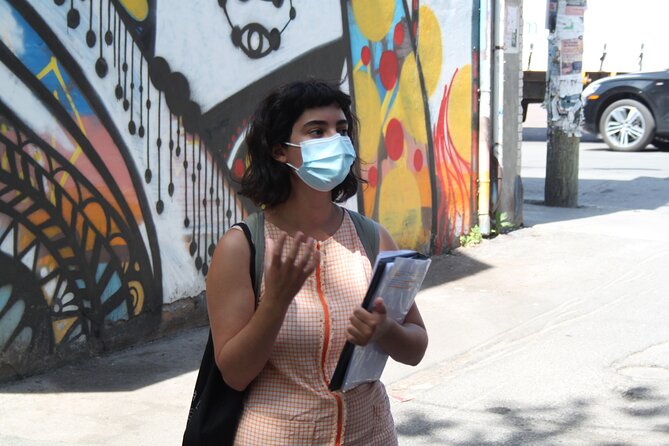
Reviewed · HISTORICAL TOURS
In the Shadow of the Mountain: Montreal Jewish History Walking Tour
Montreal keeps its Jewish story close to the pavement. This two-hour walk through historic Jewish neighborhoods connects people, buildings, migration, language, and memory in a way that a museum visit alone cannot. I like the tour’s small maximum group of eight, which should leave room for questions, and I like the use of mobile images and primary-source material to bring vanished places and earlier lives into view. The main consideration is simple: you need to be comfortable walking for about two hours, possibly as far north as Fletcher Park across from Mount Royal.
The tour begins and ends near the Museum of Jewish Montreal on Saint-Laurent Boulevard. Museum staff lead the route, and guides such as Avery and Nama have been praised for their warmth, preparation, and ability to explain difficult subjects clearly. At $24.02 per person, this is a strong value if you want context rather than a quick photo stop, though the museum’s interior may be closed during periods when only outdoor tours are operating.
In This Review
- Key points at a glance
- Why Jewish Montreal makes a good walking subject
- Starting near the Museum of Jewish Montreal
- Following the arrival of Jewish Montreal
- Using mobile images to see what the street no longer shows
- From Saint-Laurent Boulevard toward Fletcher Park
- What the guide adds to the experience
- Is $24.02 a fair price?
- Who will enjoy this Montreal walking tour?
- Practical details before you book
- Should you book Tur Malka?
- FAQ
- Where does the Montreal Jewish history walking tour begin?
- Where does the tour end?
- How long does the tour last?
- What time does the listed tour begin?
- Is the tour offered in English?
- How many people can join the tour?
- Is the museum interior included?
- Can I cancel for a refund?
Key points at a glance
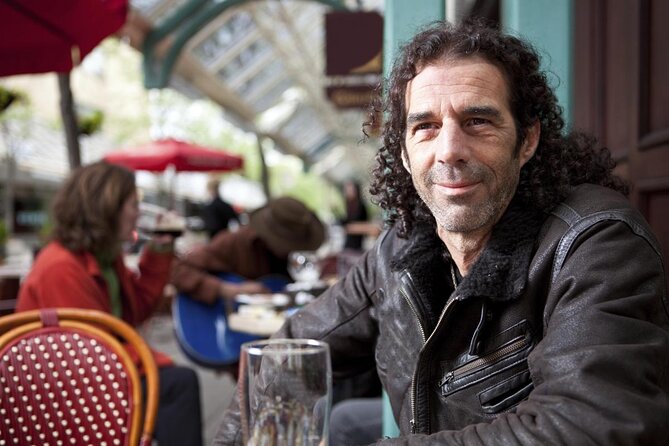
- Tur Malka gives Mount Royal a Jewish meaning: Early 20th-century Yiddish poets used this Talmudic name for the mountain, making a major Montreal landmark part of their own cultural world.
- The route follows Jewish Montreal on foot: You begin near the Museum of Jewish Montreal, walk through historic neighborhoods, and return to the starting point.
- Mobile technology adds the missing pieces: Photos, documents, and animated material help show people and places that may no longer be visible on the street.
- The group can be very small: The maximum is eight people, and some departures have had only three participants, allowing for detailed questions.
- The focus is life in the early and mid-1900s: The tour looks at arrival, adaptation, cultural pressure, and the gap between hopes for a new home and daily reality.
- The walk lasts about two hours: It is described as manageable, but you should still bring comfortable shoes and be ready for a steady city walk.
Why Jewish Montreal makes a good walking subject
Montreal’s Jewish past is not confined to one preserved block. It is tied to streets, businesses, neighborhoods, institutions, languages, and the changing shape of the city. That makes walking the right format. You are not only hearing dates. You are seeing where community life took place and considering how a population made a home in a city with its own geographic and cultural rules.
The tour’s central idea is especially useful for first-time visitors. Jewish Montreal was not formed in isolation. Residents had to interpret the city around them, respond to local conditions, and decide which parts of their identity to keep, change, or express in new ways. The route sets those choices against the physical presence of Mount Royal and the neighborhoods around Saint-Laurent Boulevard.
The title, In the Shadow of the Mountain, comes from the name Tur Malka. Drawn from the Talmud, the phrase was used by Montreal’s Yiddish poets in the early 20th century for Mount Royal. That detail gives the tour a strong organizing image: a familiar Montreal landmark viewed through Jewish language, poetry, and belonging.
I like this approach because it avoids treating history as a row of famous names. You get a sense of how people imagined Montreal, not only how Montreal appeared on a map.
More Walking Tours in Montreal
- The Original Old Montréal Walking Tour by Guidatour
★ 4.5 · 2,217 reviews - Old Montreal Small-Group Walking Tour | Max 10 | by MTL Detours
★ 5.0 · 2,088 reviews - Montréal: The Original Old Montréal Walking Tour
★ 4.8 · 911 reviews
Starting near the Museum of Jewish Montreal
The meeting point is given as the Museum of Jewish Montreal on Boulevard Saint-Laurent. The supplied details list 4129 Boulevard Saint-Laurent as the start location, while another note says the tour begins and ends at 4040 Boulevard Saint-Laurent. Because those addresses differ, I would check the confirmation carefully before setting out. Both references place the tour on the same boulevard, but the exact door matters when you are arriving for an 11:15 a.m. departure.
The museum is the natural starting point because the tour is led by its staff and grows out of its work with Jewish Montreal’s past. During periods when the museum’s indoor space is closed, the outdoor walking and food tours continue, so do not assume you will have an interior museum visit included. The experience described here is the guided walk, not a combined museum admission and tour.
That is not necessarily a weakness. Starting outside keeps the focus on the city itself. You begin with the streets and buildings that shaped community life, then use the guide’s material to fill in what the present-day view cannot show.
The experience is offered in English and uses a mobile ticket. Several departure times are available in general, although the listed start time for this booking is 11:15 a.m. Confirmation arrives when you book, which is useful for checking the meeting details and timing.
Following the arrival of Jewish Montreal
The first part of the route introduces the arrival of Jewish residents in Montreal and the early formation of community life. The exact stops can vary in how they are presented, but the purpose is clear: you are tracing how people came to the city and how they began to shape a home here.
This is where the tour’s cultural angle matters. You are not simply learning that Jewish residents lived in a certain district. You are hearing how they faced Montreal’s geographic and cultural conditions. The tour considers the contrast between what people hoped their new home would be and what daily life actually required.
That can include questions of language, social position, neighborhood identity, and the way communities adapt to a place that already has its own divisions. The information provided does not promise a narrow architectural tour, so you should expect the guide to spend as much time explaining people and social conditions as pointing out buildings.
A good guide makes this kind of material feel grounded. Avery is described as personable and well prepared, with a strong command of Jewish life in Montreal during the early and mid-1900s. Nama is praised for answering detailed questions and for showing photographs and other primary-source documents beside the buildings on the route. Those visual aids are important. A street corner can be hard to interpret without a face, a document, or an older view of the same place.
Using mobile images to see what the street no longer shows
One of the tour’s best features is its use of mobile technology. The guide can use images and animated material to illustrate historical events and make lost or lesser-known stories easier to grasp.
This matters because urban history often disappears physically. A building may be altered, replaced, or stripped of the signs that once made its role obvious. A modern street can look ordinary even when it was once central to Jewish work, family life, political activity, or cultural exchange.
The mobile material gives you a second layer of vision. You see the street as it is, then compare it with photographs, documents, or other historical material. The experience becomes less about memorizing information and more about matching the past to the present.
I also like that this technology is described as a tool for interpretation, not a substitute for the guide. The staff member remains responsible for connecting each image to the story. That leaves room for questions and for a more personal explanation of why a place mattered.
If you prefer tours with no phone use, this may feel less appealing. The mobile component is part of the design, so bring a charged phone and be prepared to look at the guide’s digital material during the walk.
Still Montreal, at a slower pace:
- Montreal: Guided Bus Tour
★ 4.4 · 3,064 reviews - Montreal: Hop-On Hop-Off Double-Decker Bus Tour
★ 4.1 · 2,760 reviews - From Montreal: Quebec City and Montmorency Falls Day Trip
★ 4.5 · 2,669 reviews - Montreal Mile End Authentic Food Tour with 7 Delicacies Tastings
★ 5.0 · 2,598 reviews
From Saint-Laurent Boulevard toward Fletcher Park
The route begins and ends at the museum area, but it is not limited to one short block. One small-group outing went as far north as Fletcher Park across from Mount Royal. That detail gives you a better idea of the walking commitment than the simple two-hour duration does.
The distance appears manageable for someone with moderate physical fitness, but it is still a real city walk. Wear comfortable shoes, dress for Montreal’s weather, and allow enough energy for the return to the meeting point. The tour does not include hotel pickup or drop-off, so you must make your own way to Saint-Laurent Boulevard and back to your accommodation.
As you move north, the mountain becomes more than scenery. Tur Malka helps frame the route as a story of place and imagination. The mountain was not just a geographic feature looming over the city. In the work of Yiddish poets, it could also become part of a Jewish Montreal identity.
The walking route has another advantage: it shows scale. You can better understand how far people moved through the city, how neighborhoods related to one another, and how a community’s center could shift over time. A map can tell you where places are. A walk lets you feel the distance.
The tradeoff is that the route may not suit anyone seeking a seated lecture or a very short stroll. The physical effort is moderate, not extreme, but you should not book it expecting to remain near the museum.
What the guide adds to the experience
The strongest part of this tour is the person leading it. Museum staff have the subject matter, but the best guides also know how to pace a story, pause for questions, and adjust to the group.
Avery receives particular praise for being both personable and well informed. That combination matters on a history walk. Facts alone can make two hours feel long, while charm without substance leaves you with little to remember. The available feedback points to a useful balance of historical detail, conversation, and steady walking.
Nama’s approach sounds especially effective for people who like evidence. Showing photographs and primary documents beside the buildings gives the stories weight. It also helps you separate documented history from general neighborhood atmosphere.
Small groups improve this format. With a maximum of eight people, the guide can hear specific questions and spend more time on subjects that interest the group. A group of three, as occurred on one departure, can feel almost like a private conversation. Of course, group size is not guaranteed, and a fuller departure will have a different rhythm.
The tour is recommended by 91 percent of participants and has a 4.7 rating from 33 reviews. Those figures suggest a consistently strong experience, while the individual comments point to the same strengths: clear explanations, careful preparation, an engaging route, and guides who care about the subject.
Is $24.02 a fair price?
At $24.02, the tour is priced well for a two-hour guided walk led by Museum of Jewish Montreal staff. You are paying for a local guide, a planned route, historical research, and mobile material that helps explain what you are seeing.
The value is best if you already enjoy history, migration stories, or urban culture. A generic neighborhood walk might show you streets and architecture. This tour adds the social meaning behind them and explains how Jewish residents interpreted Montreal as they built their lives here.
The price is less compelling if you want a broad introduction to all of Montreal. This is a focused tour. It does not attempt to cover the entire city, every religious community, or every period of Jewish history. Its strength is the specific relationship between Jewish life and Montreal’s streets.
With free cancellation up to 24 hours before the start time, you have some flexibility if your schedule changes. Changes or cancellations made less than 24 hours before the start are not accepted for a refund. The practical point is simple: decide by the previous morning if your plans are uncertain.
Who will enjoy this Montreal walking tour?
I would choose this experience if you want to understand Montreal through one community’s story. It suits history-minded visitors, people interested in Jewish culture, and anyone who prefers a guided walk with real interpretation instead of a list of photo stops.
It is also a good choice for repeat visitors. If you have already seen Old Montreal and the major downtown sights, this tour gives you a different way to read the city. The focus on early and mid-20th-century life adds depth without requiring a full day.
Families with older children may find the mobile images helpful, especially if a conventional lecture loses their attention. The guide can show how historical events connect to places in front of you, which gives younger participants something concrete to follow.
I would be more cautious if you have limited mobility, dislike walking, or want an indoor museum experience. The activity requires a moderate physical fitness level, ends where it starts, and may travel as far north as Fletcher Park. Also remember that the museum interior can be closed while outdoor tours continue.
Practical details before you book
The tour lasts approximately two hours and is offered in English. It starts at 11:15 a.m. for the departure described here, with several departure times available in the wider schedule.
The activity begins and ends near the Museum of Jewish Montreal on Saint-Laurent Boulevard. Since the supplied meeting information gives both 4129 and 4040 Boulevard Saint-Laurent, verify the exact address in your confirmation. This is the one logistical detail I would not leave to chance.
You receive a mobile ticket, and service animals are allowed. The meeting point is near public transportation, but hotel pickup and drop-off are not included. Plan your route in advance, especially if you need to arrive promptly for the small-group departure.
Should you book Tur Malka?
Book it if you want a thoughtful, focused walk through Jewish Montreal, especially if you value local guides, primary-source images, and the chance to ask questions. The low price, two-hour length, and small group limit make it an easy addition to a Montreal morning.
Skip it if you want a broad city tour, a fully indoor activity, or a short stroll with little physical effort. For everyone else, this is a practical way to see Saint-Laurent Boulevard and the surrounding neighborhoods with more meaning. You leave with not only names and dates, but a clearer sense of how Jewish Montreal claimed space, adapted to the city, and gave Mount Royal its own poetic place.
FAQ
Where does the Montreal Jewish history walking tour begin?
The tour begins near the Museum of Jewish Montreal on Saint-Laurent Boulevard. The supplied details list both 4129 and 4040 Boulevard Saint-Laurent, so check your booking confirmation for the exact meeting address.
Where does the tour end?
The tour ends back at the meeting point near the Museum of Jewish Montreal.
How long does the tour last?
The walking tour lasts approximately two hours.
What time does the listed tour begin?
The listed departure begins at 11:15 a.m. Several departure times are available in the overall schedule.
Is the tour offered in English?
Yes. The tour is offered in English.
How many people can join the tour?
The tour has a maximum group size of eight people. Some departures may be smaller.
Is the museum interior included?
The tour starts at the Museum of Jewish Montreal, but the museum’s interior may be closed while outdoor walking and food tours continue. The experience described here is the outdoor walking tour.
Can I cancel for a refund?
You can cancel up to 24 hours before the experience begins for a full refund. Cancellations or changes made less than 24 hours before the start time are not accepted for a refund.
More History Tours in Montreal
- Montreal History Guided Sightseeing Cruise
★ 3.5 · 363 reviews - Making Their Mark: Montreal Jewish History Walking Tour
★ 5.0 · 166 reviews - Rabbis, Writers and Radicals: Montreal Jewish History Walking Tour
★ 4.5 · 52 reviews - Private Montreal City Tour by Car, History & Hidden Gems
★ 5.0 · 22 reviews
Just added around Montreal
- Full Day Family Bike Rental★ 5.0 · 17 reviews
- Montréal Downtown and Underground City Private Walking Tour★ 5.0 · 47 reviews
- Winter Express: Old Montreal Highlights Walking Tour★ 5.0 · 119 reviews
- Montreal Premium Driving Tour with River Cruise and Notre Dame★ 4.5 · 164 reviews
- Under the Surface of Montreal’s Chinatown: Guided Food Walking Tour★ 5.0 · 23 reviews
- The Ultimate Montreal Boat Tour – Fall Colors Apéro Edition★ 4.5 · 31 reviews
- Immersive Virtual Reality Game Activity★ 5.0 · 19 reviews
- Toronto, Niagara Falls & Thousand Islands VIP 2–Day Trip★ 5.0 · 20 reviews
Historical Tours, compared.



Evening Gourmet Tour 5 Course Dinner – History and Food in Old Quebec City
Read our review →
Browse the lists this tour appears in