
Reviewed · OLD MONTREAL TOURS
Old Montreal Small-Group Walking Tour | Max 10 | by MTL Detours
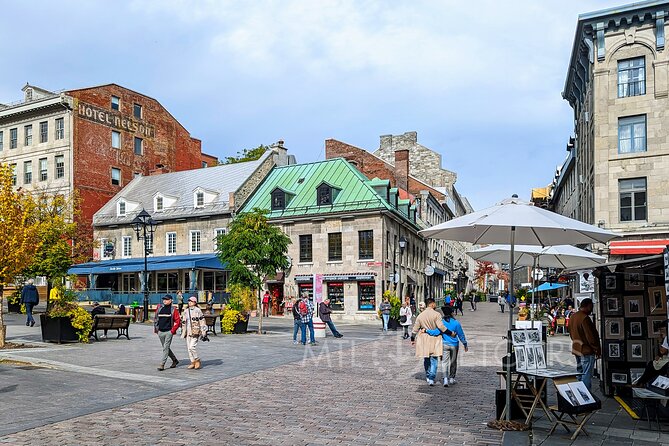
Old Montreal rewards a good guide. This two-hour walk by MTL Detours helps you make sense of the district’s crooked lanes, old stone buildings, churches, squares, and waterfront history without wasting time on wrong turns. I especially like the maximum of 10 people, which makes it easier to hear stories and ask questions, and the practical food and shopping advice you receive at the end. The main drawback is simple: you spend most of the tour outdoors, walking or standing on cobblestones, so poor footwear or harsh weather can change the experience quickly.
I also like how much ground the guide covers in a short time. Louise, Amelie, Darren, Elise, Silvia, and other MTL Detours guides have earned praise for lively storytelling, local pride, and the ability to explain both old and modern Montreal. The route gives you a useful first look at Old Montreal, but it is not designed for long interior visits. Notre-Dame Basilica, for example, is viewed from outside only.
In This Review
- Six useful things to know before you book
- Why a small group matters on cobbled streets
- Starting near Place d’Armes
- Bonsecours Market and Montreal’s civic life
- Rue Saint-Paul and the oldest street in Montreal
- Place Jacques-Cartier and the city’s public face
- City Hall and Montreal’s turning points
- Notre-Dame Basilica from the outside
- Banks, governors, and the making of a financial centre
- Notre-Dame-de-Bon-Secours and the Old Port
- The birthplace of Montreal and the city beneath the city
- Two hours, outdoor conditions, and winter comfort
- Is $44.40 a fair price?
- Who will enjoy this Old Montreal walk?
- Should you book MTL Detours?
- FAQ
- How long is the Old Montreal walking tour?
- What is the maximum group size?
- Is admission to Notre-Dame Basilica included?
- Where does the tour start and end?
- Does the tour operate in winter or bad weather?
- Can I cancel for a full refund?
Six useful things to know before you book
- The group never exceeds 10 people: This is small enough for conversation, questions, and a guide who can keep an eye on the pace.
- The route crosses Montreal’s oldest streets: Expect cobblestones, uneven ground, some stairs, and limited places to sit.
- The tour covers both famous sights and less obvious context: You learn about churches, banks, former government buildings, the port, and the old financial district.
- It ends near Bonsecours Market and Place Jacques-Cartier: That leaves you in a handy part of Old Montreal for lunch, coffee, shopping, or further exploring.
- Winter tours can still work well: Guides have used indoor warm-up stops and even hand warmers on especially cold days, but you must dress for the forecast.
- The little extras are useful: You receive a local treat, a parting gift, and a printed list of places to eat, see, and shop.
Why a small group matters on cobbled streets
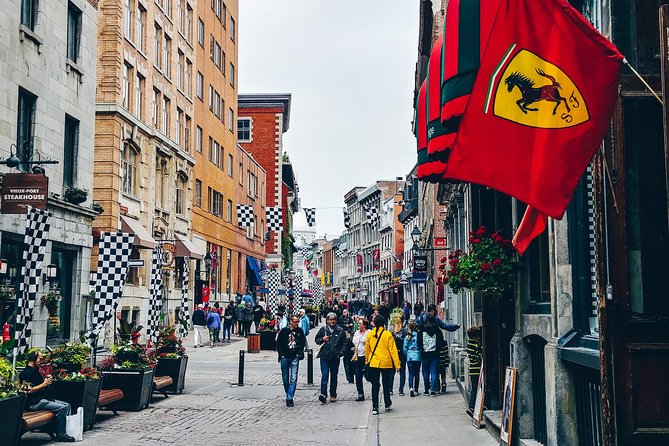
Old Montreal is compact, but it is not always easy to read. Streets bend, historic buildings crowd one another, and a quick walk past a handsome façade can leave you with no idea why it matters. A large group would make this kind of tour slower and less personal. With only 10 people, you can usually hear the guide clearly and ask about details that catch your eye.
The small size also helps when the group moves through narrow streets or pauses near a busy square. Your guide can adjust the pace when needed. One visitor found the guide moved quickly, while others appreciated the brisk rhythm, especially in winter. That is a fair warning: this is a walking tour, not a series of long seated talks.
The guides are licensed and hold the required City of Montreal permit. More important for you, they are trained to tell the city’s story in a human way. Louise is especially praised for her passion, anecdotes, and command of the city’s past. Amelie has been described as funny and personable, while Darren brings humor to some of Montreal’s more unusual and sometimes sordid stories. The individual guide can shape the mood, but the company’s approach is clear: history should feel connected to real people and real streets.
More Walking Tours in Montreal
- The Original Old Montréal Walking Tour by Guidatour
★ 4.5 · 2,217 reviews - Montréal: The Original Old Montréal Walking Tour
★ 4.8 · 911 reviews - Old Montreal: Traditional Ghost Walk of the Haunted City
★ 4.7 · 746 reviews
Starting near Place d’Armes
The meeting point is listed at Marché Saint Laurent, 503 Place d’Armes. You make your own way there because hotel pickup and drop-off are not included. The area is close to public transportation, and it puts you right beside one of Old Montreal’s most important spaces.
Place d’Armes is a good place to begin because several layers of Montreal meet here. Churches, banks, commercial buildings, and public spaces show how the city grew from a colonial settlement into a major Canadian centre. Your guide helps you read the façades instead of treating them as background scenery.
The route is designed as an orientation walk. I would take it early in your stay, ideally on your first or second day in Montreal. You get the basic map of Old Montreal, then receive suggestions for restaurants, museums, shops, and places to explore later. That printed handout may be more useful than a generic list online because it reflects the guide’s own local choices.
Bonsecours Market and Montreal’s civic life
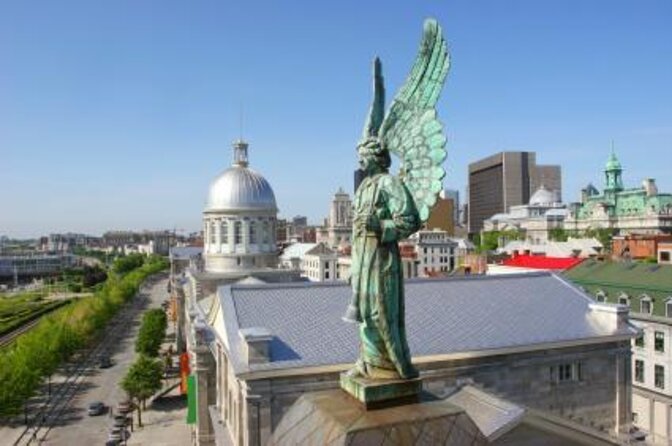
One of the first major sights is Bonsecours Market, the large building with the silver dome. Its shape is hard to miss, but the more interesting part is how it helped shape public life in Old Montreal. The building has served more than one purpose over time, and its location links the old city with the port and market activity.
This is a good example of what the tour does well. You are not simply told to take a photo of a pretty roof. You hear why the building mattered to Montreal’s civic and commercial life. Later, the tour ends in the vicinity of Bonsecours Market, so you can return for a closer look or use it as a reference point while exploring.
The market area also puts you near cafés, restaurants, and shops. The guide’s recommendations become practical here. You can mark down a place for a meal rather than making a random choice after two hours of walking.
Rue Saint-Paul and the oldest street in Montreal
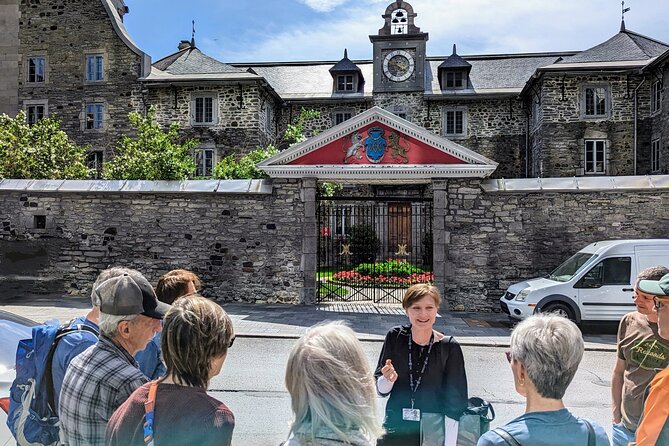
The walk continues along Rue Saint-Paul, known as Montreal’s oldest street. The cobblestones and historic façades create the postcard view many people expect from Old Montreal, but the guide adds the missing context: how the street functioned, how the buildings changed, and how the old city’s boundaries shaped its growth.
This section is beautiful, but it is also where footwear matters most. Wear shoes with good grip and support. The surface is uneven, and wet weather can make it less comfortable. The tour requires a moderate level of walking, with most of the two hours spent on your feet.
You may find the route especially useful if you tend to overlook architecture. The guides explain the buildings, styles, and details along the way, including the mixture of older colonial structures and later commercial architecture. Silvia, for example, has been praised for explaining the history of buildings the group passed, not just the headline sights.
More Old Montreal walks:
- Old Montreal Ghost Walking Tour
★ 4.5 · 726 reviews - Montreal: Top Rated Small Group Old Montreal Walking Tour
★ 4.9 · 611 reviews - Walking tour of Old Montreal – 16/42 Tours
★ 5.0 · 592 reviews - Old Montreal Guided Food Tour with 8+ Local Delicacies Tastings
★ 5.0 · 461 reviews
Place Jacques-Cartier and the city’s public face
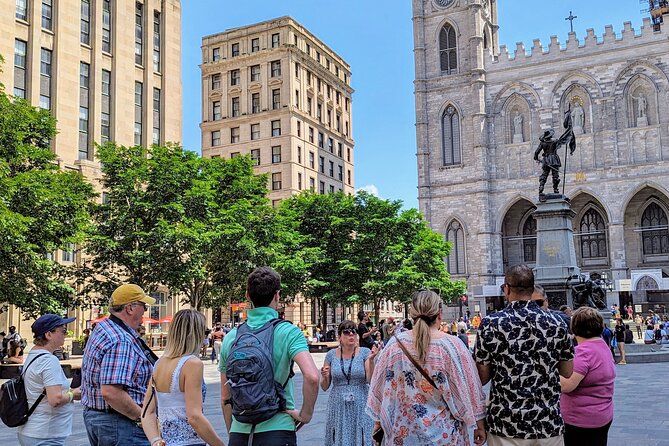
Place Jacques-Cartier is one of Old Montreal’s most animated historic squares. It opens toward the Old Port and gives you a better sense of how Montreal’s centre has been used for public life, trade, celebrations, and civic activity.
The square is also a useful pause in the route. You can see how the street grid changes, how buildings frame the space, and why this part of town remains a natural meeting place. The guide’s stories help you connect the square to the people and events that shaped Montreal.
The walk ends nearby, making this a good place to continue on your own. You can browse Bonsecours Market, linger around the square, or use the printed recommendations to choose your next stop. The end point is not an isolated drop-off. It leaves you in a central area with plenty of options.
City Hall and Montreal’s turning points
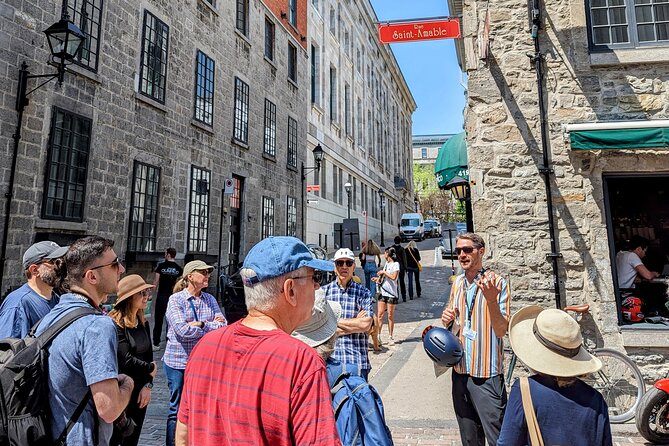
The tour includes a grand Second Empire building associated with key moments in the city’s history, Montreal City Hall. The building’s scale and formal design make a sharp contrast with the narrow lanes nearby.
Here, the guide shifts from street-level architecture to civic history. You learn how Montreal governed itself and how major changes affected the city. This is one of the places where a guide adds real value because the building’s appearance alone tells only part of the story.
You will view the building as part of the outdoor route rather than spending a long period inside. That keeps the tour moving, but it also means you should not expect a museum-style visit. The benefit is range: in two hours, you see several major sites instead of spending the entire time at one attraction.
Notre-Dame Basilica from the outside
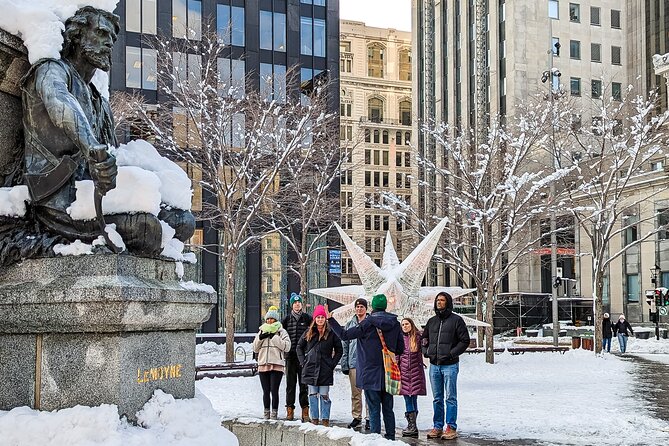
Notre-Dame Basilica is one of Montreal’s best-known landmarks, and the tour includes the exterior only. That distinction matters. Admission to the interior is not part of the experience, so if you want to see the famous interior, you need to arrange a separate visit.
The exterior stop still has value. Your guide explains the story behind the basilica’s creation and places it within the development of Old Montreal. You get enough context to decide if an interior visit belongs on your own schedule.
I like this approach for a first-day walk. You receive a clear introduction without paying for several separate admissions or spending your limited tour time inside. The tradeoff is that architecture lovers may want more time than the stop allows.
Banks, governors, and the making of a financial centre
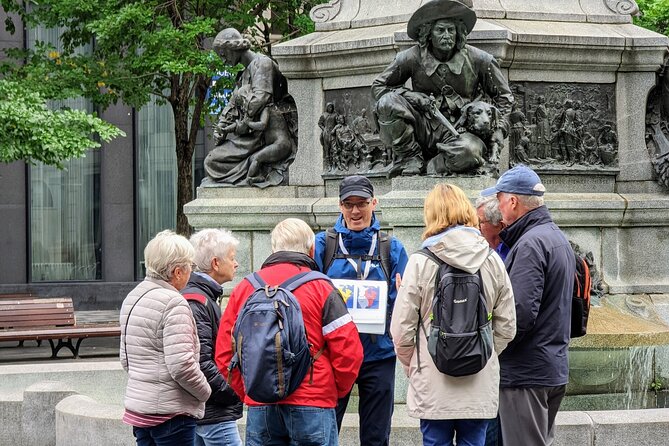
Old Montreal’s story is not only about churches and stone streets. The tour also points out Canada’s oldest bank and explains how Montreal became the country’s financial centre. This is a useful correction to the idea that Old Montreal was simply a quiet colonial quarter preserved for sightseeing.
The old banking district shows the city’s commercial ambitions. Grand façades were built to project confidence, wealth, and permanence. You can see how business shaped the streets as much as religion or government did.
The route also includes an 18th-century former governor’s residence, now associated with Montreal’s colonial past. This stop gives you a look at authority in the early city and helps explain who controlled the settlement and its institutions.
Later, you walk through the former financial district, once known as Canada’s Wall Street. That phrase gives you an instant sense of the area’s former importance, but the guide’s stories are what make it useful. You begin to see Old Montreal as a working centre with competing interests, not just a collection of old façades.
Notre-Dame-de-Bon-Secours and the Old Port
The chapel known as the Sailors’ Church connects Old Montreal to the water. Its story is tied to sailors and the Old Port, so this part of the tour broadens the focus from buildings to movement, trade, and travel.
The chapel is also a reminder that the port shaped daily life. Montreal’s location along the St. Lawrence helped it grow, and the religious traditions around the port reflect the risks and hopes of people who depended on ships.
The stop is viewed as part of the walking route, so check your expectations. You are getting an explanation and an exterior visit rather than a long interior tour. Still, the connection between the chapel, sailors, and the waterfront makes it one of the more memorable pieces of the route.
The birthplace of Montreal and the city beneath the city
Near the birthplace of Montreal, you hear how the city was founded. This is where the tour reaches further back than the grand commercial buildings and later civic landmarks.
The guide helps place the founding story in the physical setting of the original settlement. You are encouraged to think about how much the city changed from its first boundaries to the Montreal you see today. That sense of changing scale is one of the best reasons to take a guided walk instead of simply following a map.
The route also passes through the old financial district and connects the early settlement to modern Montreal. The story moves from foundation, to government, to religion, to banking, and then to the present-day Old Port. In two hours, that is a lot of ground, but the pace keeps the overview focused.
Two hours, outdoor conditions, and winter comfort
The advertised duration is about two hours, and that length works well for most people. It is long enough to cover the major landmarks but short enough to fit around a meal, museum visit, or afternoon plan.
The experience operates in rain, snow, or sunshine, with one important exception: if poor weather causes cancellation, you receive a different date or a full refund. Do not treat this as an indoor activity. Most of the time is spent outside, with limited seating and some indoor warm-up stops when conditions require it.
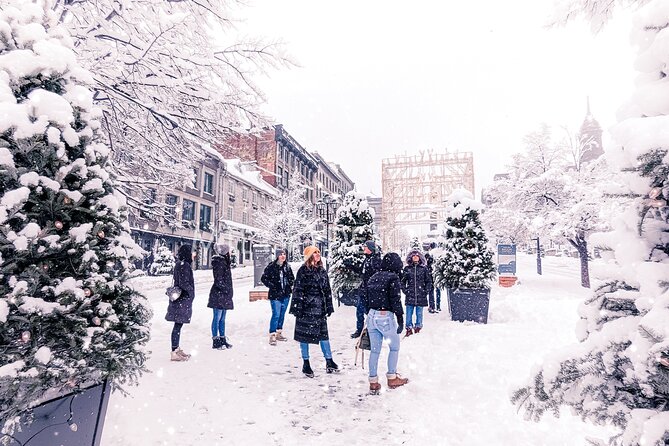
Winter can be surprisingly manageable if you prepare properly. Guides have brought hand warmers on bitterly cold days, and the route may include brief indoor pauses. Even so, wear a warm coat, gloves, and footwear that can handle snow or slick cobblestones. A scarf that protects your face is useful in exposed areas near the waterfront.
The pace appears to vary with the guide and the weather. Some people find it gentle, while one experience was described as fast. If you cannot walk at a steady pace, this may not be the right choice. The tour is not recommended for people with significant mobility restrictions.
The minimum age is 12, and minors must be accompanied by an adult. Service animals are allowed, and most people can participate, but the uneven surfaces and stairs deserve attention before booking.
Is $44.40 a fair price?
At $44.40 per person, the tour costs more than a free self-guided walk, but you are paying for more than directions. The price includes a licensed local guide, a group capped at 10, a printed recommendation sheet, a small local treat, and a parting gift.
The strongest value comes from time. If you are new to Montreal, two focused hours can prevent a full morning of wandering without context. You also leave with ideas for where to eat and what to visit next, which can save you from choosing restaurants at random in a heavily visited area.
The value is lower if you already know Old Montreal well or mainly want interior access to major attractions. This is an overview and orientation tour. It does not include hotel transportation, attraction admission, or an extended visit inside Notre-Dame Basilica.
The maple candy and postcards are small touches, not reasons to book on their own. Still, they add warmth to the experience, especially for families and solo visitors. One winter guide even supplied hand warmers, a practical gesture when temperatures dropped sharply.
Cancellation is free up to 24 hours before the start time. Changes or cancellations inside that window are not refunded. The tour also requires a minimum number of participants, so a cancellation for that reason brings a refund or an alternative date or experience.
Who will enjoy this Old Montreal walk?
I would recommend it most strongly to first-time visitors, solo visitors, couples, and families with teenagers aged 12 or older. It is also a good choice if you want a local introduction before deciding which museums, churches, and restaurants deserve more of your time.
History fans will appreciate the mix of colonial events, civic life, banking, religion, architecture, and local anecdotes. Food-focused visitors will benefit from the final list of restaurants and shops. Photographers will enjoy Rue Saint-Paul, Place Jacques-Cartier, Bonsecours Market, and the older façades, though the guide’s pace may limit long photo sessions.
You may want another option if you dislike cold weather, need frequent seating, or want a slow architectural study. You should also remember that the tour is conducted in English and has no hotel pickup.
Should you book MTL Detours?
Book this tour if you want a friendly, well-paced introduction to Old Montreal with a real person helping you understand what you see. The small group, strong storytelling, and useful local recommendations make the $44.40 price reasonable, especially early in your visit.
Skip it if you already know the district, want extensive indoor sightseeing, or cannot manage cobblestones and two hours of walking or standing. For most first-time visitors who dress for the weather and keep their expectations realistic, this is a smart way to get your bearings fast and make the rest of Montreal easier to enjoy.
FAQ
How long is the Old Montreal walking tour?
The tour lasts approximately two hours. Most of that time involves walking or standing outdoors, with limited seating.
What is the maximum group size?
The tour is limited to a maximum of 10 travelers. All participants require a paid ticket.
Is admission to Notre-Dame Basilica included?
No. The tour views Notre-Dame Basilica from the outside only. Interior admission is not included.
Where does the tour start and end?
It starts at Marché Saint Laurent, 503 Place d’Armes, Montreal. It ends near Place Jacques-Cartier and Bonsecours Market.
Does the tour operate in winter or bad weather?
The tour operates in rain, snow, or sunshine, so you should dress for the weather. If poor weather causes a cancellation, you receive an alternative date or a full refund.
Can I cancel for a full refund?
Yes. You can cancel at least 24 hours before the local start time for a full refund. Cancellations or changes made less than 24 hours before the start time are not refunded.
Just added around Montreal
- Full Day Family Bike Rental★ 5.0 · 17 reviews
- Montréal Downtown and Underground City Private Walking Tour★ 5.0 · 47 reviews
- Winter Express: Old Montreal Highlights Walking Tour★ 5.0 · 119 reviews
- Montreal Premium Driving Tour with River Cruise and Notre Dame★ 4.5 · 164 reviews
- Under the Surface of Montreal’s Chinatown: Guided Food Walking Tour★ 5.0 · 23 reviews
- The Ultimate Montreal Boat Tour – Fall Colors Apéro Edition★ 4.5 · 31 reviews
- In the Shadow of the Mountain: Montreal Jewish History Walking Tour★ 4.5 · 33 reviews
- Immersive Virtual Reality Game Activity★ 5.0 · 19 reviews
Old Montreal Tours, compared.
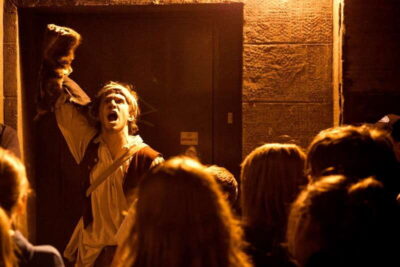
Old Montreal: Traditional Ghost Walk of the Haunted City
Read our review →
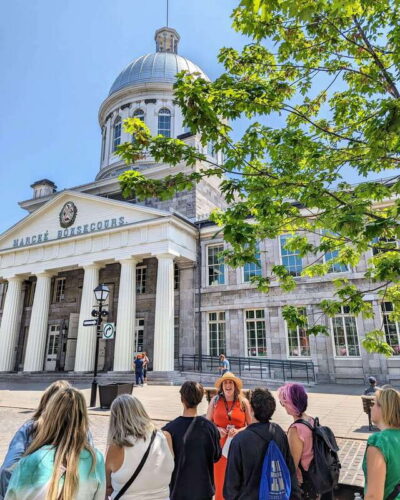
Top Rated Small Group Old Montreal Walking Tour
Read our review →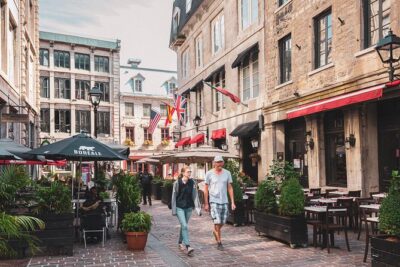

Old Montreal Guided Food Tour with 8+ Local Delicacies Tastings
Read our review →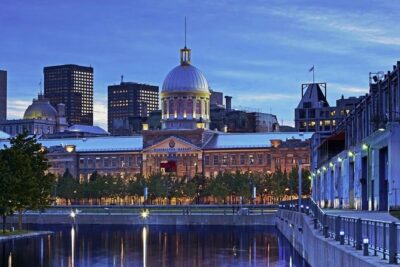

Bike / E-bike Tour : Downtown, Old Montreal, Waterfront by Fitz
Read our review →
Browse the lists this tour appears in