
Reviewed · HISTORICAL TOURS
Making Their Mark: Montreal Jewish History Walking Tour
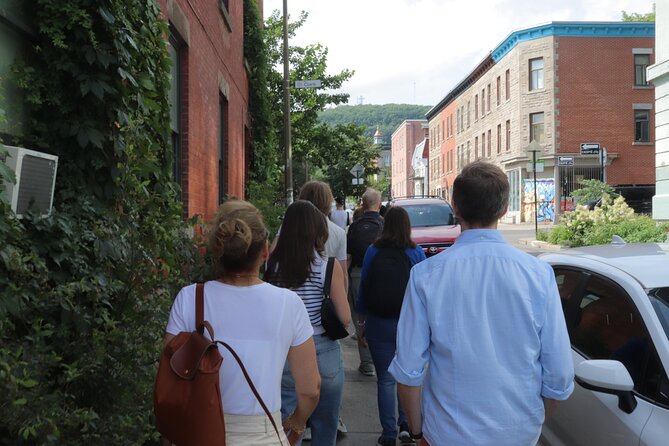
Montreal’s streets still whisper in Yiddish. The Making Their Mark walking tour connects the city’s Plateau and Mile End neighborhoods with the people, shops, schools, religious life, and working families that shaped Jewish Montreal. I like its human scale and its focus on real streets rather than a lecture room. I also like the choice of morning or afternoon departures.
The main caution is simple: you will walk quite a bit, while some original Jewish buildings and businesses are gone. The tour is strongest when you enjoy reading the past through what remains, not when you expect a preserved historic district. Check your meeting details carefully, since the start information has caused confusion for at least one person.
In This Review
- Key points to know before you book
- Why Montreal Jewish history belongs on a walking tour
- Starting near Saint-Laurent Boulevard
- The Museum of Jewish Montreal connection
- Following the early Jewish neighborhood
- The human stories behind immigration
- A walk through a neighborhood that has changed
- Pace, distance, and comfort
- Is $24.03 a fair price?
- Guide quality makes the difference
- Who will get the most from this tour?
- Booking details that matter
- Should you book Making Their Mark?
- FAQ
- Where does the tour begin?
- Where does the tour end?
- How long does the tour last?
- Is the tour offered in English?
- Is the Museum of Jewish Montreal building part of the walking route?
- Are museum exhibitions included?
- How much does the tour cost?
- How large can the group be?
- Can I cancel for a full refund?
Key points to know before you book
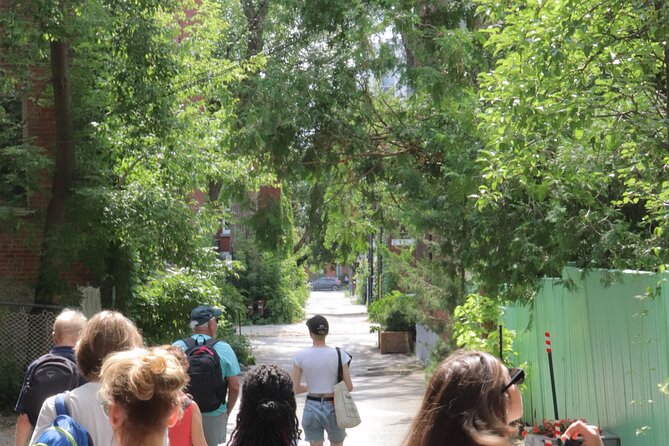
- The story unfolds around Saint-Laurent Boulevard, the Plateau, and Mile End, not inside a museum gallery.
- The tour lasts about two hours, with a short rest break reported midway through the walk.
- Guides such as Shannon, Emily, Pauline, and Tani receive especially warm praise for clear storytelling, good pacing, and thoughtful answers.
- You will see traces rather than a fully preserved Jewish quarter, since many historic buildings and community sites have changed or disappeared.
- The group can include up to 20 people, large enough for energy but still small enough for questions.
- The price is about $24.03 per person, a fair rate for a local guide and two hours of focused city history.
Why Montreal Jewish history belongs on a walking tour
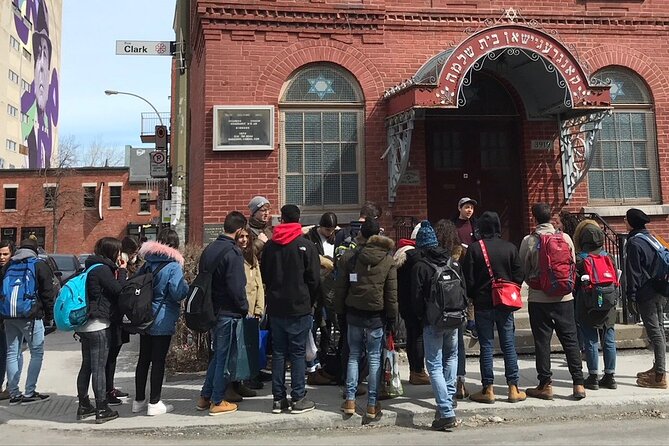
Montreal’s Jewish story is not confined to one landmark. It is written across apartment blocks, storefronts, former workshops, streets, and neighborhood institutions.
That makes walking the right format. You move through the same urban setting where Eastern European Jewish immigrants built their lives, worked long hours, raised families, created religious communities, and contributed to Montreal’s cultural life. The guide helps you connect an ordinary-looking building with the people who once gave it purpose.
I like this approach because it avoids treating history as a list of dates. The tour looks at immigration, work, education, medical care, religious life, and community leadership. It also shows how Jewish Montreal was woven into the wider city rather than separated from it.
You should arrive ready for stories about change. The present-day streets do not always make the past obvious. At times, you may be looking at a building that has little outward connection to its former role. That can feel sad, but it also makes the guide’s work more important.
More Walking Tours in Montreal
- The Original Old Montréal Walking Tour by Guidatour
★ 4.5 · 2,217 reviews - Old Montreal Small-Group Walking Tour | Max 10 | by MTL Detours
★ 5.0 · 2,088 reviews - Montréal: The Original Old Montréal Walking Tour
★ 4.8 · 911 reviews
Starting near Saint-Laurent Boulevard
The tour begins outside 3961 Boulevard Saint-Laurent, at the intersection with Napoleon Street. The general booking information also gives 4129 Boulevard Saint-Laurent as a start point, so I would use the exact location printed on your ticket and confirm it before setting out.
This detail matters. One person was given an incorrect meeting location and had to call the museum to find the group. Another booking problem led to a guide not appearing, and the provider offered a full refund after explaining that an outside partner had opened an unavailable date. These appear to be unusual problems, but you can avoid needless stress by checking the meeting address, date, and local contact details in advance.
There is no hotel pickup or drop-off. You need to make your own way to the neighborhood using Montreal’s public transportation system or on foot.
Once the group gathers, expect a short orientation before the walk gets underway. The tour is offered in English, and the maximum group size is 20 people. That is a reasonable size for a city walk. You are not guaranteed a private conversation with the guide, but there should be room to ask questions.
The Museum of Jewish Montreal connection
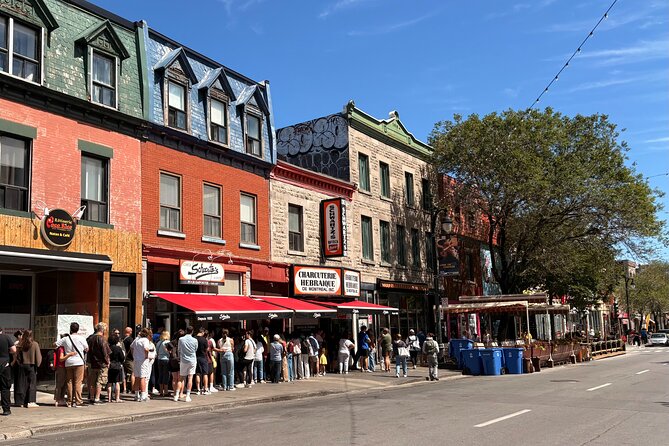
The first listed point is the Museum of Jewish Montreal, though the walking tour does not begin or end at the museum’s exhibition building. The museum’s public exhibitions are at 5220 Saint-Laurent Boulevard and are open Thursday through Sunday. They are also scheduled to open on Mondays beginning in late May 2024, with hours subject to change.
The tour itself uses meeting points around the Plateau and Mile End. Its listed end is outside 3919 Rue Clark, at the intersection of Clark and Bagg. This separation between the museum building and the walking route is worth understanding before you book.
I see the museum connection as useful context rather than an extra included visit. The admission noted for the museum stop is free, but the experience is primarily an outdoor walking tour with a local guide. If you want to visit the museum exhibitions, check the separate opening hours and allow additional time.
Following the early Jewish neighborhood
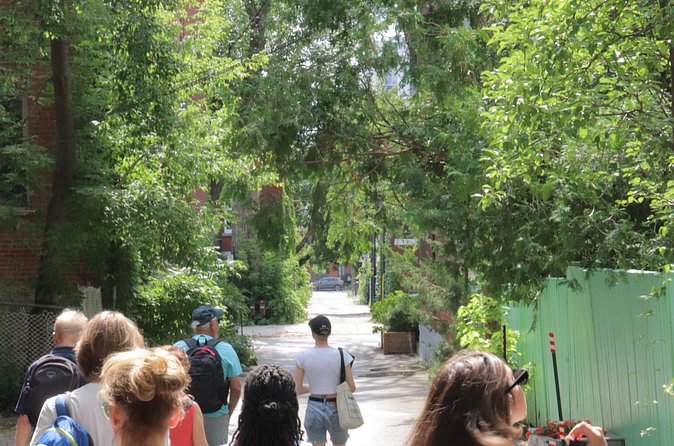
The central part of the route explores the former Jewish area around Saint-Laurent Boulevard and the Plateau. The exact stops are not fully listed, so you should not expect a fixed checklist of famous buildings. Instead, the guide builds a neighborhood story from the streets and surviving traces.
One particularly memorable detail from the tour feedback is a start at H. Fischer & Fils, where the group saw a tailor shop. That sort of stop gives the history a practical edge. It helps you picture the working world of the neighborhood, where trades and small businesses were part of daily life.
The route also considers people who made their mark in education, medical care, religious communities, and industry. This broadens the story beyond immigration alone. You hear about people arriving in Montreal, but also about the institutions and careers they built once they were here.
I especially like the attention to how older buildings relate to current uses. A facade, shopfront, or street corner may look ordinary until the guide explains its earlier role. You begin to notice how Montreal’s past survives in fragments.
Still Montreal, at a slower pace:
- Montreal: Guided Bus Tour
★ 4.4 · 3,064 reviews - Montreal: Hop-On Hop-Off Double-Decker Bus Tour
★ 4.1 · 2,760 reviews - From Montreal: Quebec City and Montmorency Falls Day Trip
★ 4.5 · 2,669 reviews - Montreal Mile End Authentic Food Tour with 7 Delicacies Tastings
★ 5.0 · 2,598 reviews
The human stories behind immigration
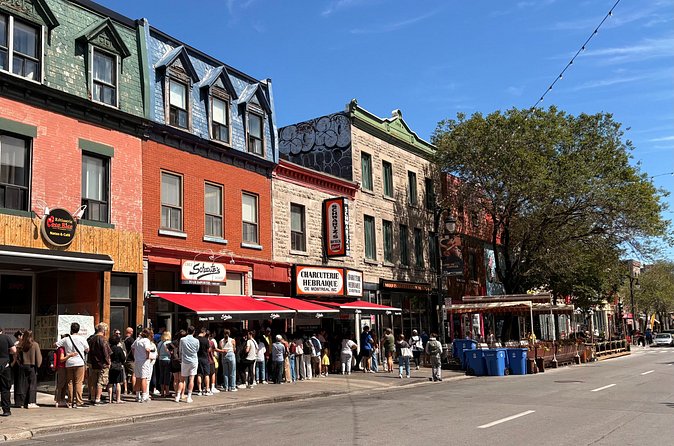
The tour’s strongest subject is the arrival of Eastern European Jews and the realities they faced in Montreal. The stories deal with work, family, community, and the effort required to build a life in a new city.
The best guides keep this personal. Shannon was repeatedly praised for making Jewish Montreal’s past feel immediate without overwhelming the group. Pauline was described as clear, lively, enthusiastic, and willing to say when she did not have a firm answer. Emily was praised for connecting the Jewish past to present-day buildings and for explaining the city’s Yiddish history.
Those details matter because a good history guide does more than recite facts. You want someone who can explain uncertainty honestly, answer a teenager’s question, and adjust the pace when the group needs a pause. The accounts of Shannon, Pauline, Emily, Tani, and Shushann point to guides who bring both preparation and personality.
The subject can also be emotional. The tour deals with difficult conditions and the challenges faced by early Jewish residents. Shannon was particularly praised for treating those experiences with feeling while keeping the walk organized and approachable.
A walk through a neighborhood that has changed
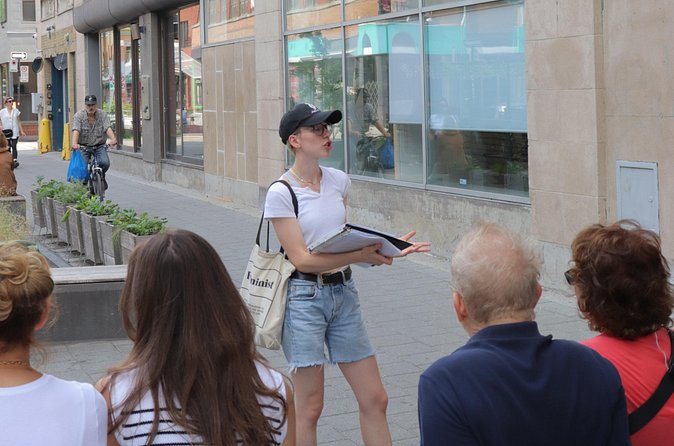
The route’s biggest limitation is also part of its value. Much of the original Jewish neighborhood no longer looks Jewish in an obvious way, and many community sites have moved elsewhere in Montreal.
If you want rows of preserved synagogues, shops, and homes with original signs, this tour may disappoint. One person described the area as rather nondescript in places and wished for more attention to postwar Jewish Montreal.
I would treat that criticism as useful advice. The tour focuses heavily on the early Jewish presence in the Plateau and Mile End. It gives you a strong introduction to immigration and community formation, but it may not provide equal coverage of the postwar period or the current Jewish community on the other side of the city.
Still, the disappearance of many original sites creates an important lesson. Cities change, and communities move. The walk shows you how a neighborhood can remain historically important even after its first residents, businesses, and institutions have gone.
Pace, distance, and comfort
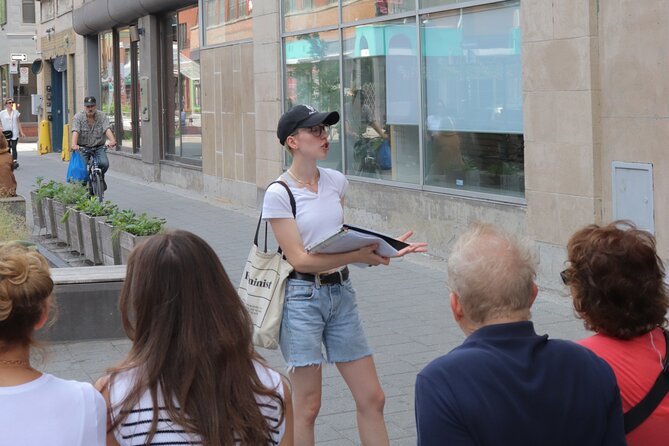
Two hours is long enough to create a clear story but short enough to fit into a day of sightseeing. The walk includes a fair amount of movement, so wear comfortable shoes and expect to remain on your feet for much of the outing.
A short break in the middle helps. It gives you time to rest, take in the surroundings, and ask questions without trying to absorb every detail while walking.
The tour requires a moderate level of physical fitness. That does not mean it is an athletic outing, but you should be comfortable covering neighborhood streets for roughly two hours. Families have taken the tour with teenagers, and it is described as family friendly.
I would choose the morning if you want to use the tour as an introduction to Montreal’s Plateau and Mile End. You can then return to places that caught your attention. The afternoon option works well if you prefer a slower morning or want to pair the walk with another activity earlier in the day.
Service animals are allowed, and the meeting points are near public transportation. Hotel transfers are not included, so plan your route before departure.
Is $24.03 a fair price?
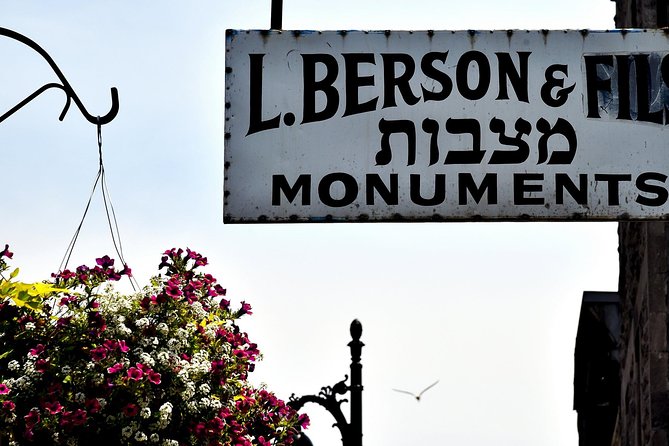
At about $24.03 per person, the tour offers good value if Jewish Montreal is a real interest for you. You are paying for a local guide, a prepared route, and two hours of interpretation in an area that can be difficult to understand on your own.
The price is especially fair for couples, families, and solo visitors who would otherwise spend the morning walking without context. A self-guided stroll through Saint-Laurent Boulevard costs nothing, but it will not explain who lived and worked there, how the neighborhood developed, or why certain sites matter.
The value is less obvious if you want a general overview of Montreal. This is a focused history tour, not a broad city orientation. It does not replace a tour of Old Montreal, a food walk, or a visit to the museum exhibitions.
The high satisfaction rate, with a 4.8 rating from 166 ratings and 96 percent of people recommending it, supports the price. I would still book for the subject and guide-led storytelling, not simply because the rating is high.
Guide quality makes the difference
The guide is the heart of this experience. A route through changed streets needs a person who can make absent buildings and former communities understandable.
Shannon receives the strongest praise for her command of Montreal Jewish history, emotional intelligence, pacing, humor, and ability to answer questions. She was also praised for looking after the group and for giving a clear picture of a neighborhood whose Jewish sites have largely moved or disappeared.
Emily is noted for explaining how current buildings connect to the past. Pauline is praised for her warmth, clarity, and honest handling of questions. Tani is described as prepared, friendly, and especially good with a group that included teenagers.
Guide assignments can change, so you cannot assume you will receive a particular person. The important point is the pattern: the experience depends heavily on a guide who can translate research into stories you can follow on the street.
A group of up to 20 people is not tiny. Even so, the walk has been described as paced well, with enough opportunity for questions and discussion. If you prefer silent sightseeing or a private guide, this format may feel too social.
Who will get the most from this tour?
I would choose Making Their Mark if you have a personal connection to Jewish history, an interest in immigration, or a desire to see Montreal through a community story that is not always obvious from the streets.
It is also a good choice for families with older children and teenagers. The subject gives young people a way to connect migration, work, identity, and city life. The walking format can be easier to follow than a long indoor presentation.
Solo visitors and couples should find the two-hour length manageable. The tour provides structure without taking over your entire day.
You may want a different experience if your main goal is current Jewish Montreal, postwar history, or a tour of preserved religious buildings. The walk offers some of that wider context, but its main strength is the early history of Jewish life in the Plateau and Mile End.
Booking details that matter
You receive confirmation when you book, and the activity is offered in English. Free cancellation is available if you cancel at least 24 hours before the local start time. Changes or cancellations made inside that window are not accepted for a refund.
I would save the ticket on your phone and read the meeting point carefully. The published information includes both 3961 and 4129 Saint-Laurent Boulevard, while the tour instructions say to begin outside 3961 at Napoleon. If anything looks inconsistent, contact the Museum of Jewish Montreal or the booking provider before the tour begins.
The walk ends outside 3919 Rue Clark, at Clark and Bagg, rather than returning to the starting point. That is useful when planning lunch, public transportation, or your next stop.
Should you book Making Their Mark?
Book this tour if you want a focused, thoughtful introduction to Montreal’s early Jewish community and you are comfortable finding meaning in streets that have changed.
I like the combination of neighborhood walking, immigration stories, Yiddish Montreal, working life, and community achievement. The guides are the strongest reason to go, with Shannon, Emily, Pauline, and Tani receiving particular praise for clear explanations and personal warmth.
Skip it if you need a perfectly preserved historic district, a full account of postwar Jewish Montreal, or a tour with no walking. For most people interested in Montreal’s past, though, $24.03 buys a useful two hours and a new way to read the Plateau and Mile End.
FAQ
Where does the tour begin?
The tour begins outside 3961 Boulevard Saint-Laurent at the intersection with Napoleon Street. The booking information also lists 4129 Boulevard Saint-Laurent, so check the exact location on your ticket before arriving.
Where does the tour end?
The tour ends outside 3919 Rue Clark, at the intersection of Clark and Bagg.
How long does the tour last?
The walking tour lasts approximately two hours.
Is the tour offered in English?
Yes. The tour is offered in English.
Is the Museum of Jewish Montreal building part of the walking route?
The tour is connected with the Museum of Jewish Montreal, but the walking tour begins and ends at locations around the Plateau and Mile End rather than at the museum’s exhibition building.
Are museum exhibitions included?
The listed museum admission is free, but the exhibitions at 5220 Saint-Laurent Boulevard have separate public opening hours. Check the museum’s schedule if you want to visit them.
How much does the tour cost?
The listed price is approximately $24.03 per person.
How large can the group be?
The tour can have a maximum of 20 people.
Can I cancel for a full refund?
Yes, if you cancel at least 24 hours before the experience’s start time. Cancellations or changes made less than 24 hours before the start time are not accepted for a refund.
More History Tours in Montreal
- Montreal History Guided Sightseeing Cruise
★ 3.5 · 363 reviews - Rabbis, Writers and Radicals: Montreal Jewish History Walking Tour
★ 4.5 · 52 reviews - In the Shadow of the Mountain: Montreal Jewish History Walking Tour
★ 4.5 · 33 reviews - Private Montreal City Tour by Car, History & Hidden Gems
★ 5.0 · 22 reviews
Just added around Montreal
- Full Day Family Bike Rental★ 5.0 · 17 reviews
- Montréal Downtown and Underground City Private Walking Tour★ 5.0 · 47 reviews
- Winter Express: Old Montreal Highlights Walking Tour★ 5.0 · 119 reviews
- Montreal Premium Driving Tour with River Cruise and Notre Dame★ 4.5 · 164 reviews
- Under the Surface of Montreal’s Chinatown: Guided Food Walking Tour★ 5.0 · 23 reviews
- In the Shadow of the Mountain: Montreal Jewish History Walking Tour★ 4.5 · 33 reviews
- The Ultimate Montreal Boat Tour – Fall Colors Apéro Edition★ 4.5 · 31 reviews
- Immersive Virtual Reality Game Activity★ 5.0 · 19 reviews
Historical Tours, compared.



Evening Gourmet Tour 5 Course Dinner – History and Food in Old Quebec City
Read our review →
Browse the lists this tour appears in