
Reviewed · MUSEUMS
Montreal: Museum of Illusions Entry Ticket
Reality gets wobbly here. Montreal’s Museum of Illusions packs more than 70 hands-on exhibits into a one-hour visit, with holograms, stereograms, puzzles, and rooms that make your eyes argue with your brain. I like the tilted room for its simple, funny challenge, and the infinity tunnel for its strong photo effect. The main drawback is that people with vertigo may find some exhibits uncomfortable.
This is a self-paced stop rather than a guided museum tour. You move from one trick to the next, test your balance, study the science behind perception, and take photos as you go. I also like that the experience works best with a companion, since several illusions are more fun when someone else can film you or compare what each of you sees.
In This Review
- Key points to know before you go
- What the Montreal Museum of Illusions actually offers
- Starting with light, perspective, and reflection
- The tilted room and the problem with your balance
- The infinity tunnel and the best photo stops
- The vortex tunnel and stronger sensory effects
- Puzzles, perception, and the science behind the tricks
- Why the one-hour length works
- Who will enjoy this most
- Practical details that affect your visit
- How to get the most from the exhibits
- Should you book the Museum of Illusions Montreal?
- FAQ
- How long does the Museum of Illusions Montreal visit last?
- How much does admission cost?
- What is included in the ticket?
- Is the visit guided?
- How many exhibits are at the museum?
- Is the museum suitable for children?
- Is the Museum of Illusions wheelchair accessible?
- Can I cancel my booking?
Key points to know before you go
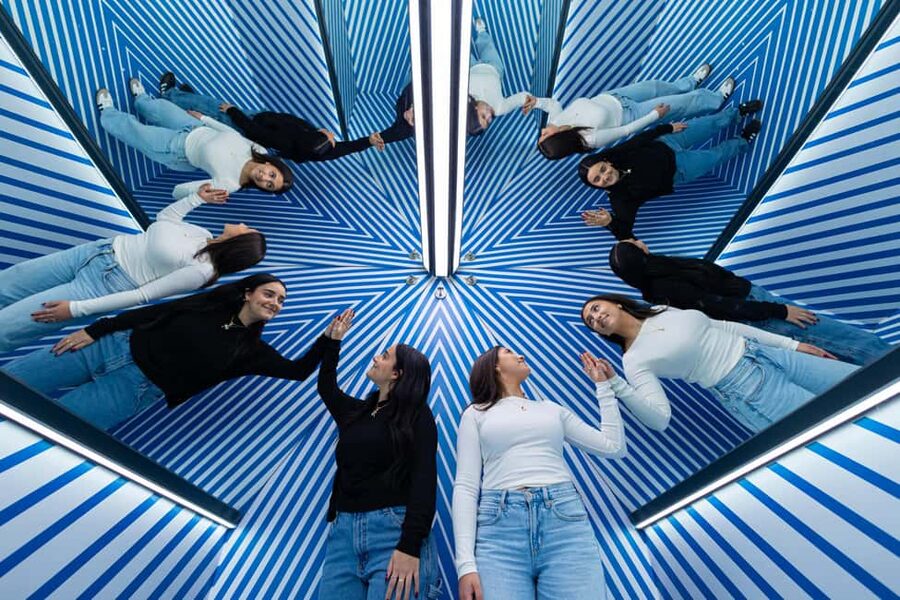
- More than 70 optical tricks: Expect holograms, stereograms, reflection effects, puzzles, and rooms built around perspective.
- The tilted room tests your balance: It looks simple, but your body may not agree with what your eyes see.
- The infinity tunnel is made for photos: Bring a camera and leave room for playful shots.
- The vortex tunnel adds a stronger physical sensation: It can be exciting, but people with vertigo should skip this experience.
- You set the pace: The visit lasts about one hour, with no fixed sequence or guide-led commentary.
- Best enjoyed with company: Some effects are easier to understand, record, and laugh about with another person.
What the Montreal Museum of Illusions actually offers
The Museum of Illusions is built around a basic idea: your eyes collect information, but your brain decides what that information means. The exhibits interrupt that process. You may see a room as level when it is not, watch an image change as you move, or study a display that seems to break the rules of light and space.
This is not a traditional museum filled with paintings, artifacts, or long information panels. It is an interactive attraction. You touch, look, walk, pose, balance, and solve. The learning comes through the experience first, with explanations that help you understand why the trick works.
I think that makes the museum especially useful on a short Montreal visit. You do not need several hours or a special background in science. You simply need curiosity and a willingness to look twice.
More Museums in Montreal
- Museum of Illusions Montreal – 70+ Illusions to Explore
★ 4.0 · 103 reviews - Montreal: Art Center and Museum Audio Guided Tour
★ 4.3 · 18 reviews - McCord Stewart Museum – Admission
★ 4.5 · 17 reviews
Starting with light, perspective, and reflection
The early exhibits introduce the main tools used throughout the museum: light, perspective, reflection, and visual comparison. Some displays may look obvious at first glance, but the point is to slow down and test what you think you are seeing.
Holograms are a good example. They can appear to have depth or movement even though the image is produced by a flat display or carefully arranged light. The effect is not just a quick visual surprise. It gives you a simple way to see how the brain fills in missing information and turns patterns into something that feels solid.
Stereograms ask for a different kind of attention. These images can hide a three-dimensional form inside a repeated pattern. If you focus correctly, a shape may seem to rise from the surface. If you cannot see it right away, do not assume you are doing something wrong. These exhibits reward patience more than speed.
I would not rush this opening section. The first few tricks give you a better sense of how to approach the rest of the museum. Move your head, change your distance, follow the instructions, and compare what you see with the person beside you.
The tilted room and the problem with your balance

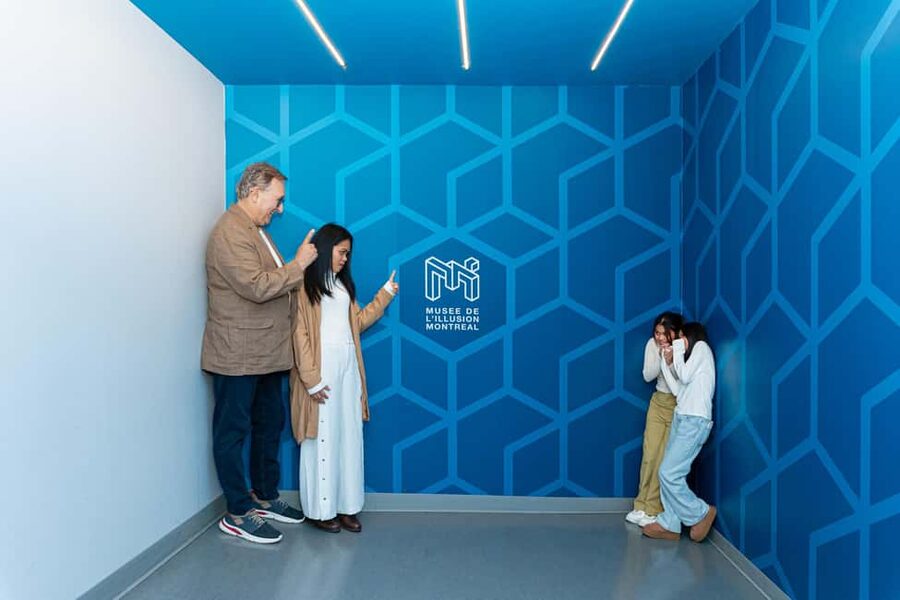
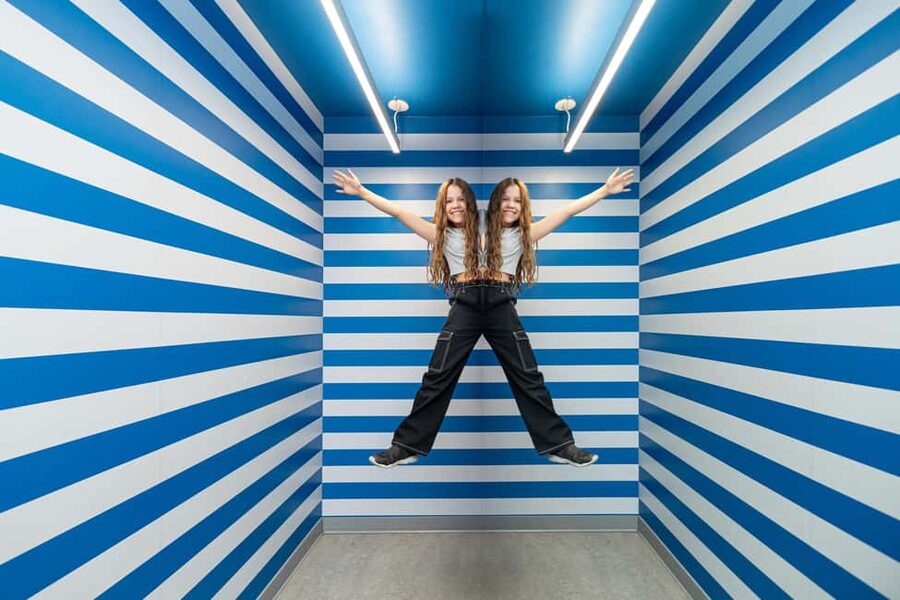
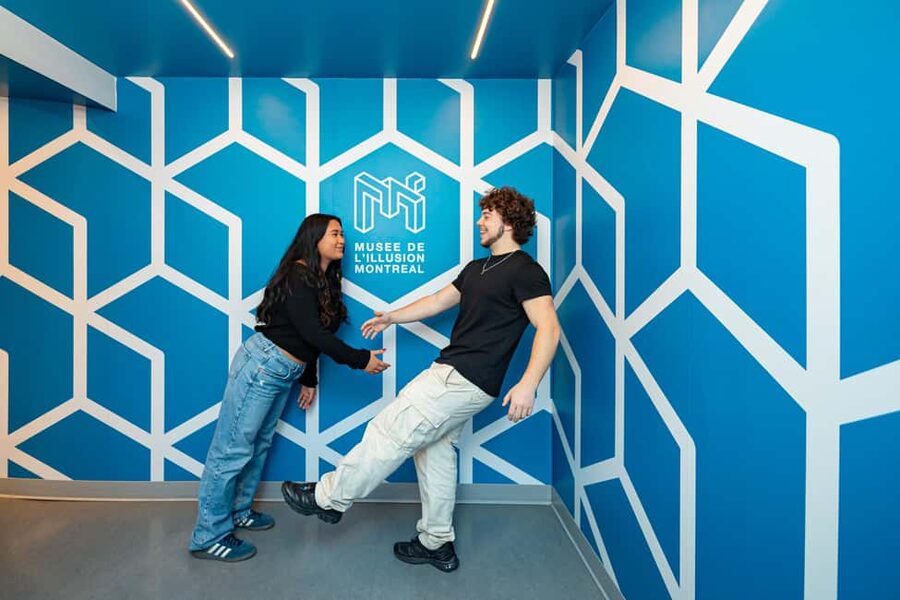
The tilted room is one of the clearest examples of the museum’s appeal. The room uses angled lines and an altered sense of level to make your body question the floor beneath you. You may feel as though you are standing normally, even while your balance tells you something is off.
This is a good place for a photo because the effect is easy to understand in a picture. A person can appear to lean at an impossible angle, or a group can pose as if gravity has taken a short holiday. The fun comes from the mismatch between what the camera records and what your body feels.
Take your time here. The trick works better when you look around the whole room instead of glancing at one object. You may also want someone else to take the picture, since the strongest images often require you to hold a pose.
The tilted room is also where you should pay attention to your comfort. The activity is suitable for all ages in general, but the attraction specifically advises against it for people with vertigo. If you are sensitive to balance effects, you can still enjoy the museum’s more stationary displays, but some of the rooms may not feel pleasant.
The infinity tunnel and the best photo stops
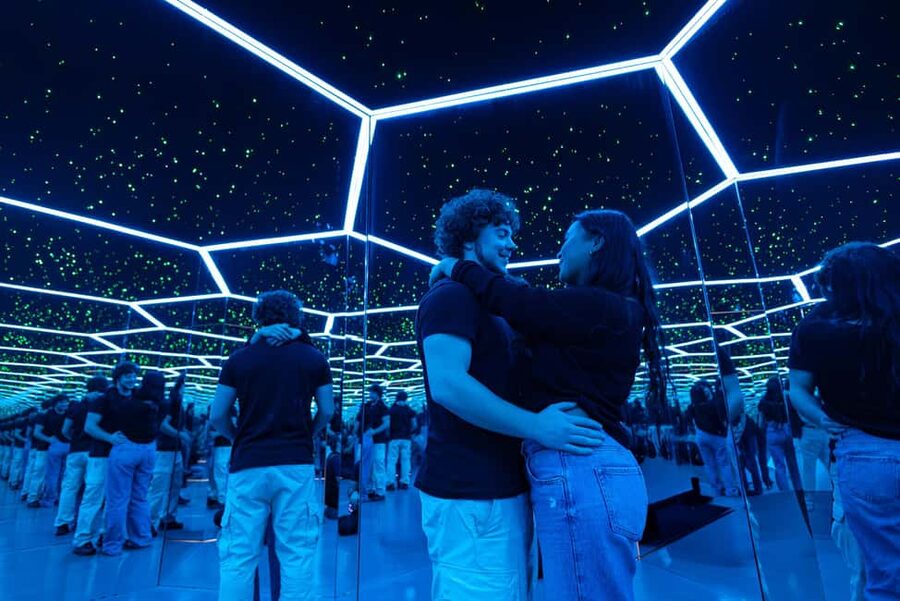
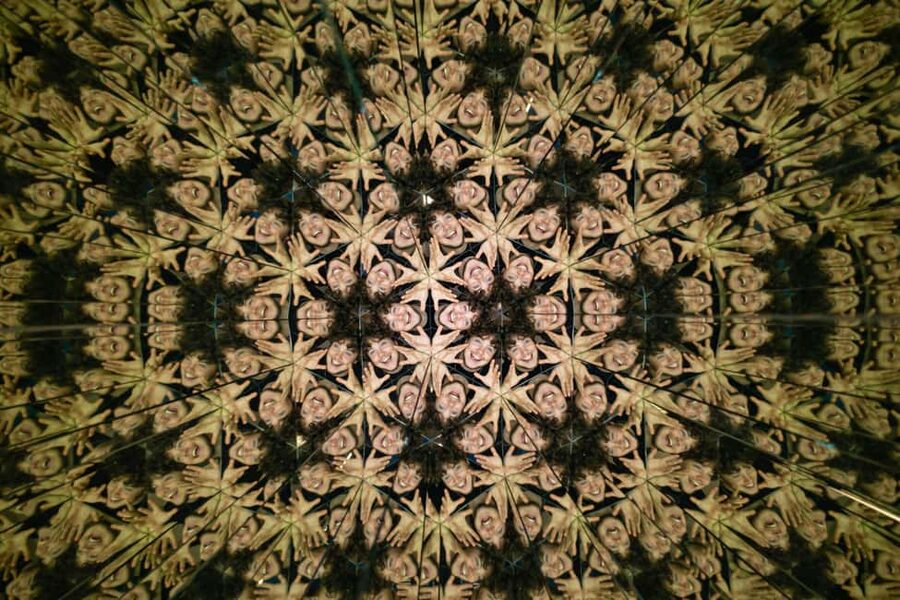
The infinity tunnel uses repeated reflections to create the feeling of a space stretching much farther than it really does. It is one of the museum’s most eye-catching displays because the visual result is immediate. You do not need a long explanation to understand that your senses are being fooled.
This is the place to have your camera ready. The museum is designed with photo-worthy moments in mind, and the infinity tunnel gives you a strong setting for creative pictures. A companion can help frame the shot, record a short video, or try the effect from another angle.
I would keep expectations sensible. The museum is not a professional photography studio, and the experience lasts about an hour. You may need to share space and wait briefly at popular displays, though no specific wait time is provided. The best approach is to take a few good photos, then move on rather than turning each exhibit into a full photo session.
The social side matters here. One person can pose while another explains how the trick looks from the outside. That back-and-forth is part of the entertainment. Alone, you can still explore the exhibits, but some effects lose a little of their charm when nobody is there to capture the moment or compare reactions.
Still Montreal, at a slower pace:
- Montreal: Guided Bus Tour
★ 4.4 · 3,064 reviews - Montreal: Hop-On Hop-Off Double-Decker Bus Tour
★ 4.1 · 2,760 reviews - From Montreal: Quebec City and Montmorency Falls Day Trip
★ 4.5 · 2,669 reviews - Montreal Mile End Authentic Food Tour with 7 Delicacies Tastings
★ 5.0 · 2,598 reviews
The vortex tunnel and stronger sensory effects
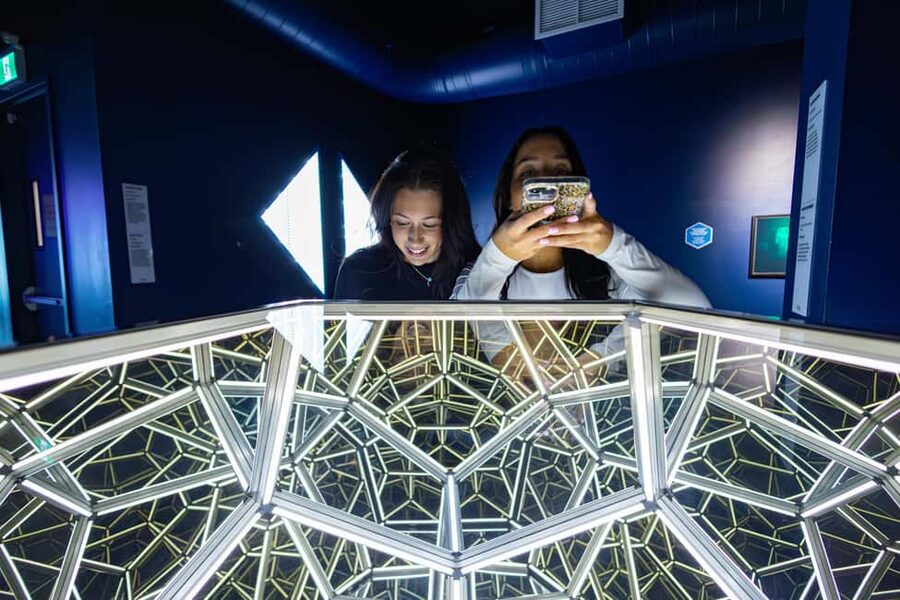
The vortex tunnel is designed to make you feel as if the surroundings are moving or rotating. The floor itself may remain stable, but your eyes send a different message to your brain. That conflict can create a surprisingly strong sensation.
For many people, this is the most memorable part of the visit. It is also the exhibit that deserves the clearest warning. If you have vertigo or are easily affected by spinning visual effects, this attraction may not be a good match. You do not need to force yourself through every exhibit to get value from the museum.
If you are comfortable with the effect, enter slowly and pay attention to how you feel. The point is not to prove your balance or endurance. It is to notice how quickly visual information can change your sense of movement.
Puzzles, perception, and the science behind the tricks
The museum is not only about rooms that make you wobble. Puzzles and perception-based displays ask you to solve a problem, spot a pattern, or rethink a familiar image. This gives the visit a little more substance than a series of quick photo backdrops.
I especially like this part for families and groups with different interests. A child may enjoy the visual surprise, while an adult may want to know why it happens. You can approach the exhibits at your own level, and the science behind optical illusions provides a useful thread connecting the rooms.
Holograms and stereograms also fit into this learning side. They show that perception is not a direct recording of the world. Your brain makes choices about depth, movement, size, and position. When an exhibit supplies misleading clues, your brain can reach a very convincing but incorrect answer.
That is the museum’s best educational feature. It does not ask you to memorize technical terms. It lets you feel the mistake first, then think about how the mistake happened.
Why the one-hour length works
The stated duration is one hour, which feels appropriate for this type of attraction. The exhibits are active and visual, so you do not need a long stretch of quiet reading. A focused hour lets you try the major rooms without turning the experience into a tiring half-day stop.
Because the visit is self-paced, your actual time may depend on how long you spend taking photos and solving puzzles. You might move quickly through a display that does not catch your interest, then linger over an illusion that challenges you.
That flexibility is useful when fitting the museum into a day in Montreal. It can work as a short indoor activity alongside other plans. The attraction also provides starting times, so check availability before choosing your visit.
A one-hour ticket at $25 per person is fair if you enjoy interactive exhibits and plan to use the displays rather than simply walk through them. The price is less compelling if you want a conventional museum with extensive collections or hours of historical material. You are paying for hands-on entertainment, visual tricks, and the chance to create photos, not for a large art collection.
Who will enjoy this most
The museum is ideal for families, couples, friends, and small groups who like playful activities. It suits people who enjoy taking photos, trying puzzles, and testing their senses. Since the visit is self-paced, you do not have to keep up with a guide or follow a fixed explanation.
It can also work well for a mixed-age group. The basic tricks are easy to understand, while the science gives older children and adults something more to consider. The attraction is listed as suitable for all ages.
I would think twice if you dislike visual motion, balance challenges, or staged photo activities. People with vertigo should avoid the experience. It may also feel less satisfying if you are visiting alone, since some exhibits are better when another person can film you, pose with you, or discuss what you see.
The group size is limited to four participants. That small-group format should make it easier to engage with the exhibits than in a large crowd, although the supplied details do not promise private access or a specific visit schedule.
Practical details that affect your visit
The ticket includes entry to the Museum of Illusions Montreal. English is the listed language, and a host or greeter is available in English. This is not described as a guided tour, so plan on exploring the displays yourself.
The museum is wheelchair accessible. That is useful information for planning, though some individual illusions may feel different depending on how you move through them. If you have specific mobility needs, it is sensible to confirm details when booking.
Wear comfortable shoes. The visit involves moving between exhibits and may include balance-based displays. Bring a camera, since photography is one of the main pleasures of the experience.
You can cancel up to 24 hours in advance for a full refund. The reserve-now, pay-later option also helps if your Montreal plans are still shifting. Those policies add value because a short attraction is easier to fit into a changing day when you do not have to pay immediately.
How to get the most from the exhibits
Start by reading the instructions, even if an exhibit looks self-explanatory. Optical illusions often depend on where you stand, how you look, or what you compare. A quick glance may give you the effect, but a careful second look usually gives you the explanation too.
Go with at least one other person if you can. Ask your companion what they see, trade places in front of the camera, and record short videos when an illusion needs movement. The shared reaction is a major part of the fun.
Do not judge the museum by one favorite exhibit. Some displays may work instantly for you, while others may not. The value comes from the variety: a room that challenges balance, a tunnel that alters movement, a hologram that plays with depth, and a puzzle that makes you stop and think.
Give yourself enough time for the exhibits that require focus. The self-paced format means you do not have to hurry from one room to the next. An hour is enough for a satisfying visit, but only if you avoid spending the entire time at one photo station.
Should you book the Museum of Illusions Montreal?
Book it if you want a compact, playful Montreal activity with plenty of visual surprises and photo chances. At $25 per person, it is a reasonable value for an hour of hands-on entertainment, especially for families and groups of friends.
I would skip it if you are looking for traditional museum collections, detailed cultural history, or a quiet visit. I would also avoid it if you have vertigo or dislike balance and motion effects.
For the best experience, reserve a time that fits your schedule, wear comfortable shoes, bring a camera, and go with someone who will enjoy the tricks with you. The museum cannot change how you see the world, but it can make you question your eyes for an entertaining hour.
FAQ
How long does the Museum of Illusions Montreal visit last?
The stated duration is one hour. Since the visit is self-paced, you can decide how long to spend at each exhibit during that time.
How much does admission cost?
The entry ticket costs $25 per person.
What is included in the ticket?
The ticket includes admission to the Museum of Illusions Montreal.
Is the visit guided?
The experience is self-paced rather than described as a guided tour. A host or greeter is available in English.
How many exhibits are at the museum?
The museum has more than 70 exhibits involving optical illusions, holograms, stereograms, puzzles, reflections, and unusual rooms.
Is the museum suitable for children?
The experience is listed as ideal for all ages. Its interactive displays and puzzles can suit families and mixed-age groups.
Is the Museum of Illusions wheelchair accessible?
Yes. The activity is listed as wheelchair accessible.
Can I cancel my booking?
Yes. You can cancel up to 24 hours in advance for a full refund. A reserve-now, pay-later option is also available.
Just added around Montreal
- Full Day Family Bike Rental★ 5.0 · 17 reviews
- Montréal Downtown and Underground City Private Walking Tour★ 5.0 · 47 reviews
- Winter Express: Old Montreal Highlights Walking Tour★ 5.0 · 119 reviews
- Montreal Premium Driving Tour with River Cruise and Notre Dame★ 4.5 · 164 reviews
- Under the Surface of Montreal’s Chinatown: Guided Food Walking Tour★ 5.0 · 23 reviews
- The Ultimate Montreal Boat Tour – Fall Colors Apéro Edition★ 4.5 · 31 reviews
- In the Shadow of the Mountain: Montreal Jewish History Walking Tour★ 4.5 · 33 reviews
- Immersive Virtual Reality Game Activity★ 5.0 · 19 reviews
Museums, compared.
Art Gallery of Ontario General Admission Ticket
Read our review →



Browse the lists this tour appears in