

Reviewed · MUSEUMS
Museum of Illusions Admission in Toronto
Bring your camera and your curiosity. The Museum of Illusions Toronto turns perception into a hands-on game, with optical tricks, holograms, puzzles, and photo-friendly rooms at 132 Front St E. I like the freedom of a self-guided visit, and I like that the exhibits give adults and children something to do together rather than simply something to look at.
The main catch is value. At $26.23 per person, the museum is not cheap for a venue that many people finish in 30 to 60 minutes. It can stretch toward two hours if you take your time with the wooden puzzles and repeat your favorite illusions, but crowding can make that extra time less enjoyable.
In This Review
- Key points to know before you go
- What the Museum of Illusions actually offers
- Starting at 132 Front Street East
- The first illusions: learning how to look twice
- The photo rooms and why a companion helps
- Holograms, the Subway illusion, and hands-on stops
- How long should you allow?
- Is $26.23 a fair price?
- Crowds can change the whole experience
- Who will enjoy this most?
- Practical tips for a smoother visit
- Should you book the Museum of Illusions Toronto?
- FAQ
- Where is the Museum of Illusions Toronto?
- How long does the visit take?
- How much does admission cost?
- Is the experience guided?
- Are children allowed to visit alone?
- Is the museum suitable for adults?
- Is food or drink included?
- Can I cancel or change my ticket?
Key points to know before you go
- Expect a compact, interactive visit: Most people spend about 30 to 60 minutes, though puzzle fans may stay longer.
- Bring a companion: Many exhibits work best when someone else takes your photo or helps you test the illusion.
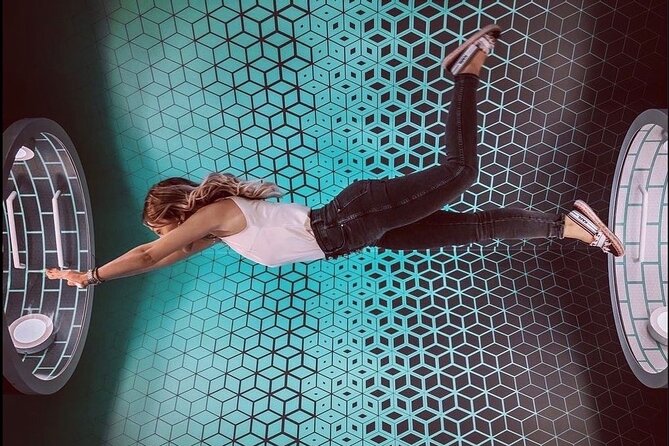
- Save your favorite poses: The upside-down rooms, tilted room, infinity room, vortex tunnel, holograms, and Subway illusion are popular photo stops.
- Read every instruction sign: Some displays are not self-explanatory, and the printed directions tell you how to get the intended effect.
- Choose your timing carefully: Crowding has been a real issue during busy periods, with some visitors finding it hard to move between exhibits.
- Staff can add a lot: Helpful employees may explain displays, demonstrate activities, or take photos for you.
What the Museum of Illusions actually offers
The Museum of Illusions Toronto is built around a simple idea: your eyes can be fooled, and your brain will happily fill in the gaps. Instead of walking through a collection of objects behind glass, you move from one interactive setup to another and test how perception changes what you see.
That makes this a good rainy-day stop, a family activity, or a light break from Toronto’s more traditional museums. You do not need specialist knowledge. The fun comes from trying the displays, posing in the right place, and working out why the image looks impossible.
The experience is self-guided. You can move at your own pace, return to a favorite exhibit, and spend extra time on puzzles that catch your attention. Written explanations are posted throughout the space, so you can get a basic idea of the science behind each trick.
I would not expect a formal museum tour with a guide leading your group from room to room. Staff members are available to help, and some have been especially good at explaining the exhibits. One employee, Pragya, was praised for giving clear introductions and helping visitors get full value from the displays. That kind of assistance matters here, since a few installations make more sense once someone shows you how to use them.
More Museums in Toronto:
- Royal Ontario Museum Admission
★ 4.5 · 411 reviews - Toronto: Art Gallery of Ontario General Admission Ticket
★ 4.6 · 251 reviews - Art Gallery of Ontario: General Admission
★ 4.5 · 160 reviews
Starting at 132 Front Street East
The ticket redemption point is the Museum of Illusions Toronto at 132 Front St E. It is near public transportation, and the venue is described as easy to find. You receive confirmation when booking, and advance reservations are sensible because this attraction is popular and is commonly booked about seven days ahead.
The visit is set up as a scheduled admission rather than a long guided excursion. That gives you more control, but it also means you need to manage your own pace. If an exhibit is busy, you may need to wait, circle back, or return later.
The venue is private for your own group in the booking description, but the experience can still feel crowded when several groups arrive close together. This is especially important for families with young children. The museum is small, so a high number of people has a bigger effect than it would in a large gallery.
The first illusions: learning how to look twice
Your first few displays help you understand the museum’s rhythm. You look, read the instructions, try the activity, and then check whether your eyes and brain agree.
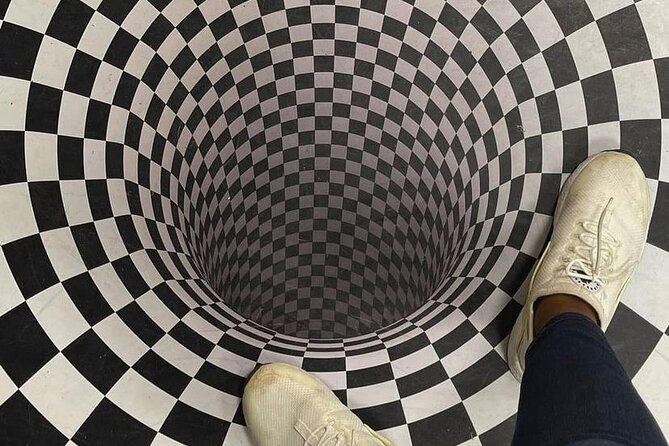
Some exhibits are primarily visual. Others ask you to touch, move, compare, or solve. The mix keeps the visit from becoming a simple photo walk. Still, the balance varies from one installation to another, and the appeal depends on what you enjoy.
If you like puzzles, you will probably spend more time than someone interested mainly in taking pictures. Wooden brain teasers can hold your attention well beyond the first circuit. I would encourage you not to rush past these. They are among the displays that make the admission feel more like an activity than a set of selfie stations.
The printed explanations are useful, but they are easy to miss. Read the signs before attempting an installation. One common problem is arriving at a display without knowing the intended position or sequence, then assuming it is less interesting than it really is.
The photo rooms and why a companion helps
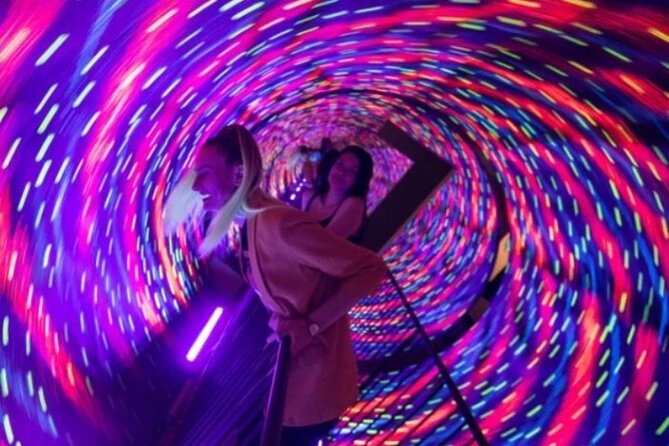
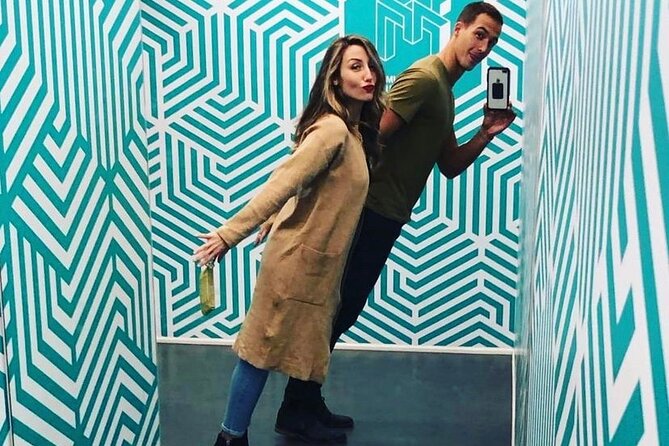
Photography is a major part of the appeal. You can pose in scenes that make you appear upside down, distorted, enlarged, or placed in an impossible setting. The tilted room is a favorite for families, and the infinity room offers the kind of repeating visual effect that works well in photographs.
The upside-down displays are also popular. The trick is not simply to stand there and look. You need someone to frame the shot so the room and your body line up correctly. That is why I recommend visiting with a friend, partner, or family member.
Solo visitors can still enjoy the museum. Staff members may help take photos, and other people may be willing to assist. One solo visit became especially memorable because an employee walked through the entire museum with the visitor and took pictures. That is a generous level of help, but you should not assume a staff member will always be free to do this.
If you are visiting alone, concentrate on the displays that do not depend on a second person. If you are visiting as a couple or family, plan to take turns behind and in front of the camera. This turns the visit into a shared game rather than a quick walk around.
A few more Toronto trips worth comparing
- Toronto: Niagara Falls Day Tour with Optional Boat Cruise
★ 4.6 · 3,178 reviews - Niagara Falls Day Tour from Toronto
★ 5.0 · 2,889 reviews - Toronto: Casa Loma Entry Ticket
★ 4.7 · 2,705 reviews - Niagara Falls Canada Day Tour From Toronto + Boat Cruise Option
★ 5.0 · 2,576 reviews
Holograms, the Subway illusion, and hands-on stops
The holograms offer a change of pace from the rooms designed for posing. They are more about watching an image shift or appear to have depth, while the hands-on puzzles ask you to think and experiment.
The Subway illusion and train station display were singled out as memorable stops. These scenes give you a setting for photographs, but they also show how the museum uses familiar spaces to create visual confusion.
The DJ illusion board is another unusual feature. It is the sort of exhibit that rewards a little time rather than a quick glance. If you are with children, let them test each part without rushing them. Adults often find themselves competing over puzzles or trying the same illusion several times.
The museum’s strongest feature is this combination of visual tricks and physical interaction. You are not simply reading about perception. You are seeing how easily your own senses can be led astray.
How long should you allow?
The advertised duration is about one hour, and that is a fair planning figure. Some people finish the full circuit in 15 to 30 minutes, especially if the museum is crowded or they focus only on the main displays.
Others spend closer to an hour or two. The difference comes from your pace, the wait at each exhibit, the number of photographs you take, and how seriously you approach the puzzles. You can also go back to favorite displays or revisit anything you missed.
I would set aside one hour, then treat any extra time as a bonus. Do not build a full afternoon around this attraction unless your group truly enjoys puzzles and repeated photo attempts. The compact size is convenient when you are fitting it between other downtown plans, but it limits the total amount of material.
This short length is the central value question. For a child who is excited by optical tricks, an hour can feel full and memorable. For an adult expecting a large museum with many galleries, the price may feel high.
Is $26.23 a fair price?
At $26.23 per person, the admission falls into the category where expectations matter. I think the price works best when two conditions are met: you enjoy interactive puzzles, and you visit with someone who will take part in the photo opportunities.
For a family, the total cost rises quickly. A six-year-old may have a terrific time, but a child who wants a large, traditional interactive museum may find the venue too small. Some adults regard it as mainly a place for unusual pictures, while others enjoy the mental challenge as much as the photos.
I would not call it a bargain. The museum’s strongest value is convenience and shared fun, not the number of exhibits. You can get a pleasant, memorable hour in downtown Toronto, especially if the attraction fills a gap in your schedule. You are paying for a compact experience, so the admission makes more sense when you use the displays fully.
Take your time with the signs. Try every puzzle that interests you. Return to the rooms that produce the best photographs. Those small choices make the cost easier to justify.
Crowds can change the whole experience
The museum’s small footprint means crowd levels matter. When the space is quiet, you can take photographs without pressure, read the instructions, and try a display more than once.
When it is busy, the same layout can feel cramped. People may wait for a turn, gather around the most popular illusions, or bump into one another while trying to line up a photograph. Large groups of children can also make some exhibits difficult to use, particularly if supervision is limited.
A busy visit has led some people to leave before seeing everything. Others were able to stay an extra 15 minutes after a crowded group moved on. You should not count on that extra time, but it shows how much the atmosphere can change during a single visit.
Advance booking secures your admission, but it does not guarantee a quiet museum. If you have flexibility, I would favor a less busy time rather than arriving at the most popular part of the day. The supplied booking information does not promise a specific crowd level, so keep your plans flexible after the visit.
Who will enjoy this most?
I think this is best for:
- Families with children who enjoy puzzles, visual tricks, and taking pictures
- Couples looking for a playful downtown activity
- Friends who like competing over brain teasers
- Solo visitors who are comfortable asking for help with photographs
- Anyone with a spare hour and an interest in perception
It is less suitable if you want a large museum, a long educational program, or a quiet gallery visit. Adults can certainly have fun, but the appeal leans toward playful interaction rather than serious study.
The museum also works better for people who enjoy participating. If your group prefers to look at exhibits from a distance, you may finish quickly and feel the admission is expensive.
Practical tips for a smoother visit
Read the instructions at every exhibit before you begin. This is the single best tip because some activities do not reveal their purpose at first glance.
Visit with at least one other person if you want the best photographs. Take turns posing and holding the phone, and ask staff for assistance when needed.
Allow one hour, but do not be surprised if you finish in less time. Puzzle fans should leave room for a second circuit, while families with young children may want to keep the visit short and focused.
The attraction is near public transportation and easy to find at the stated Front Street East address. Food and drinks are not included, and drinks or refreshments are not part of the admission experience, so plan those separately.
Children must be accompanied by an adult. Most people can participate, but the supplied information does not give detailed accessibility specifications, so you should contact the museum directly if your group has particular access needs.
Finally, check your plans before paying. The ticket is non-refundable and cannot be changed for any reason after booking.
Should you book the Museum of Illusions Toronto?
Book it if you want a short, playful stop with hands-on puzzles and unusual photographs. I would especially recommend it for families, couples, and friends who will actively try the displays rather than rush through them.
Think twice if $26.23 feels high for an hour, or if you expect a large museum. The experience is compact, and crowding can reduce the fun. For the best chance of good value, go with a companion, read the signs, take your time, and visit when your schedule allows you to linger.
FAQ
Where is the Museum of Illusions Toronto?
The ticket redemption point is the Museum of Illusions Toronto at 132 Front St E, Toronto, Ontario M5A 1E2, Canada.
How long does the visit take?
The approximate duration is one hour. Depending on crowd levels and your pace, you might finish in 15 to 30 minutes or spend closer to one or two hours with the puzzles, photographs, and repeat visits to favorite exhibits.
How much does admission cost?
Admission is listed at $26.23 per person.
Is the experience guided?
It is a self-guided visit. Written explanations are available at the exhibits, and staff may help explain displays or assist with photographs.
Are children allowed to visit alone?
No. Children must be accompanied by an adult.
Is the museum suitable for adults?
Yes. Adults can enjoy the optical illusions, holograms, photo rooms, and puzzles, although the experience is particularly popular with families and children.
Is food or drink included?
No. Food and drinks are not included in the admission.
Can I cancel or change my ticket?
No. The experience is non-refundable and cannot be changed for any reason after booking.
Just added around Toronto
- Toronto Craft Brewery Tour★ 5.0 · 97 reviews
- Canada eSIM | 3-30 days | Daily data | QR code★ 4.0 · 12 reviews
- Handcrafted Donuts of Toronto: A Sweet City Walking Tour★ 5.0 · 141 reviews
- Underground Toronto PATH Tour★ 4.5 · 6 reviews
- Tour to Niagara Falls from Toronto★ 4.0 · 19 reviews
- Customizable Walking Tour of Toronto’s Hidden Gems★ 5.0 · 15 reviews
- Tour to Niagara Falls with skip the line Cruise★ 4.0 · 27 reviews
- Toronto Airport Private Transfer to Downtown★ 4.5 · 10 reviews
Museums, compared.
Art Gallery of Ontario General Admission Ticket
Read our review →



Browse the lists this tour appears in