
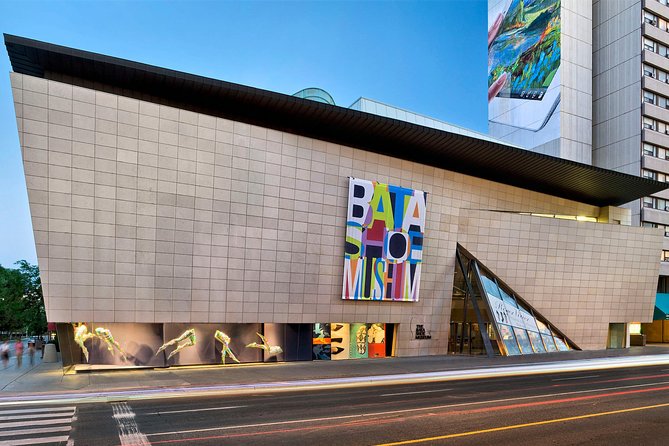
Reviewed · MUSEUMS
Bata Shoe Museum Admission Ticket
Shoes tell stranger stories than you expect. Toronto’s Bata Shoe Museum turns footwear into a compact lesson in history, culture, fashion, and belief, with objects reaching back to ancient Egypt. I like the clear, well-presented displays and the way the museum gives attention to artisans and cultural context, especially in its Indigenous material. I also like that you can explore at your own pace with a mobile ticket, without being tied to a tour group.
The main caution is size. You can see the museum in about 45 minutes if you move quickly, and most people will need roughly 1 to 2 hours rather than a full afternoon. A changing display may also be closed during renovation, and exhibits featuring famous names may not be on view at the time of your visit.
In This Review
- Key points to know before you go
- Why a shoe museum works in Toronto
- Starting with All About Shoes
- Ancient Egypt and the long road of footwear
- Indigenous pieces and the people behind the objects
- Three changing galleries keep the visit fresh
- The 1980s section and the pleasure of recognition
- A self-guided format that gives you control
- How long should you plan to stay?
- Mobile tickets, access, and practical planning
- Is the admission good value?
- Who will enjoy the Bata Shoe Museum most?
- Should you book this Toronto museum visit?
- FAQ
- How long does a visit to the Bata Shoe Museum take?
- What can I see at the Bata Shoe Museum?
- Are the museum exhibits guided?
- Is transportation included with admission?
- Is parking included?
- Is a mobile ticket available?
- Are service animals allowed?
- Can children participate?
- What is the cancellation policy?
Key points to know before you go
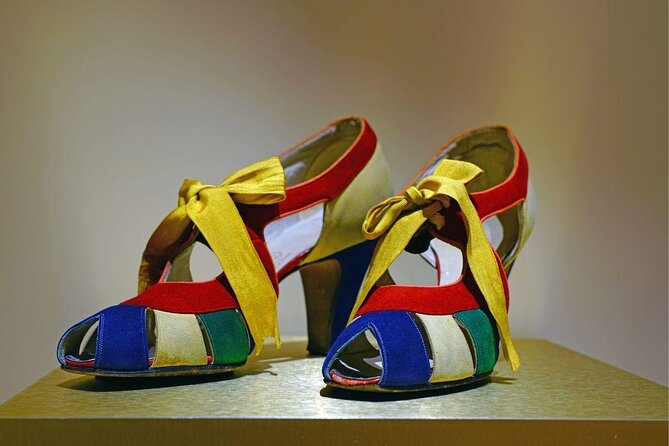
- Ancient footwear is part of the main story: You can see artifacts dating as far back as ancient Egypt.
- All About Shoes anchors the visit: The semi-permanent exhibition explains how footwear developed across time and cultures.
- Three galleries keep the museum changing: New exhibitions generally open one or two times each year, and displays often run for about a year.
- The 1980s display is a crowd favorite: Expect a strong dose of fashion memory, with shoes that can send older visitors straight back to high school.
- This is a self-guided museum: Lectures, workshops, and guided group visits cost extra or are not included.
- Allow 45 to 90 minutes for most visits: You can stay longer if you read every panel and take your time with the changing exhibitions.
Why a shoe museum works in Toronto
At first glance, a museum devoted to shoes sounds like a quick novelty stop. The Bata Shoe Museum proves that footwear is a useful way to examine the past. Shoes reveal social rank, work, religion, gender, climate, technology, and personal taste. Once you begin looking at them as cultural objects rather than things in your closet, the collection makes more sense.
I like the museum because it gives you a fresh way to think about familiar objects. You may leave paying closer attention to the shoes you are wearing, not just because of their design, but because of what they say about the time and place that produced them.
The subject also suits a broad range of interests. Art lovers can focus on shape and materials. Fashion fans can track changing styles. Families can use the displays as an easy introduction to world history. Older visitors may enjoy the strong memory factor in the modern fashion sections, while children can simply react to the unusual shapes and clever presentation.
It is not a giant museum. That is part of its appeal, but it also sets a limit on what you should expect. You will not need a whole day here, and the experience works best as one stop in a Toronto sightseeing plan.
More Museums in Toronto:
- Royal Ontario Museum Admission
★ 4.5 · 411 reviews - Toronto: Art Gallery of Ontario General Admission Ticket
★ 4.6 · 251 reviews - Museum of Illusions Admission in Toronto
★ 3.5 · 214 reviews
Starting with All About Shoes
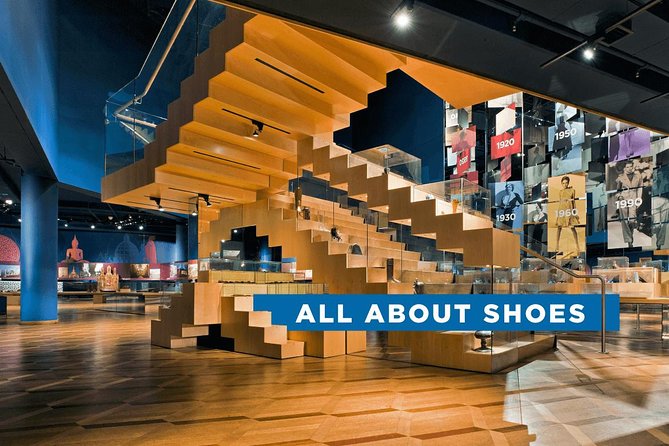
The semi-permanent exhibition, All About Shoes, provides the museum’s central framework. This is where you get the broad story of footwear and see how shoes have changed across centuries and societies.
The collection reaches back to ancient Egypt, giving the visit a much longer timeline than a fashion-only exhibition would offer. The point is not simply to admire old objects. You begin to see how footwear can reflect available materials, local customs, practical needs, and social meaning.
I would give this section your best attention at the start. It helps you understand why the later displays matter. After seeing footwear presented as an object of craft and daily life, a contemporary shoe no longer looks like a simple accessory.
The displays are arranged to make the subject approachable. You do not need specialist knowledge, and the museum’s labels help explain the pieces without requiring you to arrive with a background in fashion or archaeology. Some visitors finish the museum in around 45 minutes, but you will get more from it if you pause at the objects that surprise you.
Ancient Egypt and the long road of footwear
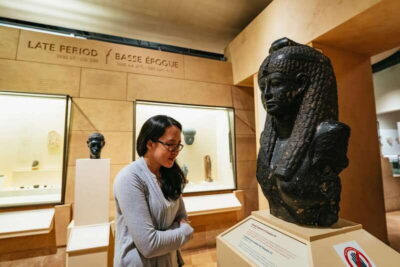
The ancient Egyptian artifacts add a useful sense of scale. They remind you that shoes are not a recent fashion concern. People have been shaping footwear around work, status, ceremony, and local conditions for thousands of years.
This part of the museum is especially good for visitors who want more than a display of pretty shoes. It connects the object in front of you with the larger question of how people lived. A shoe can show how much walking a society expected, what materials were available, or how a person marked their position.
The museum does not require you to choose between history and design. You can study a piece for its construction, then read about the people and practices connected to it. That mix is one reason the collection works well for both adults and families.
If your main interest is celebrity fashion, keep your expectations in check. Famous footwear associated with figures such as Madonna, Marilyn Monroe, Elton John, or the Dalai Lama may be referenced in promotional material or past displays, but those objects are not guaranteed to be on view. Exhibitions change, so the permanent collection should be the reason you book.
Indigenous pieces and the people behind the objects
One of the museum’s most thoughtful strengths is its treatment of Indigenous material. The labels acknowledge artisans and collaborators rather than presenting the objects as anonymous examples of style.
That matters because footwear can easily be reduced to decoration when it is shown in a case. Giving credit to makers and communities brings the human side back into the display. You can think about skill, tradition, and cultural meaning instead of looking only at color or shape.
I would slow down here, even if you are making a short visit. The museum is more interesting when you read the context around the objects. The displays reward curiosity, particularly if you enjoy learning how craft traditions carry knowledge across generations.
The exact exhibits can change, but the museum’s effort to explain authorship and collaboration is an important part of the experience. It gives the collection more care and substance than a room of attractive objects arranged only for visual effect.
A few more Toronto trips worth comparing
- Toronto: Niagara Falls Day Tour with Optional Boat Cruise
★ 4.6 · 3,178 reviews - Niagara Falls Day Tour from Toronto
★ 5.0 · 2,889 reviews - Toronto: Casa Loma Entry Ticket
★ 4.7 · 2,705 reviews - Niagara Falls Canada Day Tour From Toronto + Boat Cruise Option
★ 5.0 · 2,576 reviews
Three changing galleries keep the visit fresh
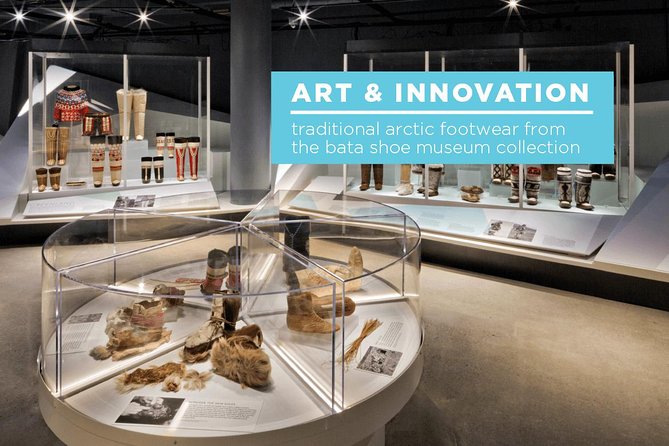
Alongside All About Shoes, the museum has three galleries for temporary exhibitions. Shows generally run for about a year, with one or two new exhibitions opening annually. That makes the museum more useful for repeat visits than its small size might suggest.
A changing gallery can also affect the length and quality of your stop. If all areas are open, you may find enough material for 90 minutes or more. If one section is being renovated, or if you move quickly through the labels, the visit may be closer to 45 minutes.
This is worth keeping in mind when planning a busy day in Toronto. The museum works well before lunch, between other downtown stops, or as a short indoor break. It is less suitable if you need a full-day attraction to fill your schedule.
The temporary exhibitions can also shift the museum’s mood. One show may focus on fashion, another on culture or craft, and another on a particular period. The 1980s display has a strong appeal for anyone who remembers the era, but its value is not limited to nostalgia. It shows how footwear can capture a moment in popular culture.
The 1980s section and the pleasure of recognition
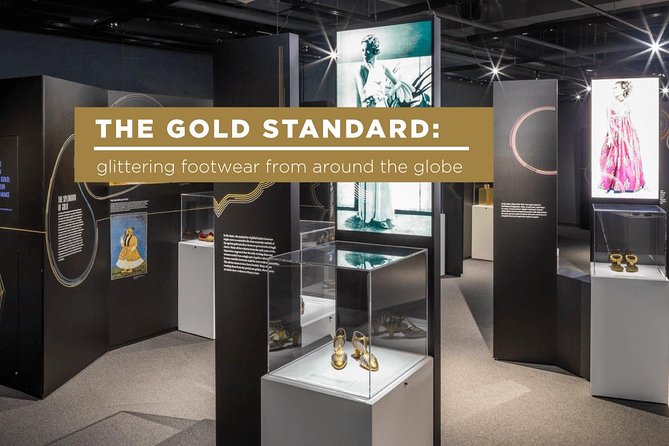
The 1980s exhibition has been especially popular because it connects museum objects with personal memory. For older visitors, the shoes can recall school, music, parties, work, and the look of a particular decade.
That recognition gives the museum an easy entry point. You might arrive for ancient artifacts and find yourself spending extra time with the modern section because the shapes and styles feel familiar. It is a nice reminder that today’s everyday clothing can become tomorrow’s historical evidence.
Families can use this gallery as a conversation starter. Ask children what looks strange, practical, or fashionable. Then compare their answers with what adults remember wearing. The museum becomes more than a silent display, and the topic stays accessible across generations.
Still, the 1980s section is a changing exhibition, not a permanent promise. If it is a major reason for your visit, check what is currently on display before booking. The same advice applies to celebrity shoes and any other special feature you may have seen advertised elsewhere.
A self-guided format that gives you control
Admission is designed for self-guided visits. You are not placed in a fixed group, and you can choose how much time to spend with each section. That flexibility is useful in a museum where different objects appeal to different people.
I would not book this expecting a scheduled lecture or a personal guide. Museum lectures, workshops, and guided group visits are not included with the admission ticket. The standard experience is independent exploration.
The self-guided format works well for couples and friends who want to talk as they go. It also helps solo visitors set their own pace. If you are fascinated by historical footwear, you can read every panel. If one display does not interest you, you can move on without holding up a group.
A recorded talk may be available during your visit, based on the museum’s setup and current offerings. Front-desk staff have helped visitors access recorded material before, but you should not assume that every lecture or special program is included. Ask when you arrive if you want more listening material.
How long should you plan to stay?
The stated visit length is about 1 to 2 hours, and that is a sensible planning range. A quick visit can take about 45 minutes, while a slower visit with careful reading may approach 90 minutes or more.
Here is how I would think about your timing:
- Allow 45 minutes for a brisk look at the principal displays.
- Allow 60 to 90 minutes for a relaxed visit with time for labels and changing exhibitions.
- Allow up to 2 hours if you enjoy fashion, design, cultural history, or photography and want to examine each gallery closely.
The museum is not so large that you risk exhaustion. Its compact size makes it a good choice when you want something interesting but do not want to commit to a major institution for half a day.
School groups can change the feel of the visit. If you prefer a quieter experience, aim for a period when organized groups are less likely to be present. The museum is near public transportation, so it is easy to fit into a day without arranging a special transfer.
Mobile tickets, access, and practical planning
Your admission ticket is mobile, and confirmation is provided when you book. GST is included, which makes the listed admission amount easier to assess because you are not adding that tax later.
Transportation to and from the museum is not included. Parking is also not included, so public transportation may be the simpler choice. The museum is near public transit, but the supplied details do not specify a particular route or station, so check your preferred directions before setting out.
Service animals are allowed, and most people can participate. The booking is limited to a maximum of nine travelers, but that should not be confused with a guided tour. The museum itself is designed to be self-guided.
The ticket includes admission only. If you want a workshop, lecture, or guided group visit, plan for those separately. This distinction matters if you are booking for an organization or hoping for a formal educational program.
Free cancellation is available if you cancel at least 24 hours before the experience start time. Cancellations made within 24 hours are not refunded, and late changes are not accepted. The cut-off follows local Toronto time.
Is the admission good value?
No admission price is provided here, so I cannot judge the ticket against a specific dollar amount. I can judge the type of value you receive. This is a short, focused museum visit with a subject that is unusual enough to feel different from Toronto’s larger art and history attractions.
The value is strongest if you enjoy design, fashion, cultural traditions, archaeology, or well-presented small museums. Families may also find it worthwhile because the subject is easy to understand and the visit does not demand a long attention span.
The value is weaker if you expect a huge collection, a full-day attraction, or a guaranteed display of famous people’s shoes. You should also allow for the possibility that a gallery may be closed during renovation or that a temporary exhibition may have ended.
I would treat the museum as a modestly timed stop with strong content, not as the sole reason to plan a day in Toronto. Its compact format is a benefit when you combine it with other attractions, but it may feel too brief if you want a large-scale museum experience.
Who will enjoy the Bata Shoe Museum most?
I would recommend it to:
- Fashion and design enthusiasts who enjoy materials, shapes, and changing styles.
- History fans who like studying ordinary objects in a wider social setting.
- Families looking for an educational stop that can be completed in under two hours.
- Solo visitors who prefer to set their own pace.
- Older visitors who may enjoy the 1980s display and its memories of earlier styles.
- Anyone looking for an unusual Toronto museum rather than another broad art collection.
I would be more cautious if your main goal is to see celebrity-owned shoes. Those objects may not be displayed during your visit. I would also reconsider if you need a guided experience, since admission is built around self-guided exploration.
Should you book this Toronto museum visit?
Book it if you want an engaging, compact museum with ancient artifacts, cultural context, changing exhibitions, and a strong fashion angle. The most praised parts are the clear presentation, the journey through time, the thoughtful treatment of artisans, and the fun modern displays, especially the 1980s section.
Skip it if you want a large museum, a guaranteed celebrity collection, or a formal guide included with admission. For most people, I would set aside 60 to 90 minutes, use public transportation if convenient, and treat the Bata Shoe Museum as a distinctive stop between larger Toronto sights.
FAQ
How long does a visit to the Bata Shoe Museum take?
The experience is listed as approximately 1 to 2 hours. A brisk visit may take about 45 minutes, while a slower visit with time for labels and changing exhibitions can take 90 minutes or longer.
What can I see at the Bata Shoe Museum?
You can see the semi-permanent All About Shoes exhibition, artifacts dating as far back as ancient Egypt, and displays in three galleries devoted to changing exhibitions.
Are the museum exhibits guided?
No. The museum is designed to be self-guided. Lectures, workshops, and guided group visits are not included with standard admission.
Is transportation included with admission?
No. Transportation to and from the museum is not included, and parking is not included. The museum is near public transportation.
Is parking included?
No. Parking is not included with the admission ticket.
Is a mobile ticket available?
Yes. The admission ticket is mobile, and confirmation is provided when you book.
Are service animals allowed?
Yes. Service animals are allowed.
Can children participate?
Most people can participate, and the museum’s displays are designed to enlighten and entertain visitors of all ages.
What is the cancellation policy?
You can cancel at least 24 hours before the experience start time for a full refund. Cancellations or changes made less than 24 hours before the start time are not accepted and are not refunded.
Just added around Toronto
- Toronto Craft Brewery Tour★ 5.0 · 97 reviews
- Canada eSIM | 3-30 days | Daily data | QR code★ 4.0 · 12 reviews
- Handcrafted Donuts of Toronto: A Sweet City Walking Tour★ 5.0 · 141 reviews
- Underground Toronto PATH Tour★ 4.5 · 6 reviews
- Tour to Niagara Falls from Toronto★ 4.0 · 19 reviews
- Customizable Walking Tour of Toronto’s Hidden Gems★ 5.0 · 15 reviews
- Tour to Niagara Falls with skip the line Cruise★ 4.0 · 27 reviews
- Toronto Airport Private Transfer to Downtown★ 4.5 · 10 reviews
Museums, compared.
Art Gallery of Ontario General Admission Ticket
Read our review →


Browse the lists this tour appears in