
Reviewed · WALKING TOURS
Customizable Walking Tour of Toronto’s Hidden Gems
Toronto rewards walkers who know where to look. This private three-hour tour links major sights with street art, markets, architecture, and local stories, making it a useful first look at the city beyond the postcard stops. I like that you can shape the route around your interests, and I especially like the one-guide-for-your-group format.
The tour also earns points for flexibility. You can choose a morning or afternoon start, and guide Matty adjusted the pace and route around rain for one booking, beginning indoors before heading outside. The main consideration is distance: the itinerary covers a lot of Toronto, so anyone wanting a slow, single-neighborhood stroll may find it broad rather than leisurely.
In This Review
- Key points to know before booking
- Why this Toronto walk works as an introduction
- Meeting at Buddies in Bad Times Theatre
- The tower, the mall, and Toronto’s public center
- Graffiti Alley and Toronto’s street art scene
- The University of Toronto’s Oxford-like campus
- Kensington Market, from counterculture to shopping streets
- Church-Wellesley Village and Toronto’s queer history
- St. Lawrence Market and Toronto’s food traditions
- Pace, weather, and the value of private guiding
- Who should book this three-hour Toronto walk?
- Should you book it?
- FAQ
- How long does the Toronto walking tour last?
- How much does the tour cost?
- Is the tour private?
- Where does the tour start?
- Where does the tour finish?
- What language is the tour offered in?
- Can I choose the tour time?
- Can the tour be adjusted to my interests?
- Is cancellation free?
Key points to know before booking
- Private route planning: You can focus on history, art, food, architecture, or a mix of all four.
- A useful first-day introduction: The walk connects major Toronto landmarks with areas many first-time visitors miss.
- Seven contrasting stops: Expect a tower, shopping center, university campus, markets, street art, and Toronto’s queer cultural district.
- Weather flexibility: The guide can adjust the order and favor indoor areas when conditions turn poor.
- Small-group attention: Only your own group participates, which makes questions and pace changes easier.
- Straightforward timing: The tour lasts about three hours, starts at Buddies in Bad Times Theatre, and returns there.
Why this Toronto walk works as an introduction
Toronto can feel scattered at first. Its best-known sights sit among shopping arcades, public squares, campuses, markets, and neighborhood streets, and a first visit does not always reveal how those pieces connect.
This walk gives you a broad introduction in about three hours. You will pass some of the city’s biggest symbols, then move into places with more local character. That mix matters. A tour focused only on major attractions can feel polished but thin, while a tour focused only on side streets can leave you without a clear sense of Toronto’s shape.
I like the way this experience gives you room to set the emphasis. You can ask for more architecture, more food, more art, or more history. The guide can then use the listed stops as a framework rather than treating them as a rigid checklist.
The private setup is another strong point. You are not trying to keep up with a large crowd or wait while strangers ask questions. If you want to pause at a market, move faster between major sights, or spend more time looking at murals, that is easier with only your group involved.
The trade-off is that a private tour works best when you speak up. If you simply follow along without sharing your interests, you may receive a general introduction rather than a route shaped closely around your priorities.
More Walking Tours in Toronto
- Show me the City! A Small Group Walking Tour of Toronto
★ 5.0 · 621 reviews - Toronto Distillery District Walking Tour
★ 5.0 · 327 reviews - Toronto: City Highlights Walking Tour | 3-Hour
★ 4.6 · 306 reviews
Meeting at Buddies in Bad Times Theatre
The walk begins at Buddies in Bad Times Theatre, at 12 Alexander Street. This is a practical meeting point because it places the tour near one of Toronto’s most important queer cultural areas, which also appears later in the route.
Starting here gives the guide a natural chance to explain why the surrounding district matters. It is not just a convenient address. The area connects to one of North America’s oldest queer destinations, with local businesses and a long story of inclusion and community life.
You should arrive ready to walk and keep your phone available for the mobile ticket. The meeting point is near public transportation, though no specific transit route is provided, so check your own connection before setting out.
The activity returns to the same meeting point. That makes the walk easier to fit into a day because you are not left across town at the end, though you should still allow time for the return leg when planning another booking.
The tower, the mall, and Toronto’s public center
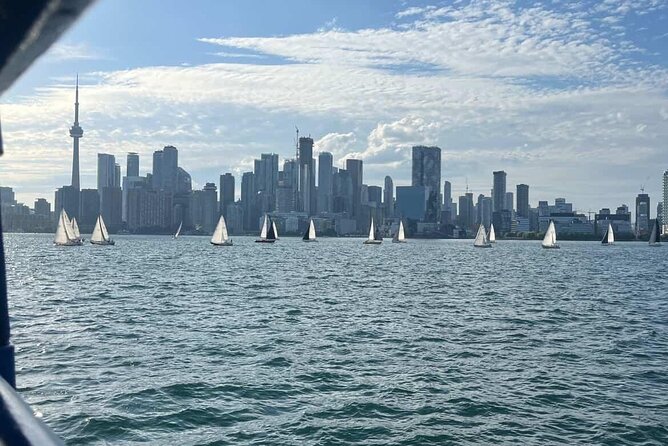
One of the first major subjects is Toronto’s iconic tower, clearly the CN Tower from the description. You will walk by it rather than take part in an observation-deck visit. The guide discusses its history, importance, and practical uses, giving you context instead of adding a separate admission ticket.
That distinction affects expectations. If you want panoramic views from the tower, this tour does not promise entry. If you already plan to visit the CN Tower separately, the walking tour can help you understand its role in Toronto without using tour time on an indoor attraction.
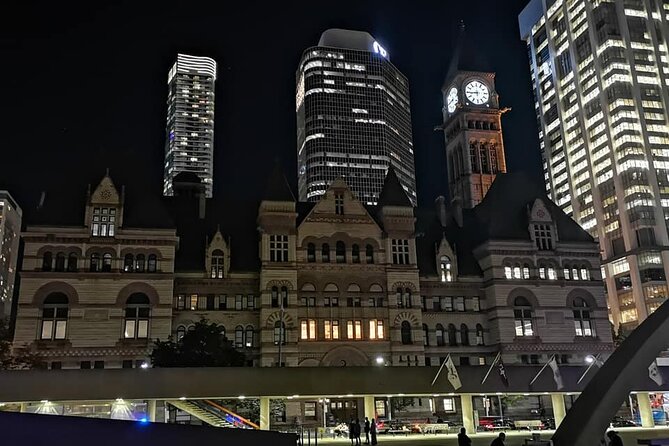
The route also includes the city’s iconic shopping mall, likely the Toronto Eaton Centre. It functions as more than a place to buy clothes. Its connections to the square, the underground PATH system, and Nathan Phillips Square help explain how Toronto’s downtown works.
This is useful orientation for a first visit. The PATH can be confusing, especially when streets, office buildings, shops, and underground passages blend together. A guide can help you see the mall as part of a wider downtown network rather than an isolated retail stop.
Nathan Phillips Square and the surrounding civic center bring another side of Toronto into view. The itinerary does not promise a lengthy stop or a specific building tour, so treat this section as an outdoor introduction to the city center, not a formal civic architecture visit.
Graffiti Alley and Toronto’s street art scene
The street-art stop is one of the most appealing parts of the route. This often-overlooked area shows Toronto’s creative side and highlights artists working in the city today.
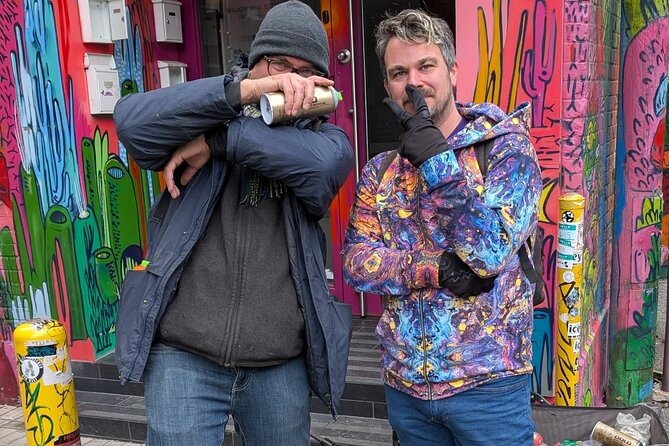
The supplied description points to Graffiti Alley and its surrounding streets. That means you should expect a setting where painted walls and changing public art matter as much as polished landmarks. The art gives the walk a different pace. Instead of listening while facing a famous building, you can stop, look closely, and compare different styles across a compact area.
I particularly like this stop for visitors who want something more current than standard city history. It also makes a good contrast with the tower and shopping center. Toronto is not presented as only glass towers and major attractions. You get a look at how artists use urban walls to shape the feel of a neighborhood.
Keep in mind that street art changes. Murals may be painted over, added to, or altered, so the exact views cannot be guaranteed. The benefit is that the area is not frozen in time. A return visit can show a different set of work.
One previous booking combined Graffiti Alley with nearby areas and covered a wide stretch of the city. That suggests the route can pack in a lot, but you should tell the guide if you want to linger. Otherwise, the broad itinerary may leave you moving on just as the art gets interesting.
Still Toronto, at a slower pace:
- Toronto: Niagara Falls Day Tour with Optional Boat Cruise
★ 4.6 · 3,178 reviews - Niagara Falls Day Tour from Toronto
★ 5.0 · 2,889 reviews - Toronto: Casa Loma Entry Ticket
★ 4.7 · 2,705 reviews - Niagara Falls Canada Day Tour From Toronto + Boat Cruise Option
★ 5.0 · 2,576 reviews
The University of Toronto’s Oxford-like campus
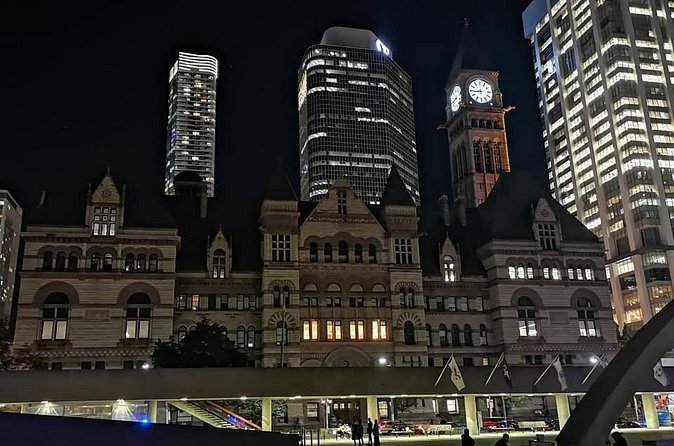
The University of Toronto campus provides a calmer change of scene. Its appeal comes from architecture and education, with a look described as Oxford-like.
This section should suit you if historic buildings and academic settings interest you. The campus offers a useful pause from downtown commerce and street art, and the guide can connect the buildings to Toronto’s educational development.
The description promises interesting architecture and a substantial history, but it does not specify individual buildings, colleges, or an interior visit. You should therefore expect an outdoor campus walk rather than access to restricted rooms or a structured university tour.
That limitation is not a major problem if you view the campus as part of a larger city walk. Its value lies in showing another face of Toronto, one shaped by courtyards, institutional buildings, and long-standing study rather than shopping or entertainment.
Ask for extra architecture time if that is your main interest. The private format gives you a better chance to make that request than a fixed group route would.
Kensington Market, from counterculture to shopping streets
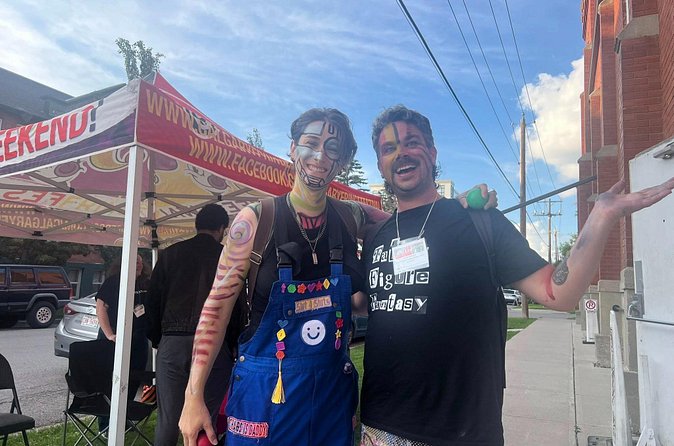
Kensington Market brings the tour back to neighborhood life. The area has connections to beatnik culture, later change, and some of the city’s best shopping.
That mix makes it more interesting than a simple retail district. You can consider how a neighborhood develops, how independent businesses shape its identity, and how older local character can sit beside newer investment.
The word market can mislead you if you expect one enclosed food hall. Kensington Market is a neighborhood shopping area, so the experience is about streets, storefronts, and the atmosphere of the district. The tour description does not guarantee tastings or purchases, but you may find places worth returning to after the walk.
This is a good stop for visitors who enjoy browsing and people-watching. It is also one of the places where your guide’s customization can matter most. You can ask for more food suggestions, more social history, or more time to browse.
The drawback is that neighborhood change can be a sensitive subject. A short walk cannot cover every layer of the area, and the itinerary gives no promise of visits inside specific shops. Think of Kensington Market as an introduction that helps you decide where to spend more time later.
Church-Wellesley Village and Toronto’s queer history
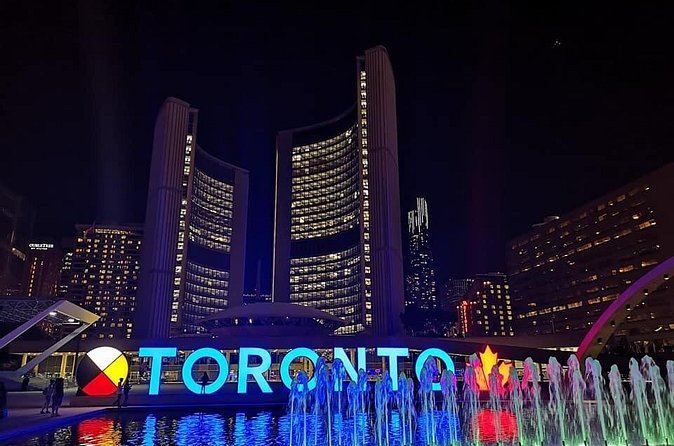
The tour also explores one of Toronto’s most inclusive spaces, with local businesses and the history of one of North America’s oldest queer destinations. Given the meeting point at Buddies in Bad Times Theatre, this section likely centers on Church-Wellesley Village and its surrounding streets.
This is an important inclusion. It places Toronto’s queer culture within the city’s everyday story, not in a separate add-on. You can expect the guide to point out local businesses and explain why the district matters to Toronto’s social and cultural life.
The description does not identify individual venues, memorials, or organizations, so do not book this expecting a detailed stop at a particular site. Its strength is the broader neighborhood view, especially when combined with the theater meeting point.
I would choose this tour over a landmark-only walk if you want a city introduction that includes community history. Still, the subject deserves attention, and a three-hour route covering seven main areas can only provide an overview. Tell the guide if this is your priority so the route can give it suitable weight.
St. Lawrence Market and Toronto’s food traditions
Toronto’s original market is the final major highlight in the route. It has operated for decades and is presented as one of the city’s most interesting food destinations.
St. Lawrence Market gives the tour a strong finish because it is practical as well as historic. You can learn about the market’s place in Toronto, then return later for food or shopping if something catches your eye.
The description does not promise food samples, a meal, or included purchases. Plan on a guided look and recommendations rather than a tasting tour. That distinction helps you budget properly and avoids expecting lunch to be part of the $37.47 price.
This stop is especially useful if you want to make your own food plans after the tour. A guide can help you understand why the market matters, while you decide how much time and money to spend there later.
The route’s market sequence also gives you a helpful comparison. Kensington Market offers neighborhood shopping and counterculture associations, while St. Lawrence Market presents a more established food destination. Seeing both helps you understand that Toronto’s market culture is not one single thing.
Pace, weather, and the value of private guiding
The tour lasts about three hours, but the actual feel depends on your choices. Seven listed areas across Toronto make this an active introduction rather than a slow architectural stroll. You will likely cover considerable ground, especially if you want to see both downtown landmarks and several neighborhoods.
The weather plan is a real practical benefit. On a rainy day, guide Matty changed the order, began with an indoor route, and moved outside after the weather improved. That kind of adjustment can save the experience from becoming three wet hours on city sidewalks.
Matty also made sure the group returned safely to its hotel after the walk. The tour does not promise hotel drop-off as a standard feature, so do not assume that service is included every time, but the example shows a thoughtful approach to the end of the outing.
At $37.47 per person, the value depends on how many people are in your private group and how much you use the customization. For one person or a small group, the price buys personal attention, route flexibility, and a broad introduction. For a larger party sharing the private format, it can become especially appealing, and group discounts are available.
The price does not include tower admission, food, or stated tastings. Its value is in the guide and the route, not in bundled tickets. I would compare it with the cost of arranging several separate visits, then ask whether personal explanations and local orientation matter to you.
Morning and afternoon starts make the tour easier to fit around a Toronto day. An early start can help you get your bearings before independent exploring, while an afternoon walk may work better if you want a relaxed first morning.
Who should book this three-hour Toronto walk?
I would recommend it most strongly to first-time visitors who want the major downtown sights but also want street art, markets, architecture, and queer cultural history. It suits curious walkers who enjoy asking questions and changing plans as they go.
It is also a good choice for families or friends with different interests. One person can ask about food, another about architecture, and another about art, with the guide adjusting the balance.
You may want a different experience if you want a formal attraction tour, a food tasting, a tower visit, or a slow walk focused on one district. The tour passes the CN Tower rather than promising entry, and its food stops do not include stated samples.
Most participants can take part, service animals are allowed, and the meeting point is near public transportation. The activity is private, with only your group participating, which is useful if you need a more personal pace.
Free cancellation is available if you cancel at least 24 hours before the start time. Changes or cancellations within 24 hours are not accepted for a refund, and the cut-off follows Toronto local time.
Should you book it?
Book this walk if you want a flexible first look at Toronto and prefer a guide who can connect famous sights with less obvious parts of the city. The strongest reasons are the private format, the wide range of stops, and the chance to shape the route around art, food, architecture, or history.
I would skip it only if you want a slow neighborhood tour or guaranteed entry and tastings. For most first visits, the $37.47 price is a sensible way to learn how Toronto’s center, markets, campus, street art, and queer cultural district fit together before exploring on your own.
FAQ
How long does the Toronto walking tour last?
The tour lasts approximately three hours.
How much does the tour cost?
The listed price is $37.47 per person.
Is the tour private?
Yes. Only your group participates in the activity.
Where does the tour start?
The meeting point is Buddies in Bad Times Theatre, 12 Alexander Street, Toronto, Ontario, M4Y 1B4, Canada.
Where does the tour finish?
The activity ends back at the meeting point.
What language is the tour offered in?
The tour is offered in English.
Can I choose the tour time?
Yes. Morning and afternoon start times are available.
Can the tour be adjusted to my interests?
Yes. You can shape the experience around interests such as history, art, or food.
Is cancellation free?
Yes, if you cancel at least 24 hours before the experience start time. Cancellations or changes made within 24 hours are not refunded or accepted.
Just added around Toronto
- Toronto Craft Brewery Tour★ 5.0 · 97 reviews
- Canada eSIM | 3-30 days | Daily data | QR code★ 4.0 · 12 reviews
- Handcrafted Donuts of Toronto: A Sweet City Walking Tour★ 5.0 · 141 reviews
- Underground Toronto PATH Tour★ 4.5 · 6 reviews
- Tour to Niagara Falls from Toronto★ 4.0 · 19 reviews
- Tour to Niagara Falls with skip the line Cruise★ 4.0 · 27 reviews
- Toronto Airport Private Transfer to Downtown★ 4.5 · 10 reviews
- Tour of Niagara Falls with Cruise and Lunch from Toronto★ 4.5 · 13 reviews
Walking Tours, compared.
Old Quebec City: Grand Walking Tour with Private Option
Read our review →
The Original Old Montréal Walking Tour by Guidatour
Read our review →
Old Montreal Small-Group Walking Tour | Max 10 | by MTL Detours
Read our review →
Old Quebec Classique Walking Tour with Funicular
Read our review →

Quebec: Crimes of New France Animated Walking Tour
Read our review →Browse the lists this tour appears in