
Reviewed · WALKING TOURS
The Essential 101 Non-Touristy Walking Tour by Spade & Palacio
Montreal reveals itself on foot. This 2-hour-45-minute walk links the grand Notre-Dame Basilica and Old Montreal with Chinatown, Saint Laurent Boulevard, and the artistic Plateau Mont-Royal. I like the route’s sharp change of mood, from old stone and civic squares to murals, thrift shops, and coffee. I also like the small-group size, capped at 10 people, which gives guides such as Gabriella, Danny, Pax, and Mel room to answer questions.
The main thing to consider is the walking. You cover a lot of ground, cross streets, and walk uphill in parts, so comfortable shoes are not optional. At $51.92 per person, the value is strongest if you want a useful first look at Montreal, plus a snack, a drink, and practical advice for the rest of your stay.
In This Review
- Key reasons to consider this Montreal walking tour
- A smart first look at Montreal in under three hours
- Starting at Maisonneuve Monument in Place d’Armes
- Inside Notre-Dame Basilica
- One hour through Old Montreal
- A short look at the Underground City
- Chinatown, with a snack along the way
- Saint Laurent Boulevard, murals, and Montreal’s changing identity
- Ten minutes at Eva B
- The Plateau Mont-Royal finish
- The guides shape the experience
- How hard is the walking?
- Is $51.92 a fair price?
- Who should book this tour?
- FAQ
- How long does the Essential 101 Non-Touristy Walking Tour last?
- Where does the tour start and finish?
- Is food included?
- How many people are in each group?
- What should I wear?
- Can I cancel for a full refund?
- Should you book the Essential 101 tour?
Key reasons to consider this Montreal walking tour
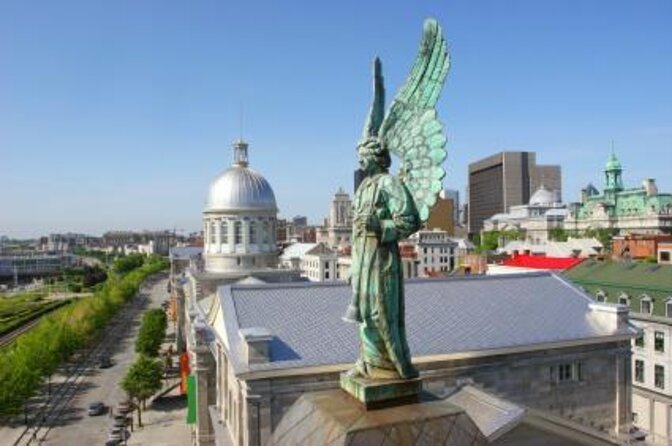
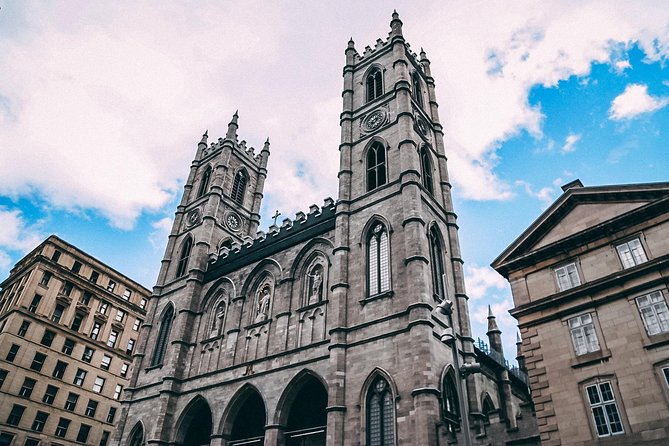
- Notre-Dame Basilica begins the day with real visual drama: You get time to look inside one of Canada’s most ornate churches before moving on.
- The route connects several different Montreals: Old Montreal, the Underground City, Chinatown, Saint Laurent Boulevard, and the Plateau all appear in one outing.
- A Chinatown snack and locally roasted coffee are included: These small stops break up the walking and add a taste of local life.
- Street art is part of the history lesson: Murals on and around Saint Laurent Boulevard help explain immigration, festivals, and changing neighborhoods.
- The guide’s recommendation list has practical value: You finish in the Plateau with ideas for restaurants, bars, shops, Mount Royal, and other sights.
- Small groups make the pace more personal: With no more than 10 people, guides can adjust the conversation and keep the group together.
A smart first look at Montreal in under three hours
This is a city-orientation tour rather than a single-sight visit. In one continuous walk, you move from the formal center of Old Montreal into areas shaped by immigration, nightlife, street art, independent shops, and local café culture.
That mix is the tour’s main strength. You do not spend nearly three hours hearing only about old buildings, and you do not spend the whole time chasing murals without context. The guide connects Montreal’s past with the city you see today.
I would book this early in a Montreal stay. The final coffee stop comes with a list of suggestions, and guides point out places to return to on your own. That advice can save you from wasting an evening near the most obvious tourist streets.
The published rating is 4.9 from 716 reviews, with 98 percent of customers recommending the experience. Those figures suggest strong consistency, though the route still depends on the guide, weather, and your comfort with a brisk urban walk.
More Walking Tours in Montreal
- The Original Old Montréal Walking Tour by Guidatour
★ 4.5 · 2,217 reviews - Old Montreal Small-Group Walking Tour | Max 10 | by MTL Detours
★ 5.0 · 2,088 reviews - Montréal: The Original Old Montréal Walking Tour
★ 4.8 · 911 reviews
Starting at Maisonneuve Monument in Place d’Armes
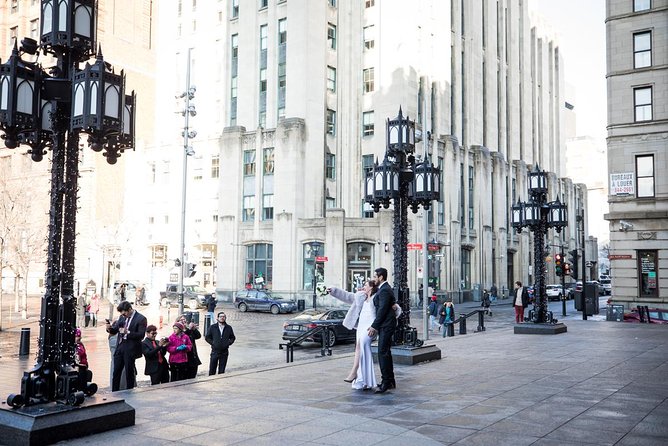
The meeting point is the Monument to Paul de Chomedey, Sieur de Maisonneuve, at 512 Place d’Armes. This is a fitting start because the square gathers several of Old Montreal’s architectural styles in one compact view.
You spend about 10 minutes here before entering the basilica. The guide uses the surrounding buildings to introduce Montreal’s development and the people connected with its early story. It is a short opening, but it gives you a useful frame for the streets ahead.
The square is also easy to reach by public transportation. Since there is no hotel pickup included unless you select that option, plan to arrive at the monument on your own and give yourself a little extra time to find the correct spot.
Inside Notre-Dame Basilica
The Notre-Dame Basilica is the visual centerpiece of the opening section. The tour allows about 15 minutes inside, with time to hear about the church’s design and history and then look around independently.
That free time matters. A church this ornate can turn into a blur if a guide talks nonstop, so the chance to pause and study the interior is welcome. You can listen, look closely, and take in the decoration without being hurried through every detail.
The tour information lists the basilica stop with no separate admission ticket charge. Still, entry arrangements can be subject to operating conditions, so follow the booking instructions you receive.
This part suits first-time visitors especially well. You get one major Montreal sight early, then the tour moves into streets and neighborhoods that are less formal and more varied.
One hour through Old Montreal
Old Montreal receives the longest stop, about an hour. That is sensible. The district is not just a collection of attractive façades. Its streets offer the clearest introduction to Montreal’s older commercial and civic center.
The guide points out elegant buildings, the former financial district sometimes called the old Wall Street of Canada, and the foundations of the city. You also hear about cultural events and current activity in the area, which keeps the walk from becoming a frozen-in-time history lesson.
I like this balance. You get enough time to notice the architecture, but the guide also shows how the district functions now. Street art appears along the way, creating a useful contrast with the stone buildings and formal squares.
The drawback is that Old Montreal can be busy, especially around its best-known streets. A group of 10 is much easier to manage than a large coach crowd, but you should still expect city traffic, pedestrians, and occasional street crossings.
Still Montreal, at a slower pace:
- Montreal: Guided Bus Tour
★ 4.4 · 3,064 reviews - Montreal: Hop-On Hop-Off Double-Decker Bus Tour
★ 4.1 · 2,760 reviews - From Montreal: Quebec City and Montmorency Falls Day Trip
★ 4.5 · 2,669 reviews - Montreal Mile End Authentic Food Tour with 7 Delicacies Tastings
★ 5.0 · 2,598 reviews
A short look at the Underground City
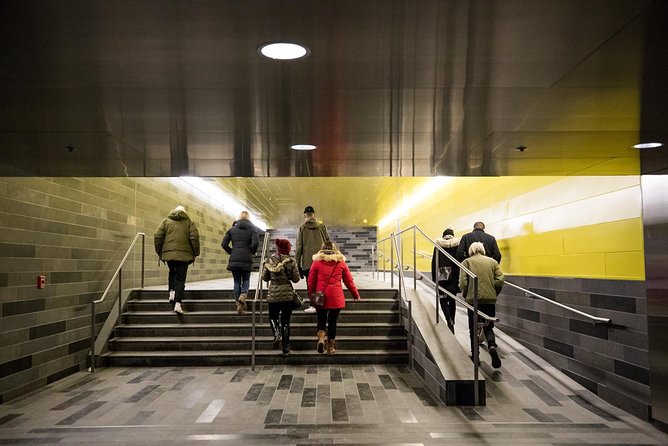
The route then enters part of Montreal’s interior pedestrian network, walking from the World Trade Center toward Chinatown. This section lasts about 15 minutes.
You will not see every corner of the Underground City in that time. Instead, the tour gives you a working introduction to one stretch of the network and explains how the connected indoor spaces fit into daily city life.
This is useful in poor weather and practical for anyone staying downtown. It also changes the rhythm of the walk. After historic streets and open squares, you move indoors before emerging in Chinatown.
Do not expect this to be the tour’s main attraction. It is a compact orientation stop, not an in-depth visit to the entire underground system.
Chinatown, with a snack along the way
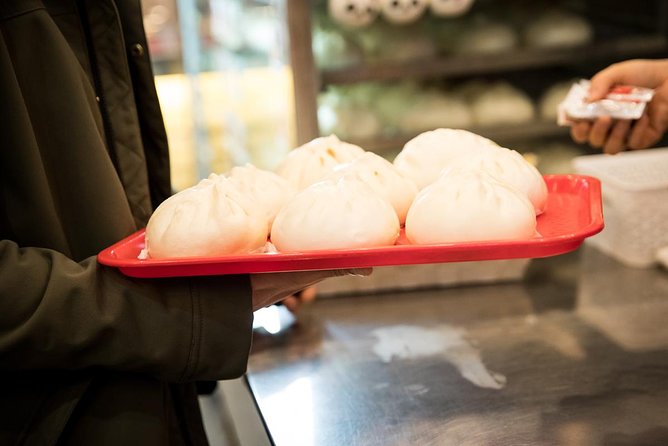
In Chinatown, the group stops at a local bakery for a snack to take along, then walks through the pedestrian mall. Food and beverages are included, and past tour experiences have featured steamed bao, though the exact offering may vary.
This is one of the tour’s most useful details. A small food stop gives you a taste of the neighborhood without turning the outing into a full food tour. It also offers a natural break after more than an hour of walking.
You should advise the company of dietary requirements when booking. The provided information does not spell out every ingredient or substitution, so specific needs are worth raising in advance.
The Chinatown stop lasts about 15 minutes. That is enough to sample something and get a sense of the area, but not enough for a long meal or a detailed food crawl. If you are hungry, plan a proper meal after the tour.
Saint Laurent Boulevard, murals, and Montreal’s changing identity
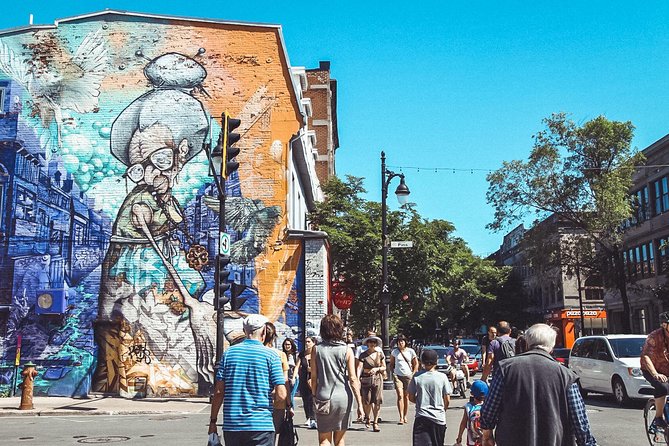
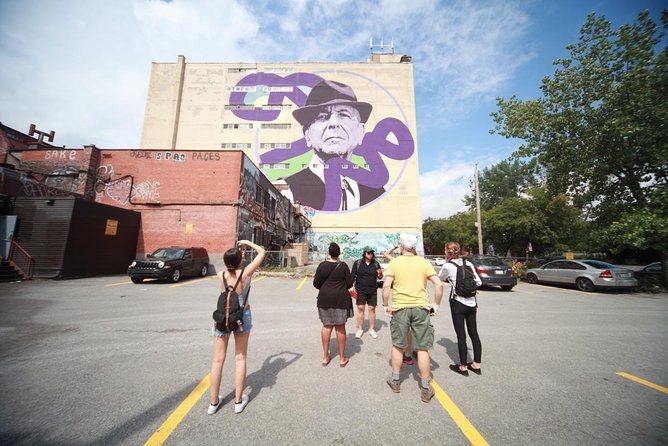
Saint Laurent Boulevard brings a completely different side of the city. The tour spends about 20 minutes looking at street art connected with a large festival, learning about the boulevard’s history, and discussing the waves of immigration that shaped the area.
This is where the route earns its non-touristy claim. You are not only looking at painted walls as decoration. The murals become an entry point into Montreal’s current culture and the people who have made the boulevard what it is.
The guide also leads the group through the former Red Light District, now an entertainment area. That change gives you a concise example of how city neighborhoods shift over time. Old uses do not simply vanish, they leave traces while new festivals, venues, and businesses move in.
Street art is temporary by nature. A mural may change, disappear, or be replaced, so do not treat the route as a fixed checklist. The useful part is learning how to read the city’s public art and streets, not just photographing one particular wall.
Ten minutes at Eva B
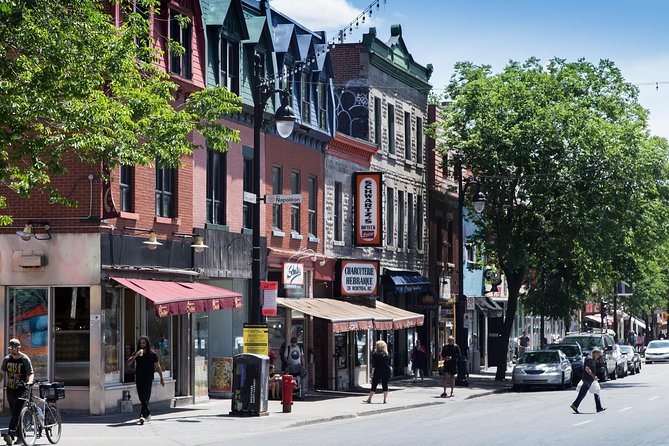
Eva B is a memorable pause on Saint Laurent Boulevard. This three-floor thrift store has an unusual interior and gives you about 10 minutes of free time to look around.
The stop adds personality to the tour. After churches, financial buildings, and civic history, a wild thrift store shows Montreal’s playful, creative side. It also gives you a quick chance to browse rather than only listen.
Ten minutes is not enough for a serious shopping session. Think of it as an introduction. If the store catches your interest, the guide points out how to return on your own after the tour.
That distinction is important. The tour gives you a taste of places you may want to revisit, rather than pretending every stop can be explored fully within the scheduled route.
The Plateau Mont-Royal finish
The final neighborhood is the Plateau Mont-Royal, home to a high concentration of artists. You see roughly a dozen murals and other works of art, then receive suggestions for shops and sights to visit independently.
The tour ends at Dispatch Coffee, 4021 Boulevard Saint-Laurent. The group sits down for locally roasted coffee, and the guide hands out a list of recommendations for the rest of your stay.
This ending works well because it is both relaxed and practical. You are not dropped at a random corner after a long walk. Instead, you finish with a drink, a chance to ask final questions, and a useful starting point for exploring the Plateau.
The coffee stop lasts about 20 minutes. It is included in the price, along with the snack and other beverages listed as part of the experience. If you want lunch, dinner, or a drink afterward, the guide can point you in the right direction, but those purchases are your responsibility.
The finish also means you are not returned to Place d’Armes. That is no problem if you plan to continue in the Plateau, but it matters if you have luggage, a timed reservation, or a hotel back in Old Montreal.
The guides shape the experience
The company uses several guides, including Gabriella, Danny, Rufus, Mel, Pax, Jeff, Chris, Marie, and Marie Pier. Their styles differ, but the strongest pattern is personal conversation rather than a memorized speech delivered at arm’s length.
Gabriella receives praise for making history fun and adjusting to different needs and abilities. Danny is described as funny, friendly, and good at keeping a rainy-day group engaged. Pax is especially good at changing the plan when weather turns bad, using indoor spaces for shelter while continuing the discussion.
Jeff’s habit of recapping the route at the end is helpful. It lets you place the neighborhoods in order and remember what to return to later. Rufus is praised for including each person in the conversation, which can make a family group with a teenager feel more involved.
No guide can guarantee the same experience every day. Still, the small group and licensed guides are meaningful advantages. You can ask questions, request clarification, and get suggestions suited to your interests instead of receiving only a standard script.
How hard is the walking?
The tour requires a moderate level of fitness. You walk for nearly three hours, cross streets, and handle some uphill sections, especially as the route moves toward the Plateau.
The pace is generally manageable, but this is not a gentle sightseeing stroll with long rests. Wear comfortable walking shoes, bring water, and dress for the forecast. The company says it operates in all weather conditions, while the cancellation terms also allow a date change or full refund if poor weather forces cancellation.
Rain does not automatically ruin the outing. Guides have taken groups into building alcoves and indoor areas for dry spells, but you should still bring suitable clothing. The experience is intended for ages 5 and up, and participants should be prepared for a moderate physical effort.
Is $51.92 a fair price?
At $51.92 per person, this is not the cheapest way to see Montreal. You could walk through Old Montreal on your own for little money, and many street-art areas are free.
The value comes from the route design and the time saved. You cover several districts without having to plan the connections yourself, receive historical context, enter the basilica, get a Chinatown snack, drink locally roasted coffee, and leave with ideas for the rest of your visit.
The small group also matters. A maximum of 10 people makes it easier to hear the guide and ask questions. If your main goal is a long food tasting, extensive basilica study, or several hours of shopping, another tour would suit you better.
For a first visit, I consider the price reasonable because the experience combines orientation, local food, art, and practical planning. It is particularly good value for a short Montreal stay, when every hour needs to do useful work.
Who should book this tour?
I would recommend it to first-time Montreal visitors who want to understand how the city fits together. It suits solo visitors, couples, and families with older children who can manage a sustained urban walk.
It is also a good choice at the beginning of your stay. The recommendation list and neighborhood tips can shape the next few days, and the route helps you decide where to return for food, art, shopping, or more sightseeing.
You may want another option if you dislike group walks, need frequent seated breaks, or want a tour focused on one subject. The route covers a lot, but that means no single neighborhood receives a full, slow exploration.
Free cancellation is available up to 24 hours before the start time for a full refund. Changes made inside that window are not accepted, and minimum-group requirements can affect operation.
FAQ
How long does the Essential 101 Non-Touristy Walking Tour last?
The tour lasts approximately 2 hours and 45 minutes.
Where does the tour start and finish?
It starts at the Monument to Paul de Chomedey, Sieur de Maisonneuve at 512 Place d’Armes in Old Montreal. It ends at Dispatch Coffee at 4021 Boulevard Saint-Laurent in the Plateau Mont-Royal district.
Is food included?
Yes. Beverages, snacks, and a food tasting are included. The Chinatown stop includes a snack from a local bakery, and the tour finishes with locally roasted coffee.
How many people are in each group?
The tour has a maximum of 10 participants.
What should I wear?
Wear comfortable walking shoes and dress for the weather. The tour involves a moderate amount of walking, street crossings, and some uphill sections, and it operates in all weather conditions unless poor weather causes cancellation.
Can I cancel for a full refund?
Yes. You must cancel at least 24 hours before the local start time to receive a full refund. If poor weather or an insufficient number of participants cancels the tour, you will be offered another date or experience, or a full refund.
Should you book the Essential 101 tour?
Book it if you want a lively first pass through Montreal that joins major sights with ordinary streets, murals, Chinatown, and the Plateau. The basilica, included snacks, small group, and final coffee make the price easier to justify, while the recommendation list adds value after the walk ends.
Skip it if your priority is a slow, specialized visit or if nearly three hours on foot sounds tiring. For most first-time visitors who can handle the distance, this is a well-planned way to get your bearings and see Montreal from old stone to street art in one morning or afternoon.
Just added around Montreal
- Full Day Family Bike Rental★ 5.0 · 17 reviews
- Montréal Downtown and Underground City Private Walking Tour★ 5.0 · 47 reviews
- Winter Express: Old Montreal Highlights Walking Tour★ 5.0 · 119 reviews
- Montreal Premium Driving Tour with River Cruise and Notre Dame★ 4.5 · 164 reviews
- Under the Surface of Montreal’s Chinatown: Guided Food Walking Tour★ 5.0 · 23 reviews
- The Ultimate Montreal Boat Tour – Fall Colors Apéro Edition★ 4.5 · 31 reviews
- In the Shadow of the Mountain: Montreal Jewish History Walking Tour★ 4.5 · 33 reviews
- Immersive Virtual Reality Game Activity★ 5.0 · 19 reviews
Walking Tours, compared.
Old Quebec City: Grand Walking Tour with Private Option
Read our review →
The Original Old Montréal Walking Tour by Guidatour
Read our review →
Old Montreal Small-Group Walking Tour | Max 10 | by MTL Detours
Read our review →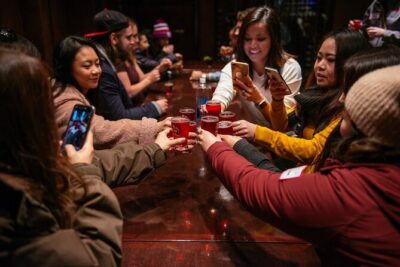
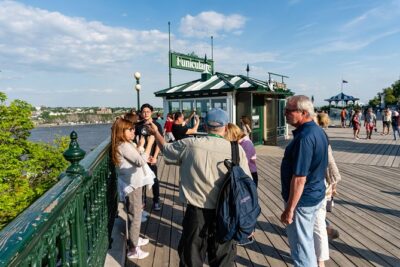
Old Quebec Classique Walking Tour with Funicular
Read our review →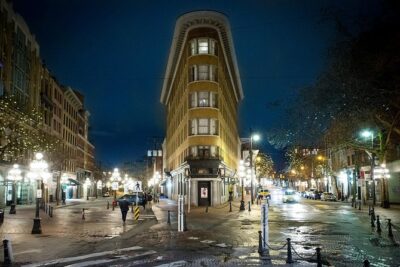
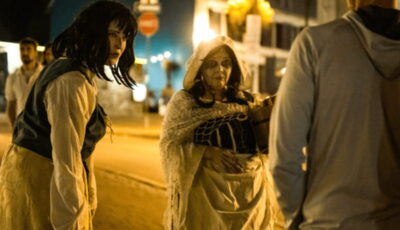
Quebec: Crimes of New France Animated Walking Tour
Read our review →Browse the lists this tour appears in