
Reviewed · WALKING TOURS
Private Jewish Walking Tours in Toronto
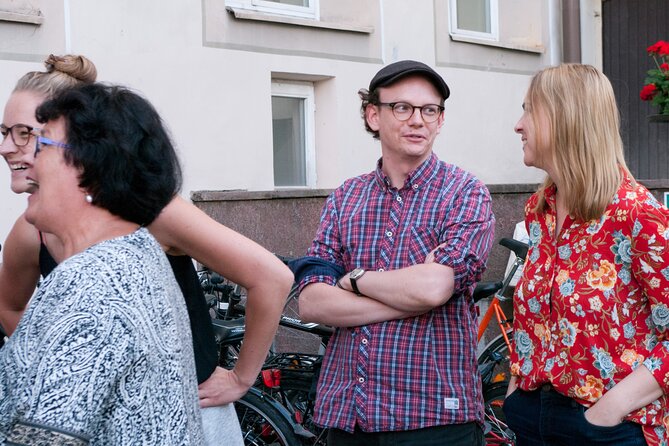
Toronto’s Jewish past is written into ordinary streets. This private two-hour walk follows old synagogues, schools, labour offices, theatres, shops, and restaurants from the Art Gallery of Ontario to Kensington Market. I like the small-group format, which lets you ask questions, and I like the way the route connects immigration policy with daily life.
The walk also gives you a useful sense of place. You hear about the people who built institutions on Beverley and Cecil Streets, then follow the story into Spadina Avenue’s theatres, taverns, delis, and music scene. The main drawback is its historical focus: it gives little attention to Toronto’s current Jewish community, and some stops are short exterior explanations rather than interior visits.
In This Review
- Key points at a glance
- Starting at the AGO and meeting Toronto’s first Jewish arrivals
- Beverley Street: institutions, immigration rules, and school life
- Henry Street synagogue architecture and a building with a new use
- Cecil Street and the old community’s institutional heart
- Spadina Avenue: cowboys, taverns, markets, and Yiddish culture
- The Minsker Synagogue and the final walk into Kensington Market
- What the private format adds at $41.16
- Who will get the most from this Toronto history walk
- Final recommendation: book it for context, not just landmarks
- FAQ
- Where does the tour begin?
- Where does the tour end?
- How long does the walking tour last?
- How much does the tour cost?
- Is this a private tour?
- Is the tour offered in English?
- Can I cancel for a full refund?
Key points at a glance
- A private route through old Jewish Toronto: Only your group takes part, so the pace can feel more personal than a large public walk.
- Nine major stops over about two hours: The route begins at the AGO and ends in Kensington Market, covering Beverley Street, Cecil Street, Spadina Avenue, and St. Andrew Street.
- Synagogues with changing identities: You see former Jewish religious buildings now used for other purposes, including Holy Trinity Russian Orthodox Church and the Minsker Synagogue.
- Social history beyond religious buildings: Immigration rules, schools, labour politics, entertainment, commercial life, and neighbourhood change all have a place.
- A walk through Toronto’s Jewish cultural life: Yiddish theatre, dairy restaurants, delicatessens, the hat trade, and Spadina’s music scene add colour to the story.
- Good value for a focused history walk: At $41.16 per person, the price is reasonable if you want a private guide and a clear route through several connected neighbourhood sites.
Starting at the AGO and meeting Toronto’s first Jewish arrivals

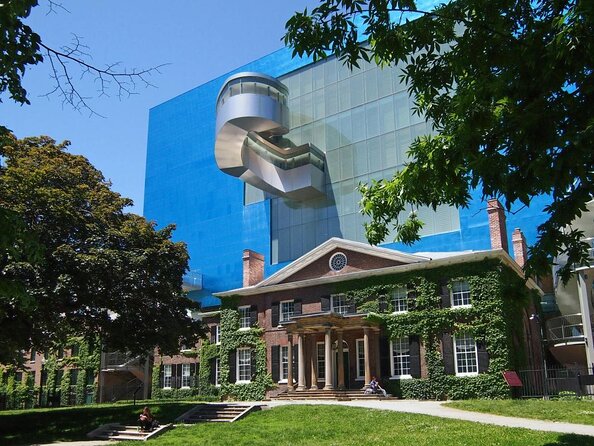
The tour begins outside the Art Gallery of Ontario at 317 Dundas Street West. This is a practical starting point near public transportation, but the gallery itself is not part of the experience. You should expect an exterior meeting point and a ten-minute opening talk about the mass immigration that shaped Toronto’s Jewish community in the late nineteenth and early twentieth centuries.
That introduction matters because the walk is not simply a parade of old buildings. It sets up the central question: how did new arrivals create a community, find work, educate their children, worship, and respond to government policy?
I like beginning here because it gives the rest of the route a clear purpose. When you later see a school, synagogue, labour office, or restaurant site, you can connect it to the larger process of settlement. The first stop is brief, so you will not get a full history lesson before walking. Instead, you get the basic frame and then build the story block by block.
The AGO is also an easy place to find, which helps if you are unfamiliar with downtown Toronto. Wear comfortable shoes and arrive ready to walk. The tour lasts about two hours, but it includes several stops and a fair amount of movement between them.
More Walking Tours in Toronto
- Show me the City! A Small Group Walking Tour of Toronto
★ 5.0 · 621 reviews - Toronto Distillery District Walking Tour
★ 5.0 · 327 reviews - Toronto: City Highlights Walking Tour | 3-Hour
★ 4.6 · 306 reviews
Beverley Street: institutions, immigration rules, and school life
The early Beverley Street stops show how a community takes root. At 136 Beverley Street, the focus is the original character of the neighbourhood and the Jewish institutions that helped immigrants settle. The stop lasts about seven minutes and is free to enter, though the experience is primarily about the street and its history.
This is one of the useful parts of the walk because it shifts attention away from famous landmarks. You begin to see the neighbourhood as a working community, shaped by homes, schools, worship spaces, and shared organizations. The buildings may not look dramatic at first glance, but the guide gives them a social purpose.
At 147 Beverley Street, the discussion turns to government immigration policies and the Jewish response to them. It is a short, three-minute stop, yet the subject gives the route political weight. Immigration is not presented as a simple story of arrival and success. You also consider the rules that restricted or shaped who could enter Canada, and how Jewish people responded.
That connection between policy and community action is one of the tour’s strengths. You are not only hearing where people lived. You are hearing how outside decisions affected family life and community planning.
At 70 D’Arcy Street, you learn about the former Eitz Chaim school. The stop lasts about four minutes and includes colourful figures from the school’s past. This adds personality to the broader history. Institutions are built by people, and the stories of unusual or memorable characters can make a school building easier to remember than a list of dates.
At 186 Beverley Street, the tour brings in a piece of non-Jewish Canadian context through George Brown House. You also hear about the Jewish history of the public school next door. I appreciate this wider frame. A neighbourhood does not develop in isolation, and the Jewish story makes more sense when placed beside Toronto’s larger civic and educational life.
The Beverley Street section is tightly timed. That is good if you prefer a steady walk, but it means you should listen closely. Several stops last only three or four minutes, so this is not the place for long photo breaks or wandering off.
Henry Street synagogue architecture and a building with a new use
The route continues to 23 Henry Street, now home to Holy Trinity Russian Orthodox Church and formerly the Henry Street synagogue. This is a ten-minute stop, giving the guide more time to explain synagogue architecture, early Toronto synagogues, and the city’s first Jewish architects.
This building is especially useful for understanding how Jewish places of worship fit into the city. Architecture can reveal community needs, religious practice, and the resources available to a growing population. The former synagogue also shows how buildings can outlive the groups that first created them.
You should not expect a standard museum visit here. Admission is listed as free, but the tour is built around historical explanation rather than a guaranteed interior tour. The building’s present identity is part of the story, and the change in use helps you see how neighbourhood institutions shift over time.
This stop may appeal most if you enjoy architecture and urban change. If you want only stories about famous people, it may feel slower. For me, it gives the walk a welcome physical anchor after the more policy-focused Beverley Street stops.
Cecil Street and the old community’s institutional heart
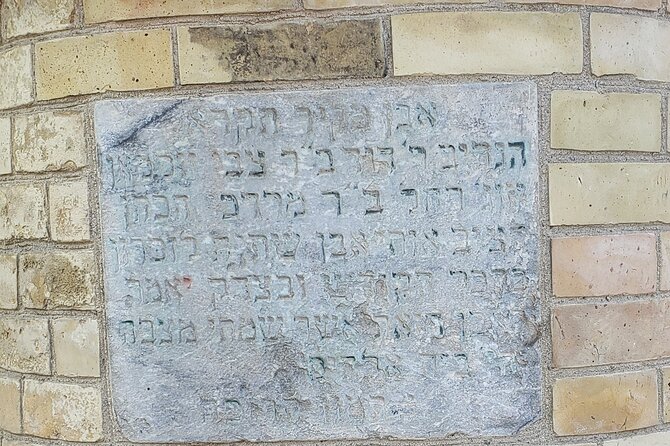
Cecil Street receives the longest treatment, about 24 minutes. The route introduces the rabbi of the Henry Street Synagogue, then turns to 206 and 207 Beverley Street as a way to explain Cecil Street’s role as an institutional centre for the older Jewish community.
The longer pause is justified. Cecil Street once held a dense mix of Jewish organizations and institutions, and the guide traces what occupied addresses from 33 through 58 Cecil Street. You get a sense of a community that needed more than a synagogue. It needed schools, political offices, social centres, labour organizations, and places for entertainment.
At 24 Cecil Street, the subject is the Labour Zionist headquarters and school, followed by its later political history. This is an important addition because Jewish Toronto was not politically uniform. Labour Zionism connects community life with work, education, and debates about Jewish political identity.
The Cecil Street Community Centre adds another layer. Its earlier life as a synagogue and centre for traditional entertainment shows how religious and social activities could share the same neighbourhood buildings. The story is not limited to formal worship. Music, gatherings, education, and politics all helped define community life.
I would pay close attention here, since this is likely the intellectual centre of the walk. It is also where the tour may feel most demanding for anyone who prefers a light sightseeing stroll. There are many institutions and historical threads in a compact area. The private format helps because you can ask the guide to clarify a name or connection instead of losing the thread.
Still Toronto, at a slower pace:
- Toronto: Niagara Falls Day Tour with Optional Boat Cruise
★ 4.6 · 3,178 reviews - Niagara Falls Day Tour from Toronto
★ 5.0 · 2,889 reviews - Toronto: Casa Loma Entry Ticket
★ 4.7 · 2,705 reviews - Niagara Falls Canada Day Tour From Toronto + Boat Cruise Option
★ 5.0 · 2,576 reviews
Spadina Avenue: cowboys, taverns, markets, and Yiddish culture
Spadina Avenue receives about 26 minutes, making it another major section of the route. You first walk north from Cecil Street toward the El Mocambo, hearing about the less traditional side of the neighbourhood and the Spadina Avenue cowboys of the 1930s and 1940s.
That subject gives the route a different tone. Up to this point, the focus has been heavily institutional. Spadina introduces street life, informal culture, and the public character of the neighbourhood. The phrase cowboys refers to a local social world that adds texture to the period, rather than presenting the community as solemn or self-contained.
On the return south toward Cecil Street, the focus shifts to Grossman’s Tavern, commercial development, and Spadina’s music scene. You see how the avenue changed as businesses and entertainment venues shaped its identity. The point is not just that Jewish people lived here, but that they helped form a commercial and cultural district that kept changing.
At the west side of Spadina near Baldwin Street, the discussion explains how Kensington became a market. This is a valuable connection for anyone planning to spend time in Kensington Market after the walk. You learn to see the market not simply as a place to shop or eat, but as part of a longer chain of migration, commerce, and neighbourhood change.
The section between Dundas and St. Andrew Street turns to Yiddish theatre, delicatessens, dairy restaurants, and the history of the hat trick. These details make the walk especially appealing. Food and entertainment are often the easiest ways to understand how a community expressed itself in public.
The hat trade is a particularly good example of work and culture meeting in one story. It points to commercial life while also giving you a memorable detail to carry away. You may not remember every address, but you are likely to remember that this part of Spadina had a connection to hats, theatres, restaurants, and Jewish commercial life.
The Spadina section is also where the walk feels most connected to the Toronto you can experience today. Some original uses have changed, but the street still links neighbourhoods, food, music, and commerce. The route helps you look at familiar urban scenes with more historical context.
The Minsker Synagogue and the final walk into Kensington Market
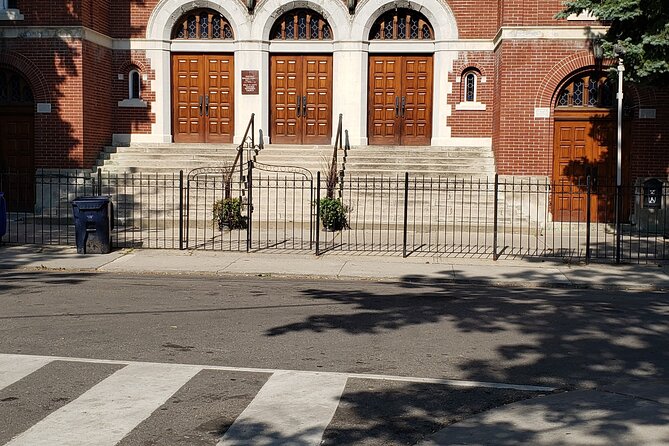
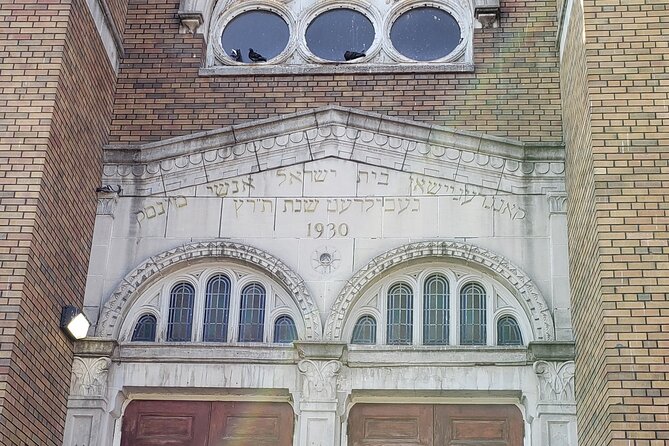
The last major stop is 10 St. Andrew Street, home of the Minsker Synagogue. The visit lasts about five minutes and presents St. Andrew Street as a small-scale portrait of the neighbourhood.
You hear about the synagogue as the first in the Kensington area and about the Labour Lyceum across the street. That pairing neatly reinforces the themes developed earlier: religious life, labour politics, education, and community organization all existed close together.
The tour ends at 57 Kensington Avenue, at the corner of Kensington Avenue and St. Andrew Street, in the heart of Kensington Market. This is a satisfying finish because the walk does not end at a random transit stop or send you back to the starting point. You finish in a district where you can continue exploring on your own.
The ending also leaves you with a useful choice. You can stop for food, browse the market, or simply walk around with a better understanding of the area’s earlier Jewish connections. The tour itself does not include food or admission to attractions, so plan any extra exploring separately.
What the private format adds at $41.16
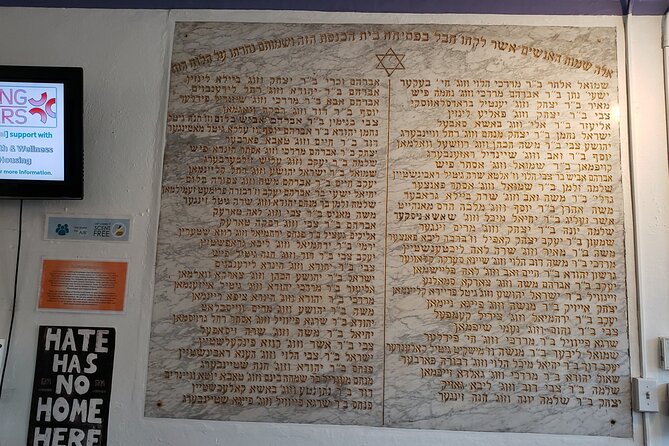
The price is $41.16 per person. For a two-hour walk, that may seem higher than joining a large public history stroll, but this is a private activity for your group alone. I see the value in the format if you want to ask questions, slow down at a building, or keep the conversation focused on a particular interest.
The route includes many addresses, but the most valuable part is the interpretation between them. You are paying for the connections among immigration policy, religious architecture, schools, political organizations, businesses, and entertainment. A self-guided walk could take you past the same streets, but it would be much harder to understand why those places mattered.
The price is less compelling if you mainly want to enter historic buildings or visit formal museums. Admission is not included at the AGO, and the route generally uses streets and free exterior locations. Much of the experience is listening and looking, not touring private interiors.
The booking pattern suggests planning ahead may be sensible, since it is booked on average 21 days in advance. Confirmation is provided at booking, and English is the offered language. Since the walk requires good weather and a minimum number of participants, keep the cancellation terms in mind: you can receive a full refund if you cancel at least 24 hours before the start time, and weather or minimum-group cancellations offer a new date or full refund.
Who will get the most from this Toronto history walk
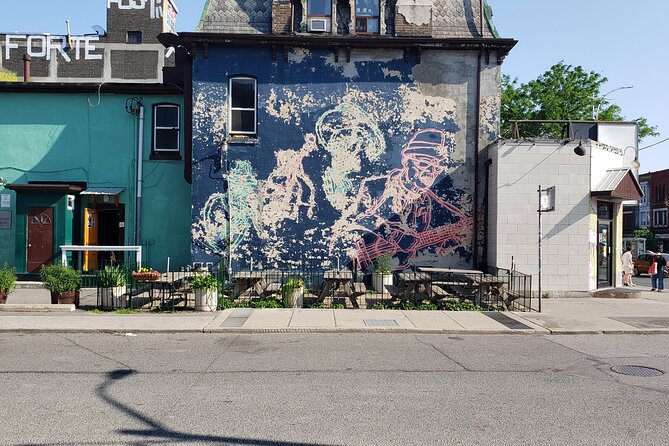
I would choose this tour if you want Jewish Toronto explained through real streets rather than a single museum display. It suits history-minded visitors, people interested in immigration, and anyone who enjoys learning how ordinary buildings served several community purposes.
It also works well for a private family group or friends who want a discussion rather than a fixed lecture. Service animals are allowed, the route is near public transportation, and most people can participate, according to the practical details provided.
You should think twice if your main interest is Toronto’s present-day Jewish community. One clear limitation is that the walk concentrates on the nineteenth- and twentieth-century development of the older neighbourhood and gives little attention to current Jewish life.
You should also allow for the limits of a two-hour route. The stops at Beverley Street and St. Andrew Street are short, and even the longer Cecil and Spadina sections can only cover so much. If you want every address, date, and organization explained at length, you may need a book or a second visit.
Final recommendation: book it for context, not just landmarks
I would book Private Jewish Walking Tours in Toronto if you want a focused, human-scale introduction to the city’s older Jewish neighbourhoods. The strongest parts are the well-connected storytelling, the former synagogues, the Cecil Street institutions, and the Spadina material on theatre, food, commerce, and music.
The $41.16 price makes the most sense when you value a private guide and the ability to ask questions. Go in expecting a street-based history walk, not a series of museum admissions. If that sounds right, the route from the AGO to Kensington Market gives you a thoughtful way to read Toronto’s streets, one former school, synagogue, political office, and storefront at a time.
FAQ
Where does the tour begin?
It begins at the Art Gallery of Ontario, 317 Dundas Street West, Toronto, Ontario M5T 1G4.
Where does the tour end?
It ends at 57 Kensington Avenue, at the corner of Kensington Avenue and St. Andrew Street in Kensington Market.
How long does the walking tour last?
The tour lasts approximately two hours.
How much does the tour cost?
The listed price is $41.16 per person.
Is this a private tour?
Yes. Only your group participates in the private tour or activity.
Is the tour offered in English?
Yes. English is the offered language.
Can I cancel for a full refund?
Yes, if you cancel at least 24 hours before the experience start time. Cancellations made less than 24 hours before the start time are not refunded. If poor weather or the minimum number of participants causes the tour to be canceled, you will be offered another date or experience, or a full refund.
Just added around Toronto
- Toronto Craft Brewery Tour★ 5.0 · 97 reviews
- Canada eSIM | 3-30 days | Daily data | QR code★ 4.0 · 12 reviews
- Handcrafted Donuts of Toronto: A Sweet City Walking Tour★ 5.0 · 141 reviews
- Underground Toronto PATH Tour★ 4.5 · 6 reviews
- Tour to Niagara Falls with skip the line Cruise★ 4.0 · 27 reviews
- Tour to Niagara Falls from Toronto★ 4.0 · 19 reviews
- Customizable Walking Tour of Toronto’s Hidden Gems★ 5.0 · 15 reviews
- Toronto Airport Private Transfer to Downtown★ 4.5 · 10 reviews
Walking Tours, compared.
Old Quebec City: Grand Walking Tour with Private Option
Read our review →
The Original Old Montréal Walking Tour by Guidatour
Read our review →
Old Montreal Small-Group Walking Tour | Max 10 | by MTL Detours
Read our review →
Old Quebec Classique Walking Tour with Funicular
Read our review →
Quebec: Crimes of New France Animated Walking Tour
Read our review →Browse the lists this tour appears in