
Reviewed · MONTREAL TOURS
Pen Making With The Woodworker Himself
Make something you can actually use. This three-hour Montreal workshop puts you at the lathe, where you shape a wooden pen from raw material into a personal keepsake. I like the clear step-by-step teaching and the choice of local or exotic woods. I also like that the group is capped at nine people, keeping the session small enough for hands-on help.
The main consideration is the price: $161.10 per person is a serious spend for one pen. You are paying for instruction, equipment, materials, and time with a working woodworker, so this makes more sense as a special activity than as a quick souvenir stop.
In This Review
- Key points to know before you book
- Why a wooden pen makes a good Montreal souvenir
- Starting at 4710 Rue Saint-Ambroise
- Learning what the lathe does before using it
- Watching the full pen-making demonstration
- Choosing between local and exotic woods
- Taking control of the lathe
- Sanding, polishing, and assembling the final piece
- What the three-hour schedule means for you
- Is $161.10 a fair price?
- Who will enjoy this workshop most?
- Booking dates, cancellations, and flexible timing
- Should you book Pen Making With The Woodworker Himself?
- FAQ
- How long does the pen-making experience last?
- How much does the experience cost?
- Where does the workshop begin?
- Where does the activity finish?
- Is the workshop offered in English?
- How many people can join the workshop?
- Can I cancel for a full refund?
Key points to know before you book
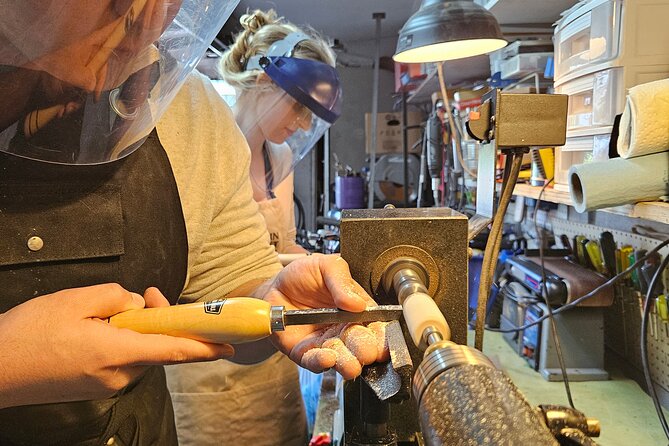
- You operate the lathe yourself: This is a hands-on workshop, not a demonstration where you simply watch.
- You choose your own wood: Local and exotic options let you make a pen with a look that suits you.
- The process covers every main step: You learn turning, profiling, sanding, polishing, and assembly.
- Jonathan receives especially warm praise: His relaxed teaching style and sense of humor help beginners feel at ease.
- The group limit is nine people: That matters when you need guidance around tools and machinery.
- The workshop returns to its starting point: Meet at 4710 Rue Saint-Ambroise in Montreal, and the activity ends there.
Why a wooden pen makes a good Montreal souvenir
Montreal offers no shortage of things to buy, but most souvenirs arrive finished and sealed in a bag. Here, you make the object yourself. That gives the final pen a useful story, not just a city label.
The project is also small enough to fit easily in your luggage. You are not trying to carry home a chair, cutting board, or bulky piece of furniture. At the end, you have a working pen that reflects your choice of wood and the marks of your own hand.
I especially like the balance between instruction and personal control. You are not expected to know how a lathe works before arriving. At the same time, you are not kept at a safe distance from the main tool. With guidance, you take the reins and shape the pen yourself.
That mix makes the session appealing to both curious beginners and people who already enjoy making things. You do not need to arrive with a finished design or a long list of woodworking skills. The workshop is set up to take you through the process in a clear order.
A few more Montreal trips worth comparing
- Montreal: Guided Bus Tour
★ 4.4 · 3,064 reviews - Montreal: Hop-On Hop-Off Double-Decker Bus Tour
★ 4.1 · 2,760 reviews - From Montreal: Quebec City and Montmorency Falls Day Trip
★ 4.5 · 2,669 reviews
Starting at 4710 Rue Saint-Ambroise
The workshop begins at 4710 Rue Saint-Ambroise, Montréal, QC H4C 2C7. The location is near public transportation, which helps if you are building your day around Montreal without a car. Your mobile ticket can be used for the booking, and confirmation is provided when you reserve.
The meeting point matters because this is a focused workshop rather than a city tour. There is no sightseeing route to follow and no second drop-off point to arrange. You arrive at the woodworker’s workspace, complete the project, and finish back at the same address.
Plan your timing carefully. The activity lasts about three hours, so you will want enough space before and after it for getting there, checking in, and returning to your plans. Since the workshop involves several stages, arriving rushed would take some of the fun out of the opening explanation.
The session is offered in English. If you are comfortable learning practical instructions in English, you should be able to follow the process as it is explained. The small maximum of nine people is another useful detail, since machinery work is easier when the instructor has time to watch each person.
Learning what the lathe does before using it
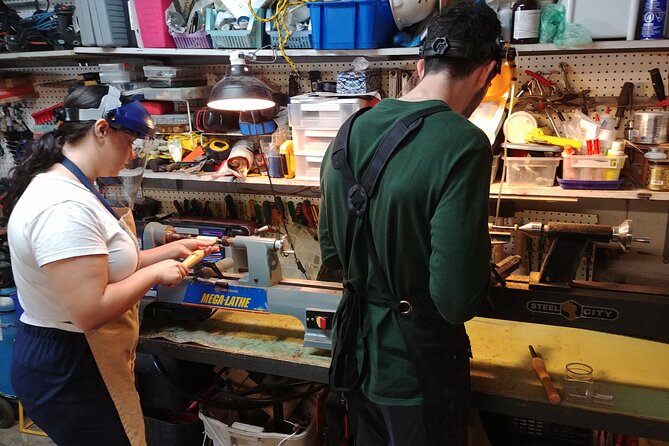
The workshop begins with a short introduction to the lathe and its parts. This is more useful than it may sound. A lathe can seem like an intimidating machine when you first see it, but understanding what each part does gives you a basic map before the wood starts spinning.
You also receive a safety briefing before working. That is essential here, not filler. The session involves operating machinery, so knowing how to approach the lathe and how to handle the tools helps you work with more confidence.
I appreciate this order: explanation first, safety second, practical work after that. You are given a chance to understand the equipment before being asked to make decisions with it. For a first-time woodworker, that structure can make the difference between feeling nervous and feeling ready.
The safety talk may be one of the less glamorous parts of the session, but it is a sign of a well-run workshop. Pay attention, ask questions, and resist the urge to rush toward the finished pen. The best part of the activity is learning how each stage affects the next one.
Watching the full pen-making demonstration
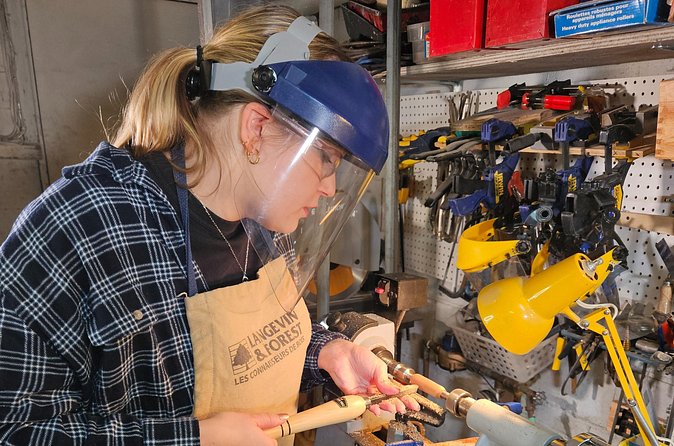
Before you make your own pen, you watch a detailed demonstration from beginning to end. This gives you a working model of the process and lets you see how the separate stages connect.
The demonstration covers turning, profiling, sanding, polishing, and assembly. Each step changes the character of the piece. Turning brings the rough wood into a workable shape. Profiling gives the pen its final form. Sanding smooths the surface, while polishing brings out the wood’s finish before the components are assembled.
That sequence is valuable because it shows you that the attractive final object is built through a series of small decisions. You are not simply pressing a button and waiting for a pen to appear. You are learning how shape, surface, and finish work together.
Watching first also gives you a chance to notice the pace and technique before your turn begins. You can see how the woodworker handles the tools and how much attention goes into the surface. Once you start, those earlier demonstrations give you something concrete to copy.
The workshop’s strongest feature is likely this combination of showing and doing. A demonstration alone can be interesting, but it leaves you with a memory rather than a skill. Here, the explanation leads directly into your own attempt.
Still Montreal, at a slower pace:
- Montreal Mile End Authentic Food Tour with 7 Delicacies Tastings
★ 5.0 · 2,598 reviews - Quebec City and Montmorency Falls Day Trip from Montreal
★ 4.0 · 2,437 reviews - The Original Old Montréal Walking Tour by Guidatour
★ 4.5 · 2,217 reviews - Old Montreal Small-Group Walking Tour | Max 10 | by MTL Detours
★ 5.0 · 2,088 reviews
Choosing between local and exotic woods
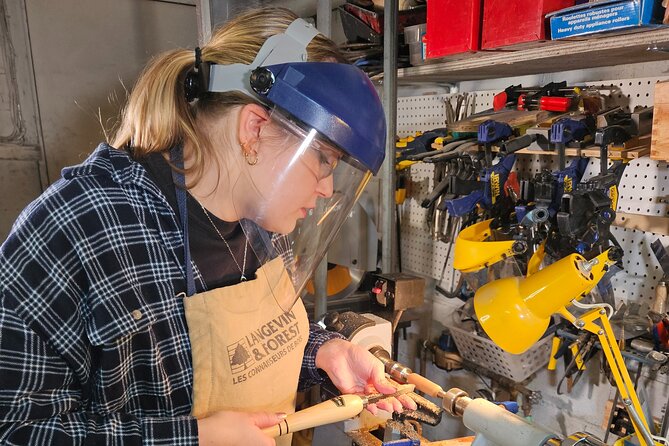
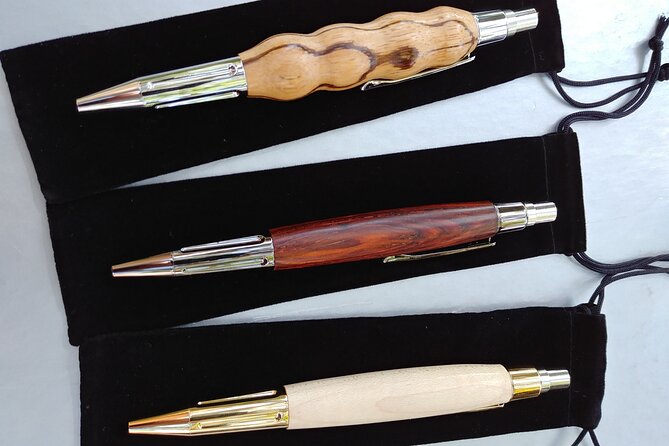
You get to select the wood for your pen from a range of local and exotic choices. This is one of the most personal parts of the workshop, because the material determines much of the pen’s color, grain, and overall feel.
If you want a stronger connection to Montreal, a local wood may be the natural choice. It gives the souvenir a sense of place without relying on a printed logo. If you are more interested in unusual appearance, an exotic wood may appeal to you instead.
The supplied details do not promise a fixed list of species, colors, or grain patterns, so the exact selection can vary. I would treat the wood choice as an opportunity to ask questions rather than assuming a particular type will be available. The woodworker can help you understand what your options will look like once shaped and polished.
Take your time here. A rough block of wood may not look much like a finished pen at first. You are choosing the material that will pass through every later step, so this is where your keepsake begins to take on its character.
Taking control of the lathe
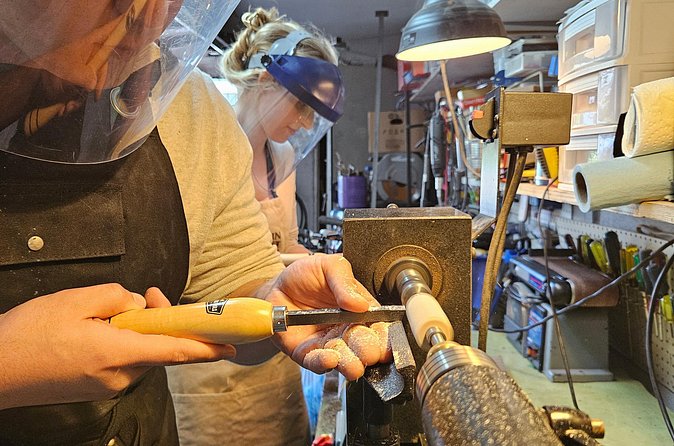
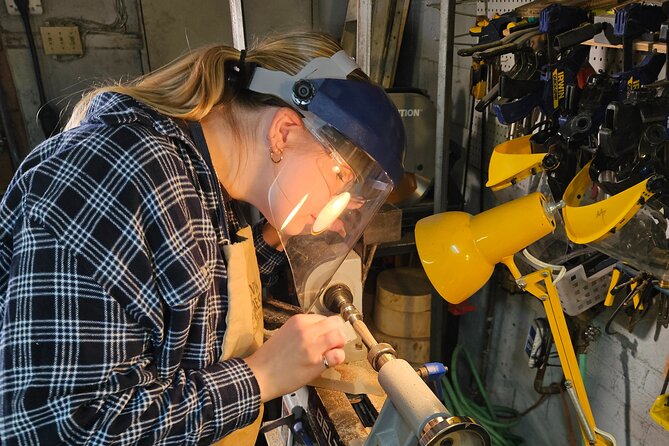
After the demonstration, you operate the lathe with guidance. This is the point where the workshop becomes more than a craft lesson. You are responsible for shaping the pen, but you are not left to figure out the machinery on your own.
The work proceeds through the stages already introduced: turning, profiling, sanding, polishing, and assembly. Each stage asks for a different kind of attention. Early shaping is about form, while sanding and polishing demand patience because surface quality becomes more visible as the pen nears completion.
I like that the finished pen does not need to look mass-produced. The goal is to create a one-of-a-kind object, and small differences are part of its character. You are making a useful item, but you are also leaving with evidence that you made it yourself.
Jonathan is singled out for creating a relaxed, funny atmosphere while guiding the work. That combination matters for a beginner. Clear instruction helps you avoid mistakes, while a light mood makes it easier to ask for help when you need it.
Do not measure the session only by how quickly you finish. The value lies in learning how the material responds and how the tool changes it. A slower, more careful process may give you a better understanding of the craft, even if it means the pen takes longer to shape.
Sanding, polishing, and assembling the final piece
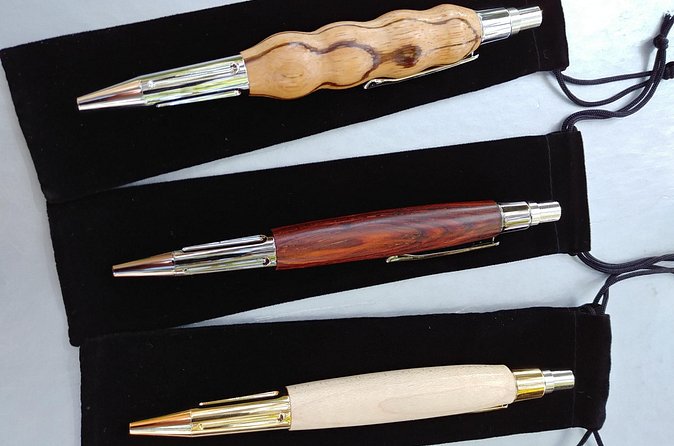
The last stages may seem less dramatic than the spinning lathe, but they have a major effect on the result. Sanding removes roughness and refines the shape. Polishing brings out the appearance of the wood and gives the pen a finished feel.
Assembly is where the separate elements become a usable writing instrument. You can see how the shaped wood fits with the pen hardware, turning a small piece of material into something practical.
This part of the workshop rewards patience. A pen may look nearly complete before sanding and polishing, but the finish changes how it feels in your hand and how the grain catches the light. If you enjoy careful handwork, you may find these stages especially satisfying.
You also leave with a clear sense of the full process. Instead of only knowing that a wooden pen was made in a workshop, you understand the path from selected wood to completed object. That makes the souvenir more meaningful and gives you a skill you can remember long after your Montreal visit.
What the three-hour schedule means for you
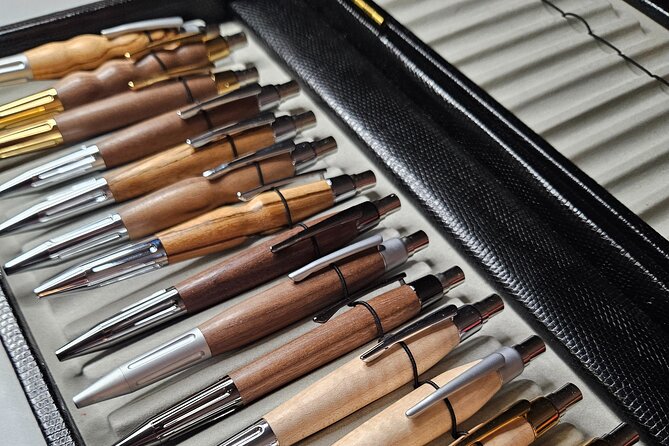
Three hours is long enough to provide real instruction without turning the session into an all-day commitment. You have time for the lathe introduction, safety briefing, demonstration, wood selection, hands-on shaping, finishing, and assembly.
The schedule will feel best if you enjoy a measured pace. This is not an activity to squeeze between two tightly timed attractions. The work has several stages, and the instructor needs time to guide each participant safely.
The group limit of nine helps, but it does not mean every minute will be spent with your hands on the tool. There is teaching, watching, choosing materials, and waiting for instructions as part of any small workshop. That is normal, and it gives you time to see how the process works for other people too.
If you are visiting with friends or family, the activity offers a shared project without requiring everyone to make identical choices. Each person can select different wood and shape a slightly different pen. The experience is likely best for people who enjoy making things more than people who simply want a quick activity checked off a list.
Is $161.10 a fair price?
At $161.10 per person, this is not a budget souvenir activity. The value depends on what you want from the afternoon.
If you only want a pen, buying one will cost less. If you want a short demonstration with a finished object handed to you, this price may also feel high. You are paying for access to the equipment, the materials, safety instruction, a full demonstration, and personal guidance while you operate the lathe.
For someone who values a hands-on lesson, the price is easier to justify. You spend about three hours learning a process and leave with a useful object made under instruction. The memory is tied to your own work, rather than to a product selected from a shop shelf.
The small group also supports the value. A maximum of nine people gives the instructor a better chance to offer individual help than a large class would. Jonathan’s warm, relaxed approach is another reason this may work well for people who are unsure about woodworking.
Still, you should book it for the experience, not for savings. If your main goal is the cheapest Montreal keepsake, choose another option. If you want to try a craft, use a lathe, and leave with something personal, the cost is more reasonable.
Who will enjoy this workshop most?
I would recommend this activity to you if you like practical experiences, small-group instruction, and souvenirs with a personal story. It suits a first attempt at wood turning because the session starts with the equipment and safety basics instead of assuming prior experience.
It is also a good fit for people who enjoy creative choices. Selecting the wood, shaping the profile, and refining the surface give you several ways to influence the result. You are not following a completely passive demonstration.
The workshop may be less suitable if you dislike machinery, prefer a fast-paced attraction, or want to spend the afternoon moving between multiple Montreal sights. Three hours at one workbench requires attention and a willingness to follow the process.
Most people can participate, and service animals are allowed. The activity is offered in English, so make sure that matches your needs before booking. The group has a maximum of nine people, which keeps the setting small but does not make it a private session.
Booking dates, cancellations, and flexible timing
The experience is commonly booked well ahead, with an average booking time of 61 days. That suggests you should reserve early if your Montreal dates are fixed, especially if you want a particular day or time.
If the available schedule does not suit you, you can contact the woodworker and ask about another time. Flexible scheduling may help, but it is best to make that request before finalizing your plans rather than assuming every time can be arranged.
You can cancel for a full refund if you do so at least 24 hours before the local start time. Cancellations made less than 24 hours before the start are not refunded, and changes inside that same period are not accepted. Confirmation arrives at booking, so keep the details handy on your phone.
Should you book Pen Making With The Woodworker Himself?
Book this workshop if you want a personal Montreal keepsake and enjoy learning by doing. The strongest reasons are the chance to operate the lathe, choose your own wood, and work through the entire process with guidance from Jonathan in a relaxed setting.
Skip it if the price feels too high for a single finished pen or if you would rather spend your time on sightseeing. This is not a quick craft-shop visit. It is a focused three-hour lesson that asks you to participate.
For the right person, that is exactly the appeal. You return to the meeting point with a useful object, a better sense of how wood turning works, and a souvenir shaped by your own hands.
FAQ
How long does the pen-making experience last?
The workshop lasts approximately three hours.
How much does the experience cost?
The price is $161.10 per person.
Where does the workshop begin?
The meeting point is 4710 Rue Saint-Ambroise, Montréal, QC H4C 2C7, Canada.
Where does the activity finish?
The workshop ends back at the meeting point.
Is the workshop offered in English?
Yes. The experience is offered in English.
How many people can join the workshop?
The activity has a maximum of nine participants.
Can I cancel for a full refund?
Yes, if you cancel at least 24 hours before the experience start time, based on the local time. Cancellations or changes made less than 24 hours before the start are not accepted, and the amount paid will not be refunded.
Just added around Montreal
- Full Day Family Bike Rental★ 5.0 · 17 reviews
- Montréal Downtown and Underground City Private Walking Tour★ 5.0 · 47 reviews
- Winter Express: Old Montreal Highlights Walking Tour★ 5.0 · 119 reviews
- Montreal Premium Driving Tour with River Cruise and Notre Dame★ 4.5 · 164 reviews
- Under the Surface of Montreal’s Chinatown: Guided Food Walking Tour★ 5.0 · 23 reviews
- The Ultimate Montreal Boat Tour – Fall Colors Apéro Edition★ 4.5 · 31 reviews
- In the Shadow of the Mountain: Montreal Jewish History Walking Tour★ 4.5 · 33 reviews
- Immersive Virtual Reality Game Activity★ 5.0 · 19 reviews
Montreal Tours, compared.




Montreal Mile End Authentic Food Tour with 7 Delicacies Tastings
Read our review →
Quebec City and Montmorency Falls Day Trip from Montreal
Read our review →
The Original Old Montréal Walking Tour by Guidatour
Read our review →
Old Montreal Small-Group Walking Tour | Max 10 | by MTL Detours
Read our review →
Montreal City Sightseeing Tour with Live Commentary
Read our review →Browse the lists this tour appears in