
Reviewed · OLD MONTREAL TOURS
Montreal: Private 2h Walking Tour RESO and Old Montreal
Montreal reveals itself one neighborhood at a time. This two-hour private walk links the polished downtown core with the underground RÉSO network, Old Montreal, Notre-Dame Basilica, and the Old Port, giving you a useful first look at the city instead of keeping you in one historic quarter. I especially like the wide route and the chance to see both modern Montreal and its colonial center. I also like the private format, which lets guide Gustavo Trindade adjust the pace and add personal recommendations.
The main drawback is simple: two hours is not enough for full visits inside the museums, basilica, or major attractions. Much of the itinerary is a guided walk and series of photo stops, so you should book this for orientation and local context, not for lengthy sightseeing at each landmark. Comfortable shoes matter, and Montreal weather can change quickly.
In This Review
- Key points at a glance
- Starting beside the Montreal Museum of Fine Arts
- McGill, Rue Sainte-Catherine, and downtown Montreal
- Entering RÉSO, Montreal’s underground city
- Place des Arts and the Quartier des Spectacles
- Place d’Armes and Notre-Dame Basilica
- Place Jacques-Cartier, City Hall, and Bonsecours Market
- Finishing at the Old Port and Saint Lawrence River
- What the private format adds
- Is $87 per person a fair price?
- Timing, weather, and walking comfort
- Who should book this Montreal walk?
- Should you book it?
- FAQ
- Where does the tour begin?
- Where does the tour finish?
- How long is the tour?
- Is this a private tour?
- Which languages are available?
- Does the tour include entry to Notre-Dame Basilica?
- Is transportation included?
- What should I bring?
- Can I visit Mount Royal, the Biodome, or the Olympic Stadium on this tour?
Key points at a glance
- A city-spanning route: Walk from the Montreal Museum of Fine Arts through downtown, RÉSO, Place des Arts, and Old Montreal.
- A private experience: Your guide can shape the walk around your interests and answer questions as you go.
- Gustavo earns strong praise: He is described as entertaining, generous with his time, and helpful with suggestions for the rest of your visit.
- RÉSO adds a different side of Montreal: The underground network gives you a look at how the city connects its downtown spaces below street level.
- Old Montreal provides the grand finish: Place d’Armes, Notre-Dame Basilica, Bonsecours Market, Saint Paul Street, and the Old Port bring the city’s older character into focus.
- Best for first-day orientation: At $87 per person, the value is strongest if you want a compact overview before exploring on your own.
Starting beside the Montreal Museum of Fine Arts
The tour begins at 1380 Rue Sherbrooke O, in front of the Montreal Museum of Fine Arts. Look for the entrance with the two hearts. This clear meeting point is useful in a city where large streets, shopping areas, and underground passages can make first-day navigation a little fuzzy.
The museum itself provides a fitting opening. You are starting on Rue Sherbrooke, one of Montreal’s notable streets, with grand architecture and upscale shops nearby. The tour only includes a photo stop at the museum, so admission is not part of the experience. If you want to see the galleries, plan a separate visit before or after the walk.
From here, the guide introduces the city through its downtown streets rather than beginning with a single historic building. That choice gives you a better sense of Montreal as a working city. You move from the museum district toward McGill University, then into the commercial core.
More Walking Tours in Montreal
- The Original Old Montréal Walking Tour by Guidatour
★ 4.5 · 2,217 reviews - Old Montreal Small-Group Walking Tour | Max 10 | by MTL Detours
★ 5.0 · 2,088 reviews - Montréal: The Original Old Montréal Walking Tour
★ 4.8 · 911 reviews
McGill, Rue Sainte-Catherine, and downtown Montreal
McGill University is another photo stop. Its campus helps explain the character of this part of town, where education, offices, shops, and older buildings sit close together. The guide can point out the relationship between the university area and the streets around it, though the tour does not promise an extended campus visit.
The route continues toward Rue Sainte-Catherine, one of the central shopping and commercial streets. You also pass Hudson’s Bay, the Edward VII Monument, and Christ Church Cathedral. These stops are not treated as long indoor visits. Instead, they work as visual markers that help you follow Montreal’s shift from historic institutions to modern retail and business districts.
Place Ville Marie and Phillips Square add another layer. Here you see the city’s high-rise core and public spaces, a sharp contrast with the stone streets you will reach later. The route also includes the Ring, a large public artwork that has become a recognizable downtown meeting point. These details make the walk more than a parade of old façades. You get a quick lesson in how Montreal presents itself today.
Entering RÉSO, Montreal’s underground city
The RÉSO section is one of the most distinctive parts of the walk. Montreal’s Underground City is a connected network of passages, shops, stations, food areas, and indoor public spaces beneath the downtown core. The tour includes Place Desjardins, the underground network, and a Montreal Metro reference.
I like this part because it shows a practical side of Montreal that is easy to miss if you only visit the postcard sights. RÉSO is not one single attraction with a ticket booth. It is a system woven into daily city life. A guide helps you make sense of it, especially if you are visiting during colder or wet weather and want to understand how downtown connections work.
Keep your expectations in check. The tour does not include a Metro pass, and transport costs are not included if you need them. The walk may pass through or point out sections of the network, but you should not expect a full underground exploration lasting most of the tour. The RÉSO segment works best as an introduction.
Place des Arts and the Quartier des Spectacles
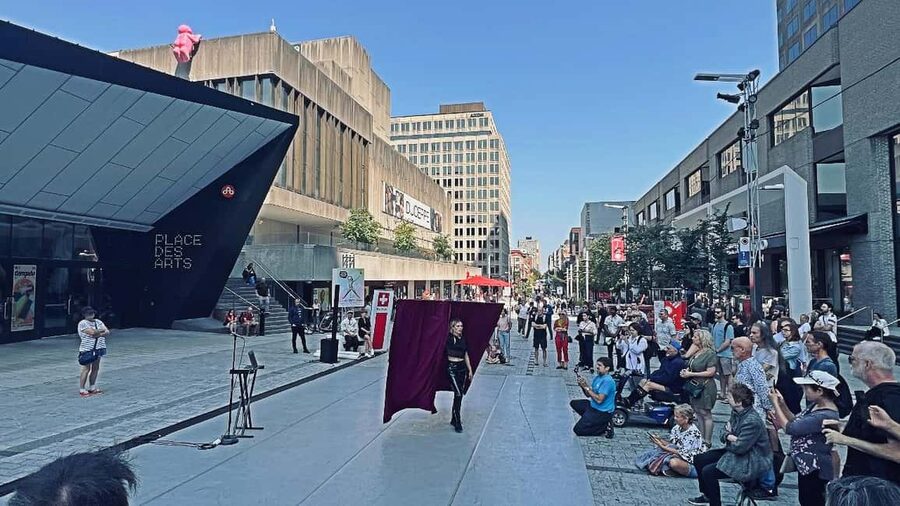
The route then heads toward the Quartier des Spectacles and Place des Arts, Montreal’s main cultural zone. This is where the city’s arts identity becomes easy to see, with performance venues and public spaces gathered around one area.
Place des Arts is listed as a photo stop, so the guide gives you context and a chance to take pictures rather than arranging a performance or interior tour. If you are interested in concerts, theatre, or festivals, ask Gustavo for recommendations. One of the strongest themes in the feedback is his willingness to offer useful ideas for what to do after the walk.
The city looks different here from the museum and university districts. The route has moved from formal streets and office towers to a public area built around music, theatre, and art. It is a good midpoint because you have already seen several sides of central Montreal before heading toward the older quarter.
More Old Montreal walks:
- Old Montreal: Traditional Ghost Walk of the Haunted City
★ 4.7 · 746 reviews - Old Montreal Ghost Walking Tour
★ 4.5 · 726 reviews - Montreal: Top Rated Small Group Old Montreal Walking Tour
★ 4.9 · 611 reviews - Walking tour of Old Montreal – 16/42 Tours
★ 5.0 · 592 reviews
Place d’Armes and Notre-Dame Basilica
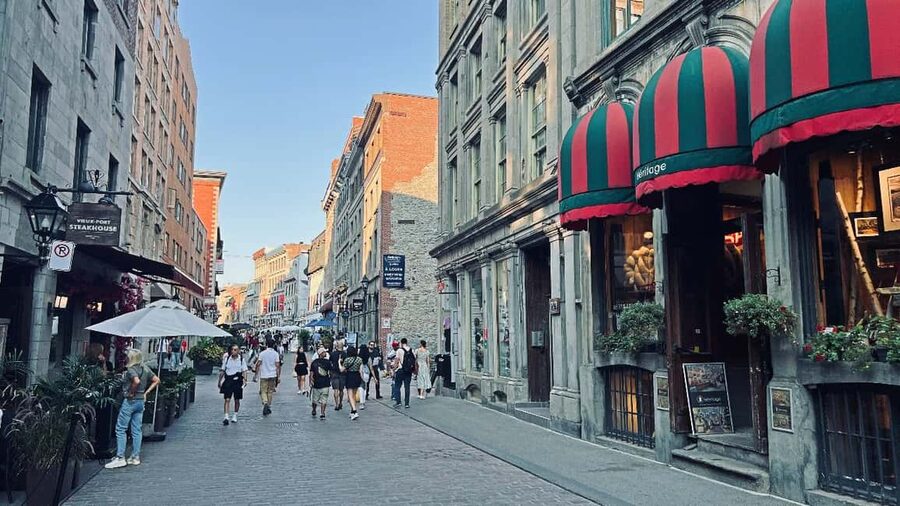
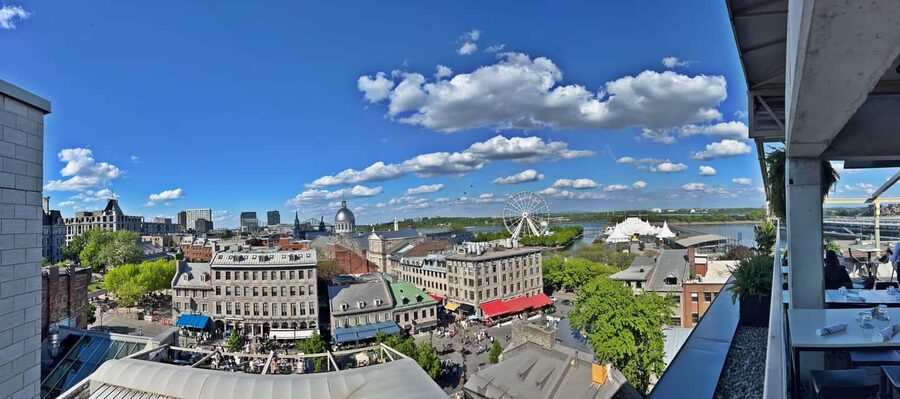
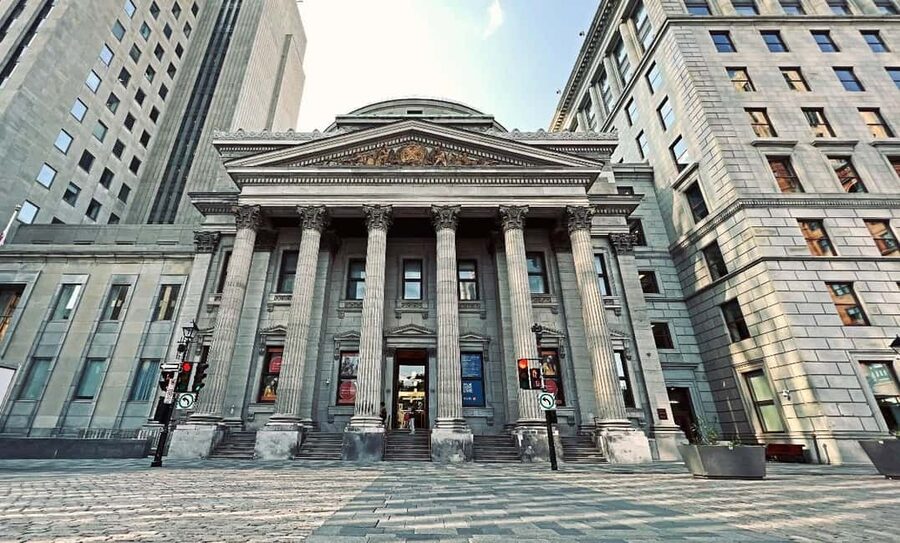
The walk’s mood changes as you enter Old Montreal. Place d’Armes is one of the key stops, with a strong concentration of historic buildings and views toward Notre-Dame Basilica. The Bank of Montreal is also included as a point of interest, adding financial history to the square’s religious and civic buildings.
Notre-Dame Basilica is a major highlight, but the tour provides a photo stop rather than a guaranteed interior visit. That distinction matters. The exterior is impressive, and the guide can explain why the basilica is such a central landmark, but you will need to arrange a separate admission if you want to see the interior.
This is also a good place to ask questions about Montreal’s past. The route does not claim to be a full history lecture, yet the sequence of Place d’Armes, the basilica, old streets, and civic buildings gives the story a clear shape. You see how religion, trade, government, and public life came together in the old center.
Place Jacques-Cartier, City Hall, and Bonsecours Market
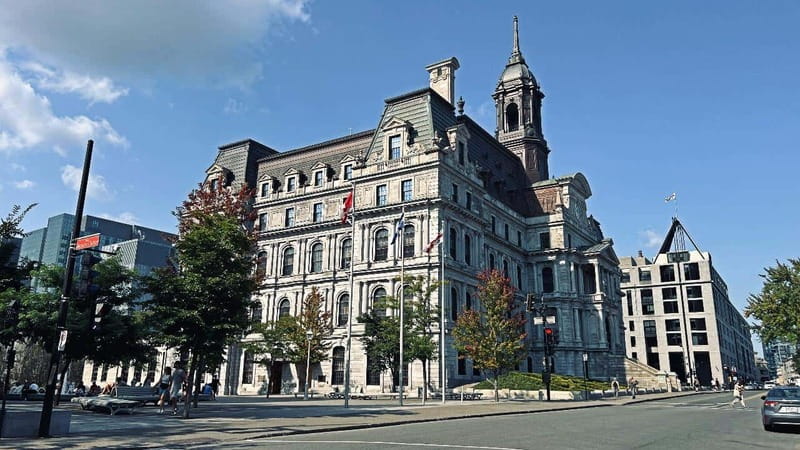
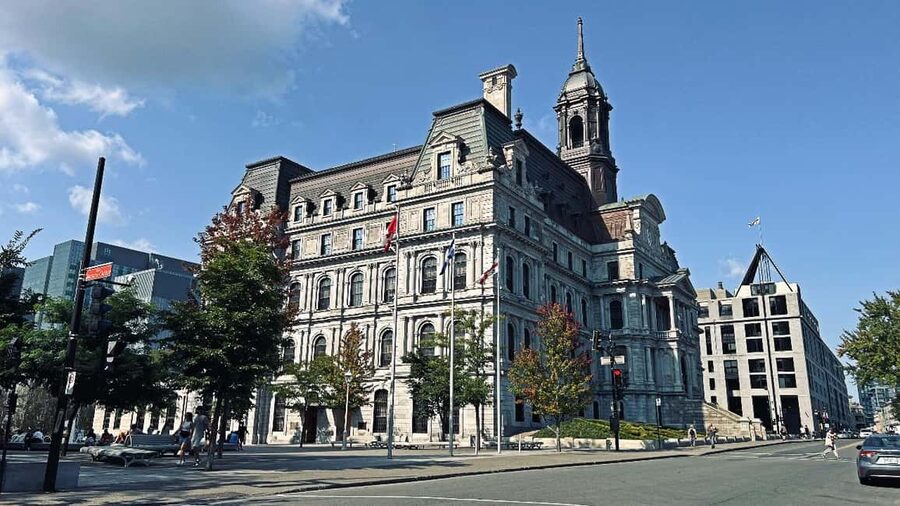
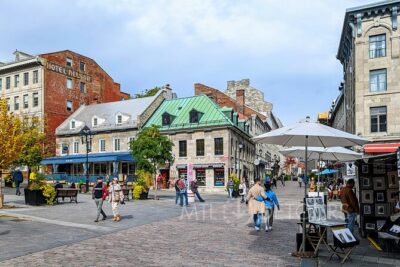
From Place d’Armes, the route moves toward Place Jacques-Cartier and Montreal City Hall. Place Jacques-Cartier is a lively public square in Old Montreal, while City Hall gives the walk a civic focus. The itinerary also includes the Quebec Court of Appeal and Montreal Courthouse, so the guide can point out how government and law remain part of this historic district.
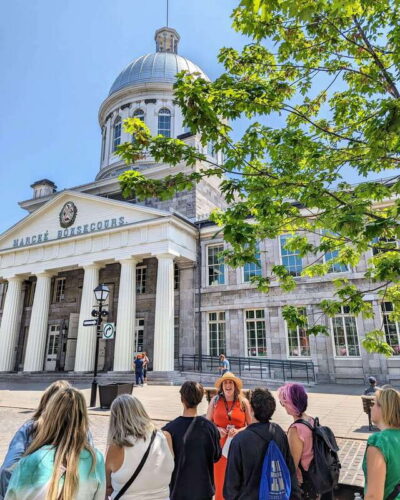
Bonsecours Market is another photo stop. Its distinctive form makes it one of the easiest Old Montreal buildings to recognize. Nearby, Old Montreal’s cafés, boutiques, and stone streets create the setting most people picture when they think of the city’s old quarter.
You should remember that the tour is short. You will pass by several important places, but you will not have time to shop, eat, enter every building, and linger at each square. I would save a café stop or market visit for afterward. The guide’s recommendations can help you decide which area deserves more of your own time.
Finishing at the Old Port and Saint Lawrence River
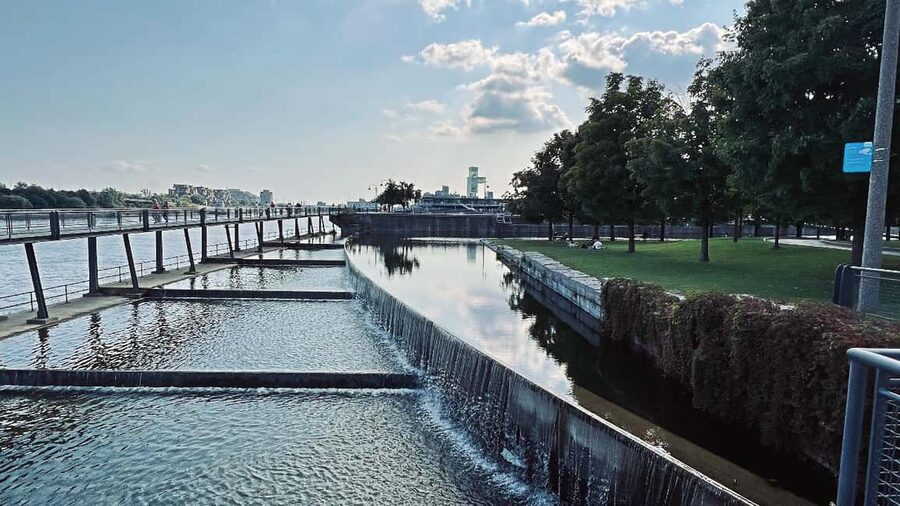
The final stretch leads to the Old Port, with the Saint Lawrence River and the Montreal Science Centre included along the way. La Grande Roue de Montréal is another photo stop. The Ferris wheel gives the waterfront a modern landmark, while the river connects the city to its wider geographic setting.
The Old Port is a smart ending. After two hours of streets, public squares, institutions, and historic buildings, you finish in an open waterfront district where you can continue walking independently. You might choose a meal, spend time along the river, or use the area as a base for another activity.
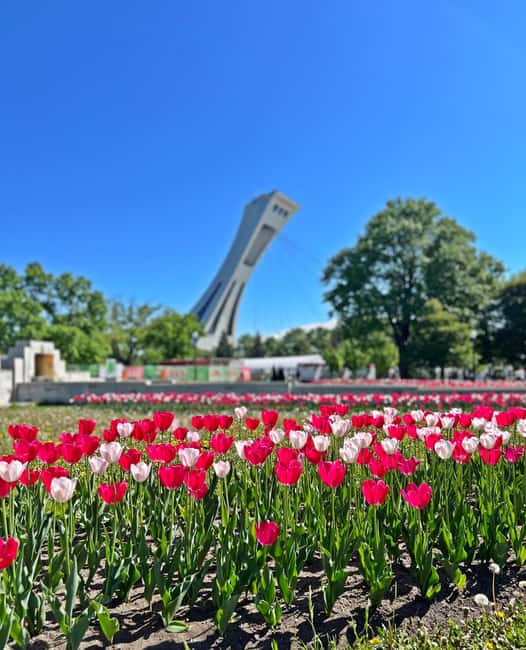
The route also offers views toward Parc Jean-Drapeau and the Montreal Biosphere, as well as a view of Mount Royal from the bottom only. These are lookouts and references, not visits to those attractions. Saint Joseph’s Oratory, the Olympic Stadium, and the Biodome are specifically outside this two-hour walk.
What the private format adds
The private group setup is the main reason to choose this tour over a larger city walk. You can ask about architecture, food, neighborhoods, transport, or what to do next without waiting for a whole group to move on. If your interests are narrow, that flexibility can make the two hours more useful.
Gustavo Trindade receives particularly strong praise for his approach. He is described as entertaining, attentive, and generous with his time. One person found that he adjusted the walk around personal interests, while another appreciated that he gave recommendations for the rest of the visit. Those details matter because a short city tour depends heavily on the guide’s judgment.
The private label does not always guarantee that other people will not join. One booking had only one participant at that time, but the supplied details also identify the activity as a private group. Confirm the exact group arrangement when booking if that point is important to you.
The guide can conduct the tour in English, French, Portuguese, or Spanish. That range is useful for mixed-language groups and for anyone who prefers to discuss history and local life in a language they handle comfortably.
Is $87 per person a fair price?
At $87 per person, this is not the cheapest way to see Montreal. You are paying for a private guided experience, a broad route, and the chance to ask questions along the way. You are not paying for meals, attraction admissions, hotel transfers, or a Metro pass.
The value depends on how you use the walk. For a first visit, the route covers enough ground to help you understand where downtown ends, where RÉSO fits in, and how Old Montreal connects to the Old Port. That can save you time later, especially if you are deciding which areas deserve a longer visit.
The price is harder to justify if you want substantial interior sightseeing. The Museum of Fine Arts, Notre-Dame Basilica, Saint Joseph’s Oratory, the Biodome, and the Olympic Stadium are not full stops on this tour. You should treat the experience as a guided city introduction, then budget separately for the attractions you want to enter.
The free cancellation period gives you a little protection, since you can cancel up to 24 hours ahead for a full refund. You can also reserve and pay later, which helps if your Montreal schedule is still changing.
Timing, weather, and walking comfort
The duration is two hours, and starting times depend on availability. The description highlights Montreal at night, but it does not guarantee that every departure is after dark. Check the available time before booking if an evening walk is important to you.
Wear comfortable walking shoes. The route includes downtown streets, Old Montreal’s cobblestones, public squares, and underground passages. Bring water, sunscreen, and clothing suited to the forecast. A raincoat or umbrella is not included, so you need to bring your own rain protection.
This is a walking tour rather than a hop-on, hop-off ride. Hotel pickup and drop-off are not included, and any transport you use outside the walk is your responsibility. The best plan is to arrive early at the Museum of Fine Arts and keep the rest of your schedule flexible enough to continue exploring from the Old Port.
Who should book this Montreal walk?
I would choose this tour for a first-time visitor who wants a fast, organized introduction to Montreal. It is also a good fit if you have only a short stay and want to connect several districts in one outing.
The route suits you if you enjoy seeing a city through streets, squares, landmarks, and local explanations rather than spending two hours inside one attraction. The mix of English, French, Portuguese, and Spanish guiding is another plus for international groups.
Families and older walkers should consider the pace and surfaces. The route involves sustained walking, and the cobblestones of Old Montreal may be less comfortable than smooth downtown streets. The tour is not described as accessible, so ask the provider directly about your specific mobility needs before booking.
I would not choose it as your only Montreal activity if you want Mount Royal, Saint Joseph’s Oratory, the Olympic Stadium, or the Biodome. Those places require a longer tour or separate transport. This walk stays mostly in the central city and Old Montreal.
Should you book it?
Book this tour if you want a broad first look at Montreal and value a guide who can adapt the conversation to your interests. The strongest elements are its downtown-to-Old-Port route, the unusual RÉSO stop, the private format, and Gustavo’s well-regarded personal approach.
Skip it if you want long visits inside museums and monuments, or if your main goal is Mount Royal and the Olympic area. At $87 per person, the tour makes the most sense as a well-organized orientation. Take it early in your stay, use the recommendations, and return later to the places that catch your attention.
FAQ
Where does the tour begin?
It begins at the Montreal Museum of Fine Arts at 1380 Rue Sherbrooke O. Meet the guide in front of the museum entrance where the two hearts are located.
Where does the tour finish?
The walk ends in the Old Port area. The route includes the Saint Lawrence River, La Grande Roue de Montréal, and the Montreal Science Centre area.
How long is the tour?
The guided walking tour lasts two hours.
Is this a private tour?
The activity is listed as a private group experience. Confirm the exact group arrangement when booking if you need a strictly exclusive tour.
Which languages are available?
The guide can conduct the tour in English, French, Portuguese, or Spanish.
Does the tour include entry to Notre-Dame Basilica?
The basilica is a photo stop. Admission for an interior visit is not listed as included.
Is transportation included?
No. Hotel pickup and drop-off are not included, and a Metro pass or other transport is not included if you need it.
What should I bring?
Wear comfortable walking shoes, check the weather, and bring water, sunscreen, and a camera. Bring your own raincoat or umbrella if rain is expected.
Can I visit Mount Royal, the Biodome, or the Olympic Stadium on this tour?
No. Saint Joseph’s Oratory, the Olympic Stadium, the Biodome, and a full Mount Royal visit are outside this two-hour route. Views toward Mount Royal, Parc Jean-Drapeau, and the Montreal Biosphere may be included, but they are view-only points.
Just added around Montreal
- Full Day Family Bike Rental★ 5.0 · 17 reviews
- Montréal Downtown and Underground City Private Walking Tour★ 5.0 · 47 reviews
- Winter Express: Old Montreal Highlights Walking Tour★ 5.0 · 119 reviews
- Montreal Premium Driving Tour with River Cruise and Notre Dame★ 4.5 · 164 reviews
- Under the Surface of Montreal’s Chinatown: Guided Food Walking Tour★ 5.0 · 23 reviews
- In the Shadow of the Mountain: Montreal Jewish History Walking Tour★ 4.5 · 33 reviews
- The Ultimate Montreal Boat Tour – Fall Colors Apéro Edition★ 4.5 · 31 reviews
- Immersive Virtual Reality Game Activity★ 5.0 · 19 reviews
Old Montreal Tours, compared.
Old Montreal Small-Group Walking Tour | Max 10 | by MTL Detours
Read our review →
Old Montreal: Traditional Ghost Walk of the Haunted City
Read our review →
Top Rated Small Group Old Montreal Walking Tour
Read our review →

Old Montreal Guided Food Tour with 8+ Local Delicacies Tastings
Read our review →
Bike / E-bike Tour : Downtown, Old Montreal, Waterfront by Fitz
Read our review →Browse the lists this tour appears in