
Reviewed · WALKING TOURS
Montreal: Guided Walking Tour of Montreal’s Murals
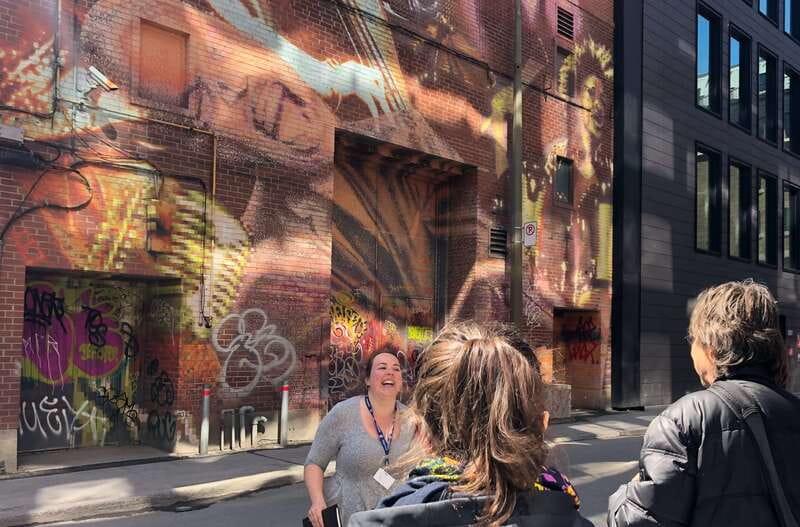
Art takes over the sidewalk here. This two-hour walk turns Montreal’s walls, alleys, and side streets into an open-air gallery, with stories about the artists, collectives, and civic changes behind the paint. I especially like the focus on St-Laurent Boulevard and the way the route reaches beyond the obvious walls into nearby streets. I also like that guides such as Sarah and Maryse add historical background instead of simply pointing at pictures.
The main drawback is practical: this is a walking tour on uneven city streets, and it runs rain or shine. You should bring comfortable shoes and be ready for weather. People with mobility impairments or wheelchair users may find the route unsuitable.
At $25 per person, the tour offers a useful introduction to a part of Montreal that is easy to miss when you stick to major sights. You can choose English or French, and private or small-group options are available. The experience has earned a strong 4.8 rating from 53 reviews, with praise focused on clear explanations, friendly guides, and the chance to find places you might otherwise walk right past.
In This Review
- Key points to know before you go
- Starting at Maison du développement durable
- Following St-Laurent Boulevard into Montreal’s street-art scene
- The Mural Festival Zone and the public life of art
- Hearing how Montreal’s mural movement developed
- Artists to watch for along the route
- Heading south to the Entertainment District
- What the $25 price gets you
- Weather, walking, and who should book
- Should you book the Montreal mural walk?
- FAQ
- How long is the Montreal mural tour?
- What languages are available?
- Where does the tour meet?
- Is hotel pickup included?
- Does the tour operate in bad weather?
- Is the tour wheelchair accessible?
Key points to know before you go
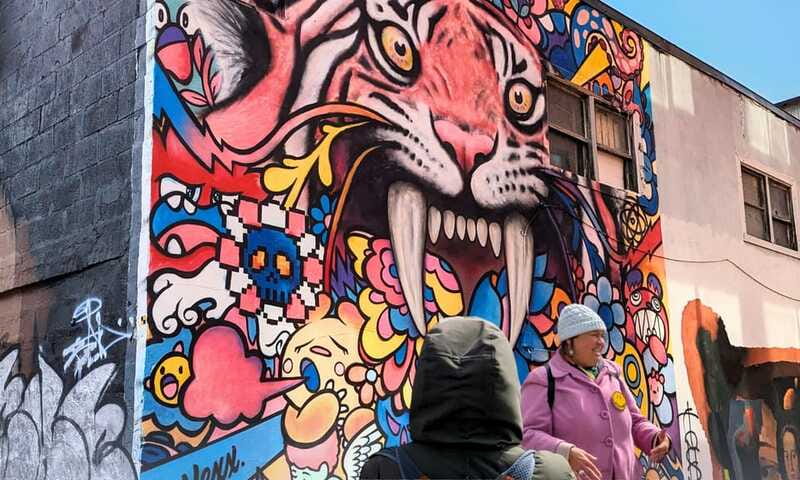
- The route centers on St-Laurent Boulevard: You will follow one of Montreal’s best-known corridors for street art, with detours into side streets and alleys.
- The Mural Festival Zone is a major stop: The area reflects the festival’s role in making urban art more accessible and accepted across the city.
- The tour connects art with history: Your guide explains how muralism moved from popular themes and national propaganda toward a major part of Montreal’s cultural life.
- Named artists add depth: Look for work associated with Phillip Adams, David Guinn, and other artists and collectives.
- Sarah and Maryse receive especially warm praise: Sarah is noted for clear, engaging explanations, while Maryse is praised for showing lesser-seen corners of the area.
- Plan for two hours outdoors: Comfortable shoes matter, and the tour goes ahead in wet weather.
Starting at Maison du développement durable
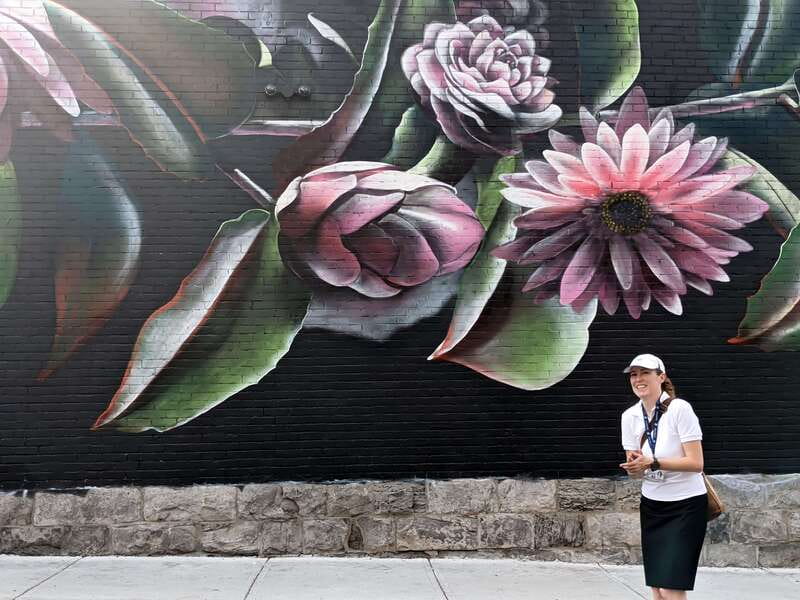
The meeting point is in front of the Maison du développement durable building. This gives you a clear place to begin, but you should allow enough time to arrive without rushing. Hotel pickup and drop-off are not included, so you are responsible for getting to the starting point and arranging your own way back.
The tour is offered in English or French. That choice matters here because the experience relies on spoken explanation. The paintings are easy to admire on your own, but the guide’s comments provide the setting, artistic background, and local meaning that a quick walk-by cannot.
The activity lasts two hours. That is long enough to cover a useful stretch of the neighborhood without turning into a full-day commitment. You will be on your feet for the whole experience, so this is best placed on a day when you have not already scheduled several long walks.
More Walking Tours in Montreal
- The Original Old Montréal Walking Tour by Guidatour
★ 4.5 · 2,217 reviews - Old Montreal Small-Group Walking Tour | Max 10 | by MTL Detours
★ 5.0 · 2,088 reviews - Montréal: The Original Old Montréal Walking Tour
★ 4.8 · 911 reviews
Following St-Laurent Boulevard into Montreal’s street-art scene
The main route follows St-Laurent Boulevard, an important artery through the city. Instead of treating the boulevard as a simple street between attractions, the guide uses it as a frame for Montreal’s outdoor art scene.
The route includes large murals, graffiti, and more eclectic works. Some pieces may catch your eye because of scale or color. Others become more interesting after you hear why they were made, who created them, or how different techniques were used.
That last point comes through clearly in the tour’s strongest feedback. Peter specifically appreciated learning about the artists, the subjects they chose, and the different methods used to make the work. This is useful if you want more than a photo stop. You will begin to notice how a mural’s subject, style, and setting work together.
The route also takes intriguing turns into surrounding streets and alleys. This is one of the best reasons to book a guide. If you wandered St-Laurent Boulevard alone, you might spot the largest paintings, but you could easily miss work tucked around a corner or in a narrow passage.
Maryse is praised for leading people into places they would not have found on their own. That is a good clue about the experience: the value is not only in seeing famous walls, but in having someone connect the main street with its less obvious offshoots.
The Mural Festival Zone and the public life of art
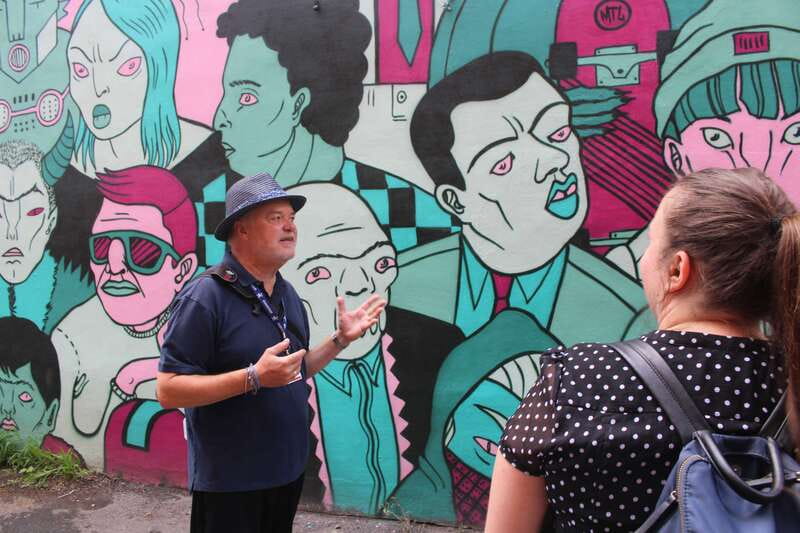
A key section of the walk takes place in the Mural Festival Zone. The name refers to an event that helped make urban art more accepted and accessible in Montreal.
Your guide explains how this festival helped democratize mural art. That idea is central to the tour. Instead of viewing graffiti and murals only as decoration, you are encouraged to consider how public art changes who gets to see art and where art belongs.
The festival area also gives you a concentrated series of photo opportunities. You can take pictures of the large-scale works, but the guide’s explanation helps you place them within Montreal’s wider mural movement.
Do not expect every piece to appeal to you in the same way. Public art is personal, and some work may feel bold, strange, or overly commercial. That variety is part of the point. The tour is not asking you to approve of every wall. It is showing how different artists and collectives use public space to express ideas, identities, and visual experiments.
This is also a good place to pay attention to the surrounding buildings. The murals do not sit in a museum with neutral walls and perfect lighting. They share space with ordinary city life, which can make the colors, scale, and placement feel more immediate.
Hearing how Montreal’s mural movement developed
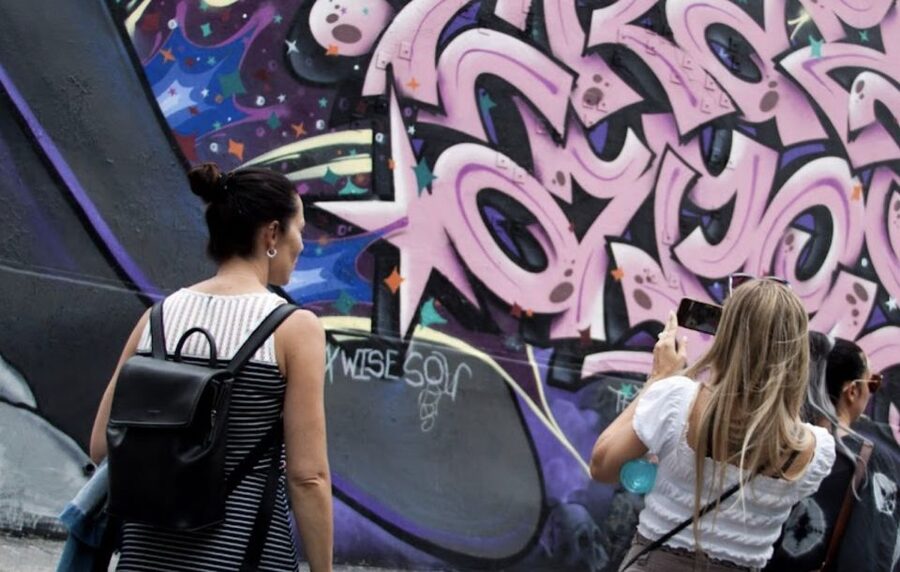
The historical section gives the walk its backbone. Your guide discusses the origins of street art in Montreal and explains how muralism first grew around popular themes and national propaganda.
The tour then moves into the city’s development of this art form during the 1970s. That period helps explain why murals became more than isolated acts of painting. Over time, the movement gained a significant place in Montreal culture.
This background keeps the experience from becoming a simple list of artist names. You learn how public art can reflect political ideas, community identity, and changing attitudes toward city space.
I appreciate that the discussion covers the evolution of muralism rather than presenting street art as a brand-new trend. The paintings you see are part of a longer story. The exact balance of history and visual analysis will depend on your guide, but the strongest feedback points to explanations that are clear, friendly, and easy to follow.
Sarah receives particularly warm praise. Laurent described her explanations as interesting and her manner as friendly. Anais called her passionate, engaging, and professional. Marina, who took the tour in Portuguese but reviewed it in English, also praised Sarah’s friendliness and command of the murals. Those comments suggest that her personality adds real value, though guide assignments can vary.
Still Montreal, at a slower pace:
- Montreal: Guided Bus Tour
★ 4.4 · 3,064 reviews - Montreal: Hop-On Hop-Off Double-Decker Bus Tour
★ 4.1 · 2,760 reviews - From Montreal: Quebec City and Montmorency Falls Day Trip
★ 4.5 · 2,669 reviews - Montreal Mile End Authentic Food Tour with 7 Delicacies Tastings
★ 5.0 · 2,598 reviews
Artists to watch for along the route
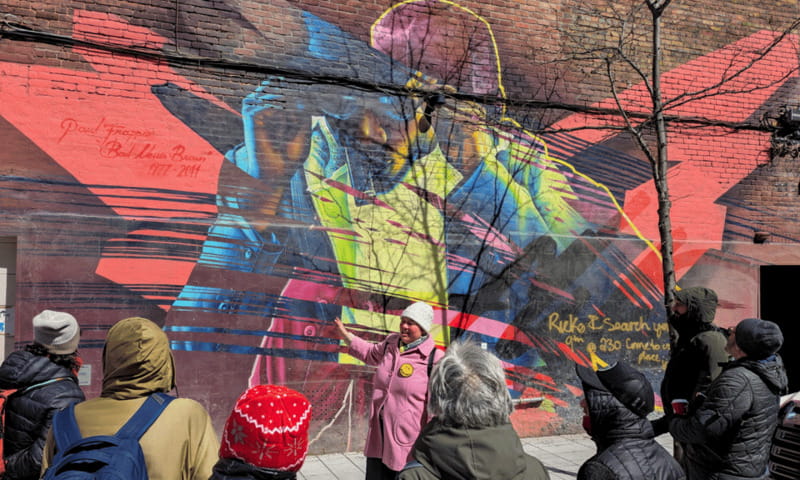
The tour includes work by recognized street artists such as Phillip Adams and David Guinn. Their names give you a few anchors as you move through the area, especially if you want to remember particular pieces later.
The walk is not only about celebrity artists. It also introduces the collectives and local creators who shape Montreal’s walls. That wider focus is important because public art often grows through collaboration, shared festivals, and repeated use of the same urban spaces.
You should listen for the connection between each artist and the subject of the work. Peter’s praise for the background on both artists and subjects points to one of the tour’s useful details. You are not just shown a mural and handed a name. You get help understanding what the image is trying to do.
The guide may also point out differences in technique. Some works rely on smooth painted forms, while others show the marks and methods associated with graffiti. You may not learn every technical term, but you will gain a better eye for how artists build large images on public walls.
Bring your phone or camera if you enjoy photography. The Mural Festival Zone and Entertainment District offer many good photo subjects, but remember that a two-hour walk also includes listening and moving. You will get more from the tour if you pause for the guide rather than treating it as a race between snapshots.
Heading south to the Entertainment District
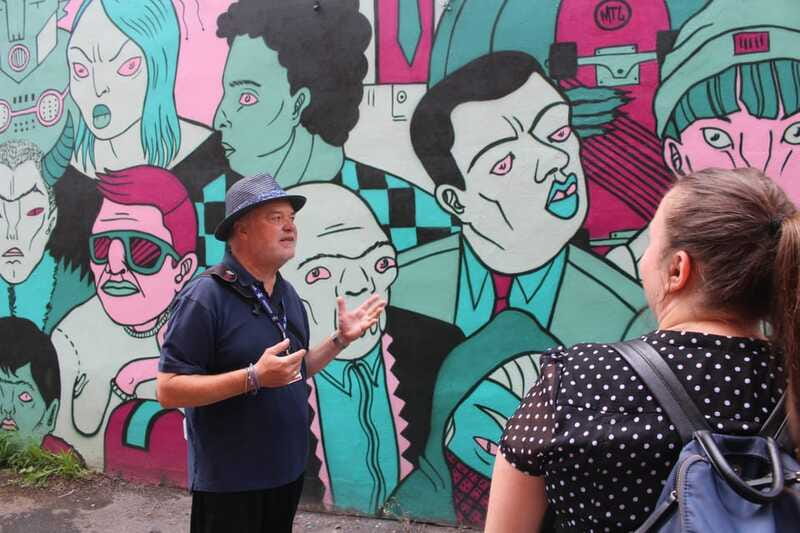
The route continues south toward the heart of Montreal’s Entertainment District. This change of setting gives the walk a useful second act.
The Mural Festival Zone shows how public art can gather around a major event and become part of a city’s identity. The Entertainment District places the art in another active urban context, where large walls and public spaces serve a different role.
Here, you encounter additional works by Phillip Adams and David Guinn. Your guide uses these pieces to continue the discussion of muralism, technique, and subject matter.
The shift south also helps you understand that Montreal’s street art is not confined to one cluster of walls. The route connects several parts of the city’s urban-art scene. You see how the work interacts with streets, businesses, alleys, and public movement.
The area may be less peaceful than a quiet gallery, and city conditions can affect your viewing. There may be traffic, pedestrians, and weather to contend with. That is part of the tradeoff. You are seeing art in its working surroundings, not in a controlled exhibition space.
What the $25 price gets you
At $25, this is a reasonably priced way to spend two hours in Montreal. You are paying for a guided route, live interpretation in English or French, and access to context that is difficult to gather on your own.
The value is strongest if you are curious about the city’s culture or enjoy art but do not want a formal museum tour. You see public work without an admission ticket, and you get a human guide to explain how it fits into Montreal life.
The price is less compelling if you only want to take mural photos. You can walk through parts of the area independently, although you may miss the side streets, artist background, and historical explanation.
Private and small-group options can make the experience more personal. The supplied information does not specify the exact maximum group size or the extra cost for a private tour, so check those details before booking. If you prefer asking questions or setting your own pace, a smaller format may be worth considering.
Free cancellation up to 24 hours before the tour and the reserve-now, pay-later option add useful flexibility. Those policies do not change the quality of the walk, but they reduce the risk of committing too early to an outdoor activity.
Weather, walking, and who should book
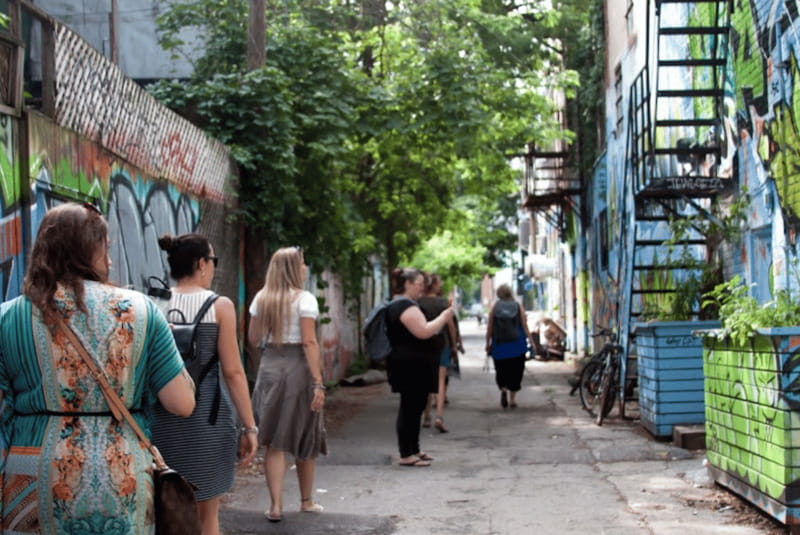
This tour runs rain or shine. That is the most important practical detail. A sunny day will make photography easier, but light rain will not automatically cancel the experience, so dress for the forecast and bring suitable protection.
Comfortable shoes are essential. You will walk for two hours, and the route includes streets, side streets, and alleys. The tour is specifically not suitable for people with mobility impairments or wheelchair users.
The walk is a strong match for:
- First-time visitors who want to see a less traditional side of Montreal
- People interested in public art, graffiti, or contemporary culture
- Photographers looking for large-scale urban subjects
- Visitors who enjoy local history in small, digestible pieces
- Couples, friends, and small groups wanting a short cultural activity
- French-speaking or English-speaking visitors who prefer a live guide
It may not suit you if you dislike walking in uncertain weather, need step-free access, or prefer indoor attractions. It is also not the best choice if you expect a quiet, carefully controlled gallery setting.
The heat can be a factor. Veronique enjoyed the explanations and the murals but noted that the weather was very hot. Take that seriously during summer visits. Schedule the walk at a comfortable time if starting times allow, and bring water.
Should you book the Montreal mural walk?
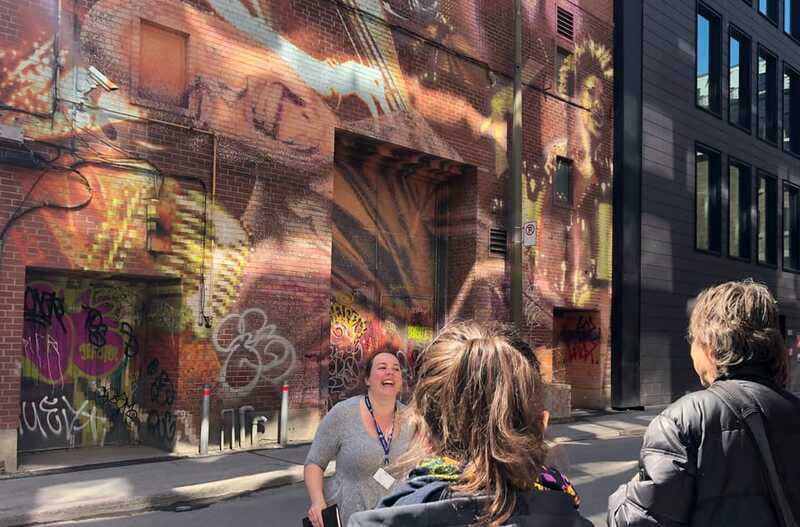
Book it if you want Montreal’s street art to come with context. The best parts are the route’s side streets, the history of muralism, and the guides’ ability to explain artists, subjects, and techniques. Sarah receives especially strong praise, while Maryse is noted for revealing corners you might otherwise miss.
At $25, the tour is good value for a two-hour cultural outing, especially if you choose a small group or private format and enjoy asking questions. Just wear comfortable shoes, accept the rain-or-shine policy, and confirm that the walking demands suit you.
If you only want quick photos, explore independently. If you want to understand why these walls matter to Montreal, this guided walk is the better choice.
FAQ
How long is the Montreal mural tour?
The walking tour lasts two hours.
What languages are available?
The tour is offered with a live guide in English or French.
Where does the tour meet?
Meet your guide in front of the Maison du développement durable building.
Is hotel pickup included?
No. Hotel pickup and drop-off are not included.
Does the tour operate in bad weather?
Yes. The tour takes place rain or shine, so bring suitable clothing and wear comfortable shoes.
Is the tour wheelchair accessible?
No. The activity is not suitable for wheelchair users or people with mobility impairments.
Just added around Montreal
- Full Day Family Bike Rental★ 5.0 · 17 reviews
- Montréal Downtown and Underground City Private Walking Tour★ 5.0 · 47 reviews
- Winter Express: Old Montreal Highlights Walking Tour★ 5.0 · 119 reviews
- Montreal Premium Driving Tour with River Cruise and Notre Dame★ 4.5 · 164 reviews
- Under the Surface of Montreal’s Chinatown: Guided Food Walking Tour★ 5.0 · 23 reviews
- The Ultimate Montreal Boat Tour – Fall Colors Apéro Edition★ 4.5 · 31 reviews
- In the Shadow of the Mountain: Montreal Jewish History Walking Tour★ 4.5 · 33 reviews
- Immersive Virtual Reality Game Activity★ 5.0 · 19 reviews
Walking Tours, compared.
Old Quebec City: Grand Walking Tour with Private Option
Read our review →
The Original Old Montréal Walking Tour by Guidatour
Read our review →
Old Montreal Small-Group Walking Tour | Max 10 | by MTL Detours
Read our review →
Old Quebec Classique Walking Tour with Funicular
Read our review →
Quebec: Crimes of New France Animated Walking Tour
Read our review →Browse the lists this tour appears in