
Reviewed · WORKSHOPS
Leather belt making workshop
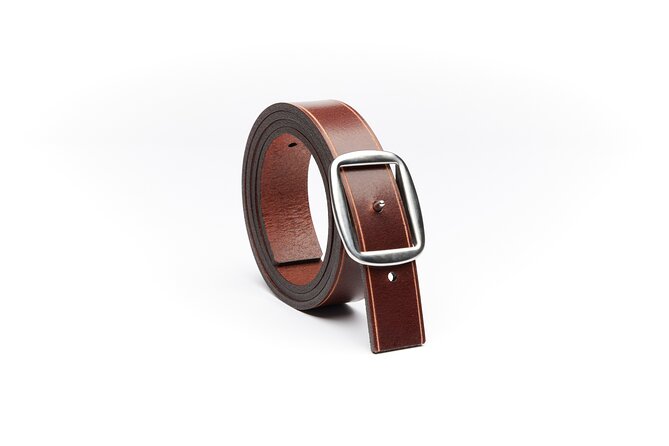
Make something you can wear home. This small-group Montreal workshop lets you learn leathercraft with designer Kimberly Fletcher while making a belt from start to finish. I like the hands-on format and the chance to leave with a useful, personal accessory rather than a souvenir that gathers dust. I also like the patient, humorous teaching style praised by a past participant.
The main consideration is noise. A few hammer blows are needed to make the belt, so this may not suit anyone with high sensitivity to sound. At about two and a half hours, it also asks for a solid block of time, though the small maximum of four people should keep the class focused.
In This Review
- Key points about this Montreal leather belt workshop
- A practical craft experience in Plateau Mont-Royal
- Choosing leather and planning the belt
- Cutting and shaping leather by hand
- Assembling the belt and creating a usable object
- Finishing techniques that give the belt character
- Why the four-person limit matters
- The sound level and physical focus
- Is the workshop good value?
- Who should book this leathercraft class?
- Getting to Rue de Bordeaux and planning your time
- Should you book the Flechr belt-making workshop?
- FAQ
- Where does the leather belt workshop take place?
- How long does the workshop last?
- Is the workshop suitable for beginners?
- What will I learn during the class?
- How many people can join the workshop?
- Is the workshop offered in English?
- Is the activity suitable for children?
- Is there noise during the workshop?
- Can I cancel for a full refund?
Key points about this Montreal leather belt workshop
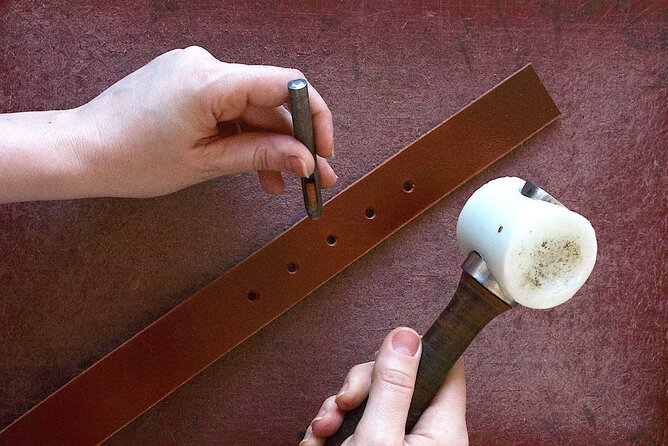
- Make your own wearable belt: You learn to cut, shape, assemble, and finish a leather belt you can use.
- Learn with designer Kimberly Fletcher: The class takes place at Fletcher’s Flechr studio in Montreal.
- Designed for beginners: No previous leatherworking experience is required.
- Small class size: The workshop accepts a maximum of four participants, allowing for close guidance.
- Located in Plateau Mont-Royal: The studio is at 5450 Rue de Bordeaux, with public transportation nearby.
- Expect some hammering: The class is not silent, and noise-sensitive participants should plan accordingly.
A practical craft experience in Plateau Mont-Royal
This is not a quick demonstration where you watch someone else work. You make the belt yourself, with Kimberly Fletcher guiding you through the main stages of leathercraft. That difference matters. You do not simply learn what leatherworking looks like. You handle the material, make decisions, and take home the result.
The studio is Flechr, Kimberly Fletcher’s workshop in Montreal’s Plateau Mont-Royal district. The meeting address is 5450 Rue de Bordeaux, Montréal, Quebec H2H 2A8. Public transportation is nearby, which is useful if you are fitting the class into a day of exploring the city without a car.
The class lasts approximately two hours and thirty minutes. That is long enough to cover the basics without turning the project into a full-day commitment. You should still arrive ready to concentrate. Cutting and shaping leather require care, and the finished belt is the result of several connected steps rather than one quick activity.
The group limit of four is one of the strongest practical features. In a large craft class, you may spend as much time waiting for help as working. Here, Kimberly can keep an eye on each person’s progress and help when a cut, hole, or finishing decision needs attention.
A few more Montreal trips worth comparing
- Montreal: Guided Bus Tour
★ 4.4 · 3,064 reviews - Montreal: Hop-On Hop-Off Double-Decker Bus Tour
★ 4.1 · 2,760 reviews - From Montreal: Quebec City and Montmorency Falls Day Trip
★ 4.5 · 2,669 reviews
Choosing leather and planning the belt
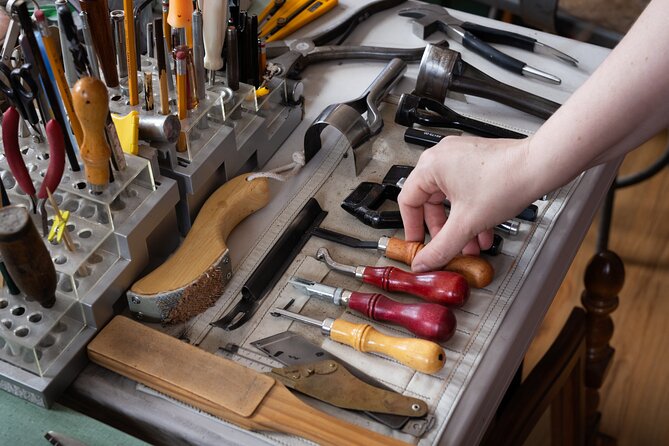
The workshop begins with the foundation of the project: understanding the leather. You learn how to select the right type of leather for a belt, including the qualities that help make an accessory both attractive and durable.
The supplied details do not specify the exact leather colors, widths, buckle options, or stock available on the day. That means you should not arrive expecting a particular shade or hardware style unless the studio confirms it in advance. Still, the basic choice is important. A belt must do more than look good. It needs enough strength and structure to serve its purpose.
This first stage gives the class a useful lesson in design. You are not just following a fixed craft kit. You are learning how the material affects the final object. For a beginner, that is a good way to understand why leather goods can vary so much in feel and quality.
Kimberly’s role is especially valuable here. A new maker may not know how to judge leather by sight or touch, or may choose based only on color. With a skilled instructor nearby, you can ask questions before committing to a cut. That can prevent a small early mistake from affecting the entire belt.
Cutting and shaping leather by hand
After choosing the material, you learn how to cut and shape the leather. This is where the class becomes more physical and precise. A belt may look simple, but a clean edge and even shape make a large difference in the finished piece.
You should expect to work carefully rather than rush. The class is intended for beginners, and Kimberly guides you through each step, but beginner-friendly does not mean completely effortless. You are making a real object from a raw strip of material, so attention to detail matters.
I like this part of the workshop because it gives you a clear sense of progress. At the start, you have leather. Gradually, the shape begins to resemble a belt that could actually be worn. That visible change helps make the time feel worthwhile, especially if you enjoy practical crafts more than passive sightseeing.
The small group should also help at this stage. If your cut needs checking or you are unsure about the next move, you can get direct help instead of guessing. The class is not presented as an advanced technical course, so the focus is on learning the basic process and gaining confidence.
Assembling the belt and creating a usable object
Once the leather has been prepared, you assemble the belt. The course covers how the different parts come together to create a durable accessory. The exact belt hardware and assembly details are not provided, so the final design may depend on the materials and options available in the studio.
That uncertainty is worth keeping in mind if you have a very specific belt in mind. You may want to contact Flechr before booking if you need a certain size, color, buckle, or finish. The class description supports a personalized belt-making process, but it does not promise a particular design menu.
The assembly stage is where the craft becomes functional. You are not making a decorative leather sample. You are working toward something you can wear, and that gives the project a useful purpose. I find that practical outcome one of the best reasons to choose this class over a generic craft activity.
You also get a better sense of how leather goods are built. A belt depends on strong connections and careful placement. Even at an introductory level, the work teaches you to think about durability, not just appearance.
Still Montreal, at a slower pace:
- Montreal Mile End Authentic Food Tour with 7 Delicacies Tastings
★ 5.0 · 2,598 reviews - Quebec City and Montmorency Falls Day Trip from Montreal
★ 4.0 · 2,437 reviews - The Original Old Montréal Walking Tour by Guidatour
★ 4.5 · 2,217 reviews - Old Montreal Small-Group Walking Tour | Max 10 | by MTL Detours
★ 5.0 · 2,088 reviews
Finishing techniques that give the belt character
The final stage covers techniques for finishing the belt and making it your own. Finishing is what separates a plain project from an accessory with a personal touch. The information provided does not list every available technique, so you should think of this as an introduction rather than a guarantee of unlimited customization.
This is a good place to bring your own taste. You might prefer a simple, clean result, while another person may want more visible detail. Kimberly’s guidance helps you make those choices without needing prior leatherworking experience.
A past participant praised Kimberly’s patience and humor, along with her skill as a craftswoman. That description gives you a useful idea of the class atmosphere. Leatherworking can be intimidating when tools and materials are unfamiliar, but a calm instructor can make the process far less stressful. Her role is not only to show you the steps, but to help you keep moving when your work does not look perfect at first.
The finished belt is also a record of the time you spent making it. Small variations can be part of its character. You will know where you cut, shaped, assembled, and finished the piece, which gives it more meaning than a standard store-bought accessory.
Why the four-person limit matters
A maximum of four people changes the feel of the class. You are likely to have more space to work and more direct contact with Kimberly than you would in a large group. That is particularly helpful for a craft that involves cutting, shaping, and hammering.
It also makes the activity suitable for people who prefer a quieter, more personal class setting, apart from the necessary hammering. You can focus on your own belt without being lost in a crowd. If you enjoy meeting a few like-minded people but do not want a social event with a large group, the size should feel comfortable.
The small capacity may also mean dates fill quickly, so flexibility can help when booking. The activity requires a minimum number of participants and may be canceled if that number is not reached. If that happens, you are offered another date or experience, or a full refund.
The class is offered in English. That makes the instructions accessible to English-speaking participants, but you should consider your comfort with English craft terms before booking if you prefer instruction in another language.
The sound level and physical focus
This workshop includes a few hammer blows to create the belt. It is not described as a loud activity overall, but the sound is part of the process and cannot be removed entirely.
If you have high sensitivity to noise, this is the main issue to consider. You may wish to ask Flechr for more detail about the tools and timing before booking. The class information specifically advises people with high noise sensitivity to refrain, so this is not a minor footnote.
The activity also requires you to stay engaged for roughly two and a half hours. You will be learning, handling materials, and following several steps. That makes it a good choice if you enjoy focused work, but less suitable if you want a relaxed activity with little concentration.
The recommended minimum age is 13. That gives families with older children and teenagers an option for a creative Montreal activity, though younger participants are not recommended. Service animals are allowed, and most people can participate.
Is the workshop good value?
No price is provided here, so I cannot judge the exact cost against other Montreal classes. I can still assess what you receive for the time and money: instruction from a working designer, a small class of no more than four, a practical skill, and a finished leather belt.
That is a stronger value proposition than a short souvenir-making session where you complete a simple item in minutes. You spend about two and a half hours learning a process that can lead to future leather projects, even though the class itself focuses on one belt.
The value depends on what you want from an activity. If you only want the cheapest belt in Montreal, a workshop will not be the obvious choice. If you want to understand how a belt is made and enjoy the satisfaction of creating one yourself, the class offers more than the object alone.
The reported rating is five out of five, with 100 percent recommendation and 17 ratings. That is a very positive record, though the number is still modest. I would treat it as encouraging evidence, not a reason to ignore the practical details about noise, age, language, and the time required.
Who should book this leathercraft class?
I would point this workshop toward several kinds of people:
- Beginners who want to try leatherworking without buying tools or committing to a long course.
- Couples or friends who prefer making something together instead of taking a standard city tour.
- Older children and teenagers aged 13 or above who enjoy practical creative work.
- Visitors who value a locally designed item with a personal connection to Montreal.
- People who like useful souvenirs and want something they can wear after the trip.
You do not need previous leatherworking experience. That is central to the class. Kimberly guides you through the process, so you can start as a complete beginner.
I would be more cautious if you dislike hands-on work, have high sensitivity to hammering sounds, or need a class in a language other than English. I would also check ahead if you have strict requirements for belt size, leather type, color, or hardware, since those details are not specified.
Getting to Rue de Bordeaux and planning your time
The workshop begins and ends at 5450 Rue de Bordeaux in Montreal. Since the activity returns to the same meeting point, you do not need to arrange a separate pickup from another part of the city.
Public transportation is nearby. Give yourself enough time to find the studio and arrive ready to begin, especially if you are unfamiliar with the area. The class is hands-on from the start, so arriving late could make it harder to follow the sequence.
A mobile ticket is accepted, and confirmation is provided at booking. The activity is offered in English. Free cancellation is available if you cancel at least 24 hours before the local start time. Changes or cancellations inside that window are not refunded, and late changes are not accepted.
Because the class requires a minimum number of participants, keep an eye on any schedule changes. If Flechr cancels for that reason, you are offered another date or experience, or a full refund.
Should you book the Flechr belt-making workshop?
Book it if you want a small, practical Montreal activity with a real result. The combination of Kimberly Fletcher’s patient teaching, a four-person maximum, and a belt you make yourself gives this class a personal feel that standard sightseeing cannot provide.
I would make the booking after checking any specific design needs and considering the hammering. If those points work for you, this is a strong choice for a creative afternoon in Plateau Mont-Royal. You will not just buy a reminder of Montreal. You will learn the basics of leathercraft and carry home something shaped by your own hands.
FAQ
Where does the leather belt workshop take place?
The workshop takes place at Flechr studio, at 5450 Rue de Bordeaux, Montréal, Quebec H2H 2A8, Canada.
How long does the workshop last?
The class lasts approximately two hours and thirty minutes.
Is the workshop suitable for beginners?
Yes. No previous leatherworking experience is required, and Kimberly Fletcher guides you through each step.
What will I learn during the class?
You learn how to select leather, cut and shape it, assemble the belt, and use finishing techniques to make the result personal and durable.
How many people can join the workshop?
The activity has a maximum of four participants.
Is the workshop offered in English?
Yes. The workshop is offered in English.
Is the activity suitable for children?
The recommended age is 13 and above.
Is there noise during the workshop?
Yes. A few hammer blows are necessary to create the belt. People with high sensitivity to noise are advised to refrain from booking.
Can I cancel for a full refund?
Yes, if you cancel at least 24 hours before the experience start time. Cancellations or changes made less than 24 hours before the start are not refunded.
Just added around Montreal
- Full Day Family Bike Rental★ 5.0 · 17 reviews
- Montréal Downtown and Underground City Private Walking Tour★ 5.0 · 47 reviews
- Winter Express: Old Montreal Highlights Walking Tour★ 5.0 · 119 reviews
- Montreal Premium Driving Tour with River Cruise and Notre Dame★ 4.5 · 164 reviews
- Under the Surface of Montreal’s Chinatown: Guided Food Walking Tour★ 5.0 · 23 reviews
- The Ultimate Montreal Boat Tour – Fall Colors Apéro Edition★ 4.5 · 31 reviews
- In the Shadow of the Mountain: Montreal Jewish History Walking Tour★ 4.5 · 33 reviews
- Immersive Virtual Reality Game Activity★ 5.0 · 19 reviews
Workshops, compared.

The Bagel Class presents : Montreal Bagel Making Workshop!
Read our review →
8 Iconic Stops. 12 Comfy Seats. See Banff’s Best in First Class.
Read our review →
Athabasca Falls: Class 2 White Water Rafting Adventure
Read our review →
Athabasca Canyon Run Family Rafting: Class II Plus Rapids
Read our review →
Sunwapta Challenge Whitewater Rafting: Class III Rapids
Read our review →
Cooking Class & Tasting with Michelin-Trained Chef
Read our review →
Class 3 Sunwapta River Rafting Adventure in Jasper
Read our review →
Quebec: Cuivres A. Gilles – (Free Entry) Fee for Workshop
Read our review →Browse the lists this tour appears in