
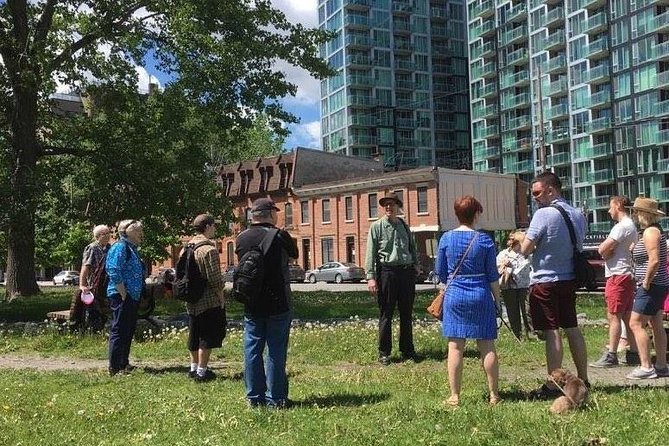
Reviewed · WALKING TOURS
Irish Famine in Montreal Walking Tour
Montreal’s hardest stories are easy to miss. This two-hour walk links the Old Port, a mass grave near the Lachine Canal, and the Black Rock monument, where more than 6,000 Irish Famine refugees are buried. I like the route because it connects ordinary city spaces with a past that is rarely given much attention. I also like the modest $20.23 price, which makes this a good-value history experience.
The main consideration is that this is a serious subject, not a light sightseeing stroll. The tour requires moderate physical fitness, depends on good weather, and ends away from the starting point. You should also expect a small number of stops, with much of the value coming from the guide’s explanation rather than from formal museum displays.
In This Review
- Key points about the Irish Famine in Montreal walk
- Why this Montreal history tour matters
- Starting at the Old Port and Montreal Museum of Archaeology and History
- The Lachine Canal mass grave
- The Black Rock and the final gravesite
- What $20.23 buys you
- Who should book this walk
- Timing, weather, and practical planning
- The honest limits of the experience
- Should you book the Irish Famine in Montreal Walking Tour?
- FAQ
- How long is the Irish Famine in Montreal Walking Tour?
- What time does the tour begin?
- Where does the tour begin?
- Where does the tour end?
- What language is the tour offered in?
- What is the price?
- Does the tour include admission fees?
- How many people can join the tour?
- Is the tour suitable for people with limited mobility?
- Can I cancel for a full refund?
Key points about the Irish Famine in Montreal walk
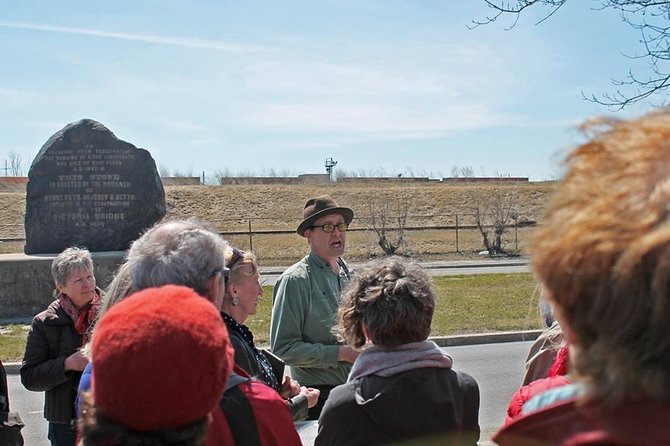
- Three meaningful locations: The route runs from the Old Port to a mass grave by the Lachine Canal and finishes at the Montreal Irish Monument.
- A powerful final stop: The Black Rock marks the gravesite of more than 6,000 Irish Famine refugees.
- Strong value at $20.23: For about two hours of guided local history, the price is notably reasonable.
- A focused English-language tour: The experience is offered in English and begins at 2:00 pm.
- A one-way route: You start at the Montreal Museum of Archaeology and History and finish at Rue Bridge.
- A subject Montreal still needs to address: The tour draws attention to the limited preservation and public recognition of Irish heritage in the city.
Why this Montreal history tour matters
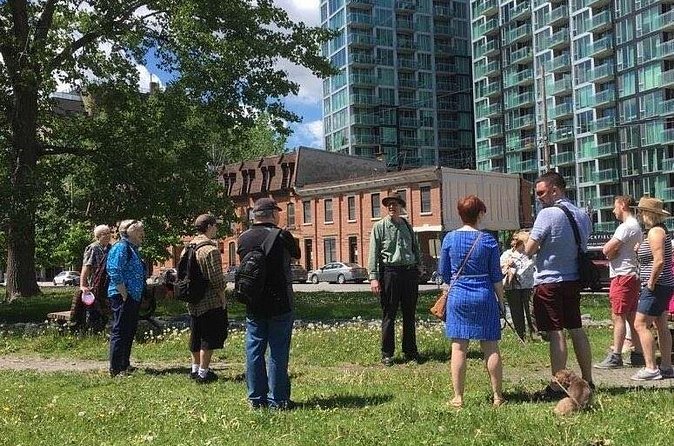
Montreal is famous for its old streets, port, churches, food, and festivals. It is less often presented as a place shaped by Irish Famine refugees. This walk corrects that gap by taking you to places connected with their arrival, suffering, and burial.
I appreciate the tour’s direct approach. It does not try to turn a painful subject into entertainment. Instead, it asks you to look at familiar parts of Montreal differently. The Old Port is not just a pleasant place beside the water. The Lachine Canal is not only a recreation area. The Black Rock is not simply another monument to pass on the way elsewhere.
The tour also raises an uncomfortable question about public memory. The response from the tour provider acknowledges that Montreal still has work to do in preserving Irish heritage and notes the terrible desecration connected with these burial sites. That gives the experience a purpose beyond sightseeing. You are not only learning what happened. You are seeing why remembrance still matters.
Because the walk lasts about two hours, the subject stays focused. You will not receive a broad survey of every Irish contribution to Montreal. Instead, you follow one clear thread through three places.
More Walking Tours in Montreal
- The Original Old Montréal Walking Tour by Guidatour
★ 4.5 · 2,217 reviews - Old Montreal Small-Group Walking Tour | Max 10 | by MTL Detours
★ 5.0 · 2,088 reviews - Montréal: The Original Old Montréal Walking Tour
★ 4.8 · 911 reviews
Starting at the Old Port and Montreal Museum of Archaeology and History
The meeting point is outside the Montreal Museum of Archaeology and History at 350 Place Royale. This is a practical starting place in Old Montreal, near public transportation and surrounded by some of the city’s most recognizable historic streets.
The first stop lasts about 30 minutes. That is the longest scheduled portion of the walk, and it gives the guide time to explain how the Old Port relates to the Irish Famine refugees. The port setting is important because it helps you connect the movement of people with the physical city they entered.
You should arrive with the understanding that this is an outdoor walking experience. The attraction is not a special admission inside the museum. Admission for the tour stops is free, and the tour’s value comes from the interpretation provided along the route.
I like this opening because it gives you a sense of place before the walk becomes more solemn. Old Montreal can feel polished and picturesque, so learning about the refugees here adds a needed layer. It reminds you that historic districts are not only collections of attractive buildings. They can also contain stories of arrival, hardship, and loss.
The 2:00 pm start time may suit you if you want to spend the morning exploring Old Montreal on your own. It also makes the tour easy to add to a day of sightseeing. Still, you should leave enough time to find Place Royale. A late arrival could be awkward because the tour moves on foot and does not return to the start.
The Lachine Canal mass grave
The second stop is at the Lieu Historique National du Canal-de-Lachine. The scheduled visit is short, about five minutes, but its importance is much greater than the time suggests. Your guide points out the exact location of one of Montreal’s mass graves connected with the Irish Famine refugees.
This is a good example of why a guide matters. A burial place can be difficult to understand when there is no large museum, entry hall, or elaborate display explaining it. The guide gives the location meaning and helps you recognize what might otherwise look like an ordinary part of the city.
Do not expect a long stop here. The five-minute timing suggests a brief explanation and moment of recognition rather than a full presentation. That can be a drawback if you prefer extended time at each site. It can also make the tour more effective, since the short pause keeps the route moving toward the final monument.
I would treat this part of the walk as a place for quiet attention. The point is not to fill every minute with facts. It is to understand that a mass grave exists near a well-known canal and that the city around it continues its daily routines.
The canal stop also gives the tour a practical lesson in historical research. Important sites are not always marked in ways that make their meaning obvious. You may pass near them without realizing what happened there. A local guide can direct your attention to the exact spot and explain why it deserves notice.
The Black Rock and the final gravesite
The tour ends at the Montreal Irish Monument, commonly called the Black Rock, on Rue Bridge. The stop lasts about 10 minutes and marks the gravesite of more than 6,000 Irish Famine refugees.
This is the emotional center of the walk. The number alone changes the scale of the story. The tour is no longer only about a route taken by refugees or a single burial location. It ends at a site associated with thousands of lives.
The Black Rock also gives the walk a physical point of remembrance. After hearing about the Old Port and the mass grave near the canal, you arrive at a monument that brings the subject together. I value that structure. The route begins with movement and arrival, passes through a less obvious burial place, and ends at a dedicated memorial.
There is no admission charge for the monument. You should not expect a large visitor center or a long museum visit at the end. This is a short outdoor stop, and the guide’s words carry much of the interpretation.
The tour ends at the Black Rock rather than returning to Place Royale. That is useful to know before booking. If you have plans near the Old Port afterward, you will need to make your own way back. The guide can provide directions at the end, which helps, but you should still plan the rest of your afternoon around the one-way route.
Still Montreal, at a slower pace:
- Montreal: Guided Bus Tour
★ 4.4 · 3,064 reviews - Montreal: Hop-On Hop-Off Double-Decker Bus Tour
★ 4.1 · 2,760 reviews - From Montreal: Quebec City and Montmorency Falls Day Trip
★ 4.5 · 2,669 reviews - Montreal Mile End Authentic Food Tour with 7 Delicacies Tastings
★ 5.0 · 2,598 reviews
What $20.23 buys you
At $20.23 per person, this tour offers good value if you enjoy guided history and want something more focused than a general city walk. You are paying for roughly two hours of interpretation, a carefully connected route, and access to places whose meaning may not be obvious on your own.
The stops themselves are free. That means the price is not covering admission to a monument or museum exhibit. It is paying for the guide’s time, historical framing, and ability to connect three separate locations.
That distinction matters. If you only want to walk through Old Montreal and take photographs, you can do that without booking. If you want to understand the relationship between the port, the mass grave, and the Black Rock, the guided format has a stronger case.
The group may include up to 40 people. That is a fairly large maximum for a walking tour. A group that size can make it harder to hear every word or gather closely around a small site, especially outdoors. On the other hand, the low price may be partly explained by the group format.
The experience is recommended by all recorded participants and has a five-star rating from 23 reviews. That is a positive signal, especially because the subject is specialized and not a standard Montreal highlight. Still, a small review total means you should judge the tour by its format and subject as well as its rating.
Who should book this walk
I would recommend the tour to you if you enjoy local history, memorial sites, and lesser-known stories. It suits visitors who want to understand Montreal beyond its architecture and restaurants. It is also a natural choice if you have a personal connection to Irish heritage or an interest in migration history.
The tour may be especially useful early in your Montreal visit. Afterward, you may notice the city’s historic areas with sharper attention. The Old Port will feel less like a scenic backdrop, and the Black Rock will have a clearer place in your understanding of Montreal.
You should think twice if you want a relaxed sightseeing walk with plenty of free time. The subject is grave, the route is one-way, and the stops are short and purposeful. This is not designed as a flexible photo tour or a broad introduction to every major attraction in the city.
It is also not ideal if moderate walking is difficult for you. The tour requires a moderate physical fitness level, and the experience takes place outdoors. Service animals are allowed, and the route is near public transportation, but the provided information does not promise a specific level of mobility access at each stop.
Timing, weather, and practical planning
The tour starts at 2:00 pm and lasts about two hours. You should allow extra time before the start to reach 350 Place Royale and confirm the meeting point. Since the tour ends at Rue Bridge, keep your afternoon plans flexible enough to account for the walk back or onward travel.
The experience requires good weather. If poor weather causes cancellation, you are offered another date or a full refund. That makes the tour easier to book in a city where outdoor plans can change quickly.
You can cancel for a full refund up to 24 hours before the start time. Changes or cancellations made less than 24 hours ahead are not accepted for a refund. The same 24-hour cut-off uses Montreal local time, so check the clock carefully if you are booking from another time zone.
Confirmation arrives when you book, and the ticket is mobile. The tour is offered in English. It also requires a minimum number of participants, so a cancellation is possible if that number is not reached. In that case, you are offered another date or experience, or a full refund.
The tour is often booked 27 days ahead, so I would not leave it until the last minute if the subject is important to your plans. That advance-booking pattern also suggests that the experience can fit well into a carefully planned Montreal itinerary.
The honest limits of the experience
The tour’s strongest feature is also its limitation: it is tightly focused. You will learn about Irish Famine refugees, burial sites, and Montreal’s treatment of Irish heritage, but you should not expect a full account of Irish life in the city.
The five-minute canal stop may feel too brief, while the 10-minute Black Rock visit may leave you wanting more time. The maximum group size of 40 is another practical concern. If you prefer intimate walks with long conversations, this may feel more structured than personal.
There is also a hard subject at the center of the experience. The tour refers to mass graves, more than 6,000 deaths, and the desecration of Irish heritage. That seriousness is appropriate, but it may not suit someone looking for cheerful afternoon entertainment.
Still, the focus gives the tour clarity. You are not pulled between unrelated attractions. Each stop supports the same story, and the final monument gives the walk a clear ending.
Should you book the Irish Famine in Montreal Walking Tour?
Book this tour if you want a low-cost, thoughtful way to examine a part of Montreal that receives too little attention. The route is short, the price is fair, and the Black Rock provides a powerful final stop. I especially recommend it to history-minded visitors who are willing to give a serious subject their full attention.
Skip it if you want indoor exhibits, extensive sightseeing, or a tour that returns to its starting point. You should also check the weather and your walking ability before booking.
For the right audience, this is a worthwhile two-hour addition to a Montreal visit. It asks you to look past the attractive surface of the Old Port and remember the people whose suffering helped shape the city.
FAQ
How long is the Irish Famine in Montreal Walking Tour?
The tour lasts approximately two hours.
What time does the tour begin?
The tour starts at 2:00 pm.
Where does the tour begin?
The meeting point is the Montreal Museum of Archaeology and History at 350 Place Royale, Montréal, QC H2Y 3Y5, Canada.
Where does the tour end?
The tour ends at the Montreal Irish Monument, also called the Black Rock, on Rue Bridge, Montréal, QC H3K 1X8, Canada.
What language is the tour offered in?
The tour is offered in English.
What is the price?
The listed price is $20.23 per person.
Does the tour include admission fees?
The listed stops have free admission. The tour includes guided visits to those locations.
How many people can join the tour?
The maximum group size is 40 travelers.
Is the tour suitable for people with limited mobility?
The experience requires a moderate level of physical fitness. Specific accessibility details for each stop are not provided.
Can I cancel for a full refund?
Yes. You can cancel at least 24 hours before the start time for a full refund. Cancellations or changes made less than 24 hours before the start time are not accepted for a refund.
Just added around Montreal
- Full Day Family Bike Rental★ 5.0 · 17 reviews
- Montréal Downtown and Underground City Private Walking Tour★ 5.0 · 47 reviews
- Winter Express: Old Montreal Highlights Walking Tour★ 5.0 · 119 reviews
- Montreal Premium Driving Tour with River Cruise and Notre Dame★ 4.5 · 164 reviews
- Under the Surface of Montreal’s Chinatown: Guided Food Walking Tour★ 5.0 · 23 reviews
- The Ultimate Montreal Boat Tour – Fall Colors Apéro Edition★ 4.5 · 31 reviews
- In the Shadow of the Mountain: Montreal Jewish History Walking Tour★ 4.5 · 33 reviews
- Immersive Virtual Reality Game Activity★ 5.0 · 19 reviews
Walking Tours, compared.

Old Quebec City: Grand Walking Tour with Private Option
Read our review →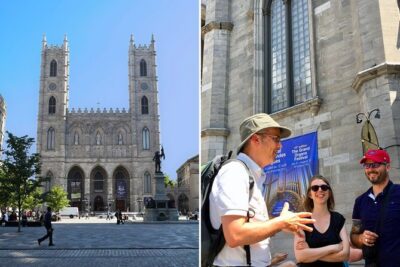
The Original Old Montréal Walking Tour by Guidatour
Read our review →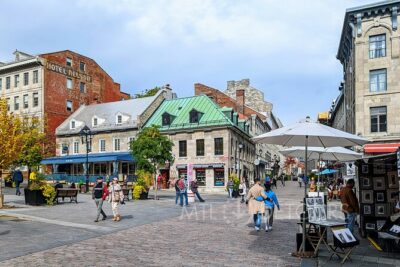
Old Montreal Small-Group Walking Tour | Max 10 | by MTL Detours
Read our review →
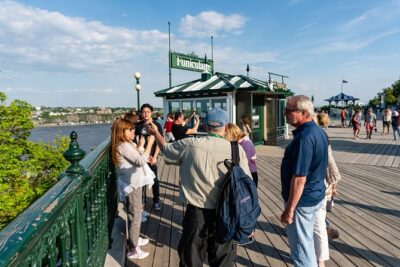
Old Quebec Classique Walking Tour with Funicular
Read our review →
Quebec: Crimes of New France Animated Walking Tour
Read our review →Browse the lists this tour appears in