
Reviewed · CITY TOURS
Underground city & Downtown. Great way to stay warm!
Winter has a secret route through Montreal. This two-hour walking tour leads you through the city’s famous Underground City, downtown districts, major buildings, and metro connections, with most of the route protected from the cold. I especially like the practical orientation it gives you and the chance to see how Montreal’s underground network really works. The main drawback is that it involves plenty of walking, stairs, escalators, and route changes, so it is not suitable for people using walkers, crutches, or canes.
At $66.69 per person, this is not the cheapest way to see downtown. Still, a small group of no more than 10 people, an English-speaking licensed guide, and a reported 24-hour metro pass can make it good value, especially at the start of a Montreal visit. Guide Thom is repeatedly praised for making the city’s architecture, French Canadian culture, and past feel clear and lively.
In This Review
- Key points to know before booking
- Why this is a smart first tour in Montreal
- Starting at The Ring on Rue de la Gauchetière
- Making sense of 45 minutes in the Underground City
- Place Ville-Marie and the city’s mid-century core
- Downtown Montreal in one compact walk
- Place des Arts and Montreal’s cultural side
- The Montreal World Trade Centre and Berlin Wall fragment
- What the guide adds to the route
- Price, metro value, and what you receive
- Walking, access, and timing
- Who should book this Montreal tour?
- Should you book it?
- FAQ
- Where does the tour begin?
- What time does the tour start?
- How long does the tour last?
- Where does the tour end?
- Is the tour offered in English?
- How many people can join the tour?
- Is the tour accessible to people with limited mobility?
- Does the tour include public transportation?
- Can I cancel for a full refund?
Key points to know before booking
- Most of the route is indoors: A smart pick for cold, snowy, or wet Montreal days.
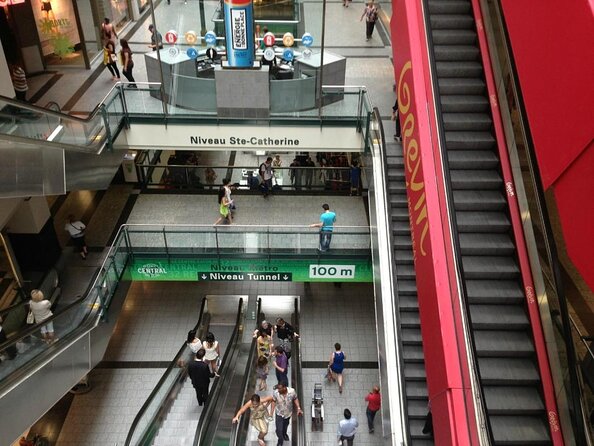
- The Underground City is more than a shopping mall: You learn how tunnels, metro stations, offices, hotels, museums, and public spaces connect.
- Guide Thom is the heart of the experience: His humor, local knowledge, and passion for Montreal receive the strongest praise.
- The tour covers a lot in two hours: You see Place Ville-Marie, Place des Arts, Chinatown, the Financial District, and the Montreal World Trade Centre.
- A 24-hour metro pass may extend the value: Several tour descriptions note that you can continue exploring after the guided portion.
- Expect stairs and a fair amount of walking: Limited-mobility access is not available, and the route is not recommended with walkers, crutches, or canes.
Why this is a smart first tour in Montreal
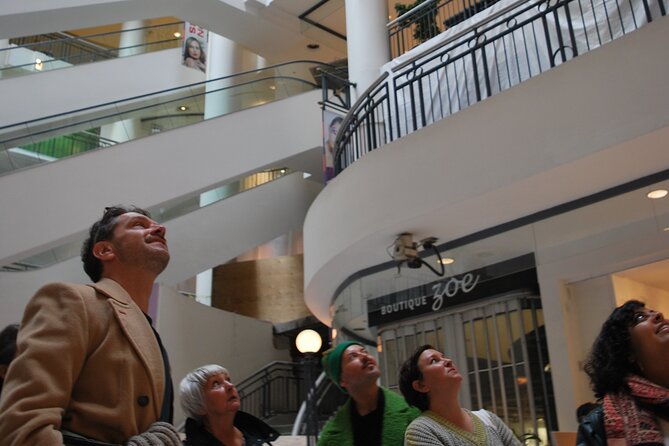
I like tours that teach you how to use a city, not just where to point your camera. This one does both. You get a quick introduction to downtown Montreal’s architecture and districts, then learn how to move through the underground pedestrian network without feeling lost.
That practical lesson matters. The Underground City can seem confusing at first. It is not one single tunnel with one clear entrance. Instead, it is a broad network of connected indoor walkways, shopping areas, metro stations, office complexes, public spaces, and buildings. Some sections feel polished and commercial. Others are simply useful passages beneath busy streets.
Thom’s job is to make that system understandable. He explains how the network developed, why Montreal needs it, and why it has become such a major part of daily life downtown. By the end, you should feel more comfortable finding your way between the metro, shopping streets, attractions, and central neighborhoods.
I would take this tour near the beginning of a Montreal stay. Several people who returned to the city chose it as an orientation walk, and that makes sense. Once you understand the downtown layout, you can return to places such as Chinatown, Place des Arts, or the World Trade Centre on your own.
More City Tours in Montreal
- From Montreal: Quebec City and Montmorency Falls Day Trip
★ 4.5 · 2,669 reviews - Quebec City and Montmorency Falls Day Trip from Montreal
★ 4.0 · 2,437 reviews - Montreal City Sightseeing Tour with Live Commentary
★ 4.0 · 1,953 reviews
Starting at The Ring on Rue de la Gauchetière
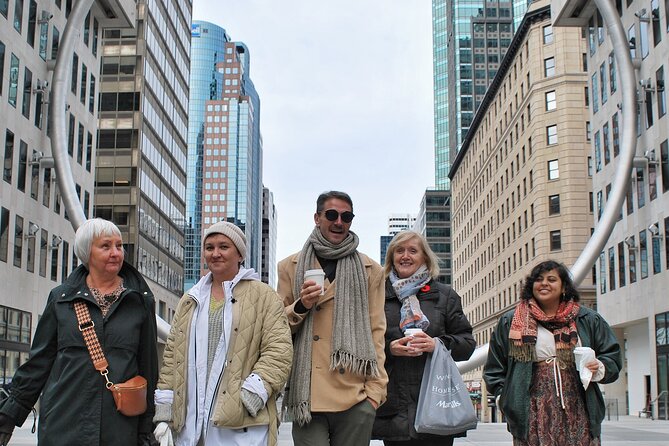
The meeting point is at 1000 Rue De la Gauchetière O, near The Ring. This large modern installation makes an easy landmark and gives the tour a strong visual start.
The Ring is a larger-than-life public artwork and a natural photo stop. You get about five minutes here, enough time for pictures and a brief introduction before heading inside. Do not expect a long art lecture at this point. The purpose is to gather, take in the setting, and begin connecting modern public art with downtown Montreal.
The location is near public transportation, which helps if you are arriving by metro or staying in central Montreal. Arrive ready to walk rather than treating this as a ride-based sightseeing tour.
Making sense of 45 minutes in the Underground City
The main portion of the tour gives you about 45 minutes in the Underground City. This is where the experience earns its keep.
Montreal’s underground pedestrian network is often described as the largest of its kind in the world. The useful part of this tour is not simply hearing that claim. You see the connections and learn how the system operates. Your guide points out tunnels, paths, metro links, and indoor areas that can be easy to miss when you are on your own.
The name can also mislead you. Much of the network is not a dark tunnel buried far below the pavement. You might walk through bright shopping passages, hotel and office connections, transit areas, galleries, and indoor public spaces. Some portions are very much part of downtown life rather than a separate underground world.
I appreciate the way this changes your view of Montreal. The system is a response to the city’s harsh winters, but it is also a piece of urban planning. It lets people move between workplaces, transit, stores, restaurants, and cultural sites while avoiding some of the worst weather.
You will also learn that the Underground City is not perfectly uniform. Different sections have different designs, entrances, signs, and uses. A guide helps you see the logic behind the network instead of simply following a corridor.
The practical benefit is clear in winter. You can keep your coat on, but you may spend much of the tour indoors and out of the wind. On a mild day, the underground route is still worth seeing because it reveals a side of Montreal you would probably overlook from street level.
Place Ville-Marie and the city’s mid-century core
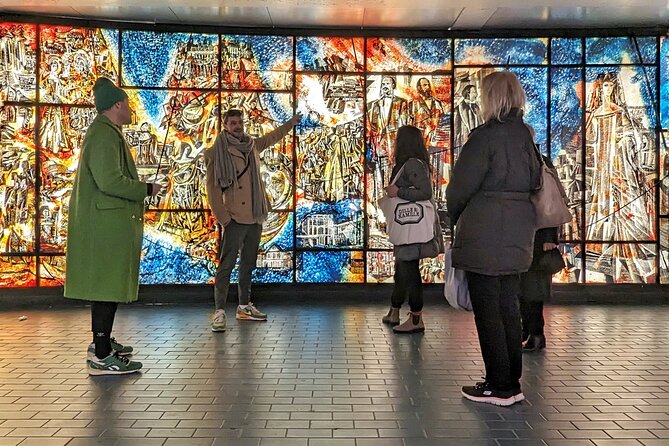
The next major stop is Place Ville-Marie, where you spend about 10 minutes. This building is central to both the downtown skyline and the Underground City.
Place Ville-Marie is a major work of mid-century modern architecture by I. M. Pei. You do not need to be an architecture specialist to enjoy the stop. The building helps explain how Montreal’s modern downtown developed around large towers, underground connections, shopping areas, and transit routes.
This is one of the tour’s useful contrasts. Montreal is not simply an old European-style city with a few new towers added around the edges. The downtown core includes grand older churches and historic districts alongside large modern buildings and engineered indoor routes.
The stop is short, so expect an overview rather than a detailed architectural study. Thom’s broader explanations are more important here. He ties the building to the way Montreal works today, not just to its shape or famous designer.
A few more Montreal trips worth comparing
- Montreal: Guided Bus Tour
★ 4.4 · 3,064 reviews - Montreal: Hop-On Hop-Off Double-Decker Bus Tour
★ 4.1 · 2,760 reviews - Montreal Mile End Authentic Food Tour with 7 Delicacies Tastings
★ 5.0 · 2,598 reviews - The Original Old Montréal Walking Tour by Guidatour
★ 4.5 · 2,217 reviews
Downtown Montreal in one compact walk
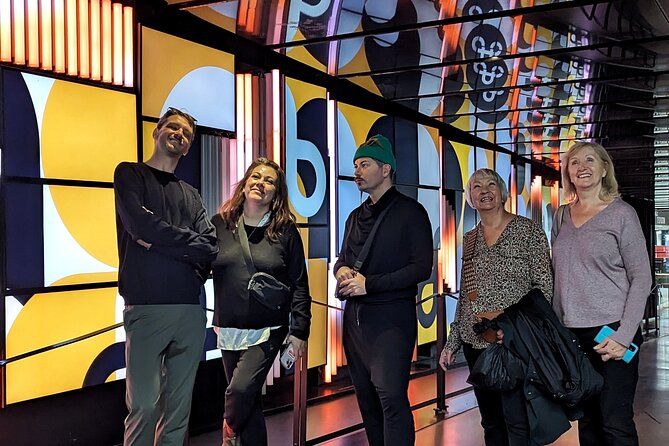
The downtown portion gives you a quick look at several distinct areas. In about 15 minutes, you are introduced to the Quartier des spectacles, Chinatown, the International Quarter, the Financial District, and the Golden Square Mile.
That list sounds ambitious for such a short period, and it is. You will not explore each neighborhood in depth. Instead, you get a useful map in your head and a sense of how close these areas are to one another.
The Quartier des spectacles is Montreal’s major entertainment area, with festival grounds, cultural venues, and nightlife. Place des Arts, the city’s large performing arts center, is part of that cultural picture. Chinatown adds a different character, with its own streets, businesses, and food options.
The International Quarter and Financial District show another side of downtown, with modern towers and business institutions. The Golden Square Mile brings in grander historic architecture and the city’s older wealth. The point is not to linger in one district. It is to see how Montreal’s downtown changes from block to block.
I like this broad approach because it gives you choices for the rest of your stay. You may decide to return for a museum, a meal, a performance, shopping, or a closer look at a cathedral. The guide helps you identify what deserves more of your time.
You will also see the contrast between centuries-old neo-Gothic churches and modern skyscrapers. Montreal’s architectural story is told through those juxtapositions. The same downtown can offer a historic cathedral, a glass tower, a festival plaza, a metro station, and a shopping street within a fairly short walk.
Place des Arts and Montreal’s cultural side
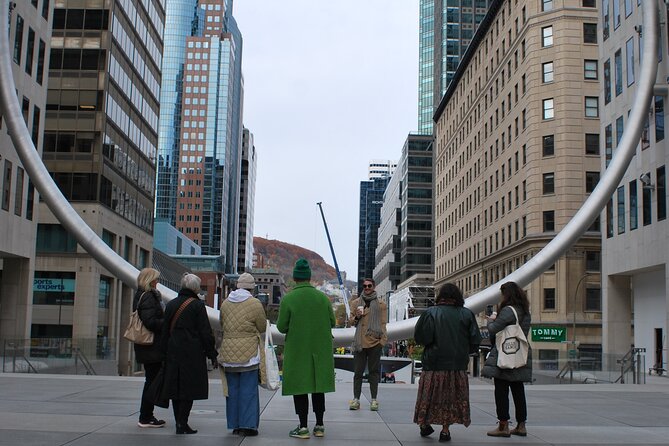
Place des Arts receives about 10 minutes. This modern performing arts center is home to the Grands Ballets Canadiens, the Opéra de Montréal, and the Orchestre Symphonique de Montréal.
The stop works best as a cultural orientation point. You learn where Montreal’s major performing arts institutions are based and how the entertainment district fits into downtown. If you are planning to attend a show, this is a helpful way to place the venue before returning on your own.
Do not book this tour expecting entry to a performance or a long indoor visit through the arts complex. The tour is about the city around the building and its role in Montreal life.
This is also where the tour’s larger theme becomes clear. Montreal’s downtown is not only a business center. It is a place for festivals, concerts, museums, universities, nightlife, and hockey. The itinerary moves quickly, but it gives you a useful sense of that mix.
The Montreal World Trade Centre and Berlin Wall fragment
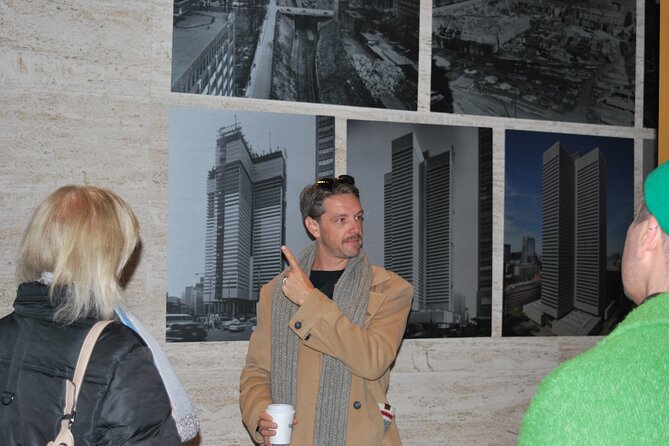
The final stop is the Montreal World Trade Centre, where the Underground City’s indoor and outdoor sides come together. You spend about 10 minutes here.
This is one of the most unusual locations on the route. The complex includes fountains and a slab of the Berlin Wall. That piece of the wall adds an international historical note to a space that might otherwise look like a modern commercial passage.
The World Trade Centre also shows why calling the network simply underground is incomplete. The system includes courtyards, atriums, connected buildings, and open-feeling spaces as well as enclosed routes. The design can make you forget that you are moving beneath or between major downtown streets.
The tour ends at 747 Rue du Square-Victoria, suite 700, at the Centre de commerce mondial. That is a useful finishing point. You are close to Old Montreal, Chinatown, downtown, public transportation, and many places to eat.
If you have energy, you can continue exploring from here. If the weather is poor, you can also use the underground network and metro to make your way toward your next stop.
What the guide adds to the route
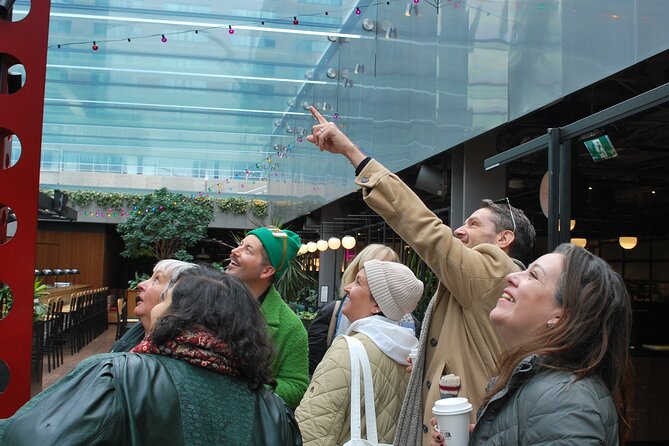
The strongest part of this experience is the guiding. Thom is praised for being engaging, humorous, warm, and well informed about Montreal’s past, architecture, people, and French Canadian culture.
That combination matters. A guide who only gives directions would not be enough here. The Underground City is practical, but it can feel anonymous without context. Thom connects the infrastructure to the city’s identity and explains why Montreal looks and functions as it does.
The tour also leaves room for questions. That is useful because the route raises plenty of natural ones. Why does Montreal have so much public art? How did the city get its name? Why is there a piece of the Berlin Wall in the World Trade Centre? What makes one building different from another? The experience is at its best when you use the walking time to ask.
A small group of up to 10 people helps. You are less likely to lose the guide in busy passages, and it is easier to hear explanations or ask for a recommendation. The compact size also suits the route, since underground spaces and metro connections can be awkward with a large group.
Price, metro value, and what you receive
The listed price is $66.69 per person for roughly two hours. That puts the tour in the moderate-to-high range for a short walking experience, so value depends on what you want from it.
If you only want to see the Underground City, you can enter many parts on your own without paying admission. The fee here pays for structure, local interpretation, orientation, and the guide’s time. You are not buying access to a locked attraction. You are paying to understand a complicated part of Montreal and to connect it with the city above.
A 24-hour metro pass has been included with the experience, allowing you to continue using public transportation after the tour. Confirm the current arrangements when booking, but if included, this adds real value. You can use the rest of the day to reach other parts of Montreal without paying separately for every ride.
Some tour experiences also include a drink or gift card at the end, with alcoholic drinks available only to people age 18 and older. Treat that as an extra rather than the main reason to book.
The best value comes when you take the tour early in your visit and use what you learn. If you spend the following day wandering randomly through downtown, the benefit is smaller. If you use the route to plan your own visits, the price becomes easier to justify.
Walking, access, and timing
The tour begins at 10:30 a.m. and lasts about two hours. That timing gives you a useful start to the day, with plenty of time afterward for Old Montreal, museums, lunch, shopping, or another neighborhood.
You need comfortable shoes. The route includes lots of walking, stairs, escalators, and changing levels. It is not accessible to people with limited mobility and is not recommended for anyone using a walker, crutches, or cane.
The tour is offered in English. Most people can participate, but you should be comfortable keeping pace through a busy urban setting. The route is protected from much of Montreal’s weather, yet you still need to dress for the conditions between entrances and exits.
Who should book this Montreal tour?
I would recommend it most strongly to first-time visitors, winter visitors, families, couples, and solo travelers who want a useful downtown introduction. Teenagers may enjoy it too, since the mix of public art, metro travel, architecture, shopping, and unusual places such as the Berlin Wall fragment keeps the route moving.
It also suits repeat visitors. Montreal changes with the season, and the Underground City is easy to miss even if you have already seen Old Montreal and Mount Royal.
You may want a different tour if you prefer a slow, detailed look at one historic district. This route covers a lot of ground quickly. It does not provide a long museum visit, a sit-down meal, or extensive time inside each neighborhood.
Should you book it?
Book this tour if you want to understand how downtown Montreal fits together, especially during cold weather. You will see public art, major architecture, cultural venues, historic contrasts, metro links, and the Underground City in one compact outing.
The best reason to go is Thom’s guiding. He turns a maze of passages and buildings into a story about Montreal’s culture, planning, and daily life. Skip it only if stairs and sustained walking are difficult for you, or if you want a slower sightseeing pace.
For most able-bodied visitors, I would take it near the start of a Montreal stay. It helps you get your bearings, keeps you warm, and gives you a practical route for exploring on your own afterward.
FAQ
Where does the tour begin?
The tour begins at 1000 Rue De la Gauchetière O, Montréal, Quebec H3B 4W5, near The Ring.
What time does the tour start?
The tour starts at 10:30 a.m.
How long does the tour last?
The experience lasts approximately two hours.
Where does the tour end?
It ends at 747 Rue du Square-Victoria, suite 700, Montréal, at the Centre de commerce mondial.
Is the tour offered in English?
Yes. The tour is offered in English.
How many people can join the tour?
The maximum group size is 10 people.
Is the tour accessible to people with limited mobility?
No. The route includes substantial walking, stairs, and escalators, and it is not recommended for people using walkers, crutches, or canes.
Does the tour include public transportation?
A 24-hour metro pass has been included with the experience, allowing you to continue exploring after the guided tour. Confirm the current inclusion when booking.
Can I cancel for a full refund?
Yes, if you cancel at least 24 hours before the local start time. Cancellations made less than 24 hours before the start time are not refunded.
Just added around Montreal
- Full Day Family Bike Rental★ 5.0 · 17 reviews
- Montréal Downtown and Underground City Private Walking Tour★ 5.0 · 47 reviews
- Winter Express: Old Montreal Highlights Walking Tour★ 5.0 · 119 reviews
- Under the Surface of Montreal’s Chinatown: Guided Food Walking Tour★ 5.0 · 23 reviews
- Montreal Premium Driving Tour with River Cruise and Notre Dame★ 4.5 · 164 reviews
- The Ultimate Montreal Boat Tour – Fall Colors Apéro Edition★ 4.5 · 31 reviews
- In the Shadow of the Mountain: Montreal Jewish History Walking Tour★ 4.5 · 33 reviews
- Immersive Virtual Reality Game Activity★ 5.0 · 19 reviews
City Tours, compared.
Half-Day Trip to Montmorency Falls and Ste-Anne-de-Beaupré from Quebec city
Read our review →
Old Quebec City: Grand Walking Tour with Private Option
Read our review →
Quebec City and Montmorency Falls Day Trip from Montreal
Read our review →Browse the lists this tour appears in