
Reviewed · HISTORICAL TOURS
Toronto: Distillery District Historic Walking Tour
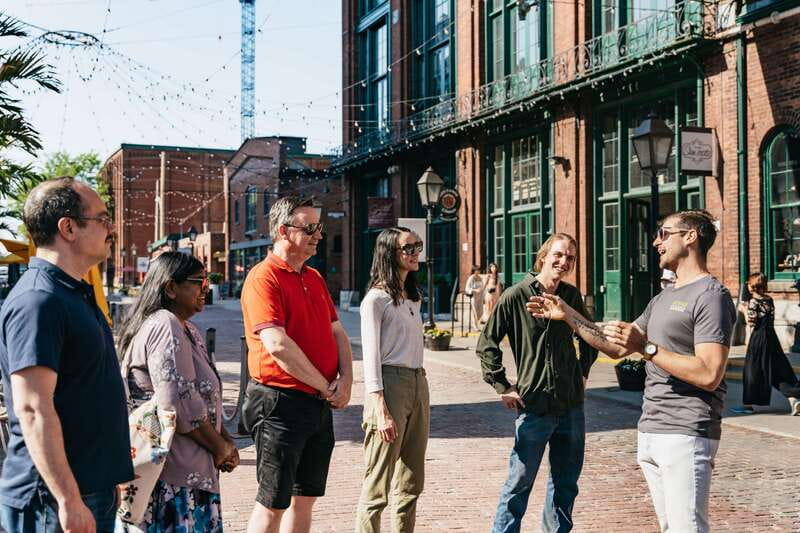
Toronto’s whiskey past is hiding in plain sight. This one-hour walk brings the Distillery District’s cobblestones, Victorian factories, and Gooderham and Worts story into focus, with lively tales of business ambition, alcohol, women’s work, and a young city that drank hard. I especially like the chance to see parts of the buildings that are not normally open to the public, and the way the guides connect the district to Toronto’s wider growth. The main limitation is simple: one hour goes quickly, and this is a history walk rather than a distillery tasting.
The tour costs $20 per person, which is fair for a professional guide, sales tax, and a focused introduction to one of Toronto’s most distinctive areas. It is also easy walking, wheelchair accessible, and suitable for most people aged 10 and over. If you want spirits to sample, book the separate Prohibition and Spirits Walking Tour instead.
In This Review
- Key points at a glance
- Why the Distillery District deserves a guided walk
- Meeting near the Red Heart
- The first look at Victorian industrial Toronto
- Gooderham and Worts, from family business to giant producer
- Stories from Toronto’s early drinking years
- The waterfront has moved, and the district explains why
- A compact route with plenty to notice
- Guides are the main variable, and the signs are good
- What is included, and what is not
- Who should book this walk?
- Practical tips for making the hour count
- Should you book the Toronto Distillery District walking tour?
- FAQ
- How long is the Toronto Distillery District Historic Walking Tour?
- How much does the tour cost?
- Where does the tour meet?
- Where does the tour finish?
- What language is the tour conducted in?
- Is alcohol tasting included?
- Is the tour wheelchair accessible?
- How difficult is the walking?
- What should I bring?
- Can I cancel the tour for a full refund?
Key points at a glance
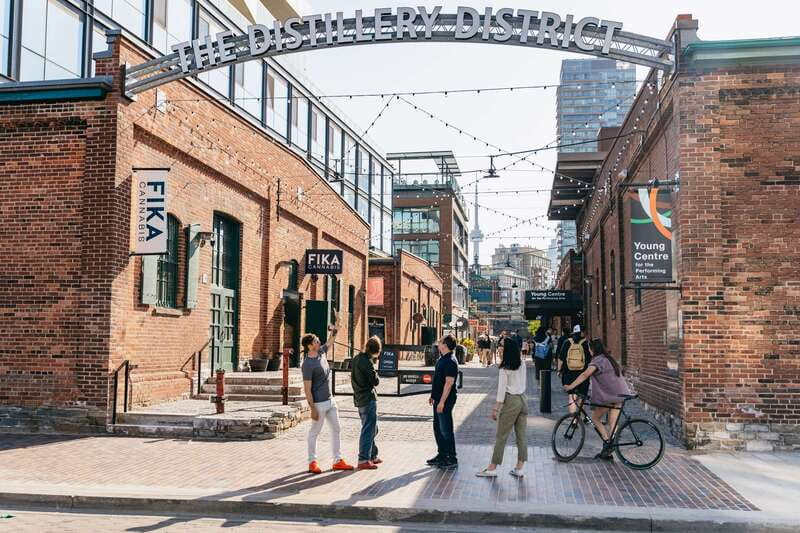
- Victorian factories with surprising access: You may see interiors and details that are easy to miss from the public lanes.
- Toronto’s whiskey powerhouse: Learn how Gooderham and Worts grew into one of the world’s largest distilleries.
- More than a drinking story: The tour also covers family business, industrial work, women’s jobs, and the changing shoreline.
- A lively guide makes the difference: Guides including Erik, Nicole, Devin, Tom, Sarah, and Eric have been praised for humor, energy, and clear storytelling.
- Easy one-hour format: The route works well before lunch, dinner, shopping, or a longer Toronto sightseeing day.
- No tasting included: The standard experience focuses on history, not alcohol samples.
Why the Distillery District deserves a guided walk

The Distillery District is one of those Toronto areas that can look self-explanatory. You see handsome brick buildings, old industrial details, art, shops, restaurants, bars, galleries, theaters, and broad pedestrian lanes. It is attractive enough for a pleasant stroll without any plan.
But the polished setting can hide the working place it once was. This was not built as a picturesque shopping quarter. It was an industrial complex tied to grain, whiskey, shipping, labor, trade, and Toronto’s early development. A guide gives you the missing connections.
The area contains the largest and best-preserved collection of Victorian industrial architecture in North America. That claim matters because the buildings are not just decorative shells. Their thick walls, working layout, and sturdy construction help explain how a distillery operated at a huge scale.
I like this kind of tour because it makes you look twice. A wall becomes evidence of production. A lane suggests the movement of goods. The position of the lake becomes part of the story. One especially useful detail concerns how close the shoreline once was to the original property compared with today. Toronto changed its waterfront, and the district’s location makes more sense once you understand that shift.
More History Tours in Toronto
- Toronto: Dark History Nighttime Walking Tour
★ 4.7 · 273 reviews - Toronto Local Beer Tour: 2 Beers at 2 Unique & Historical Pubs
★ 5.0 · 154 reviews - Old Town Toronto History Walking Tour
★ 4.5 · 122 reviews
Meeting near the Red Heart
The tour begins at Go Tours Canada, inside the Distillery District. The office is at 11 Gristmill Lane, near the Red Heart at Parliament Street and Mill Street.
Give yourself enough time to find the office. The district is pedestrian-friendly, but its lanes can feel confusing if you arrive in a hurry. You will check in first, then head out with an English-speaking guide for the one-hour walk.
The meeting point is useful for planning the rest of your day. You are already among the district’s restaurants, bars, boutiques, galleries, outdoor sculptures, and theaters. A morning tour can lead into lunch. An afternoon tour works well before dinner or an evening visit to the area.
There is no transportation between stops. You walk the entire route and return to Go Tours Canada at the end.
The first look at Victorian industrial Toronto
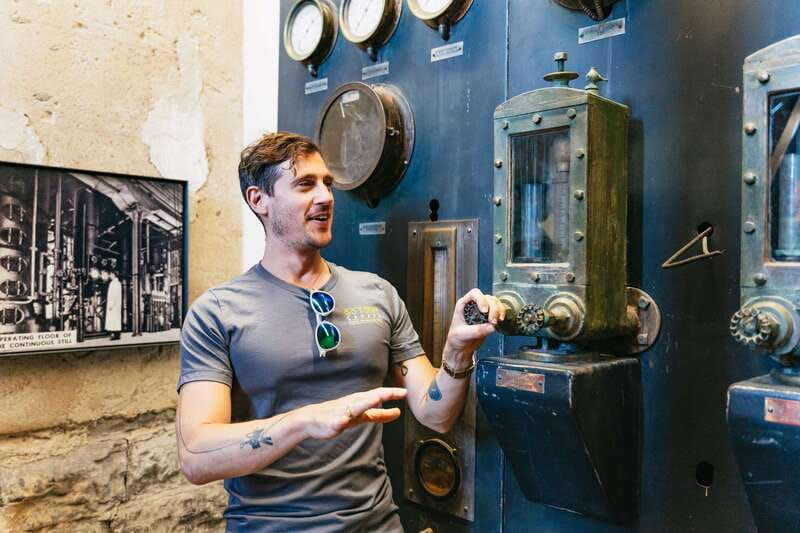
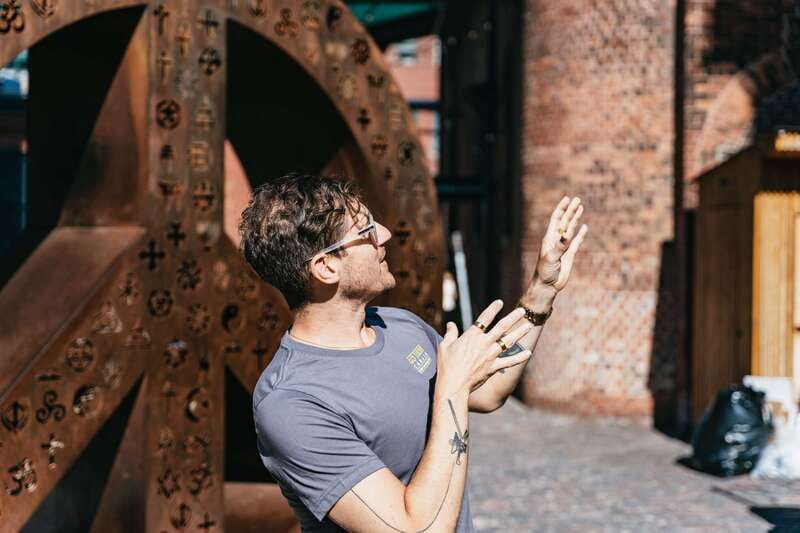
The opening part of the walk sets up the buildings themselves. Expect your guide to point out materials, construction, industrial design, and the difference between what you see today and what the complex was built to do.
The architecture is the visual star, but it works best when paired with explanation. Without context, the old brick buildings may simply look photogenic. With context, you start to notice how practical and heavy-duty the site feels.
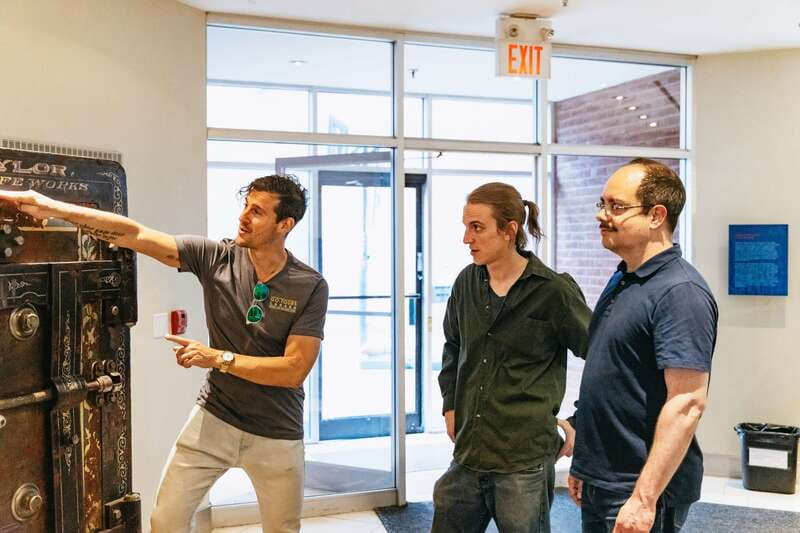
One past participant singled out a white building with walls about a meter thick. That is the sort of detail that gives the district weight. These were built for industry, storage, security, and long use, not for quick redevelopment.
The tour may also offer a look inside buildings that the general public cannot normally enter. Access can depend on the day and the guide, so treat it as a welcome possibility rather than a guarantee. Even from the streets, the preserved facades and industrial forms make the walk worthwhile.
Bring a camera, but do not let photography take over. The best details are often small: masonry, old openings, structural features, and the way the buildings frame the lanes.
Gooderham and Worts, from family business to giant producer
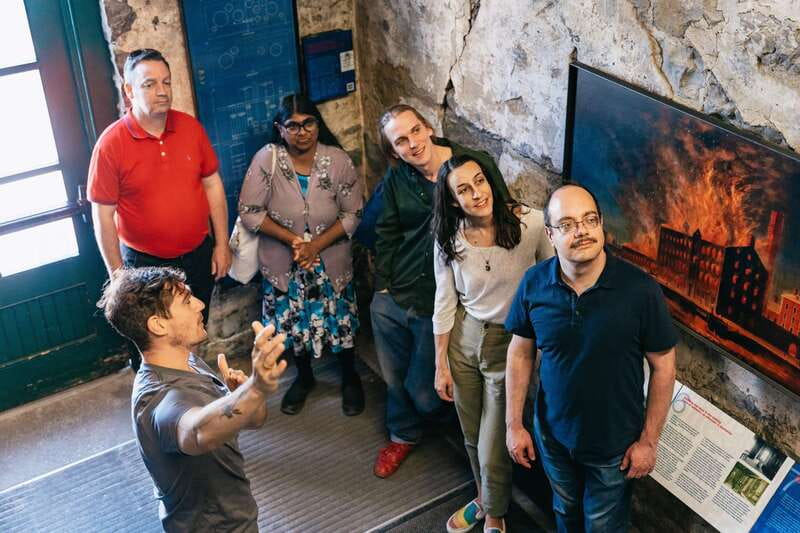
The central story is the rise of Gooderham and Worts. The company grew from a family operation into a distillery of international importance, eventually becoming the world’s largest distillery according to the tour’s historical account.
That makes the district more than a collection of old buildings. You are looking at the remains of a company that shaped employment, trade, and Toronto’s identity. The story includes business decisions, family interests, production, and the hard practical work needed to keep such a large operation running.
The tour also explains the company’s fall from grace and the eventual end of distilling. One guide-led account notes that whiskey production continued until 1990, a surprisingly recent date for a place that now feels historic.
I find this rise-and-fall structure more useful than a simple list of dates. It gives you a clear way to understand the district. First came growth and industrial success. Then the business changed, the city changed, and the old production role ended. Later, the buildings found a new life as a cultural and entertainment quarter.
The experience is not a technical distillery tour. You should not expect a full explanation of modern whiskey production or a tasting flight. The emphasis is on the people, company, buildings, and city around the distillery.
More Walking Tours in Toronto
- Show me the City! A Small Group Walking Tour of Toronto
★ 5.0 · 621 reviews - Toronto Distillery District Walking Tour
★ 5.0 · 327 reviews - Toronto: City Highlights Walking Tour | 3-Hour
★ 4.6 · 306 reviews - Old Town Toronto Highlights 3 Hour Walking Tour | Gratuity-Based
★ 4.5 · 290 reviews
Stories from Toronto’s early drinking years
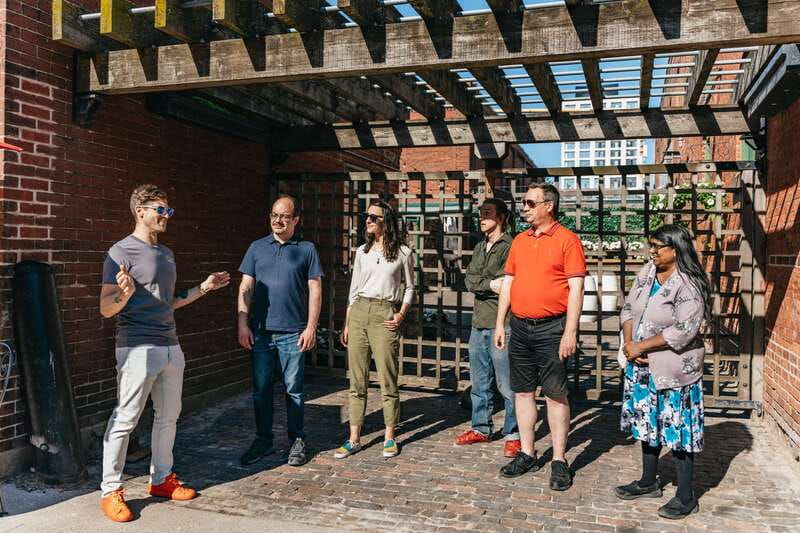
The tour’s most entertaining angle is its portrait of early Toronto as a young, often inebriated city. Alcohol was not a side issue. It affected business, social life, work, regulation, and public behavior.
A strong guide can make this material funny without turning it into a string of drinking jokes. The supplied guide accounts repeatedly praise Erik, Eric, Devin, Nicole, and others for balancing humor with useful detail. Erik, in particular, has been praised for energetic storytelling and amusing jokes. Devin was noted for bringing the period to life, including the atmosphere of the district when liquor production was at full speed.
The humor helps, but the larger value is context. You learn why a distillery could become so powerful in Toronto and why alcohol production mattered to the city’s growth. The walk connects private business to public life.
There are also less expected subjects. The distillery’s work included antifreeze, not just whiskey. The operation created jobs for women, with wider social effects that your guide may explain. These details keep the tour from becoming a narrow story about famous men and old bottles.
If you prefer history with a human scale, this is one of the strongest parts of the experience. The big company story is there, but it is tied to workers, families, streets, and daily life.
The waterfront has moved, and the district explains why
The relationship between the Distillery District and Lake Ontario is another worthwhile thread. The shoreline is not where it was when the original property began operating. That simple fact changes how you picture the site.
Today, the district can feel separated from the lake by the modern city. In its early years, its position near the waterfront had more direct importance for bringing in materials and moving goods. Your guide can help you picture the industrial complex in its earlier setting.
This is a good example of why a short guided walk adds value even if you have already visited the district. You may have photographed the buildings before, but you may not have understood how Toronto’s land-making and expansion altered the setting.
The tour does not turn into a long waterfront history lesson. Instead, the shoreline becomes one useful piece of the larger story. That keeps the hour moving.
A compact route with plenty to notice
The formal route is simple:
- Check in at Go Tours Canada.
- Walk through the Distillery District with a professional guide for one hour.
- Return to Go Tours Canada.
The district itself is not enormous, so the tour can cover a lot without exhausting you. Past guide-led visits have sometimes taken longer than the scheduled hour, especially when the group had questions or when only one or two people attended. Do not count on overtime, but the pattern suggests that guides are willing to engage rather than rush through a script.
Small groups can be especially pleasant. Nicole has led tours for very small parties, including a departure with only one participant, and still gave a full explanation and time for questions. That matters if you prefer conversation over a large crowd.
The route is described as easy walking. You should still wear comfortable shoes because the surface includes cobblestone streets and you will be on your feet for the full hour. The tour is wheelchair accessible, but cobblestones can make any rolling route less smooth than a paved sidewalk.
Rain does not necessarily ruin the experience. One guide kept much of a wet-weather tour indoors, which made the walk more comfortable. Still, bring weather-appropriate clothing because the tour takes place outside as well as inside when access allows.
Guides are the main variable, and the signs are good

The buildings provide the setting, but the guide shapes the experience. The strongest praise centers on guides who are energetic, friendly, funny, and willing to answer questions.
Erik has been praised several times for passion, humor, and a talent for making historical details memorable. Nicole receives similar praise for warmth, patience, and personal attention. Devin is noted for enthusiasm and for making the city’s past feel close at hand. Tom, Sarah, Eric, David, Milo, Josh, and Michelle have also been praised for clear explanations, humor, and helpful suggestions for seeing more of the district.
That range matters. You are not relying on one personality to carry every departure. The consistent pattern is a guide who treats the walk as a conversation rather than a lecture.
The overall score is 4.8 from 267 ratings, with repeated praise for the storytelling, historical detail, and friendly presentation. I would put the guide quality at the top of the reasons to book.
What is included, and what is not
For $20, you receive:
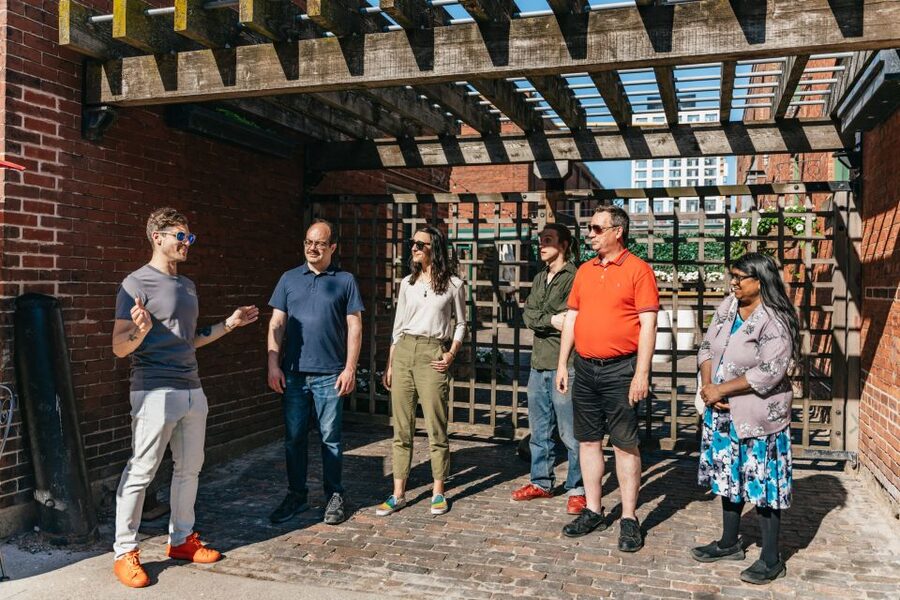
- A one-hour guided walking tour
- A professional English-speaking guide
- Sales tax
The price is good if you want orientation and historical context, not just access to the district. You can walk through the area for free, but the tour may reveal interiors, explain architectural details, and connect the distillery to Toronto’s larger story.
Alcohol tasting is not part of this standard tour. That distinction is important. Some older departures included chocolate or beer at the end, but you should not assume those extras are included now. The clearly defined tasting option is the separate Prohibition and Spirits Walking Tour, which combines Prohibition and Distillery District history with a flight of spirits.
The $20 fee is easiest to justify if you plan to spend time in the district afterward. The tour gives you a better sense of where to pause for food, drinks, shopping, galleries, or theater. It turns a pretty area into a place with a story.
Who should book this walk?
I would recommend it to first-time Toronto visitors who want a short, manageable introduction to the Distillery District. It also suits locals playing tourist in their own city. One local participant had visited many times but still found the guided explanation changed how the area made sense.
Families with older children may enjoy the stories, especially those aged 10 and above. The route is short, the subject is lively, and the mix of business, alcohol, architecture, and city growth gives a guide several ways to hold attention.
It is also a good choice for history fans who do not want a long museum visit. You get buildings, streets, and physical evidence while walking through an active district.
You may want something else if your main goal is whiskey tasting, a full production tour, or an extended architectural survey. Book the spirits option for samples. Choose another experience if you want a much longer historical walk.
Practical tips for making the hour count
Arrive early enough to locate 11 Gristmill Lane and check in without stress. The office is near the Red Heart at Parliament and Mill, but the district’s lanes can be unfamiliar on a first visit.
Wear comfortable shoes. The walking level is easy, but cobblestones and standing can still tire you if you arrive in dress shoes.
Bring a camera and a passport or other identification. English is the tour language, and the general age recommendation is 10 and above.
Plan extra time after the tour. The walk lasts one hour, but the district rewards a slower second look. You can browse boutiques and galleries, examine outdoor sculptures, or choose a restaurant or bar nearby.
If you are deciding between the history walk and the Prohibition and Spirits option, ask yourself one question: do you want the story, the tasting, or both? The standard tour gives you the story at a lower price. The other option is the better fit if spirits are central to your plans.
Should you book the Toronto Distillery District walking tour?
Yes, if you want a short, well-priced history walk with strong guides and plenty of context. The tour explains why the buildings matter, how Gooderham and Worts shaped Toronto, and how an industrial whiskey complex became one of the city’s favorite places to eat, shop, and explore.
Book it early in your Distillery District visit, not at the end. You will understand the buildings better and have time to use the guide’s suggestions afterward.
Skip this version if you expect alcohol samples. For that, choose the Prohibition and Spirits Walking Tour. For everyone else, $20 buys a useful hour, a clearer view of Toronto’s past, and a much better reason to look up from the cobblestones.
FAQ
How long is the Toronto Distillery District Historic Walking Tour?
The guided walking tour lasts one hour.
How much does the tour cost?
The listed price is $20 per person, including sales tax.
Where does the tour meet?
Check in at Go Tours Canada, 11 Gristmill Lane, Toronto, near the Red Heart at Parliament Street and Mill Street.
Where does the tour finish?
The walk returns to Go Tours Canada in the Distillery District.
What language is the tour conducted in?
The tour is conducted in English with a live guide.
Is alcohol tasting included?
No. The standard historic walking tour does not include alcohol tasting. A separate Prohibition and Spirits Walking Tour includes a flight of spirits.
Is the tour wheelchair accessible?
Yes, the activity is listed as wheelchair accessible.
How difficult is the walking?
The walking level is easy. Comfortable shoes are recommended because the route uses cobblestone streets and includes standing.
What should I bring?
Bring a passport or identification card, comfortable shoes, and a camera.
Can I cancel the tour for a full refund?
Yes. You can cancel up to 24 hours in advance for a full refund. You can also reserve now and pay later to keep your plans flexible.
Just added around Toronto
- Toronto Craft Brewery Tour★ 5.0 · 97 reviews
- Canada eSIM | 3-30 days | Daily data | QR code★ 4.0 · 12 reviews
- Handcrafted Donuts of Toronto: A Sweet City Walking Tour★ 5.0 · 141 reviews
- Underground Toronto PATH Tour★ 4.5 · 6 reviews
- Tour to Niagara Falls from Toronto★ 4.0 · 19 reviews
- Customizable Walking Tour of Toronto’s Hidden Gems★ 5.0 · 15 reviews
- Tour to Niagara Falls with skip the line Cruise★ 4.0 · 27 reviews
- Tour of Niagara Falls with Cruise and Lunch from Toronto★ 4.5 · 13 reviews
Historical Tours, compared.



Evening Gourmet Tour 5 Course Dinner – History and Food in Old Quebec City
Read our review →

Browse the lists this tour appears in