
Reviewed · WALKING TOURS
Then & Now Walking Tour
Victoria’s past is hiding in plain sight. This two-hour to two-and-a-half-hour walking tour links major sights with the less polished stories behind them, from colonial power and courthouse hangings to Chinatown’s opium and gambling trade. I like the clear route from Government Street to Fan Tan Alley, and I like that guides such as Helen and Claire add local stories beyond the usual guidebook facts. The main drawback is the price: at $220.32 per person, this is a serious spend for a short walking tour.
I also like the small-group limit of 20 people, which should make it easier to hear the guide and ask questions. The tour can help you get oriented early in a Victoria visit, with practical tips about restaurants, shopping, and entertainment included along the way. Bring water and dress for changing west-coast weather, since the tour runs outside and requires good weather.
In This Review
- Key points to know before booking
- What the Then & Now Walking Tour is really about
- Royal BC Museum area: starting with Indigenous culture
- Empress Hotel: architecture, status, and old Victoria
- Trounce Alley: a small lane with several stories
- Market Square: the ravine beneath the modern city
- Bastion Square: law, punishment, and public spectacle
- Fan Tan Alley: Chinatown’s most vivid finish
- The guides make the difference
- Is $220.32 per person good value?
- Timing, weather, and practical details
- Who should book it?
- FAQ
- How long does the Then & Now Walking Tour last?
- Where does the tour begin?
- Where does the tour end?
- What time does the tour start?
- Is admission to the stops included?
- Are children charged for the tour?
- What happens if bad weather cancels the tour?
Key points to know before booking

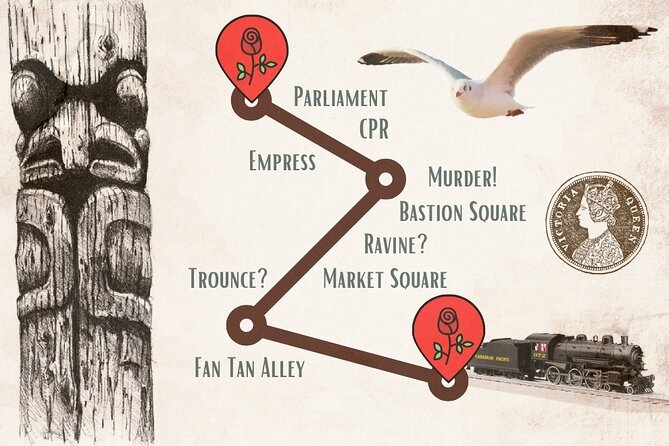
- Six central Victoria stops: The route covers the Royal BC Museum area, Empress Hotel, Trounce Alley, Market Square, Bastion Square, and Fan Tan Alley.
- A story-led walk: Expect scandals, intrigue, local characters, and unusual details rather than a simple list of dates.
- Chinatown finish: The tour ends near the Gate of Harmonious Interest or another preferred location in Chinatown.
- Small group size: A maximum of 20 people keeps the walk more personal than a large city tour.
- Minors 16 and under are free: This can improve the value for families, though the adult price remains high.
- Weather matters: Bring your own hydration and wear suitable clothing. Poor weather can lead to a rescheduled tour or full refund.
What the Then & Now Walking Tour is really about
This is a history walk with a present-day purpose. You are not only shown where important buildings are. You are given a sense of how Victoria was shaped by colonial government, commerce, immigration, law, entertainment, and conflict between communities.
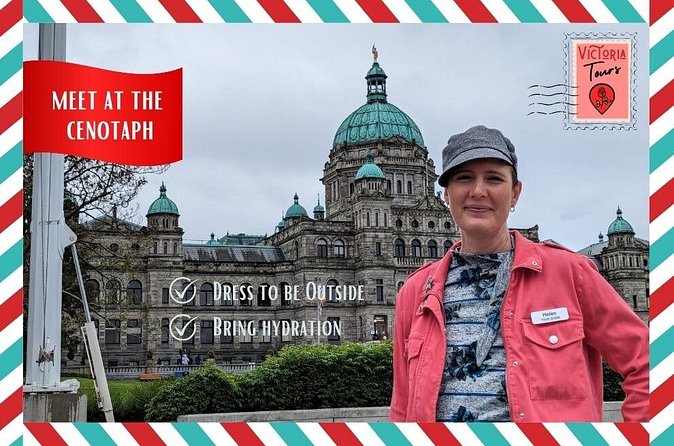
The tour begins at 9:30 a.m. at 698 Government Street, close to the Royal BC Museum and the Inner Harbour area. From there, the route moves through the historic centre and finishes at 568 Fisgard Street in Chinatown. That point is near the Gate of Harmonious Interest, although the walk can end at another preferred location in Chinatown.
The route is compact, but the subject matter is not. In roughly two hours, you move from Indigenous cultural material and grand imperial architecture to narrow lanes, business districts, courts, prisons, and Chinatown. I see this as a useful first look at Victoria, especially if you want context before exploring the city on your own.
The guide is the key to the experience. Helen is praised for her friendly storytelling, local advice, and ability to explain scandal and intrigue without making the tour feel like a lecture. Claire is also described as engaging and full of unusual historical details. Guide assignments may vary, but you can expect a personal style rather than a recorded audio script.
More Walking Tours in Vancouver Island
- Ghostly Walking Tour in Victoria
★ 5.0 · 816 reviews - Victoria Bites and Sights Walking + Ferry (winter Sat, Sun)
★ 5.0 · 242 reviews - Historical Victoria Walking Tour
★ 5.0 · 173 reviews
Royal BC Museum area: starting with Indigenous culture
The first stop is listed at IMAX Victoria in the Royal BC Museum, with a focus on totem poles, Thunderbird Park, and the Ceremonial House. You have about 20 minutes here, and admission to the stop is included.
This is an important choice for the opening. Victoria can sometimes be presented through its British architecture alone, which gives you only one piece of the city’s story. Beginning near Indigenous cultural displays gives the walk a wider frame before it turns to hotels, courts, and commercial streets.
The totem poles and Thunderbird Park provide visual anchors for the discussion. The Ceremonial House adds another point of focus. Since the stop is short, you should expect an introduction rather than a long museum visit. The tour does not list a full Royal BC Museum admission, and the stop is described as free, so do not assume you will have time for the entire museum or IMAX program during this walk.
That limitation is worth noting. If you want a full museum visit, plan it separately. The walking tour gives you a starting point and cultural context, while the museum itself requires more time than this itinerary allows.
Empress Hotel: architecture, status, and old Victoria
The next stop is the Empress Hotel, a National Historic Site of Canada. The tour spends about 20 minutes discussing the hotel’s history and architect.
The Empress is one of Victoria’s most familiar buildings, but a quick photo outside does not tell you much. A guide can help you read it as a symbol of the city’s British identity and its long connection with grand hotel culture. Here, the focus is not only on what the building looks like, but also on why it was built and what its architect intended.
One useful feature of this stop is the chance to see the hotel as part of a larger story. After the first stop’s Indigenous focus, the Empress shows another force that shaped Victoria: the desire to present the city as a refined destination connected to the British Empire.
The tour description allows about 20 minutes, so this is not a full hotel tour. You may see interiors or historic buildings along the route, depending on the guide’s approach and access at the time. Helen’s tour style has included showing beautiful interiors, but interior access should not be treated as guaranteed. The hotel is still worth seeing from the outside, and the guide’s explanation adds meaning to a familiar landmark.
Trounce Alley: a small lane with several stories
Trounce Alley receives about 10 minutes, which may sound brief, but the lane is compact. The guide explains why it is called Trounce, discusses Morse code, and points out unique shops and an old-school arcade.
This is the kind of stop that makes a city walk feel more personal. You are moved away from the grand facades and into a smaller passage where the clues are easy to miss. The name itself becomes part of the story, while the Morse code connection adds a glimpse of how communication once worked before modern phones and messaging.
The shops and arcade also connect the past to present-day Victoria. You are not simply looking at preserved architecture. You are seeing a working part of downtown with retail and entertainment folded into an older setting.
The tradeoff is time. Ten minutes is enough for an explanation and a quick look, but not enough for careful shopping or an arcade visit. If something catches your eye, make a note and return later. This tour is designed to show you where to explore, not give you long free periods at every stop.
Still Vancouver Island, at a slower pace:
- Victoria Half-Day Whale Watching Adventure with Free Photos
★ 5.0 · 2,259 reviews - Victoria Guided Food and History Tour
★ 5.0 · 2,015 reviews - Victoria Whale and Wildlife Cruise
★ 5.0 · 1,729 reviews - Victoria Zodiac Boat Whale Watching Adventure
★ 5.0 · 916 reviews
Market Square: the ravine beneath the modern city
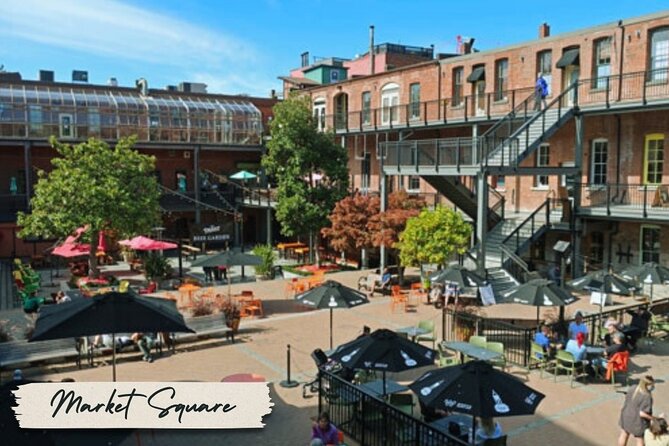
At Market Square, the guide spends about 10 minutes explaining the ravine that divided European and Chinese colonists. That detail gives the square a much more complicated identity than its shops and public spaces suggest.
Market Square is a good place to understand how physical geography can shape social boundaries. A ravine was not just a natural feature. It became a dividing line between communities, reflecting the separation and tension built into early colonial Victoria.
This is one of the tour’s most useful ideas because it connects the city’s layout with its social past. You can look at a modern commercial area and learn that its location once helped mark who lived, worked, or traded where.
Again, the stop is short. You will not receive a full account of every group that shaped the city, and the guide may need to keep the talk focused. Still, the point is strong and memorable. It prepares you for the later stop in Chinatown, where the tour looks more directly at Chinese Canadian history and the businesses that developed there.
Bastion Square: law, punishment, and public spectacle
Bastion Square gets about 15 minutes and covers the courthouse, jailhouse, law offices, and hangings. This is the darker part of the walk, and it helps explain how early Victoria enforced authority.
The square’s name and buildings can sound respectable at first. The guide’s account adds the harder side of civic life: legal power, confinement, and public punishment. Stories of hangings and jailhouse life are not light entertainment, but they make the city’s early institutions easier to understand.
I appreciate this stop because it avoids presenting old Victoria as only elegant hotels and heritage facades. The city also had courts, prisons, lawyers, and people punished in public. That contrast gives the Empress and other grand buildings a more honest setting.
The subject may not suit young children or anyone who prefers a purely architectural tour. The listing says minors 16 and under are free, but free admission does not mean every topic will be suitable for every child. Parents should decide based on their child’s comfort with discussions of crime, punishment, and hangings.
Fan Tan Alley: Chinatown’s most vivid finish
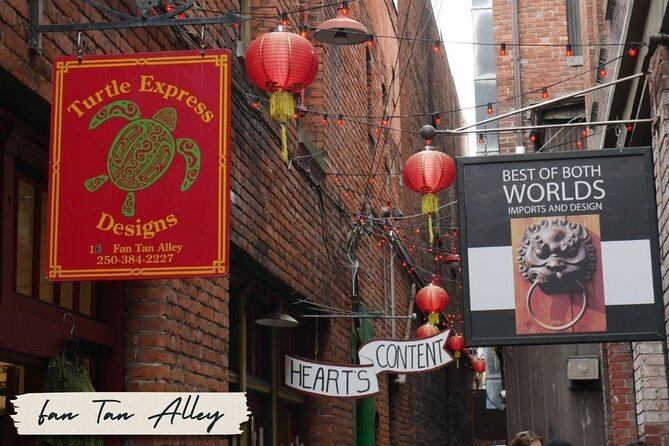
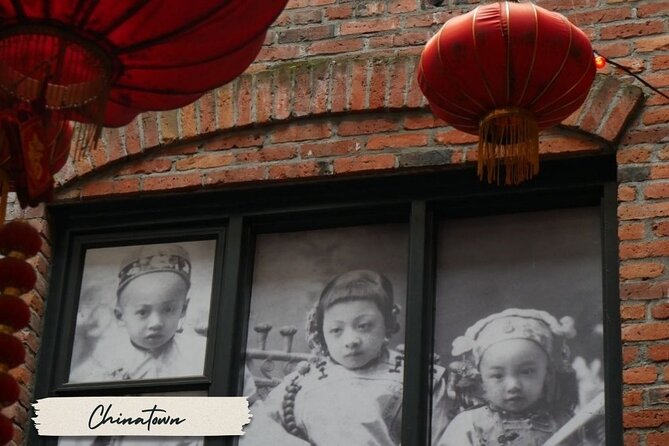
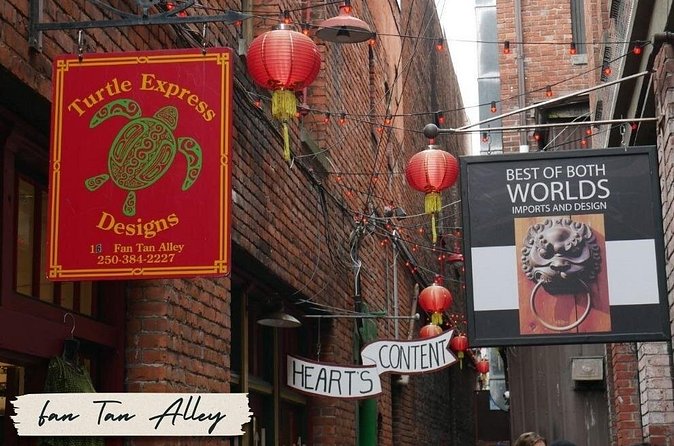
The final major stop is Fan Tan Alley, where the guide discusses opium, gambling, and the history of North America’s second-oldest Chinatown. The walk spends about 15 minutes here and ends nearby in Chinatown.
Fan Tan Alley is narrow and visually striking, but its importance goes beyond its appearance. The talk places the alley within a world of businesses, social rules, entertainment, and activities that were often judged harshly by authorities. Opium and gambling are part of the story, but they should not become the only story. The larger value is seeing Chinatown as a community shaped by commerce, discrimination, adaptation, and local life.
This finish works well because it brings together earlier themes. Market Square introduced the division between European and Chinese colonists. Fan Tan Alley shows you one of the places where Chinese businesses and community life developed within that divided city.
Ending in Chinatown is practical, too. You can continue exploring after the tour, stop for food, or walk to the Gate of Harmonious Interest. The tour ends at 568 Fisgard Street, near that gate, or at another preferred location in Chinatown. The route therefore leaves you in an active part of downtown rather than sending you back to the starting point.
The guides make the difference
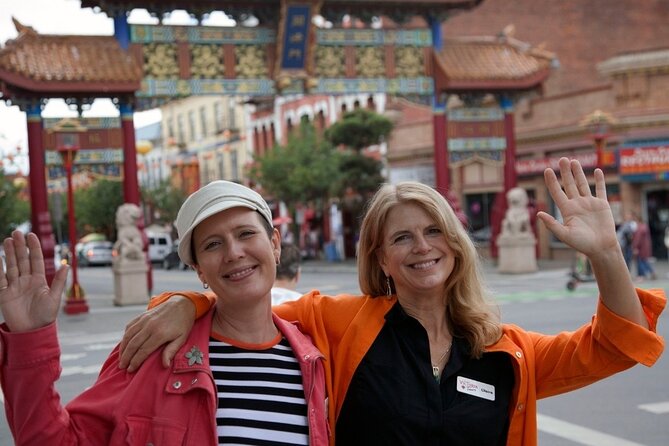
The strongest part of this tour is its human delivery. Helen is described as kind, funny, easy to talk with, and good at telling stories of scandal and intrigue. One account also notes that she offered useful suggestions for restaurants, shopping, and entertainment, which is especially helpful if you are new to Victoria.
Claire is praised for explaining unusual facts that do not usually appear in standard guidebooks. That matters because the official history of a building is easy to find on a plaque. A good local guide adds the odd detail, the overlooked connection, or the story that helps you remember the place.
The guides also appear comfortable adapting their style. Helen has used a little improvisation to explain a story, and the tour is described as welcoming for people who ask questions across a range of subjects. That makes this a better fit for curious people who want conversation, not just a speech.
Still, guide quality can vary from one departure to another. The named guides give you a useful sense of the company’s approach, but you should not assume a particular person will lead your tour unless the operator confirms it.
Is $220.32 per person good value?
The listed price is $220.32 per person, which is expensive for a walking tour lasting about two to two-and-a-half hours. The value depends heavily on what you want from the experience.
If you only want to see the outside of Victoria’s major sights, you can walk much of this route independently for far less. You can visit the Empress, Market Square, Bastion Square, and Fan Tan Alley without paying for a guide. For a budget-minded visitor, the cost is the tour’s biggest weakness.
You are paying for interpretation, local conversation, and a carefully connected story. The guide links Indigenous culture, British architecture, commercial lanes, community divisions, legal punishment, and Chinatown. If Helen or Claire gives you the same kind of personal advice described above, the tour may save you time and help you make better choices for the rest of your visit.
The price looks more reasonable for a small private or premium experience, but the available information only confirms a maximum group size of 20. That is small enough to be manageable, but not necessarily intimate. I would book it when you value a local guide and have limited time in Victoria. I would skip it if you are happy reading plaques, walking at your own pace, and researching the city yourself.
Timing, weather, and practical details
The tour starts at 9:30 a.m. Early timing is useful because it gives you the rest of the day for museums, food, shopping, or another excursion. It can also serve as a first-day orientation, especially since local suggestions about restaurants and entertainment may help shape your plans.
Pickup is offered, but the supplied details do not explain the pickup area, timing, or extra cost. Confirm those points before booking if you need transportation rather than simply meeting at 698 Government Street.
Bring your own water. Wear clothing suited to the weather, since the tour requires walking outdoors and the west-coast forecast can change. Poor weather can cancel the experience, with a choice of another date or a full refund. The tour also requires a minimum number of participants, so a cancellation for that reason brings the same basic options.
The tour is offered in English, uses a mobile ticket, and is near public transportation. Service animals are allowed, and most people can participate. The maximum group size is 20, but the information does not give a full route accessibility assessment, so ask ahead if you have specific mobility concerns.
Free cancellation is available until 24 hours before the start time. If you cancel later, changes and refunds are not accepted under the stated policy.
Who should book it?
I would recommend the Then & Now Walking Tour to a first-time visitor who wants a fast, story-driven introduction to central Victoria. It suits people who enjoy architecture but also want the uncomfortable parts of the past, including social division, legal punishment, opium, and gambling.
It is also a good match for solo visitors or couples who like asking questions and getting local suggestions. Families can benefit from the free admission for children 16 and under, but parents should consider whether the Bastion Square material is suitable for their children.
I would not choose it for someone seeking a relaxed stroll with lots of time for photographs or shopping. The stops are tightly timed, the weather can interfere, and the price is high for the length. You will get the most from it if you treat the walk as an orientation and return later to the places you want to explore in detail.
If the cost fits your plans, book early. The experience is often reserved about 91 days ahead, which suggests that popular dates can fill well before a Victoria visit.
FAQ
How long does the Then & Now Walking Tour last?
The tour lasts approximately two hours to two hours and 30 minutes.
Where does the tour begin?
It begins at 698 Government Street, Victoria, British Columbia, V8V 2L8.
Where does the tour end?
It ends at 568 Fisgard Street in Chinatown, near the Gate of Harmonious Interest, or at your preferred location in Chinatown.
What time does the tour start?
The stated start time is 9:30 a.m.
Is admission to the stops included?
The listed stops show free admission. The experience includes the walking tour in Victoria, but the information does not state that full admission to the Royal BC Museum or an IMAX program is included.
Are children charged for the tour?
Minors aged 16 and under are free of charge.
What happens if bad weather cancels the tour?
If poor weather causes cancellation, you will be offered another date or a full refund. The same options apply if the minimum number of participants is not reached.
Just added around Vancouver Island
- Wildlife, Waterfalls, Caves, Old Growth on Vancouver Island★ 4.5 · 6 reviews
- Salish Sea Whale Watching Tour in Campbell River★ 5.0 · 90 reviews
- Victoria Vistas and Views Progressive Food Tour★ 4.5 · 6 reviews
- West Coast Wildlife Rainforest Waterfall and Beaches★ 5.0 · 10 reviews
- Victoria City Highlights E-Bike Tour – Hoods & Legends★ 5.0 · 8 reviews
- One-Way High-Speed Passenger Ferry: Victoria, BC to Seattle, WA★ 4.0 · 76 reviews
- Private Boat Charter Explore Southern Gulf Islands Tour★ 5.0 · 6 reviews
- Victoria Shore Excursion: Whale-Watching Cruise with Expert Naturalist Guides★ 4.5 · 23 reviews
Walking Tours, compared.
Old Quebec City: Grand Walking Tour with Private Option
Read our review →
The Original Old Montréal Walking Tour by Guidatour
Read our review →
Old Montreal Small-Group Walking Tour | Max 10 | by MTL Detours
Read our review →
Old Quebec Classique Walking Tour with Funicular
Read our review →
Quebec: Crimes of New France Animated Walking Tour
Read our review →Browse the lists this tour appears in