
Reviewed · WALKING TOURS
Ancient Trees of Vancouver Walking Tour
Look up, and Stanley Park gets much older. This three-hour walk leads you to ancient western red cedars, towering Douglas firs, and one of Canada’s largest known maple trees, while guide Colin Spratt explains the forest’s ecology, Vancouver’s past, and the Coast Salish connection to this place. I especially like the small group of no more than 10 people and the use of old maps, postcards, and photographs that make the trees part of a larger story. The main drawback is simple: you must reach Ferguson Point on your own, and three hours on forest trails may feel long if trees are not already your idea of a good time.
I also like the tour’s thoughtful pace. You are not rushed from one photo stop to another. Instead, you have time to look closely at hollow trunks, nurse logs, old bark, and the distinctive crowns of very old trees. Colin’s passion comes through strongly, and his mix of science, local history, Indigenous knowledge, conservation, and humor gives the walk more substance than a basic park stroll.
In This Review
- Key points to know before you book
- Why these trees matter in Stanley Park
- Walking from Ferguson Point into old growth
- Colin Spratt’s way of telling the story
- Coast Salish connections and the tree of life
- The big trees you can expect to see
- Ecology, fire, rot, and forest renewal
- Is three hours and $56.33 good value?
- Who should book this Stanley Park walk?
- Should you book the Ancient Trees of Vancouver tour?
- FAQ
- Where does the Ancient Trees of Vancouver tour begin?
- Where does the tour end?
- How long does the walking tour last?
- How many people can join the tour?
- Is transportation to Ferguson Point included?
- What language is the tour offered in?
- Can I cancel for a full refund?
Key points to know before you book
- Ancient forest inside a major city: Stanley Park preserves some of Vancouver’s remaining old-growth trees, including cedars said to be up to 1,000 years old and Douglas firs hundreds of years old.
- Colin Spratt leads the walk: He is a big-tree seeker and a member of the BC Big Tree Committee, with a particular focus on identifying and protecting remarkable trees.
- Old photographs change what you see: Maps, postcards from about 120 years ago, and archival photographs connect today’s forest to the park and city of the past.
- The group stays small: A maximum of 10 participants means you can hear the guide, ask questions, and keep the walk personal.
- Morning or afternoon choices: Two departure periods give you some control over how this fits into a Vancouver day.
- A nature walk with a conservation message: You learn not only how old trees survive, but also why old-growth forests are under pressure.
Why these trees matter in Stanley Park
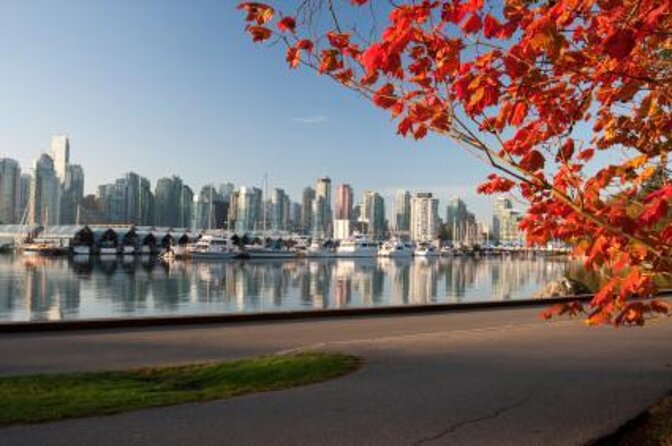
Stanley Park is famous for its seawall, views, and easy access from downtown Vancouver. This tour takes you away from the usual city-park checklist and toward the old forest that existed before the park became an urban recreation area.
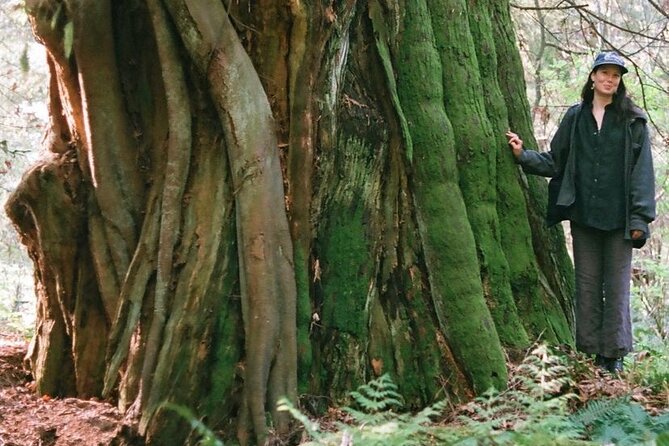
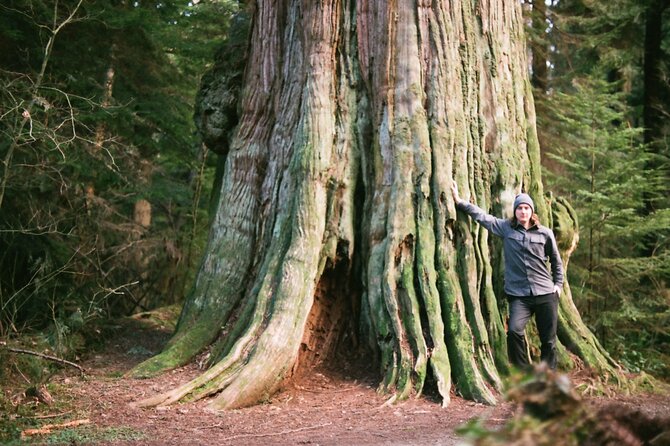
The most memorable part is the age of the trees. You may encounter western red cedars around 1,000 years old and Douglas firs described as roughly 600 to 800 years old. Age estimates are not always exact, and the guide explains how these figures are worked out rather than asking you to accept a number without context.
The trees are impressive in different ways. Cedars can become huge and hollow with age, yet continue living around their outer layers. A hollow trunk is not simply a dead shell. It can provide shelter for wildlife, including bears, and still form part of the forest’s living system.
The old trees also show their age in their upper branches. The oldest cedars can develop candelabra-like crowns, with repeated forks and spikes that give their tops a distinctive shape. You may not be able to see every detail from the trail, but knowing what to look for changes the way you view the forest.
A fallen tree is not treated as rubbish here. Colin explains the role of nurse logs, where decaying trunks support seedlings, mosses, and other new growth. The forest works in cycles: old wood breaks down, holds moisture, feeds other life, and helps the next generation begin.
That lesson gives the walk its wider value. You are not only looking at big trees. You are learning to see a forest as a connected system, where decay and growth happen side by side.
More Walking Tours in Vancouver
- Gastown Historic Walking Food Tour
★ 5.0 · 1,863 reviews - Vancouver Lost Souls of Gastown Walking Tour
★ 5.0 · 1,273 reviews - A Wok Around Chinatown: Culinary and Cultural Walking Tour Led by a Chef
★ 5.0 · 610 reviews
Walking from Ferguson Point into old growth
The meeting point is Ferguson Point, at 7501 Stanley Park Drive. The activity ends at the same location, so you do not need to arrange a second pickup point or figure out where the walk finishes.
Admission to Stanley Park is included at no extra charge, but transportation to Ferguson Point is not. You should plan that part yourself and allow enough time to arrive before the start. The tour provider does not collect you from a hotel or downtown address.
The route follows park trails and is described as an easy walk in the forest. Still, it is a three-hour outing, so comfortable walking shoes make sense. The information provided does not specify the exact distance, elevation gain, or surface conditions for every section, so anyone with mobility concerns should ask the provider for current route details before booking.
Once the walk begins, the small group format matters. With 10 people or fewer, you have a better chance of standing close enough to examine a feature on a trunk and still hear the explanation. You can also ask about a particular tree or return to a point of interest without creating the stop-and-go feel of a large excursion.
Morning and afternoon departures are useful for planning. A morning walk can leave the rest of your day open for the seawall, museums, or downtown. An afternoon departure works well if you want a slower start. Since the tour is often reserved about 46 days ahead, I would not wait until the last minute if your Vancouver dates are fixed.
Colin Spratt’s way of telling the story
The guide makes or breaks a specialist walk, and Colin Spratt receives the strongest praise for his enthusiasm, patience, and command of the subject. He is described as a big-tree seeker and a member of the BC Big Tree Committee, which gives the tour a clear focus beyond general sightseeing.
His approach combines several subjects without making the walk feel like a classroom lecture. One moment may concern how a tree grows around damage. The next may connect the forest to logging, the development of Vancouver, or the long presence of the Coast Salish peoples.
The archival material helps. Old maps, photographs, and postcards from roughly 120 years ago give you something concrete to compare with the present-day park. Instead of hearing only a list of dates, you can consider how the area looked before modern Vancouver took shape.
Colin also appears to be good at handling questions. Families with children from about 7 to 11 have found the material engaging, and the guide’s patience has helped younger participants stay involved. That does not mean every child will enjoy three hours of forest interpretation, but families who like asking questions should find plenty to discuss.
The tone is not solemn all the time. Humor and personal stories keep the science approachable. You may leave thinking differently about trees, not because you memorized species names, but because the guide gives each giant a place in a much longer story.
Coast Salish connections and the tree of life
The Indigenous history of the area is an important part of the experience. The tour recognizes that Coast Salish peoples lived here for thousands of years before Stanley Park became an urban park.
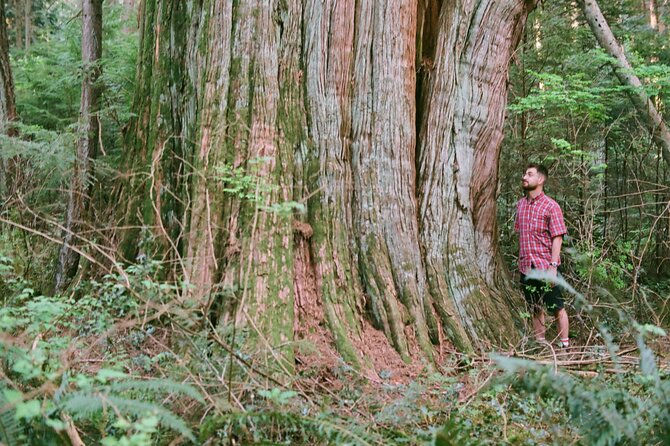
Western red cedar had practical and cultural importance. The wood could be used for longhouses and canoes, while bark fibers served in clothing, rope, and textiles. The cedar was not simply a resource to be harvested. It was part of daily life and a central material for shelter, transport, and clothing.
The tour also explains how Indigenous canoe makers tested trees with antlers before carving. Details like this help you understand the skill and care involved in working with living forest materials.
That section should be especially meaningful if you want more than a scenic walk. It gives the trees human context without separating nature from culture. The forest is not presented as empty wilderness waiting to be discovered. It has been known, used, cared for, and understood by Indigenous communities for generations.
Because the walk covers ecology, local history, and Indigenous relationships with cedar, you should expect a broad interpretation rather than a technical tree-identification course. The focus is on how trees shape a place and how people shape their relationship with trees.
Still Vancouver, at a slower pace:
- Vancouver Half-Day Whale Watching Adventure with Free Photos
★ 5.0 · 5,000 reviews - Big Bus Vancouver Hop-On Hop-Off Sightseeing Tour
★ 3.5 · 3,028 reviews - Victoria & Butchart Gardens Tour with Ferry from Vancouver
★ 4.5 · 2,703 reviews - Vancouver: Covered Whale Watching Adventure with Free Photos
★ 4.8 · 2,260 reviews
The big trees you can expect to see
The western red cedars are likely to be the stars of the walk. Some are described as 1,000 years old, including a particularly notable tree known as the grandfather tree. Their size can be hard to grasp until you stand beside the trunk and see how the bark, cavities, and surrounding growth fit together.
You may also see ancient cedar stumps and hollow remains. One highlighted example is a hollow red cedar stump estimated at around 700 years old. These remnants show that an old forest is made of more than living giants. Fallen and standing dead wood remain valuable parts of the ecosystem.
The Douglas firs bring a different character. Some are described as around 600 to 800 years old and rise high above the forest floor. Their height and straight trunks create a contrast with the broad, weathered cedars.
The walk also seeks the largest known maple tree in Canada. That claim is a specific feature of the experience, but exact records can change as trees are measured and compared. Treat it as a chance to see a remarkable maple and learn how big-tree records are established, not as a guarantee that a permanent national title will remain unchanged.
You are encouraged to look and touch where appropriate. Feeling the bark of a tree that may have begun growing centuries ago is a simple act, but it makes the age less abstract. It is one of the reasons this experience can linger after the walk ends.
Ecology, fire, rot, and forest renewal
One useful lesson concerns the fact that much of a tree is not living tissue. The older inner wood can be dead, while the outer layers continue to move water and nutrients. That apparent contradiction explains how some massive, hollow cedars remain standing and alive.
Cedars also have natural resistance to fire and rot. The tour connects these traits to their ability to survive for centuries, though survival is never guaranteed. Storms, disease, development, logging, and changing conditions all affect old-growth forests.
You also learn to notice regeneration. A seedling growing from or beside an old fallen trunk may belong to the same forest cycle as a tree more than a thousand years old. That link between great age and fresh growth is one of the walk’s most useful ideas.
The conservation message is clear but not heavy-handed. Colin’s work with big trees focuses attention on specimens that might otherwise be overlooked. You leave with a better sense of why old-growth forests matter, and why protecting a single old tree can preserve more than a scenic landmark.
This is also where the tour differs from a standard sightseeing activity. You are not only collecting attractive photographs. You are being asked to consider what an ancient tree provides: habitat, stored carbon, shelter, nutrients, cultural material, and a record of environmental change.
Is three hours and $56.33 good value?
At $56.33 per person, this is not the cheapest way to spend three hours in Stanley Park. You can walk park trails on your own for free, and the park’s most familiar sights do not require a ticket.
The value comes from access to interpretation you would be unlikely to create for yourself. Colin supplies the tree knowledge, historical context, archival visuals, and conservation perspective. He also directs you toward trees and forest details that a casual walk could easily miss.
The maximum group size of 10 improves that value. A small group allows more questions and avoids the distant-guide problem that can affect larger tours. If your interest is mainly taking a quick photograph beside a big tree, the price may feel high. If you want to understand what you are seeing, the fee is easier to justify.
Group discounts are available, though the amount is not specified. If you are booking for several people, check the current price before paying. The tour is offered in English, and the experience includes a mobile ticket for convenient entry and confirmation.
Free cancellation is available when you cancel at least 24 hours before the start time. Cancellations or changes made inside that window are not accepted for a refund, so keep your plans reasonably firm.
Who should book this Stanley Park walk?
I would choose this tour if you enjoy forests, conservation, local history, or unusual city experiences. It is a good fit for solo visitors, couples, and families who prefer a thoughtful activity to a fast sightseeing circuit.
It also suits people who have already seen Stanley Park’s seawall. The park can feel familiar after a bike ride or harbor-view walk, but an old-growth route reveals a different side of it.
Families should consider the three-hour length. Children who like nature and asking questions may enjoy the stories about canoes, cedar bark, nurse logs, and wildlife shelter. Children who need constant movement may find the interpretation slow, even though the trails are described as easy.
The walk is less suitable if you want a strenuous hike, a wildlife-spotting expedition, or a broad tour of all Vancouver attractions. It stays focused on Stanley Park’s ancient trees and the stories connected to them.
Most people can participate, and service animals are allowed. The available details do not give a full accessibility assessment, so contact the provider if you need precise information about trail surfaces, slopes, rest stops, or other mobility requirements.
Should you book the Ancient Trees of Vancouver tour?
I would book it if you want to understand Stanley Park rather than simply pass through it. The combination of ancient cedars, tall Douglas firs, archival images, Coast Salish history, and forest ecology gives the walk real substance.
The strongest reason to go is Colin Spratt. His enthusiasm for old trees is central to the experience, and his ability to connect science with stories makes the three hours feel purposeful. The small group helps preserve that personal quality.
Skip it if you dislike guided walks or have little interest in trees. Otherwise, this is one of the more distinctive ways to spend part of a Vancouver visit. Reserve ahead if your schedule is fixed, choose the morning or afternoon time that best suits you, and arrive at Ferguson Point ready for a slow look at a forest that has been here far longer than the city around it.
FAQ
Where does the Ancient Trees of Vancouver tour begin?
The tour begins at Ferguson Point, 7501 Stanley Park Drive, Vancouver, British Columbia, V6G 3E2.
Where does the tour end?
The activity ends back at the Ferguson Point meeting point.
How long does the walking tour last?
The tour lasts approximately three hours.
How many people can join the tour?
The tour has a maximum of 10 participants.
Is transportation to Ferguson Point included?
No. Pickup and drop-off at the meeting point are not included, so you must make your own way there.
What language is the tour offered in?
The tour is offered in English.
Can I cancel for a full refund?
Yes. You can cancel at least 24 hours before the experience start time for a full refund. Cancellations or changes made less than 24 hours before the start time are not accepted for a refund.
Just added around Vancouver
- Vancouver Rainforest Hike with Waterfalls, Suspension Bridge, Old Growth Forest★ 5.0 · 94 reviews
- Vancouver Signature Highlights Open Air Roadster Tour★ 5.0 · 7 reviews
- Shore Excursion: Vancouver & Granville Island City Sights Tour★ 5.0 · 7 reviews
- Private Tour: Vancouver Sightseeing and Capilano Suspension Bridge★ 4.5 · 42 reviews
- Vancouver 1-Day Tour (Granville Island/Stanley Park) (Chn&Eng)★ 4.5 · 9 reviews
- Vancouver Old Town Treasure Hunt: Self-Guided Walking Game★ 4.5 · 12 reviews
- Vancouver Local Taste Trail★ 5.0 · 33 reviews
- Vancouver Lookout Admission Ticket★ 4.0 · 185 reviews
Walking Tours, compared.
Old Quebec City: Grand Walking Tour with Private Option
Read our review →
The Original Old Montréal Walking Tour by Guidatour
Read our review →
Old Montreal Small-Group Walking Tour | Max 10 | by MTL Detours
Read our review →
Old Quebec Classique Walking Tour with Funicular
Read our review →
Quebec: Crimes of New France Animated Walking Tour
Read our review →Browse the lists this tour appears in