

Reviewed · HISTORICAL TOURS
Admission 1 person – Visit of the Acadian Historic Village
Step into Acadia’s past, one house at a time. The Village Historique Acadien gives you a self-guided 2.2 km route through homes and workplaces representing Acadian life from 1770 to 1949. I like the freedom to set my own pace, and I especially value the bilingual interpreters who bring each building to life in both French and English.
The staff’s kindness and clear explanations are a major part of the appeal. I also like that the houses are not empty displays: interpreters occupy them and explain how Acadian families lived, worked, and adapted over several generations. The main consideration is time and walking. You should allow four to six hours, and a moderate level of physical fitness is recommended.
Admission costs $18.63 per person, with free parking for cars and RVs. Booking ahead gives you a mobile ticket and lets you skip the ticket line, but this is still a relaxed visit rather than a tightly scheduled guided tour. You can pause, ask questions, and spend extra time in the buildings that interest you most.
In This Review
- Five things to know before visiting
- Why this Acadian village is worth your time
- Following the 2.2 km route through Acadian life
- Historic buildings with people inside
- The historical period from 1770 to 1949
- Why the self-guided format works
- Staff, re-creations, and the personal side of the visit
- Price, time, and practical value
- Who should visit, and who may want less time?
- Opening hours, booking, and cancellation
- FAQ
- How long should I allow for the visit?
- Is the visit guided?
- What historical period does the village cover?
- Is parking available?
- Are pets allowed?
- Can I cancel for a full refund?
- Should you book the Village Historique Acadien?
Five things to know before visiting
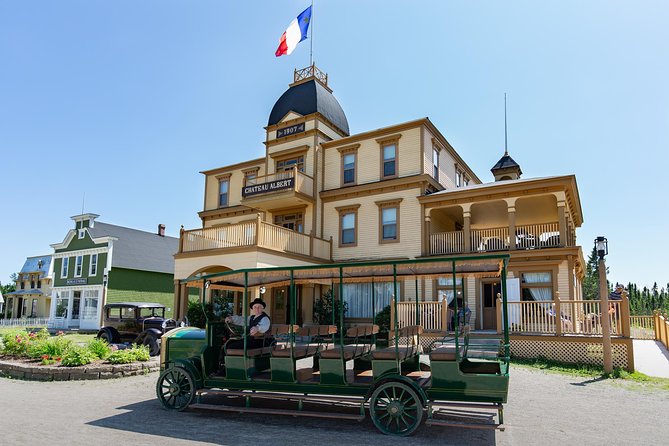
- The 2.2 km route covers 1770 to 1949: You move through nearly two centuries of Acadian daily life, not one narrow historical period.
- Every historic building has an interpreter: Bilingual staff explain the setting and answer questions in English or French.
- You control the pace: The route is self-guided, making it easier to linger in a favorite house or move along when younger family members lose interest.
- Plan on a half day: Four to six hours is a sensible allowance if you want to speak with interpreters and see the village without rushing.
- Free parking makes arrival simple: Cars and RVs can park at no extra charge, and admission is available as a mobile ticket.
- The best praise is directed at the people: Kind staff, strong historical explanations, and convincing re-creations make the visit feel personal rather than purely museum-like.
Why this Acadian village is worth your time
The Village Historique Acadien is designed to show Acadian life through places, objects, and conversation. Instead of moving from one glass case to another, you follow a route bordered by historic buildings, with interpreters working inside them.
That difference matters. A house can show you a bed, stove, table, or work area, but a person can explain how those objects fit into everyday life. The interpreters describe Acadian history and the routines of Acadian ancestors from 1770 through 1949. Since they speak both French and English, you can ask questions in the language that feels most natural to you.
I also appreciate the wide time span. The village does not freeze Acadian culture in one old-fashioned snapshot. You get a sense of change across generations, from the late eighteenth century into the twentieth century. That makes the visit more useful if you want to understand how family life and community customs developed over time.
The experience is not built around a single dramatic sight. Its strength comes from accumulation: one house, one explanation, one conversation, then another. If you enjoy places where small details gradually form a larger picture, you will find plenty to hold your attention.
More History Tours in New Brunswick:
- Pete’s Historic Walking Tour
★ 5.0 · 321 reviews - Mi’kmaq Heritage Path Tour
★ 5.0 · 23 reviews - Saint John Highlights & History Cycling Tour
★ 5.0 · 18 reviews
Following the 2.2 km route through Acadian life

The route is the heart of the visit. You walk 2.2 km through an arranged historical setting, stopping at buildings occupied by interpreters. The path gives you a clear structure, but the self-guided format keeps it from feeling like a march behind a guide holding a flag.
You can move at a steady pace, pause for a longer conversation, or spend extra time in a building that connects with your own interests. If you are visiting with family, this flexibility helps. Some people can stop to ask about work or household routines while others take a short break.
Do not treat the 2.2 km distance as the full measure of the physical effort. You are likely to spend time standing, entering buildings, walking between stops, and repeating that pattern for several hours. The stated recommendation for moderate physical fitness is sensible. Anyone who finds extended walking difficult should plan carefully.
The route is also long enough to make timing important. A quick look at the buildings will not give you the full benefit of the village. The suggested four to six hours allows room for the interpreters, and those conversations are where much of the value lies.
Historic buildings with people inside
The buildings are more than backdrops. Each one has an interpreter ready to explain the site and the period it represents. This was the most praised part of the experience for good reason: the human element gives the re-created village warmth and clarity.
You might hear how a household used a particular room, why a tool mattered, or what a daily task required. The exact conversation depends on your questions and on the building you are visiting, but you are not left to guess what you are looking at.
The staff are described as welcoming and deeply committed to their roles. One especially appealing detail is the sense that the people working in the houses treat the setting as more than a job. That attitude can make a large site feel friendly rather than formal.
The bilingual format adds practical value. You do not need to rely on a printed translation or catch every point from a distance. English and French interpretation is available throughout the village, which is important in a place centered on Acadian culture.
If you speak French, you may enjoy the chance to discuss Acadian life directly in French. If you speak only English, you can still receive the same explanations and ask questions without worry.
The historical period from 1770 to 1949
A visit here works best when you pay attention to the passage of time. The dates cover 179 years, so the setting is not about one moment in Acadian history. It presents a long stretch of daily life and shows how the community changed.
The early part of the period begins in 1770, when household work, local customs, and community life followed patterns very different from those of the modern era. The route then continues toward 1949, bringing the story into a period that feels much closer to the present.
That range gives you useful context. You can compare buildings and routines from different periods instead of assuming that all Acadian life looked the same. The interpreters help make those changes understandable, especially if you ask them to explain how one period differs from another.
I would not expect a lecture packed with dates at every stop. The appeal is more practical and personal. You learn through rooms, buildings, conversations, and examples of ordinary life. For many people, that makes the past easier to remember than a list of historical events.
The village also has strong appeal for people with a family connection to Acadian history. A visitor with the surname Ouellet described the personal meaning of discovering a family link to the village’s story. You do not need a known family connection to enjoy the site, but the setting may give genealogy-minded visitors extra reason to linger.
A few more New Brunswick trips worth comparing
- Bay of Fundy Tour by Bus
★ 4.0 · 211 reviews - Go Fundy Tours
★ 5.0 · 171 reviews - Fundy Coast to Fundy Shore Tour
★ 4.0 · 82 reviews - From Saint John: Bay of Fundy Bus Trip for Cruise Passengers
★ 4.4 · 76 reviews
Why the self-guided format works
A fixed guided tour can be useful, but it can also force you to move on just as a topic becomes interesting. Here, you have more control. You can decide how long to stay in each house and how much conversation you want.
That makes the experience suitable for different kinds of visitors. History enthusiasts can ask detailed questions. Casual visitors can focus on the buildings and atmosphere. Families can take short pauses without holding up a group.
The route remains organized, so self-guided does not mean confusing. You follow the 2.2 km circuit and encounter the historical buildings along the way. The interpreters provide the structure at each stop.
The tradeoff is that your experience depends partly on your own pace and curiosity. If you hurry, you may miss the small explanations that make the visit memorable. I would arrive with enough time to stop often rather than trying to finish quickly.
The four to six hour estimate is generous but useful. You may spend less time if you take a brisk walk through the site, but that would make the admission less valuable. If you have the time, let the village set the rhythm.
Staff, re-creations, and the personal side of the visit

The strongest feature is not simply the number of buildings. It is the way the staff use those buildings to create a sense of daily life. The historic re-creations are praised for their charm, and each house has its own character.
That variety helps prevent the route from becoming repetitive. You are not looking at one similar room after another. Different buildings offer different settings and different conversations, so the visit gains momentum as you continue.
I also like the emphasis on staff interaction. The interpreters are there to exchange information, not just point you toward the next stop. If you are curious about a building, a custom, or an Acadian family’s routine, ask. The site is at its best when you treat the interpreters as part of the experience.
The warmth of the staff matters especially for first-time visitors who may not know much about Acadian history. You can arrive with only a general interest and still find an easy way into the subject. The explanations make the village approachable without stripping away its historical importance.
For people already passionate about Acadian history, the experience offers more detail and a chance to discuss familiar subjects from a different angle. That broad appeal is one reason the village works for both dedicated history fans and people who normally avoid historical sites.
Price, time, and practical value

At $18.63 per person, admission is a reasonable buy if you use the full four to six hours. The value comes from the combination of a substantial route, numerous historic buildings, and live interpretation in English and French.
You are not paying only to enter a property and look around. The interpreters are central to the visit, and their explanations turn the buildings into active lessons about Acadian life. If you enjoy asking questions and taking your time, the price compares well with other half-day cultural activities.
The value is weaker if you plan to spend only an hour. The route is built for a slower visit, and the staff interaction is a key part of what you are paying for. I would choose this admission when you can give it a proper half day.
Free parking improves the overall value, especially if you are arriving by car or RV. You do not need to budget for a separate parking charge. The mobile ticket is also useful, and booking in advance lets you bypass the ticket line.
The experience is offered in English, while the interpreters are bilingual in English and French. That distinction means the booking information is available in English, and you can expect interpretation at the buildings in both languages.
Who should visit, and who may want less time?
I would recommend this village to anyone interested in Acadian culture, Canadian settlement history, historic buildings, or everyday life in earlier centuries. It is particularly well suited to people who prefer a flexible visit over a scheduled group tour.
Families may appreciate the open pace, especially if different people want different amounts of time at each stop. People with a personal or family connection to Acadian history may find the experience especially meaningful.
It is also a good choice if you enjoy speaking with interpreters. The site rewards curiosity. You will gain more from it if you ask questions rather than simply walking through each building.
I would be more cautious if you have limited mobility or dislike several hours of walking and standing. The route covers 2.2 km, and moderate physical fitness is recommended. You should also avoid bringing ordinary pets, since dogs, cats, and other animals are not allowed. Service animals are allowed.
This is not the right pick if you want a short photo stop or a fast attraction between other appointments. The village deserves time, and rushing through it reduces the value of the admission.
Opening hours, booking, and cancellation
The stated operating period is June 4 through September 12, 2026, with opening hours from 10:00 a.m. to 5:30 p.m. daily. Confirm your date before setting out, since the experience is seasonal.
You receive confirmation when booking, and the ticket is mobile. Advance booking can help you skip the ticket line, which is most useful when you want to begin your visit without waiting at the entrance.
Free cancellation is available if you cancel at least 24 hours before the experience start time. Cancellations made less than 24 hours ahead are not refunded, and changes within that window are not accepted. The cutoff follows local time.
FAQ
How long should I allow for the visit?
Plan on approximately four to six hours. The route itself is 2.2 km, but the time also includes walking between buildings, speaking with interpreters, and exploring at your own pace.
Is the visit guided?
It is a self-guided visit, so you choose your pace and route rhythm. Historic buildings are staffed by bilingual interpreters who explain Acadian history and daily life in English and French.
What historical period does the village cover?
The village presents Acadian life from 1770 to 1949.
Is parking available?
Yes. Parking is free for cars, RVs, and other vehicles.
Are pets allowed?
Ordinary animals, including dogs and cats, are not allowed. Service animals are allowed.
Can I cancel for a full refund?
Yes, if you cancel at least 24 hours before the experience start time. Cancellations made less than 24 hours ahead are not refunded.
Should you book the Village Historique Acadien?
Book it if you want a thoughtful half-day visit built around Acadian culture, historic buildings, and conversations with interpreters. The kind staff, bilingual explanations, and convincing house re-creations are the reasons to come, while the flexible pace lets you shape the visit around your own interests.
Skip it if you have only a short window, dislike walking, or prefer a quick attraction with little interaction. For everyone else, $18.63 buys a substantial and personal look at Acadian life, especially when you allow the full four to six hours and take time to speak with the people inside each house.
Just added around New Brunswick
- 3 different tours to choose from★ 5.0 · 23 reviews
- Saint John Walking Tour★ 4.5 · 39 reviews
- Shore Tours★ 4.5 · 33 reviews
- Private Sightseeing Tour In Saint John★ 4.0 · 6 reviews
- River Relics Kayaking Adventure★ 5.0 · 23 reviews
- Saint John Small Group Night Tour with Fort La Tour + Martello★ 4.5 · 6 reviews
- New Brunswick Shore Excursion: Bay of Fundy and More Highlights Tour★ 4.0 · 31 reviews
- Private Bay of Fundy & City sightseeing (Saint John, NB)★ 4.5 · 13 reviews
Historical Tours, compared.




Evening Gourmet Tour 5 Course Dinner – History and Food in Old Quebec City
Read our review →


Browse the lists this tour appears in