Reviewed · BANFF TOURS
Rock Climbing Adventure in Banff: Beginner
Climb real rock in Banff. This seven-hour introduction gives you outdoor climbing, patient instruction, and several routes rather than a quick turn on one wall. I especially like the small groups of no more than eight and the way guides adjust the day to suit complete beginners, indoor climbers, and families. The main drawback is practical: climbing shoes may not come in every size, so ask about fit before you set out.
The day begins at 7:45 a.m. on Bear Street and ends back at the same meeting point. I also like that the fee includes the helmet, harness, shoes, ropes, and belay equipment, which keeps the cost of trying this sport from climbing too high. You will need to arrange your own lunch and transportation, and the activity depends on good weather.
In This Review
- Key points to know before climbing in Banff
- What this Banff climbing day is really like
- Starting with helmets, harnesses, and basic safety
- From nervous first climb to harder routes
- What you may learn beyond the basics
- Banff National Park is part of the reward
- The small-group advantage
- The shoe-size issue deserves attention
- Is the $112.39 price good value?
- Who should book this climbing experience?
- Booking, weather, and timing tips
- Should you book the Banff beginner climbing day?
- FAQ
- Where does the rock climbing experience start?
- What time does the activity begin?
- How long does the experience last?
- Where does the activity end?
- Is the experience suitable for complete beginners?
- What climbing gear is included?
- Is lunch included?
- How many people can join the group?
- What happens if bad weather cancels the activity?
Key points to know before climbing in Banff
- Six climbing areas may be possible in one day: One family reported trying six different spots, giving the outing plenty of variety instead of repeating a single route.
- Patient guides make the first climb less intimidating: Jacob, Dustin, Janet, Austin, and Sebastien are all praised for calm instruction and encouragement.
- The group limit is eight people: That is small enough for individual help with knots, belaying, footwork, and route choices.
- Beginners can progress during the day: The instruction can move from basic top-rope climbing to steeper rock, mock leads, rappelling, or anchor work when appropriate.
- Children under 10 may need a shorter format: Families with younger children should ask about the half-day program.
- Shoes deserve advance attention: Limited sizes caused discomfort for one family, even though the rest of the day went very well.
What this Banff climbing day is really like
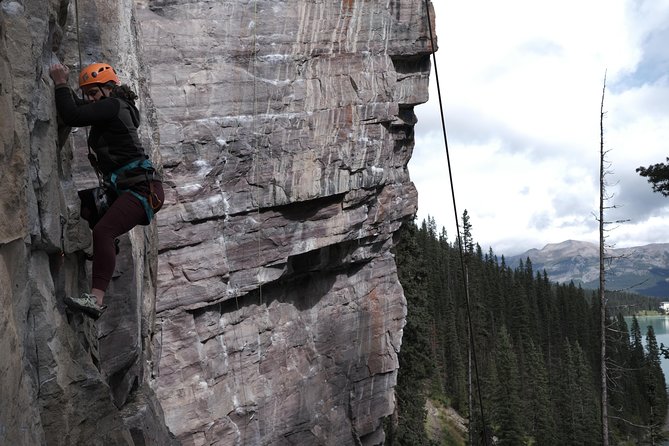
This is not a sightseeing stop with a little climbing added. It is a full outdoor activity built around learning how to climb safely on real rock in Banff National Park.
You meet at 229 Bear Street in Banff at 7:45 a.m. From there, the group heads to a local climbing area. Private transportation is not included, so you need to plan how you will reach the meeting point and return there at the end. The activity finishes back at Bear Street, which makes the morning and afternoon easy to organize around a Banff hotel or town visit.
The exact climbing site is not specified in advance. That is useful because the guides can choose a suitable area and routes for the group, but it also means you should not book this expecting one named viewpoint or a fixed sequence of climbs. The day is shaped by weather, group ability, and the routes that best fit the conditions.
The tone is safety-first without being stiff. You will learn how to recognize overhead hazards, understand the site around you, and use the equipment before being asked to climb. That matters outdoors, where loose rock, rope handling, and the position of people below you are part of the experience.
A few more Banff trips worth comparing
- Banff: Banff Gondola Admission Ticket
★ 4.7 · 3,698 reviews - Banff Gondola Ride Admission
★ 4.5 · 2,688 reviews - Columbia Icefield Tour with Glacier Skywalk
★ 4.5 · 1,860 reviews
Starting with helmets, harnesses, and basic safety
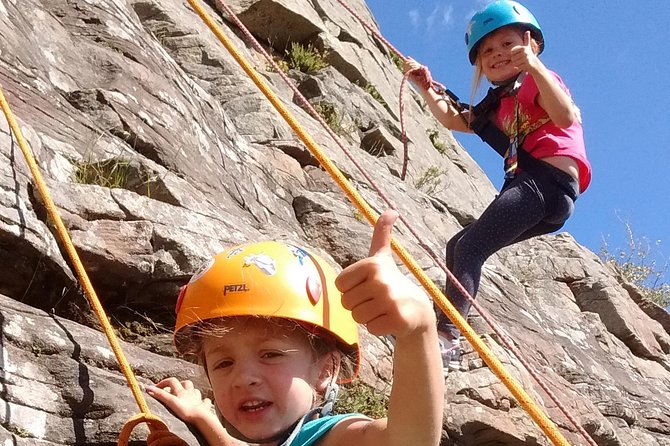
The first part of the day is about getting comfortable with the system. The supplied equipment includes a helmet, harness, climbing shoes, ropes, and belay devices. You do not need to bring a personal climbing kit, which is a major help if this is your first attempt or if you are visiting Banff with luggage rather than outdoor gear.
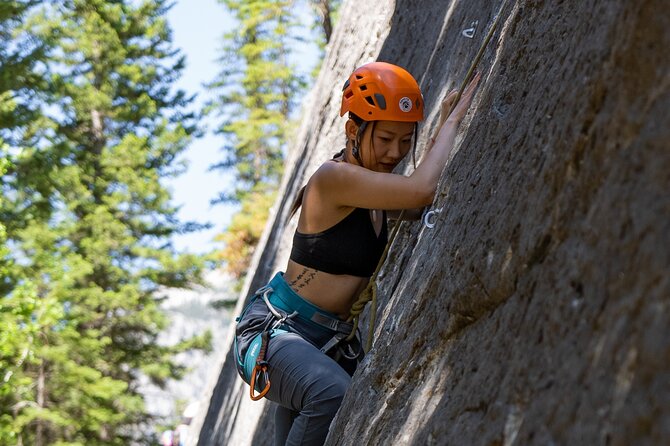
Your guide begins with the fundamentals. Expect instruction in site awareness, overhead hazard recognition, top-rope belaying, and basic climbing technique. The top-rope setup gives beginners a controlled way to learn movement on the wall while the guide manages the main safety system.
The belaying section is especially useful for anyone who wants more than a one-time thrill. You are not simply pulled up a route and sent home with a few photographs. The program can teach you how climbers support one another, how the rope system works, and why careful communication matters.
You should still expect an active day. The description makes clear that the focus is on getting as much climbing as you can handle. You may spend time standing, walking between routes, putting on and removing climbing shoes, and trying a route more than once. This is not a passive mountain excursion.
From nervous first climb to harder routes
The strongest feature here is the gradual progression. Beginners start with the basics, then can try a variety of routes as the guide sees what they can manage.
One family had two children aged nine and thirteen. The guides, Dustin and Janet, adjusted the climbs to their ability, helped the younger children stay positive, and supported the older child in attempting a 10a route by the end. That does not mean every beginner will reach the same grade. It does show how the day can offer a real sense of progress rather than keeping everyone on one easy climb.
Another first-time group began nervously, then moved to more difficult routes after gaining confidence. That is the right way to approach this activity. You do not need to arrive strong or fearless. You need to be willing to listen, try a route, rest when needed, and attempt it again with a different idea.
Austin received particular praise for helping a climber who felt stuck. Instead of simply telling the person to keep pulling, he offered ideas to help find a way up. That is important instruction in climbing, where a small change in foot placement or body position can make a move possible.
Indoor climbers also benefit. If you have spent time at a gym but have never climbed outside, this day introduces you to outdoor procedures and real rock texture. You will likely find that gym habits help, but outdoor climbing asks for more attention to route finding, footwork, rope systems, and the surroundings.
What you may learn beyond the basics
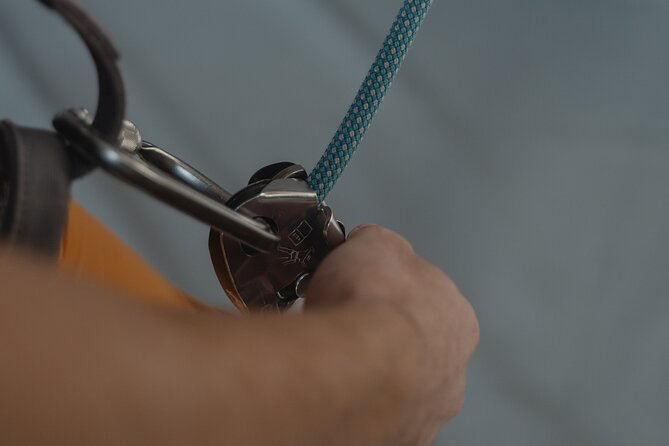
The program is designed for all experience levels, so the depth of instruction can change depending on your group. At the beginner end, expect help with climbing movement, top-rope systems, and belaying.
If you already know some of that material, the guides can discuss more technical subjects. These may include:
- Techniques for steeper rock
- Placing and using quick draws on bolted routes
- Building top-rope anchors
- Mock leads
- Rappelling
These topics are not guaranteed as a fixed checklist for every group. They are additional options that may fit a group with more experience, enough time, and suitable routes. That flexibility makes the outing more useful for mixed groups, such as one person who has climbed indoors and another who has never worn a harness.
The guide team is a major part of the value. Jacob is repeatedly praised for being approachable, encouraging, and full of useful stories. Dustin is described as careful, patient, and strong on technical instruction. Janet worked well with children alongside Dustin, while Austin helped beginners solve problems on the wall. Sebastien was praised for professional instruction and for helping a nervous first-time group move toward harder climbs.
Names do not guarantee who will lead your day, but they give you a clear sense of the teaching style to expect: friendly, attentive, and focused on helping you reach a realistic personal goal.
Still Banff, at a slower pace:
- Emerald Lake, Moraine, Louise, Johnston Canyon & Banff Town
★ 4.9 · 1,554 reviews - Lakes Moraine, Louise, Emerald, Johnston Canyon & Yoho Tour
★ 4.8 · 1,083 reviews - Banff: Louise & Moraine Lake or Johnston Canyon 1/2 Day Tour
★ 4.9 · 861 reviews - Lake Louise, Moraine Lake and the Icefields Parkway Full-Day Tour
★ 5.0 · 836 reviews
Banff National Park is part of the reward
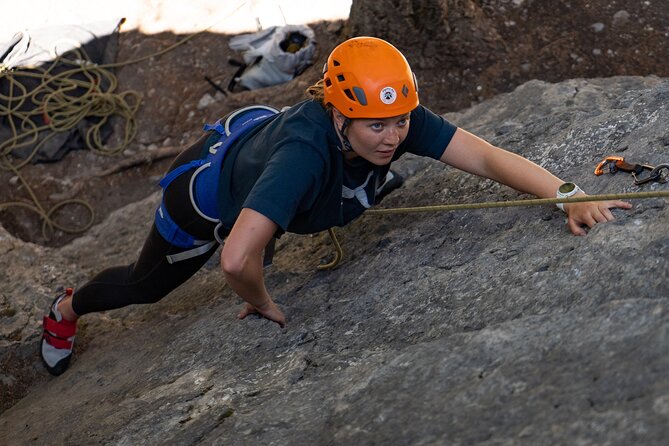
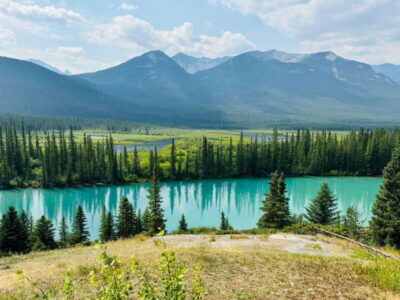
The climbing takes place in a local area within Banff National Park. The rock is not just a training surface. You are learning in the same mountain setting that makes Banff such a strong place for outdoor adventure.
The experience does not promise a particular peak or lookout, so I would not book it only for one famous view. The appeal is the combination of climbing and setting. You spend the day outside, move between routes, and get to use the surrounding park as part of your sporting experience.
One account describes trying six different climbing spots during the day. That suggests the guides may change areas or routes to keep the climbing varied, though the number of spots is not guaranteed. Route variety is valuable for beginners because one climb may teach balance, another may demand better footwork, and a steeper section may show you how body position changes the effort.
The setting also gives this outing a different feel from an indoor climbing session. You are not simply measuring yourself against a colored route in a gym. You are learning to read natural rock while paying attention to ropes, anchors, weather, and the people around you.
The small-group advantage
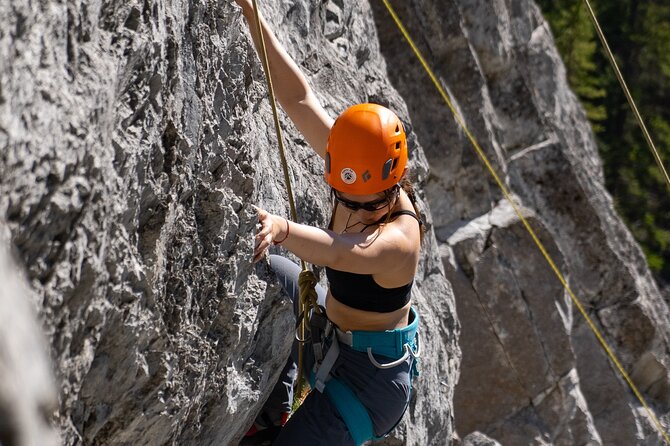
A maximum of eight people is a useful limit for a teaching-heavy activity. Climbing instruction can become frustrating when a guide has too many people waiting for a turn or cannot watch each person’s technique.
With a smaller group, you have a better chance of getting direct help with a difficult move, asking questions about belaying, or receiving feedback on how you are using your feet. The family accounts also show why group size matters when children are involved. Younger climbers may need more reassurance, more frequent encouragement, and routes matched to their comfort level.
There is still no promise that you will climb continuously. With several people sharing equipment and routes, some waiting is normal. The seven-hour length helps because the day is not built around one short session, but you should bring patience along with your enthusiasm.
For a family or group of friends, the format works well because everyone can take part at a suitable level. A strong climber can seek a more challenging route while a first-timer works on the basics. The guide’s job is to balance those needs, and the feedback here suggests that balance is handled well.
The shoe-size issue deserves attention

The equipment is included, but included gear is only useful when it fits properly. One family had trouble with climbing shoes because the available options were half a size too small or half a size too large for some members.
The smaller shoes were uncomfortable enough that the climber removed them after each climb. The larger shoes left another climber’s toes too far from the front, making precise foot placement harder. That family still enjoyed the day and would return, but they would ask about shoe sizes ahead of time.
This is the clearest practical weakness to address before booking. Contact Alpine Air Adventures and give the shoe sizes for everyone in your group. Ask how fitting works and what options are available at the climbing area. The provider has said that a shoe order was placed, though it had not arrived at the time of that response.
The company brings shoes to the climbing area rather than fitting everyone in town. That approach can save time and avoid traffic or parking problems in Banff, but it makes advance communication more useful. If someone in your party has an unusual size or is especially sensitive to tight footwear, do not leave this question until the morning.
Is the $112.39 price good value?
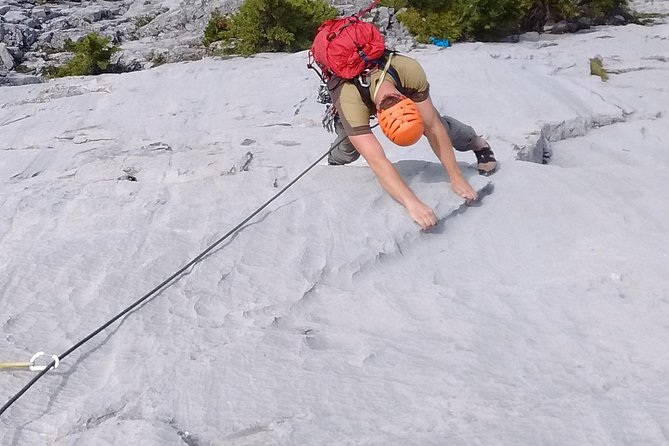
At $112.39 per person, this is a substantial activity cost, but the comparison should be with a full guided outdoor day rather than a short attraction.
The price includes the main climbing equipment: helmet, harness, shoes, ropes, and belay devices. You also receive guide instruction, safety training, route selection, and a small-group format. If you had to buy or rent all that gear separately, arrange instruction, and find suitable outdoor routes on your own, the price would look much less steep.
The value is strongest for first-timers. You are paying for a managed introduction that lets you try real climbing without owning equipment or knowing how to set up a safe session. It is also good value for families and friends who want one shared activity with room for different ability levels.
Lunch is not included, and private transportation is not included. Bring food for the day and plan your route to the 7:45 a.m. meeting point. Since the activity lasts about seven hours, treating lunch as an afterthought would be a mistake.
The day is also weather dependent. If poor weather cancels the activity, you are offered another date or a full refund. That policy protects your money, but it may not protect your schedule if you have only one available day in Banff.
Who should book this climbing experience?
I would choose this for:
- A first-time climber who wants a serious outdoor introduction
- Families with children who can manage a full active day
- Friends with mixed experience levels
- Indoor climbers ready to learn outdoor systems
- Anyone who wants a physical Banff activity beyond hiking
- Climbers who value coaching and safety over a self-guided outing
Families with children under 10 should ask about the half-day option. The full seven-hour day may be more than a young child wants, even if the child is excited at the start.
You should also be comfortable with the idea of trying, resting, and trying again. The program is suitable for people regardless of previous experience, but it is still a sport. You will be asked to participate, listen, and make an effort.
Service animals are allowed, and most people can participate. The supplied details do not give more specific physical-access information, so contact the provider if you have mobility, medical, or other participation concerns.
Booking, weather, and timing tips
This activity is often reserved about 50 days ahead, so I would not wait until the last minute if your Banff dates are fixed. Confirmation arrives when you book, and the ticket is mobile.
The cancellation policy is generous until 24 hours before the start time. Cancel at least 24 hours ahead for a full refund. Changes or cancellations inside that window are not accepted for a refund, except that poor weather or failure to meet the minimum number of participants can result in another date, another experience, or a full refund.
Because the day starts early and runs for about seven hours, keep the morning clear. Do not pair it with another fixed activity that begins soon after the expected return. You need time for the climbing itself, route changes, instruction, and the return to Bear Street.
Before you go, ask three simple questions: Are the shoe sizes for my group available? Is the full-day program right for children in my party? What should we bring for lunch and personal items? Those answers can prevent the only significant annoyance reported about the experience.
Should you book the Banff beginner climbing day?
Yes, if you want an active, guided day and are willing to learn outdoors. The best reasons to book are the patient coaching, the group limit of eight, the chance to progress from easy routes to harder ones, and the setting in Banff National Park.
I would be more cautious if you need a guaranteed named climbing site, dislike waiting between turns, or have a tight schedule that cannot handle a weather change. I would also confirm shoe availability before paying, especially for children and adults outside common sizes.
For most beginners, the price buys more than a climb. It buys a safe introduction, useful skills, equipment, and a full day trying different routes with guides who appear to care about personal progress. Ask for Dustin, Jacob, Austin, Janet, or Sebastien if one of them is available, pack lunch, and arrive ready to get chalk on your hands.
FAQ
Where does the rock climbing experience start?
It starts at 229 Bear Street, Banff, Alberta, T1L 1C3, Canada.
What time does the activity begin?
The start time is 7:45 a.m.
How long does the experience last?
The program lasts approximately seven hours.
Where does the activity end?
It ends back at the meeting point on Bear Street.
Is the experience suitable for complete beginners?
Yes. The program begins with basic instruction and is designed for people with no previous experience as well as those with more climbing background.
What climbing gear is included?
The experience includes a helmet, harness, climbing shoes, ropes, and belay devices.
Is lunch included?
No. Lunch is not included, so you need to make your own arrangements.
How many people can join the group?
The maximum group size is eight people.
What happens if bad weather cancels the activity?
You will be offered a different date or a full refund if poor weather causes a cancellation.
Just added around Banff
- Guided E-Bike Tour of Canmore★ 5.0 · 17 reviews
- 2 Day Banff Lake Louise Johnston Canyon Gondola Cave Basin tour★ 4.5 · 8 reviews
- Experience Golden Hour at Moraine and Lake Louise★ 5.0 · 18 reviews
- Rocky mountain – VIP Experience – Private Boat★ 5.0 · 6 reviews
- Sunset at Moraine Lake & Stargazing Tour from Canmore/Banff★ 5.0 · 95 reviews
- Banff/Canmore Moraine Lake & Lake Louise– Hike, Canoe or Sightsee★ 5.0 · 104 reviews
- Canyons and caves in the Rockies: Explore with us; From Calgary★ 5.0 · 27 reviews
- Shared Tour: Lake Louise & Emerald Lake from Canmore/Banff★ 4.5 · 5 reviews
Banff Tours, compared.
Emerald Lake, Moraine, Louise, Johnston Canyon & Banff Town
Read our review →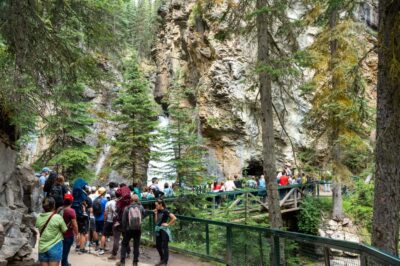
Lakes Moraine, Louise, Emerald, Johnston Canyon & Yoho Tour
Read our review →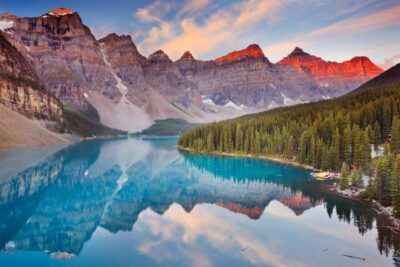
Louise & Moraine Lake or Johnston Canyon 1/2 Day Tour
Read our review →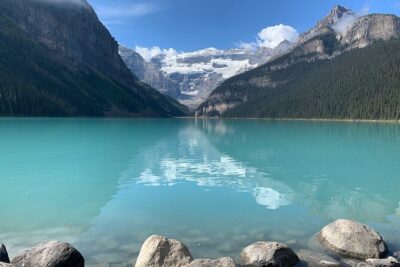
Lake Louise, Moraine Lake and the Icefields Parkway Full-Day Tour
Read our review →