
Reviewed · CITY TOURS
Québec City: Saint-Louis-Forts-and-Châteaux visit
Power once sat beneath the terrace. This one-hour visit takes you below Dufferin Terrace to the remains of Château Saint-Louis, the former seat of French and British colonial governors in North America. I like the way the site turns archaeological fragments into a readable story, and I especially like the Huron-Wendat perspective on diplomacy and colonial alliances. The main consideration is that the audio tour uses theatrical role-playing, which may not suit anyone looking for a quiet, traditional museum presentation.
For $9 per person, this is an easy addition to a day in Old Québec. You get striking St. Lawrence River views before going underground, more than 120 artifacts inside the site, and a clear look at how political decisions made here affected the wider continent. The hour-long format works well, but the site is not suitable for wheelchair users or people with mobility impairments.
In This Review
- Key points to know before you go
- Beneath Dufferin Terrace, Québec City’s power center
- Seeing the château through foundations and artifacts
- The French and British governors who ruled from here
- Huron-Wendat diplomacy receives needed attention
- Choosing between a live guide and the audio tour
- Why the $9 admission is good value
- Practical limits: stairs, bags, and timing
- Who will enjoy this one-hour visit most
- Should you book the Saint-Louis Forts and Châteaux visit?
- FAQ
- Where is the Saint-Louis Forts and Châteaux site?
- How long does the visit last?
- How much does admission cost?
- Is the visit guided or self-guided?
- Which languages are available?
- What can I see at the site?
- What years did Château Saint-Louis serve as a seat of power?
- Is the site accessible to wheelchair users?
- Can I bring food, drinks, luggage, or pets?
- Can I cancel my reservation?
Key points to know before you go
- The site lies beneath Dufferin Terrace: Start with river views, then descend below the famous boardwalk to see the preserved remains.
- This was a seat of power from 1620 to 1834: French and British governors lived and governed here for more than two centuries.
- The Huron-Wendat story is part of the visit: An exhibition created with the Huron-Wendat Nation presents diplomacy from an Indigenous perspective.
- Archaeology gives the tour its texture: More than 120 artifacts help explain architecture, domestic life, entertaining, and political work.
- You can choose between a guide and audio tour: Live commentary is available in English, French, Spanish, German, and Chinese.
- The audio presentation is not purely conventional: It sometimes asks you to imagine being a governor or servant, a feature some people may find fun and others may find distracting.
Beneath Dufferin Terrace, Québec City’s power center
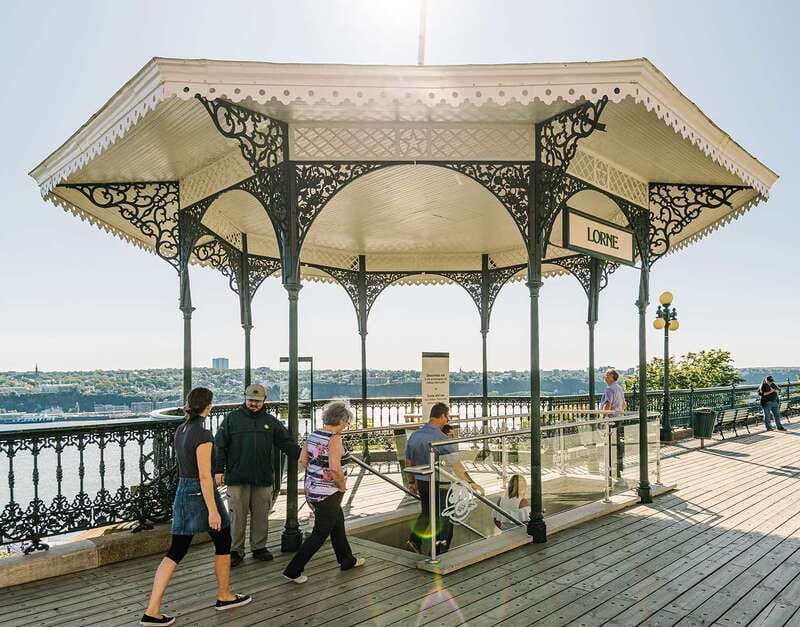
The meeting point is easy to spot at the beginning of Dufferin Terrace. Look for the green and white kiosk with a Canadian flag and a Frontenac sign. A heritage guide wears a green and beige uniform, which helps if the terrace is busy.
Before you go below ground, take a moment to look out over the St. Lawrence River. This is not just a pleasant waiting area. The view helps explain why Québec City became such an important political and military center. The terrace sits above the old château site, so you are literally standing over the remains of the place where governors received visitors, hosted formal events, and made decisions affecting French and British colonial interests.
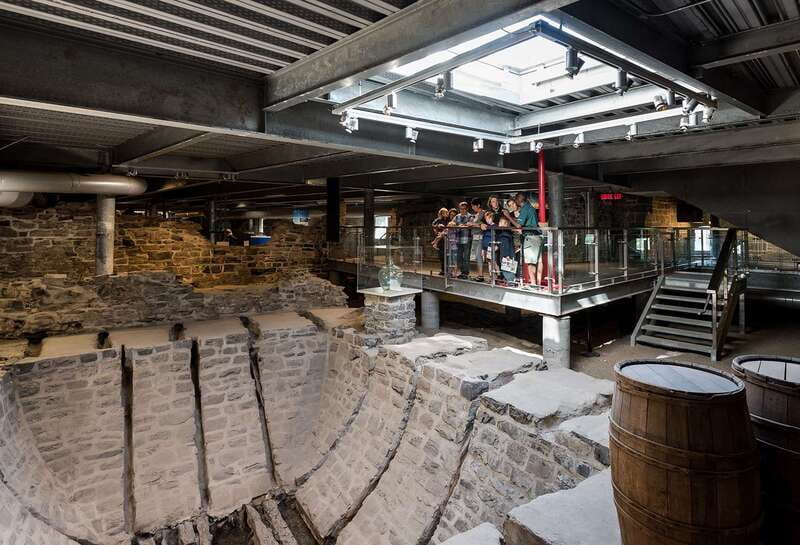
You then descend to the Saint-Louis Forts and Châteaux National Historic Site. That descent is part of the pleasure. Québec City is famous for its visible stone walls and grand public buildings, but here the important story is partly below your feet. The remains do not present a complete château that you can walk through room by room. Instead, you read the surviving foundations and archaeological evidence with help from the guide or audio program.
More City Tours in Canada:
- Quebec City Walking Tour
★ 5.0 · 4,716 reviews - Quebec City: Guided Tour of Fairmont Le Château Frontenac
★ 4.7 · 3,027 reviews - Québec City: Guided Sightseeing River Cruise
★ 4.4 · 3,000 reviews
Seeing the château through foundations and artifacts
The château served as the official residence and administrative center of French and British governors from 1620 to 1834. That long span is what gives the site its value. You are not looking at one short chapter, but at more than 200 years of changing authority, building work, diplomacy, and daily routines.
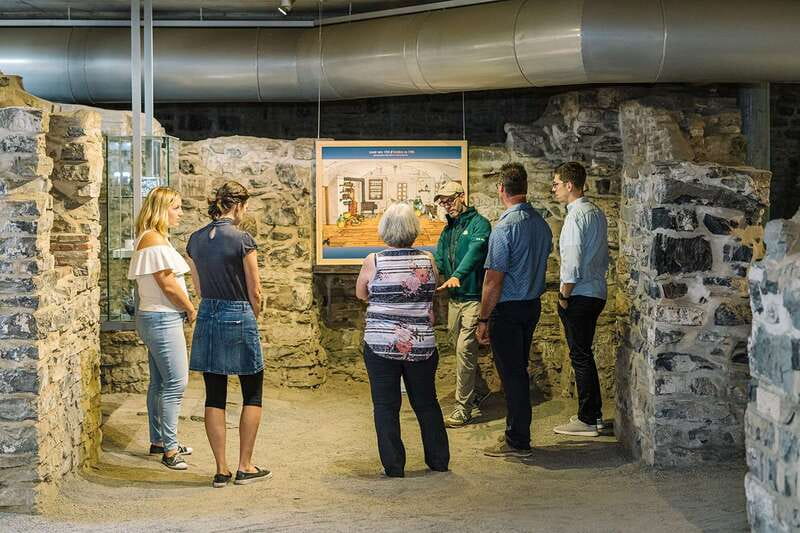
The remains help you picture the basic plan and evolution of the complex. One strong feature of the visit is the way the archaeology makes the architecture easier to understand. A foundation line or altered section of the site might seem abstract on its own, but the commentary connects it to the way the château grew and changed over time.
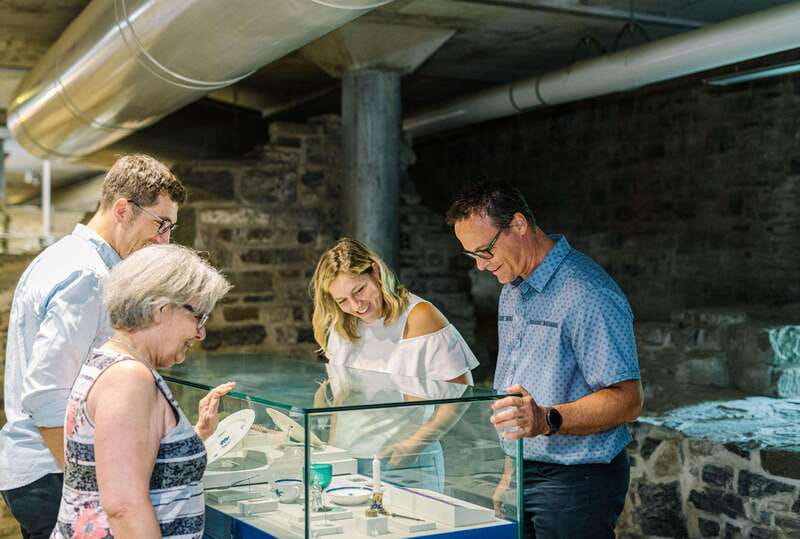
More than 120 artifacts are displayed. These objects are useful because they bring the site down from the level of governors and grand policy to the level of ordinary tasks. The archaeological collection includes details that help explain how people lived and worked inside the complex. The audio route even raises questions about objects such as an icebox, grooves in the bottom of a container, and the use of bottles of ammonia by women.
Those small points may be the most memorable part of the hour. Large political events can blur together, but a practical object makes the past easier to grasp. You begin to think about food storage, cleaning, household routines, and the work required to maintain an official residence.
I like this balance. The château was a place of ceremony and power, but it was also a workplace and a home. The artifacts keep the visit from becoming only a lesson in governors and treaties.
The French and British governors who ruled from here
The Saint-Louis site gives you a direct way to follow Québec’s change from French to British rule. French governors used the château as their base, and British governors later occupied the same seat of authority. The buildings and remains therefore carry several layers of political history.
The tour focuses on decisions made at the château that had consequences across North America. You hear about the diplomatic meetings and formal events that took place here, along with the way governors used the residence to manage relationships and authority.
Do not expect a full political seminar in one hour. The visit is an introduction, not an exhaustive account of every governor or conflict. Its strength is spatial: you are standing where the decisions happened. That physical connection makes the broad story easier to remember.
The lavish events are another useful part of the presentation. They show that the château was not simply an office. It was a place for entertaining, ceremony, and public display. The contrast between elegant gatherings and the practical objects found in the ground gives you a better idea of how official life actually operated.
The site also helps you picture the château as the only one erected in Québec City. That fact gives the visit a special place in the city’s story. Québec has no shortage of fortifications, churches, terraces, and grand historic buildings, but this particular residence was the governor’s château, a purpose-built symbol of colonial authority.
Huron-Wendat diplomacy receives needed attention
One of the visit’s most important features is the exhibition about Huron-Wendat diplomatic alliances with colonial governors. It was presented in collaboration with the Huron-Wendat Nation, and the interpretation includes a Huron-Wendat perspective.
That matters because the story of colonial Québec can easily become a tale told only through French and British institutions. Here, diplomacy is not presented as a one-way process controlled entirely by governors. The relationships with First Nations were central to the political life of the region, and the exhibition gives you a chance to consider those alliances from an Indigenous point of view.
I would give this section proper time instead of treating it as a quick add-on. It broadens the visit beyond architecture and European administration. You come away with a better sense that the château was a meeting place where different political interests negotiated, formed alliances, and shaped events together.
The exhibition also adds value to the modest admission price. You are not simply paying to see old walls. You are receiving interpretation that connects the physical site with the people and diplomatic relationships that gave it meaning.
Still Canada, at a slower pace:
- Vancouver Half-Day Whale Watching Adventure with Free Photos
★ 5.0 · 5,000 reviews - Niagara Falls: Premium Tour, Boat & Journey Behind the Falls
★ 4.8 · 4,207 reviews - Banff: Banff Gondola Admission Ticket
★ 4.7 · 3,698 reviews - Toronto: Niagara Falls Day Tour with Optional Boat Cruise
★ 4.6 · 3,178 reviews
Choosing between a live guide and the audio tour
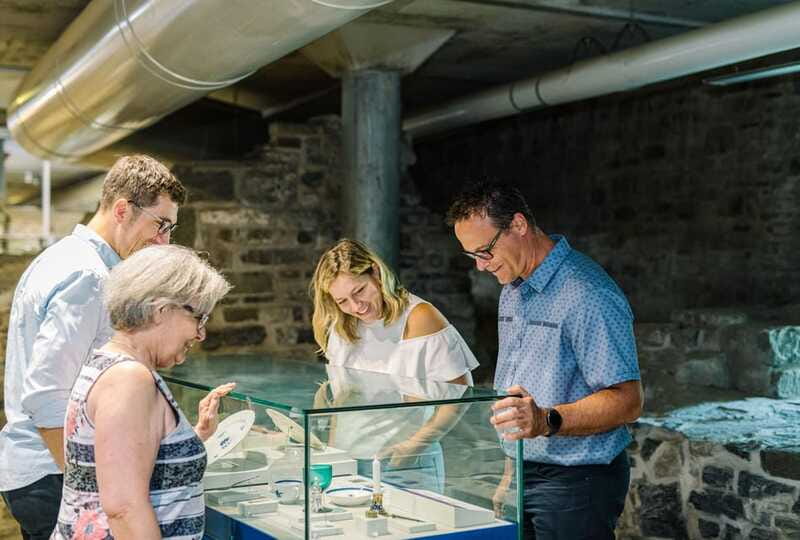
You can visit with an on-site heritage guide or use the downloadable Parks Canada app for a self-guided audio tour. Both options cover the main story, but they offer different moods.
A live guide is the better choice if you enjoy asking questions or prefer a person to shape the visit. The strongest response in the available feedback praised a guide as animated and entertaining, as well as well informed. Another visitor found the guided experience very interactive. That suggests the live format can add energy to what is otherwise a site of foundations and displays.
The guide languages listed are English, French, Spanish, German, and Chinese. Check the available starting times when you book, since the visit lasts about one hour and begins at scheduled times.
The audio tour gives you more independence. You can move through the site at your own pace within the planned route and use the downloadable app to add context. It is a practical choice if you prefer not to follow a group or if your schedule does not line up with a live presentation.
There is one clear caution. The audio circuit sometimes places you in imagined roles, such as governor or servant. One person found this theatrical approach less appealing and wanted straightforward historical information instead. If you dislike acted narration, choose the live guide if possible, or be prepared for the audio tour to include more performance than a standard museum recording.
At the same time, those scenes may help some people picture daily life. The program’s questions about household objects show that it is trying to make the past feel active rather than simply listing dates. Your preference for factual narration or staged storytelling should guide your choice.
Why the $9 admission is good value
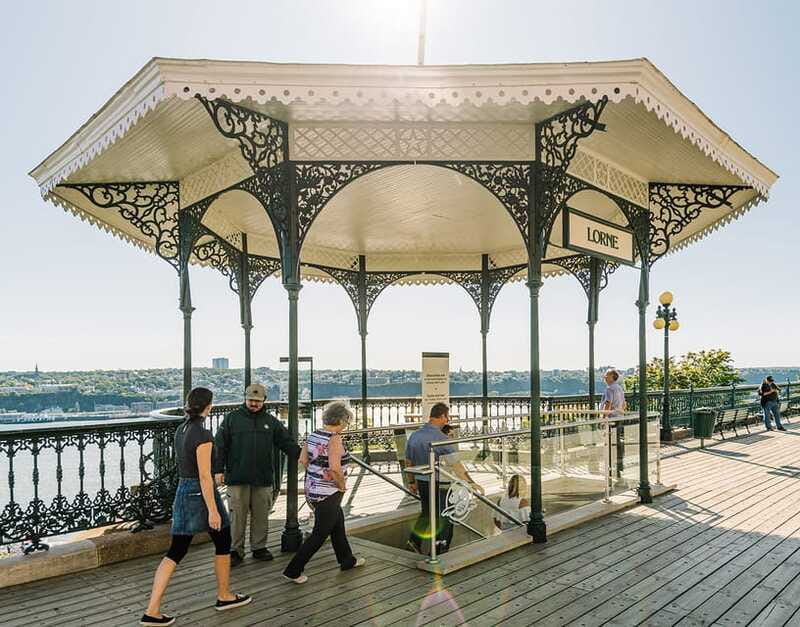
At $9 per person, this is one of the easier historic attractions to justify in Old Québec. The price is low enough that you do not need to build an entire day around it. You can add the visit between the terrace, the Château Frontenac area, and other nearby sights without making a major financial commitment.
The value comes from the combination of access and interpretation. You see archaeological remains that are not visible from the street, examine more than 120 artifacts, and hear how the site functioned as a residence, workplace, diplomatic venue, and political headquarters.
The one-hour duration also helps. You get a focused history stop rather than a long museum commitment. If you have limited time in Québec City, the visit gives you a concise introduction to colonial governance and the city’s earliest seat of power.
The price does not mean the experience is elaborate in the way a major museum can be. Much of the site is archaeological, so you need to listen and use the interpretation to form a picture of the vanished buildings. If you want intact rooms, complete furniture, or a grand château interior, this may feel modest.
For visitors who enjoy connecting fragments to a larger story, the admission is sound. For anyone mainly seeking dramatic architecture, the nearby Château Frontenac will make a stronger visual impression, while Saint-Louis offers the more unusual historical setting.
Practical limits: stairs, bags, and timing
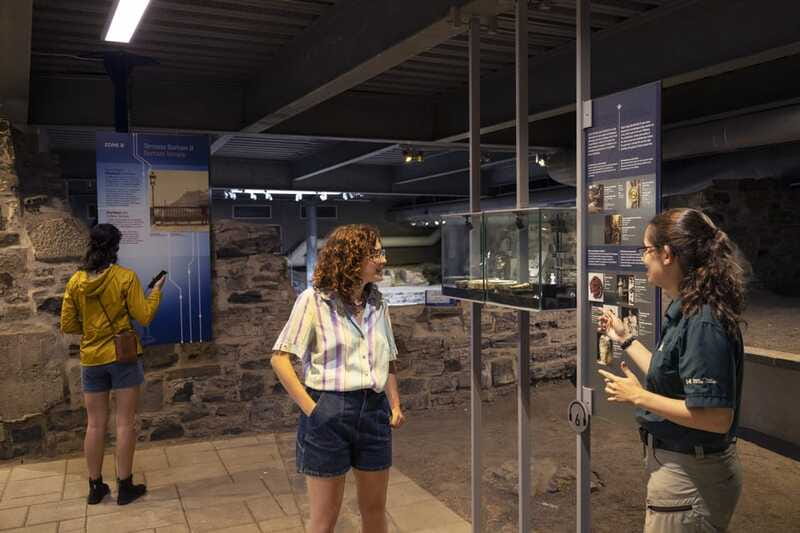
Plan on spending about one hour at the site. The starting time matters because the visit is tied to scheduled availability. Arrive at the Frontenac sign on Dufferin Terrace with enough time to find the kiosk and get oriented.
The site is not suitable for wheelchair users or people with mobility impairments. The descent from the terrace is an important part of the route, and the historic remains are not arranged as an easy, level attraction.
Food and drinks are not allowed inside. Large bags and luggage are also prohibited, so do not treat the visit as a place to store a suitcase while moving through Old Québec. Pets are not allowed, although assistance dogs are permitted. Bare feet are not allowed, a simple rule that is easy to overlook during warm weather.
Canadian Armed Forces members, Canadian veterans, and their immediate families can receive daily free admission at Parks Canada sites by presenting the applicable Platinum Une FC card or Canadian Veteran Service Card. This benefit does not include a guided tour, so check what type of visit you are booking.
The cancellation policy is flexible: you can cancel up to 24 hours in advance for a full refund. Reserve now and pay later is also available, which helps if your Québec City schedule is still shifting.
Who will enjoy this one-hour visit most
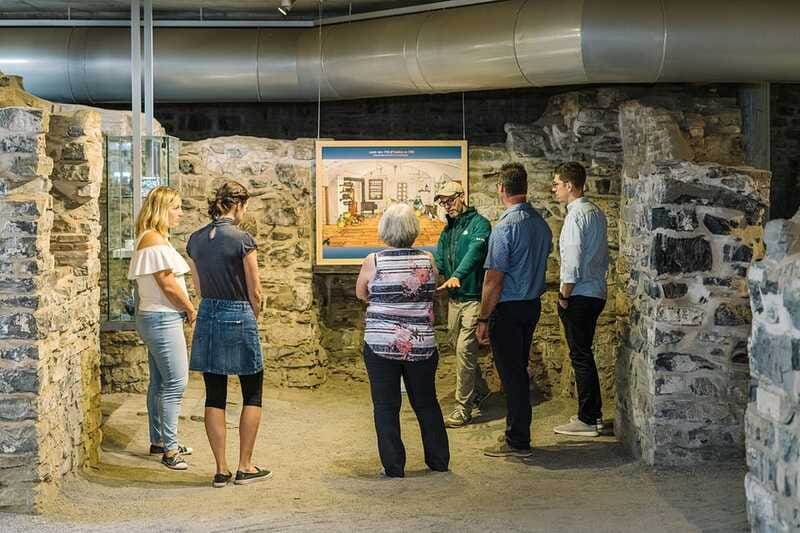
I would recommend this experience to you if you like history that connects buildings, objects, and political decisions. It is especially useful for first-time visitors who want to understand how Québec City became a center of colonial power without spending half a day in a museum.
Families with older children may also find the everyday-life details useful. Questions about ice storage, household work, and strange-looking objects give younger visitors something concrete to watch for. The theatrical audio approach could appeal to children, though adults who prefer formal interpretation may want the live guide.
This is also a good stop for anyone interested in First Nations and colonial diplomacy. The Huron-Wendat exhibition adds an important voice and keeps the visit from focusing only on French and British governors.
I would be more cautious if you have limited mobility, dislike stairs, or want a fully intact historic residence. The site is below the terrace, the remains require interpretation, and the hour is built around archaeology rather than restored rooms.
Should you book the Saint-Louis Forts and Châteaux visit?
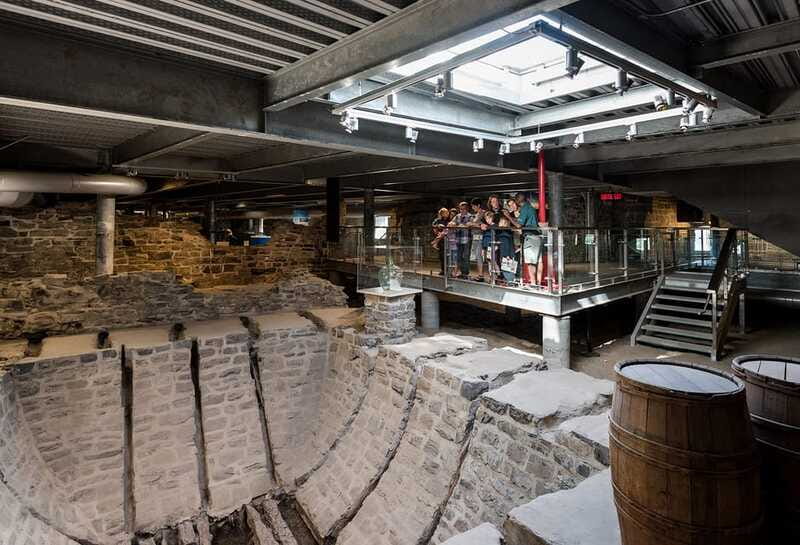
Yes, if you want a short, inexpensive history stop with real archaeological substance. The combination of the Dufferin Terrace setting, governor-era remains, household artifacts, and Huron-Wendat interpretation makes this more worthwhile than its small price suggests.
Choose the live guide if you want an animated explanation and the chance to follow a human storyteller. Choose the audio tour if you prefer independence, but remember that it includes role-playing and theatrical moments.
Skip it if stairs are a problem or if your main goal is to tour grand, intact rooms. For everyone else, this is a smart one-hour addition to Old Québec, especially on a day when you want the city’s power story to extend beyond its postcard views.
FAQ
Where is the Saint-Louis Forts and Châteaux site?
It is beneath Dufferin Terrace in Old Québec, Québec City. The meeting point is at the beginning of Dufferin Terrace near a green and white kiosk with a Canadian flag and a Frontenac sign.
How long does the visit last?
The visit lasts about one hour.
How much does admission cost?
The listed price is $9 per person.
Is the visit guided or self-guided?
You can choose an on-site heritage guide or a self-guided audio tour using the downloadable Parks Canada app.
Which languages are available?
Live tour guide languages are English, French, Spanish, German, and Chinese.
What can I see at the site?
You can see the remains of Château Saint-Louis and more than 120 artifacts found during archaeological excavations. The visit also covers the château’s architecture, daily life, diplomacy, and political role.
What years did Château Saint-Louis serve as a seat of power?
The château served as the official residence and seat of power for French and British governors from 1620 to 1834.
Is the site accessible to wheelchair users?
No. The experience is not suitable for wheelchair users or people with mobility impairments.
Can I bring food, drinks, luggage, or pets?
Food and drinks, luggage and large bags, and pets are not allowed. Assistance dogs are allowed.
Can I cancel my reservation?
Yes. You can cancel up to 24 hours in advance for a full refund. Reserve now and pay later is also available.
Just added around Canada
- Vancouver Rainforest Hike with Waterfalls, Suspension Bridge, Old Growth Forest★ 5.0 · 94 reviews
- Vancouver Signature Highlights Open Air Roadster Tour★ 5.0 · 7 reviews
- Shore Excursion: Vancouver & Granville Island City Sights Tour★ 5.0 · 7 reviews
- Private Tour: Vancouver Sightseeing and Capilano Suspension Bridge★ 4.5 · 42 reviews
- Vancouver Old Town Treasure Hunt: Self-Guided Walking Game★ 4.5 · 12 reviews
- Vancouver 1-Day Tour (Granville Island/Stanley Park) (Chn&Eng)★ 4.5 · 9 reviews
- Vancouver Local Taste Trail★ 5.0 · 33 reviews
- Vancouver Lookout Admission Ticket★ 4.0 · 185 reviews
City Tours, compared.


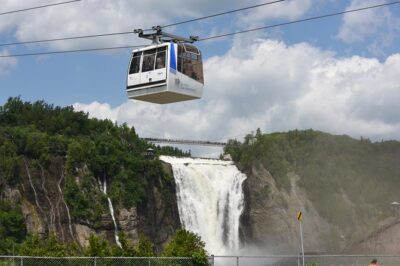
Half-Day Trip to Montmorency Falls and Ste-Anne-de-Beaupré from Quebec city
Read our review →
Old Quebec City: Grand Walking Tour with Private Option
Read our review →

Quebec City and Montmorency Falls Day Trip from Montreal
Read our review →Browse the lists this tour appears in