
Reviewed · HISTORICAL TOURS
Old Québec & French Canada Private History Walking Tour
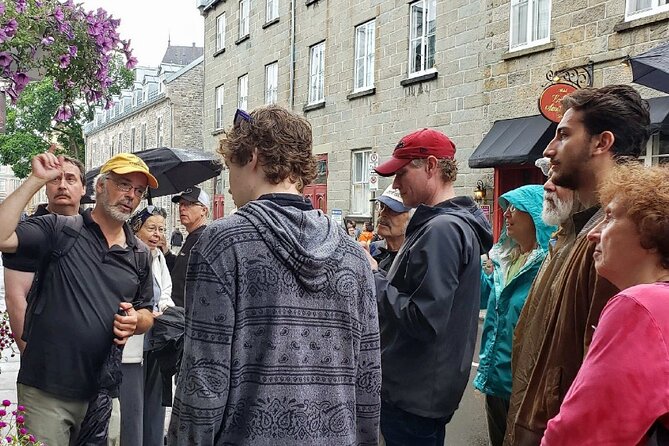
History gets personal here. This private 2.5-hour walk connects Québec City’s French beginnings, British takeover, American invasion, and modern Canadian identity in one compact route. I like the way the guide uses maps, timelines, and historic images alongside the streets themselves. I also like the private format, which lets you ask questions and shape the conversation around your family, interests, or knowledge of North American history.
The main consideration is pace. You cover a great deal in roughly one mile, with stairs and some uphill walking between Upper Town and Lower Town. The tour is a strong choice for history-minded visitors who want context, but it may feel dense if you prefer a slow stroll with long stops inside museums.
In This Review
- Key points before you book
- Why this private walk works so well
- Starting with Canada’s military story
- From Château Frontenac to the Dufferin Terrace
- Fortifications, gates, and the American threat
- Upper Town, Lower Town, and the making of Québec
- Churches, schools, and French Canadian culture
- A pulp and paper monument and the city’s modern identity
- What the 2.5-hour format gives you
- Who should book this Québec City walk
- Should you book it?
- FAQ
- How long is the Old Québec walking tour?
- How much does the tour cost?
- Is this a private tour?
- Is hotel pickup available?
- What happens if my hotel is outside Old Québec?
- What language is the tour offered in?
- Is guiding included in the price?
- How far in advance is this experience usually booked?
- Is the tour physically demanding?
- What is the cancellation policy?
Key points before you book
- A private group tour for up to 10 people: You get the guide’s full attention, with no strangers setting the pace.
- A Canadian view of American history: The 1775 to 1776 invasion, Benedict Arnold, Richard Montgomery, and the Treaty of Paris receive special attention.
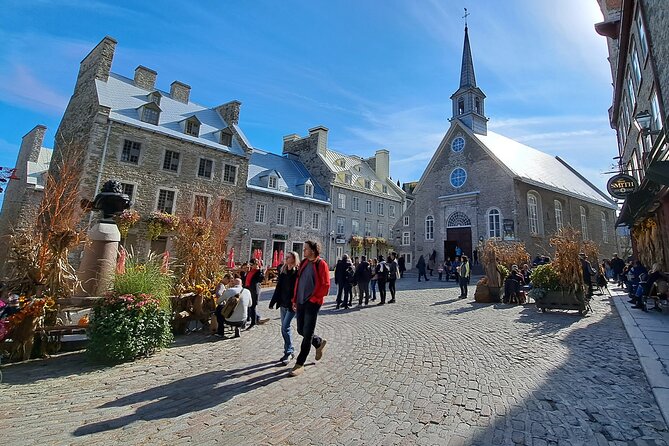
- A walk through 400 years of Québec City: The route links Upper Town, Lower Town, Place Royale, Petit-Champlain, and the Old Port.
- Guide Michel Perron is a major strength: He uses maps, timelines, and photographs to make complicated events easier to follow.
- A practical introduction to the city: You see major landmarks early, which helps you plan the rest of your stay.
- Expect moderate physical effort: The route includes the fortified upper city, Lower Town, stairs, and changes in elevation.
Why this private walk works so well
Québec City can look simple at first glance: stone walls, steep streets, church towers, and the Château Frontenac rising above it all. The story is not simple. French settlement, British rule, Catholic institutions, military defense, American expansion, and modern Canada all meet in a small area.
That is where a private guide helps. Instead of seeing the walls as scenery, you learn why Québec City had to be protected and how its position on the St. Lawrence River shaped the fate of a continent. Instead of treating the Plains of Abraham as a pleasant park, you see it as the place where the French and British struggle for Canada reached its decisive moment.
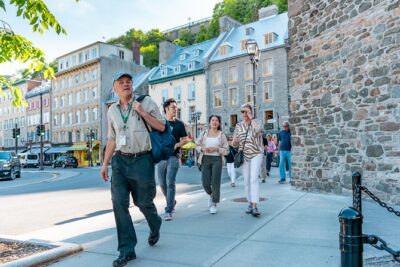
Michel Perron receives repeated praise for his ability to explain these connections in a clear, lively way. He is a Québec native, and he brings a local point of view to events that American visitors may know mainly through the Revolutionary War. He also adapts the walk to the group. Families have found ways to keep both a seven-year-old and a thirteen-year-old interested, while couples and solo visitors have used the time for more detailed questions.
That flexibility is one of the best reasons to book a private tour. You can ask about your family name, compare Canadian and American history, or pause over architecture and religion. The guide has also carried visual material in a backpack, including maps, timelines, and historical photographs. Those tools matter when several wars and political changes overlap.
More History Tours in Quebec City
- Evening Gourmet Tour 5 Course Dinner – History and Food in Old Quebec City
★ 5.0 · 496 reviews - Quebec City: Old Quebec Historical Walking Tour
★ 4.8 · 409 reviews - Combo Historical and Food Tour of Old Quebec
★ 5.0 · 360 reviews
Starting with Canada’s military story
The tour includes a stop at the museum devoted to Canada’s military history and Québec City’s major battles, from the first French settlers through 1776. Even if you do not spend time inside every museum on your visit, this stop gives the military story a clear frame.
The key theme is geography. Québec City controlled access along the St. Lawrence, the great water route into the continent. French and British fortifications were not decorative walls. They protected a strategic outpost that connected the river, the interior, and the Atlantic world.
You also see a war monument connected with the French and Indian War. The name can confuse American visitors because it refers to the same broad North American conflict often called the Seven Years’ War. A guide can help you sort out the different names, alliances, and dates without leaving you to piece it together from plaques.
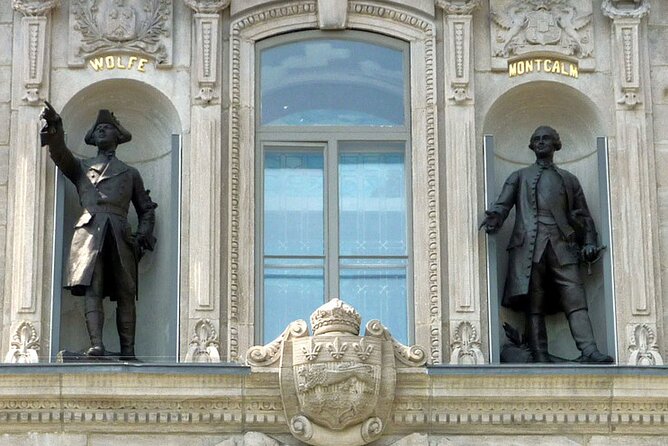
The tour then reaches the Plains of Abraham, the famous battlefield where the British defeated the French. The result was not just a change of flag in one city. The 1763 Treaty of Paris made Canada British, reshaping the political and cultural future of French Canada.
This stop is especially useful if you know the American side of colonial history but have not studied Canada’s parallel story. Québec City gives you a different ending to the imperial contest than Yorktown or the battlefield at Chalmette near New Orleans. Here, the British victory helped define the country that followed.
From Château Frontenac to the Dufferin Terrace
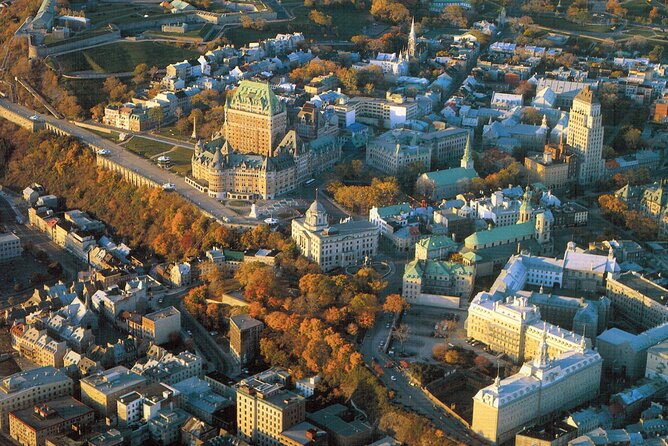
The Fairmont Château Frontenac is one of the easiest landmarks to recognize in Québec City. The hotel dates to 1893 and was built by the Canadian Pacific Railway. Its purpose was tied to the railway era, when grand hotels helped promote travel across the new country.
The guide connects this building to modern Canada from coast to coast. That context makes the hotel more than a photogenic stop. It represents a period when rail travel, national identity, and tourism were being built together.
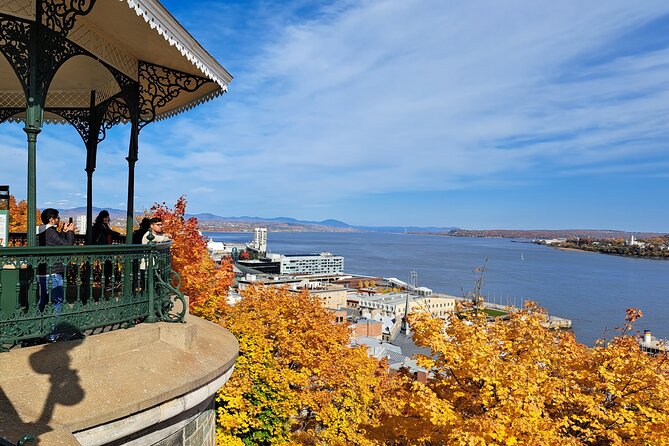
Nearby, the Dufferin Terrace recalls the British royal family and the representatives who helped shape modern Canada. The boardwalk was built after Confederation, and it also covers the Forts and Châteaux Saint-Louis National Historic Site. Beneath the terrace are the remains of the residence used by French governors before the French and Indian War.
That layered setting is classic Québec City. You may be looking across the river from a nineteenth-century boardwalk while standing above the remains of French colonial government. The guide’s job is to point out those layers so the view becomes a history lesson without losing its pleasure as a view.
Fortifications, gates, and the American threat
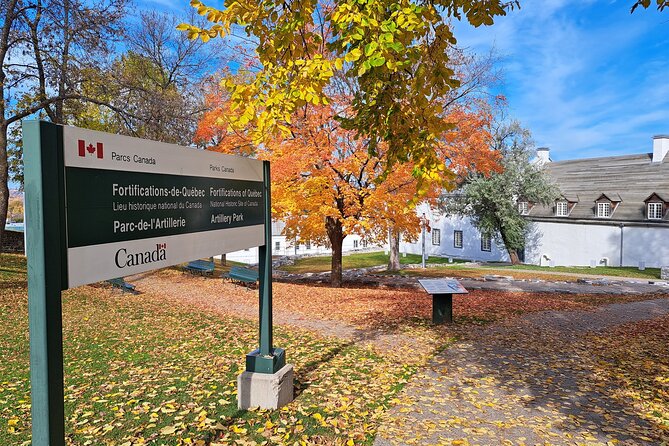
The fortified district gives the tour much of its physical character. French and British ramparts protected the city and the river route below. The Citadelle, added after the War of 1812, reflects a later fear: an attack from the United States.
That detail gives the fortifications a long timeline. They were not built for one war and then forgotten. Defense plans changed as the political map changed, and the American threat mattered long after the colonies gained independence.
You also visit a cannon platform connected with King William’s War. During that conflict, Frontenac defeated invaders from Boston led by William Phips. The stop helps show that Québec City faced attacks from the south before the American Revolution and before the War of 1812.
One of the city gates is part of this story. It began as a French rampart gate with narrow openings and doors. Those original military structures were later removed and rebuilt to look more medieval, part of Lord Dufferin’s 1875 plan to improve Québec City.
That is a useful lesson in historic cities: not everything that looks old comes from the period it suggests. Québec City’s appearance was shaped not only by military need but also by nineteenth-century ideas about how a picturesque old city should look.
The Breakneck Stairs provide the physical link between Petit-Champlain and Upper Town. They are a memorable part of the route, but they also explain the city’s topography better than any map. You should wear comfortable shoes and expect a moderate level of exertion. The route is not an intense hike, but it is not flat.
More Walking Tours in Quebec City
- Quebec City Walking Tour
★ 5.0 · 4,716 reviews - Old Quebec City: Grand Walking Tour with Private Option
★ 4.8 · 2,609 reviews - Old Quebec Classique Walking Tour with Funicular
★ 5.0 · 1,317 reviews - Quebec: Crimes of New France Animated Walking Tour
★ 4.6 · 926 reviews
Upper Town, Lower Town, and the making of Québec
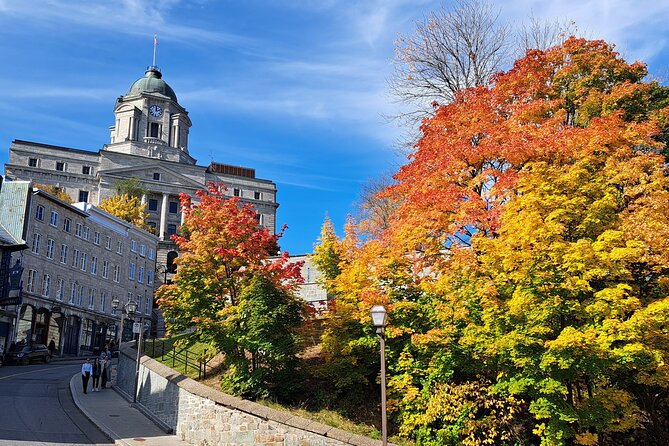
Upper Town mainly covers the walled UNESCO World Heritage area. It packs four centuries of churches, government buildings, military works, and public spaces into a tight area. Lower Town includes Place Royale, Petit-Champlain, and the Old Port, each with its own connection to commerce, settlement, and the river.
The contrast between the two areas is one of the most useful parts of the walk. Upper Town feels tied to government, defense, and religious authority. Lower Town shows the practical side of a port city, where merchants, workers, ships, and trade shaped daily life.
Place Royale is the central historical point. Samuel de Champlain founded Québec City here in 1608, and the site has been occupied ever since. The location is often compared to Jamestown and Williamsburg because it combines the birthplace of a country with later efforts to preserve and interpret that past.
The tour also addresses a never-completed 1970s museum district project connected with the area. That detail adds a modern layer to the site. Québec City is not a frozen colonial set. It has been repaired, redesigned, interpreted, and sometimes reimagined by each generation.
Petit-Champlain is now one of the Old City’s leading shopping areas. Its current character comes partly from a 1980s project led by two local architects, who wanted to bring high-end artisan shops into a declining part of the Old Port. You can enjoy the shops while also learning how urban renewal changed the district.
Churches, schools, and French Canadian culture
The tour includes the founding cathedral of Catholicism in French America. Its diocese once reached across a huge part of the continent, from Québec City toward New Orleans. That fact helps explain the reach of the Catholic Church in the French territories and the importance of Québec City as a religious center.
The route also visits the former school for French Catholic missionaries sent across North America. Today, the site is connected with Laval University’s School of Architecture and a high school. The building’s changing use shows how institutions survive by adapting, even as their original mission fades.
Two other major French heritage institutions are part of the route. One is the first school for girls in North America, now associated with French art and Catholic education. The other is the first hospital in North America, now a wellness center and museum.
These stops are valuable because they widen the story beyond battles and governors. French Canada was built through education, religion, health care, and the work of women as well as soldiers and politicians. If you are interested in architecture, art, or Catholic history, these sites may be among the most rewarding parts of the tour.
The guide places local events beside wider world history. That approach helps you see how a school, hospital, or cathedral fits into changing ideas about government, faith, and society. It also makes the tour useful for visitors who want more than a list of dates.
A pulp and paper monument and the city’s modern identity
One unusual stop is an iconic monument built in 1929 as the headquarters of a pulp and paper company. It recalls the Great Depression and the resilience of a Welsh family whose descendants now work in high-end tourism in Québec City.
This is the kind of detail that gives the walk personality. It links architecture to business, immigration, economic hardship, and family continuity. You are not only hearing about royal governors and battlefield commanders. You are also seeing how local families and industries shaped the city’s later identity.
The route also includes the former financial district, now associated with art and antique shops. The area was partly reclaimed from water during French, British, and Canadian periods. It was also one of the places connected with the failed American invasion of Canada in 1775.
Benedict Arnold and Richard Montgomery led separate parts of that invasion, and both were defeated. For American visitors, this is an important correction to the familiar Revolutionary War story. The campaign did not stop at the border. It reached Québec City, where the attempt to bring Canada into the rebellion failed.
A museum covering Canadian and Native American history is another stop in Lower Town. The route does not limit Québec City’s past to French and British figures. It points toward the Indigenous peoples and broader communities who form part of Canada’s story.
What the 2.5-hour format gives you
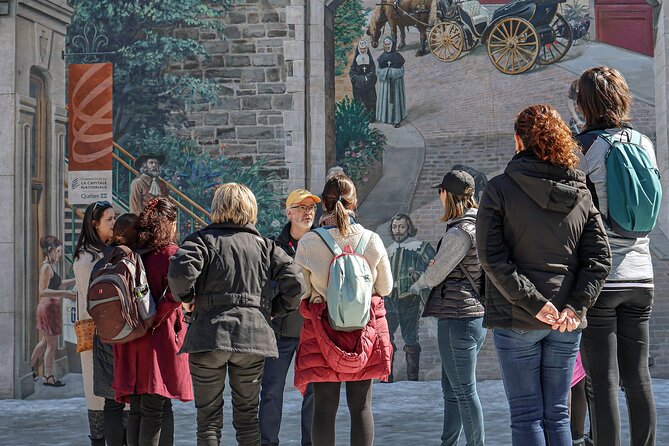
Two and a half hours is enough for a strong orientation but not enough to visit every interior site in depth. You should think of this as a guided framework for the city, not a museum tour with long indoor visits.
I like that balance for a first day. You see the main districts, learn the basic sequence of events, and collect ideas for later exploration. Afterward, you can return to the museum, cathedral, fortifications, or shopping areas that caught your interest.
The private format also keeps the walk focused. A group of up to 10 people can ask questions without turning the outing into a large procession. If your party includes children, the guide can adjust the explanation. If everyone in your group is fascinated by military history, you can spend more time there.
Pickup is offered from hotels in Old Québec. The guide meets you in the lobby five minutes before the tour. If your hotel is outside Old Québec, you receive an easy-to-find meeting point. The tour is offered in English and includes guiding services. Mobile tickets and nearby public transportation make the practical side simple.
The cost is $213.92 per group, not per person, for up to 10 people. That makes the value much better for a family or group of friends than for a solo visitor. For two people, it is a premium experience, but the private attention and tailored discussion may justify it if history is central to your trip.
The tour has a five out of five rating from 41 reviews, with 100 percent recommending it. The most consistent praise centers on the guides’ preparation, kindness, flexibility, and ability to explain both Québec and the relationship between Canada and the United States. Michel Perron is named often, while another guide, Richard, also receives warm praise.
Who should book this Québec City walk
I would choose this tour for a first visit, especially if you want the city’s major sights to make sense quickly. It suits couples, families, solo visitors, and friend groups who prefer questions and conversation over a fixed script.
It is particularly good for:
- People interested in French and British colonial history
- American visitors curious about the failed 1775 invasion
- Families with older children who can manage a moderate walk
- Visitors who want a local perspective on Canada
- Architecture, church, military, and urban history enthusiasts
- Groups that value a private guide and flexible discussion
I would hesitate if you want a slow photographic stroll, extensive museum time, or a completely level route. You also need to be comfortable walking through Upper and Lower Town and using stairs.
Free cancellation is available until 24 hours before the start time. After that point, the amount paid is not refunded, and changes are not accepted. Service animals are allowed, but you should still be prepared for the physical demands of a historic city built on a steep riverfront.
Should you book it?
Book this tour if you want Québec City explained as part of a larger North American story. The best feature is not simply the number of landmarks. It is the way the guide ties Champlain’s 1608 settlement, the French and British wars, the American invasion, Catholic institutions, railway-era Canada, and modern tourism into one readable story.
For a group of four to 10, the price is reasonable for a private, history-focused introduction. For two people, it is worth choosing only if you value personal attention and detailed conversation. Give yourself comfortable shoes, keep an open mind about the complicated French, British, Canadian, and American past, and use the final hour of the walk to decide which places deserve a longer visit.
FAQ
How long is the Old Québec walking tour?
The tour lasts approximately 2 hours and 30 minutes.
How much does the tour cost?
The price is $213.92 per group, with up to 10 people included.
Is this a private tour?
Yes. Only your group participates in the activity.
Is hotel pickup available?
Pickup is offered if your hotel is in Old Québec. The guide meets you in the hotel lobby five minutes before the tour.
What happens if my hotel is outside Old Québec?
The tour provider will contact you with an easy-to-find meeting point.
What language is the tour offered in?
The tour is offered in English.
Is guiding included in the price?
Yes. Guiding services are included.
How far in advance is this experience usually booked?
On average, it is booked 67 days in advance.
Is the tour physically demanding?
You should have a moderate level of physical fitness. The route includes walking through Upper and Lower Town, changes in elevation, and stairs such as the Breakneck Stairs.
What is the cancellation policy?
You can cancel at least 24 hours before the start time for a full refund. Cancellations or changes made less than 24 hours before the start time are not accepted for a refund.
Just added around Quebec City
- YQB Airport Transfer★ 5.0 · 41 reviews
- Wine Tasting on Ile d’Orleans★ 4.5 · 163 reviews
- Quebec City : Winter Magic Walking Tour★ 4.5 · 9 reviews
- Heritage Upper Town E-Bike Tour★ 5.0 · 6 reviews
- VIP Agritourism Tour of Île d’Orléans & Montmorency Falls (Lunch)★ 5.0 · 11 reviews
- Private Tour: Montmorency Falls & Ste-Anne-de-Beaupré from Québec★ 4.5 · 12 reviews
- 4 Hours Private Quebec City Guided Tour★ 5.0 · 83 reviews
- A Taste of History Walking Tour★ 4.5 · 86 reviews
Historical Tours, compared.


Evening Gourmet Tour 5 Course Dinner – History and Food in Old Quebec City
Read our review →
Browse the lists this tour appears in