Reviewed · TICKETS
Nikka Yuko Admission (Adults & Children)
A quiet hour can reset a busy family day. Nikka Yuko Japanese Garden brings Japanese design, Canadian history, and child-friendly activities together in a compact setting beside Henderson Lake. I like the included activity books and crayons, which give children something useful to do while you enjoy the paths, and I like that admission includes daily programming rather than just garden access. The main drawback is size: at $8.91 per person, some people may find the garden too small if they expect a large flower display or a full-day attraction.
The garden works best when you treat it as a calm cultural stop, not a botanical park packed with blooms. Seasonal timing matters, since apple blossoms appear in spring and peonies in July, while other visits focus more on stone, water, paths, exhibits, and performances.
In This Review
- Nikka Yuko Garden at a Glance
- Why This Small Garden Has Meaning
- A Child-Friendly Visit That Does Not Feel Like a Playground
- Following the Paths Through the Garden
- The Friendship Bell and Henderson Lake
- Tea Pavilion, Exhibits, and Japanese Customs
- Minyo Dance and Daily Programming
- Is $8.91 Good Value?
- Timing, Access, and Practical Details
- Who Will Enjoy Nikka Yuko Most?
- Should You Book This Admission?
- FAQ
- How much does Nikka Yuko admission cost?
- How long does a visit usually take?
- Are activities for children included?
- What does admission include?
- Are food and drinks included?
- Can I join a guided tour?
- Are service animals allowed?
- What happens if the weather is poor?
Nikka Yuko Garden at a Glance
- Family activities are included: Children receive activity books and crayons, with themed surprises and Japanese treats built into the kid-focused experience.
- The setting is compact and peaceful: Plan on roughly one to two hours, not an entire day.
- Cultural programming adds value: Daily activities may include tea ceremonies, sake tastings, Minyo dance, live performances, and seasonal exhibits.
- The Friendship Bell connects the garden to Henderson Lake: Ring it as a simple gesture of goodwill between Japan and Canada.
- Guided tours run Thursdays through Mondays: Admission also gives access to the Tea Pavilion and current exhibits.
- The $8.91 price is strongest during programmed days: If few activities are running, the visit may feel brief for the money.
Why This Small Garden Has Meaning
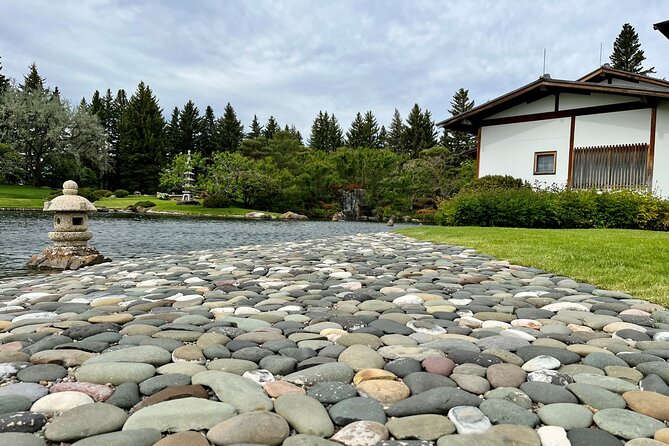
Nikka Yuko means Japan-Canada Friendship. The garden was created as a place where visitors could learn about Japanese culture and the relationship between Japanese and Canadian communities in Southern Alberta.
That purpose gives the visit more weight than a simple walk through ornamental grounds. You can learn about the people who founded the garden and the hardships Japanese-Canadians faced locally after the war. The setting is peaceful, but the story behind it is not merely decorative.
I appreciate that the garden does not rely only on signs and scenery. Cultural demonstrations, performances, and exhibits help turn the visit into an introduction to living traditions. You may hear Minyo music, see dance, take part in a tea ceremony, or watch a seasonal program.
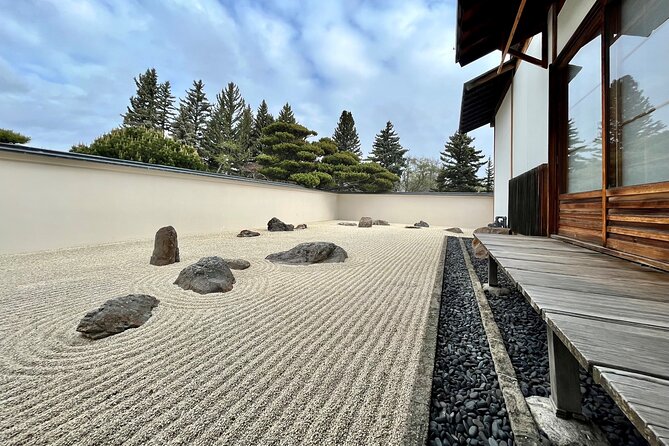
The garden is also a place to slow down. You can sit near the dry rock garden and consider its patterns, stroll along the paths, or pause with a green tea. That quiet pace is part of the point. If your ideal attraction requires constant action, you may find the experience modest. If you enjoy thoughtful places with room to pause, the scale becomes an advantage.
A few more Alberta trips worth comparing
- Banff: Banff Gondola Admission Ticket
★ 4.7 · 3,698 reviews - Toronto: Casa Loma Entry Ticket
★ 4.7 · 2,705 reviews - Banff Gondola Ride Admission
★ 4.5 · 2,688 reviews
A Child-Friendly Visit That Does Not Feel Like a Playground
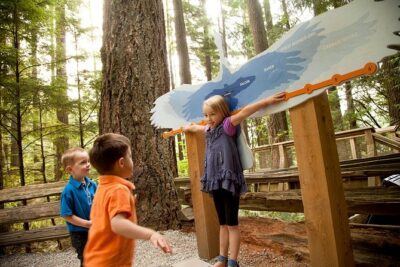
The package is designed for adults and children, but it does not turn the garden into a noisy amusement stop. Children can explore at their own pace, use the activity books and crayons, and look for themed surprises while adults take in the garden’s design.
That balance is important. Young children often lose interest when a visit asks them to simply walk and look. The activity materials give them a small task and help them notice details around them. You can enjoy the garden without expecting children to remain perfectly still beside every stone arrangement.
Japanese treats are also part of the child-focused appeal. The supplied information does not specify exactly which treats are included, so I would avoid promising a particular snack. Additional drinks, snacks, cookies, coffee, and tea are available for purchase inside the visitor centre and gift shop.
For families, I would plan on one to two hours. That gives children enough time to use the activity materials, see the main features, and take a break without stretching the visit too far. If a performance or special activity is scheduled, you can stay longer.
Following the Paths Through the Garden
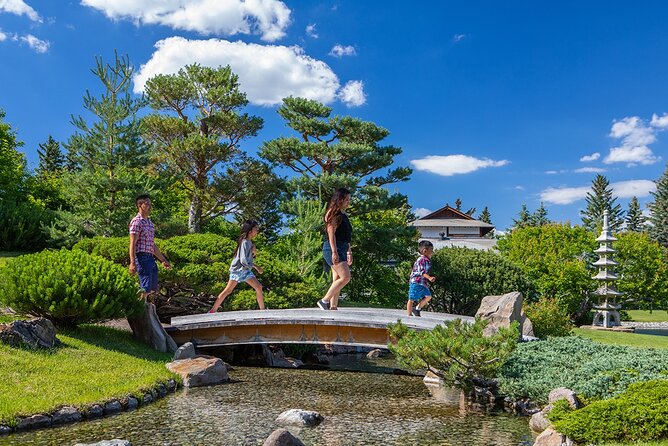
The central activity is a walk through a Japanese-style garden set in Southern Alberta. You are not covering a huge area, and that is worth knowing before you arrive. The compact layout makes it manageable for children and for anyone who prefers a gentle outing, but it may disappoint you if you expect acres of flowers.
The design asks you to notice arrangement and space. The dry rock garden offers a quieter stop, with patterns intended for contemplation. You might find yourself paying more attention to the placement of stones, the shape of a path, or the way the garden frames views toward Henderson Lake.
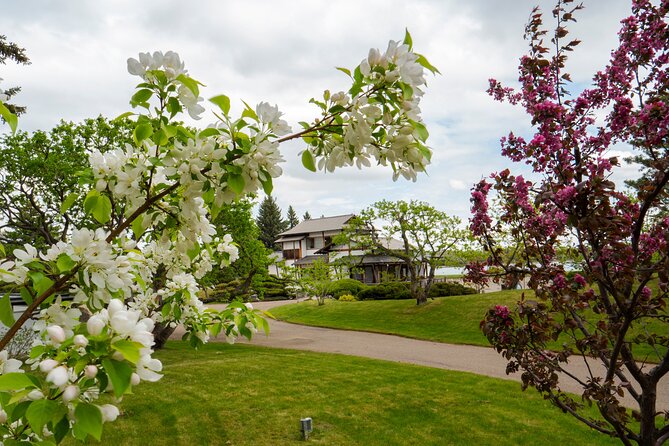
This is not a garden that promises flowers in every season. The garden’s response to disappointed visitors points out that apple blossoms appear in spring and peonies in July. Outside those periods, the visual focus is more likely to be the garden’s structure, cultural details, and seasonal programming.
That makes the calendar important. If flowers are your main reason for visiting, choose spring or July if possible. If you are coming for the garden’s atmosphere and cultural activities, other times can still work well.
The Friendship Bell and Henderson Lake
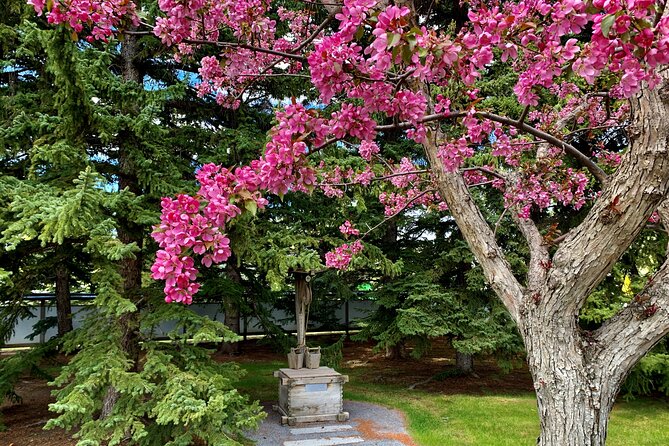
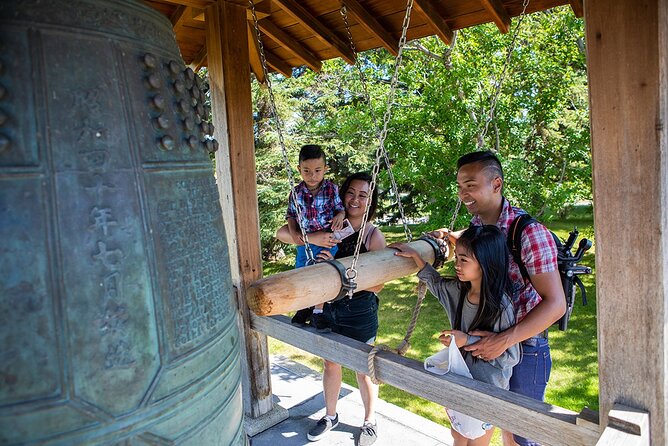
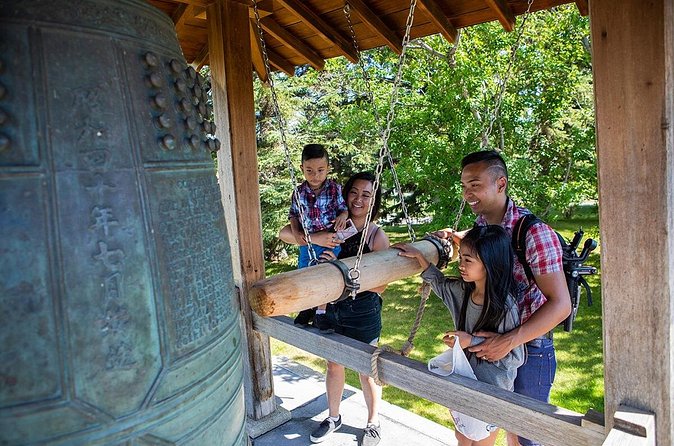
The Friendship Bell is one of the clearest symbols of the visit. Ringing it sends a goodwill message across the scenic waters of Henderson Lake, linking the garden’s name and purpose to a simple physical action.
This is especially effective for families. Children can take part in something connected to the garden’s larger message instead of only looking at objects behind barriers. It gives the visit a memorable moment without requiring a long explanation.
The lake also helps the garden feel connected to its surroundings. You are not moving through an isolated display. The water and views provide a wider setting for the paths and garden structures.
I would treat the bell and lake as a pause rather than a separate attraction. They are meaningful parts of the visit, but they will not fill an afternoon on their own. Combine them with a guided walk, exhibit, or scheduled performance for the best use of your admission.
Still Alberta, at a slower pace:
- Wild Water Adventures
★ 5.0 · 581 reviews - Abraham IceBubble/Sunwapta, Athabasca Falls, Peyto, Bow Lake
★ 5.0 · 298 reviews - Moraine Lake, Lake Louise Johnston Canyon Banff National Park
★ 4.5 · 243 reviews - Icefields Parkway: a Smartphone Audio Driving Tour
★ 4.0 · 118 reviews
Tea Pavilion, Exhibits, and Japanese Customs
Admission includes access to the Tea Pavilion and current exhibits. These features give you a reason to look indoors and add context to the outdoor spaces.
Tea has a clear place in the garden experience. You may be able to take part in a tea ceremony or buy green tea, depending on the day’s program and what is available for purchase. The supplied information confirms that coffee, tea drinks, cookies, snacks, and other drinks can be bought inside the visitor centre and gift shop, but it does not say that every drink is included in admission.
Sake tastings and Japanese beer may also be part of the on-site experience, particularly during programming connected to performances. Since schedules can vary, I would check what is planned for your date rather than assuming every activity runs every day.
These details add value because they connect the garden to customs beyond visual design. You are not just seeing Japanese-inspired features. You may also encounter food, drink, music, dance, and ceremony in the same place.
The current exhibits provide another layer. Since the subject of those exhibits can change, I would think of them as a useful bonus rather than the sole reason to book. Their value is highest when you take time to read and connect them with the garden’s Canada-Japan story.
Minyo Dance and Daily Programming
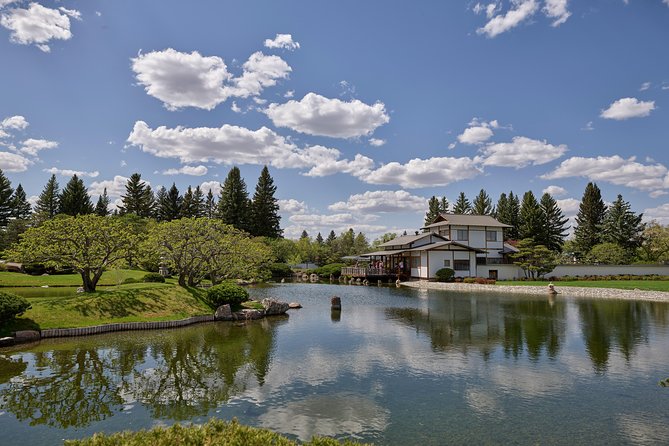
Daily programming is one of the strongest reasons to choose this admission. Depending on the season and schedule, you may find live performances, Minyo dancing, tea ceremonies, sake tastings, seasonal activities, and cultural demonstrations.
Minyo is a style of Japanese folk song and dance. Seeing it in the garden can make the experience feel more immediate than reading about Japanese customs in an exhibit. Music and movement also help children stay interested, especially after a quiet walk.
Still, admission does not guarantee that every listed type of program will appear during your visit. The information says the garden offers a variety of cultural experiences throughout the summer season, so programming is seasonal and can change. Check the day’s schedule before you commit your time.
Guided tours begin on Thursdays and run through Mondays. That schedule matters if you want more explanation about the garden’s founders, Japanese-Canadian history, or design. On other days, you can still enter and enjoy the included activities, exhibits, and performances that are scheduled, but a guided tour may not be available.
The maximum group size is 10 people. That is a useful limit for a guided experience because it should keep the group relatively manageable and allow the guide to speak without addressing a crowd. No guide names are provided, so I would not expect to book a particular individual.
Is $8.91 Good Value?
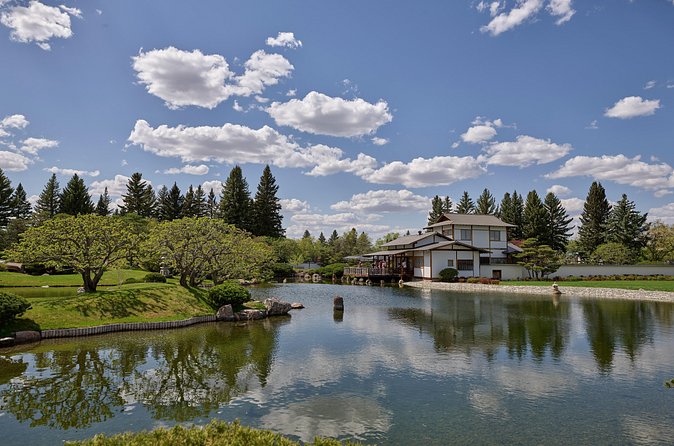
At $8.91 per person, the price is low compared with many organized cultural activities. The key question is not the admission fee alone. It is what is happening on the day you visit.
The price includes:
- Admission to Nikka Yuko Japanese Garden
- Daily programming, activities, and performances
- Access to the Tea Pavilion
- Access to current exhibits
- Guided tours from Thursdays through Mondays
That is a fair package when you use several of those inclusions. A family can walk through the garden, let children use the activity materials, visit an exhibit, and catch a scheduled performance without paying separate entry fees for each part.
The value weakens if you arrive expecting a large garden filled with flowers. The grounds are small, and flowers are seasonal. One critical response described the area as too small and lacking flowers, while another felt the views were not enough to justify the admission. Those complaints are useful warnings, not reasons to dismiss the place entirely.
I would book it as a short cultural stop, especially if you are already in the Lethbridge area or have other plans nearby. I would not make it the only purpose of a full day unless a special event or performance gives you a reason to stay.
Timing, Access, and Practical Details
The advertised visit lasts about one to two hours. Your actual time will depend on how long you spend with the children’s activities, whether a guided tour is running, and how much programming is scheduled.
The garden is near public transportation, which makes it easier to include without relying entirely on a car. Service animals are allowed, and most people can participate. The experience requires good weather, so poor conditions can lead to a different date or a full refund.
The garden is smoke-free and vape-free. Drones are not permitted at any time inside the garden. These rules help protect the quiet setting and keep the visit comfortable for families.
You receive confirmation when you book. Cancellation is free up to 24 hours before the start time for a full refund. Changes or cancellations made within 24 hours are not accepted for a refund, so keep the local cut-off time in mind.
Who Will Enjoy Nikka Yuko Most?
I would recommend this experience to families with younger children who need a little structure during a cultural visit. The activity books, crayons, treats, and themed elements make the garden easier for children to enjoy at their own pace.
It also suits you if you like peaceful places, Japanese garden design, local cultural history, and short outings with several possible activities. The Tea Pavilion, current exhibits, bell, lake views, and performances give you more to do than simply walk around.
You may want to skip it if you are looking for a large botanical garden, extensive flower beds, or a full-day attraction. The garden is compact, and its strongest features depend on your interest in design, history, and scheduled programming.
The best visit combines a good-weather day with a program schedule that appeals to you. Spring is a sensible choice for apple blossoms, and July offers peonies. At other times, go for the calm setting and cultural content rather than expecting a floral show.
Should You Book This Admission?
Book Nikka Yuko if you want an affordable, family-friendly cultural stop with a peaceful pace and a little history behind the scenery. I especially like the way the children’s materials let parents enjoy the garden without turning the visit into a constant battle for attention.
Check the season and daily schedule first. If a guided tour, Minyo performance, tea ceremony, or special activity is running, the $8.91 admission becomes much easier to justify. If you only have time for a quick look and expect abundant flowers, the small size may leave you underwhelmed.
FAQ
How much does Nikka Yuko admission cost?
Admission is listed at $8.91 per person for adults and children.
How long does a visit usually take?
The experience lasts approximately one to two hours.
Are activities for children included?
Yes. The family-focused experience includes activity books and crayons, along with interactive activities, Japanese treats, and themed surprises.
What does admission include?
Admission includes entry to Nikka Yuko, daily programming, activities and performances, access to the Tea Pavilion, current exhibits, and guided tours starting Thursdays through Mondays.
Are food and drinks included?
Coffee, tea drinks, cookies, snacks, and other drinks are available for purchase inside the visitor centre and gift shop. The supplied information does not state that these purchases are included in admission.
Can I join a guided tour?
Guided tours start on Thursdays and run through Mondays. The group size for the experience is limited to a maximum of 10 people.
Are service animals allowed?
Yes, service animals are allowed.
What happens if the weather is poor?
The experience requires good weather. If it is canceled because of poor weather, you can receive a different date or a full refund. You can also cancel up to 24 hours before the start time for a full refund.
Just added around Alberta
- Official SkiByk Rentals in Banff & The Canadian Rockies★ 5.0 · 9 reviews
- Discover the Lake Agnes Tea House Trail with an Audio Nature Tour★ 4.0 · 7 reviews
- Smartphone Audio Driving Tour between Lake Louise and Calgary★ 4.0 · 15 reviews
- Nikka Yuko Japanese Garden Winter Light Festival★ 5.0 · 6 reviews
- Moraine Lake and Lake Louise Sightseeing Half Day Tour★ 5.0 · 23 reviews
- Icefields Parkway: a Smartphone Audio Driving Tour★ 4.0 · 118 reviews
- Lake Louise to Jasper One-Way Tour★ 5.0 · 17 reviews
- Lake Louise Summer Gondola Experience★ 4.0 · 65 reviews
Tickets, compared.



Columbia Icefield Skywalk and Ice Explorer Ticket
Read our review →
Niagara Falls, Canada: Skylon Tower Observation Deck Ticket
Read our review →