
Reviewed · WHALE WATCHING
Newfoundland Puffin and Whale Watch Cruise
The North Atlantic has excellent timing. This cruise pairs two big Newfoundland sights, Atlantic puffins and whales, with sculpted icebergs, seabird colonies, and a lively local crew. I especially like the spacious catamaran and the strong onboard commentary. The main catch is simple: wildlife follows its own schedule, so whales and icebergs are never promised.
I also like the way this trip connects nature with Newfoundland culture. The crew shares stories, songs, and information about the coast, and some departures include a playful screech-in ceremony on the ride back. Bring warm layers, though. Sunny weather in St. John’s can turn into a cold, windy trip offshore.
In This Review
- Key Things To Know Before You Go
- From St. John’s to Bay Bulls
- Boarding the Gaffer VI
- Bay Bulls and Bull Head: The Opening Run
- Iceberg Alley in May and June
- Witless Bay Ecological Reserve and Gull Island
- Whales, Dolphins, and the Luck Factor
- Commentary, Music, and Newfoundland Hospitality
- Is CA$94.06 a Good Value?
- Who Will Enjoy This Cruise Most?
- Booking, Schedule Changes, and Cancellation
- Should You Book the Newfoundland Puffin and Whale Watch Cruise?
- FAQ
- Where does the cruise depart?
- How long is the cruise?
- What wildlife might I see?
- When are puffins visible?
- When is the best time to see whales?
- When can I see icebergs?
- Is hotel pickup available?
- Is the boat equipped for poor weather?
- Can I cancel for a refund?
Key Things To Know Before You Go
- Puffins have a long viewing season: You have a good chance to see them from mid-May through mid-September, especially around the reserve’s nesting islands.
- Whale season is shorter: The strongest whale-watching period runs from mid-June through mid-August, but sightings are never guaranteed.
- Icebergs are a spring bonus: Icebergs are most likely in May and June, when pieces drifting down from Greenland reach Iceberg Alley.
- The catamaran handles a full boat well: The Gaffer VI has outdoor viewing areas for up to 100 people and an interior cabin with room for everyone.
- The departure dock is outside St. John’s: Bay Bulls is about 25 minutes from downtown by car, with free parking at the dock.
- The crew adds plenty of Newfoundland character: Expect live commentary, music, stories, and possibly a screech-in ceremony, depending on the sailing.
From St. John’s to Bay Bulls
The cruise departs from a private dock in Bay Bulls, south of St. John’s. By car, the trip takes about 25 minutes from downtown, so you need to build driving time into your day. Free parking is available on site, making this a straightforward outing if you have a rental car.
Hotel transportation is available from select hotels for an extra charge. The published details list public transportation at CA$40.25 per person, while the optional shuttle has been described as roughly $35 plus tax per person, or about $40 Canadian. You must confirm the shuttle in advance, and I would do so as early as possible. Do not assume that selecting hotel pickup during an online booking automatically completes the arrangement.
Bay Bulls is a practical departure point because it puts you close to the Witless Bay Ecological Reserve. You spend less time getting out to the wildlife area and more time near the islands. The shore facilities also include a small shop selling souvenirs, drinks, and snacks.
More Whale Watching in St Johns:
- 2 Hours Guided Whale and Bird Boat Tour in Bay Bulls
★ 5.0 · 557 reviews - 2 Hour Award-Winning Whale and Seabird Boat Tour from St. John’s
★ 4.5 · 455 reviews - Vancouver Half-Day Whale Watching Adventure with Free Photos
★ 5.0 · 5,000 reviews
Boarding the Gaffer VI
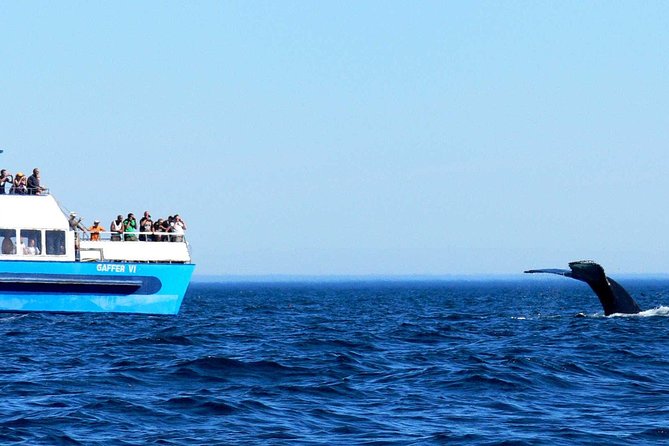
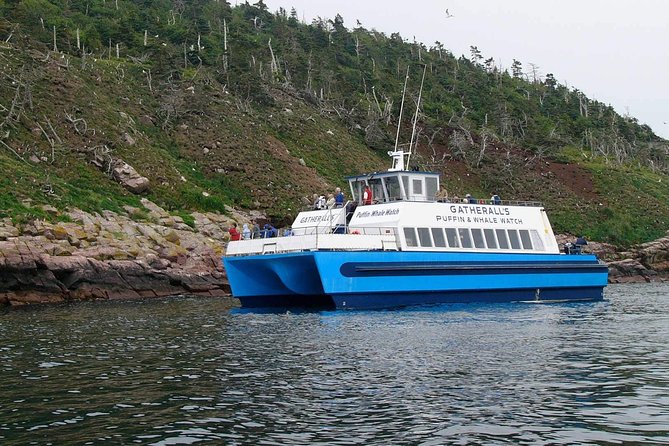
The tour uses a spacious catamaran, identified in the supplied details as the Gaffer VI. Its size is one of the better reasons to choose this outing. The outside decks can hold up to 100 people, while the enclosed cabin can accommodate everyone if the weather turns wet or rough.
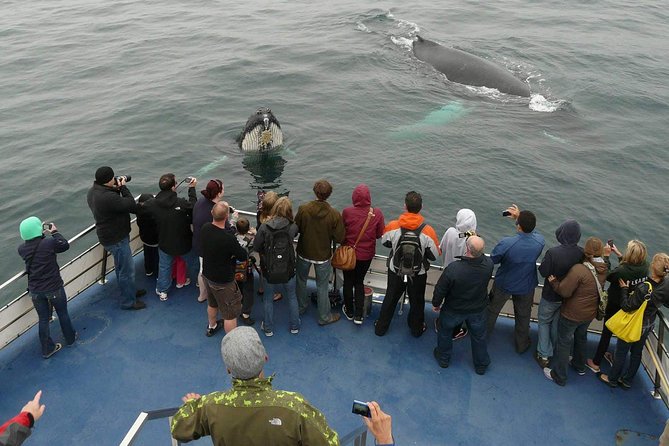
That does not mean every spot is equally good. On a full sailing, the railings can become crowded, and taller people may block a quick whale sighting. One useful tip is to move around when the crew allows it, rather than staying fixed in one place. Binoculars are also worth packing if you have them.
The vessel has washrooms, and all required safety equipment is provided. Before leaving, the crew gives a safety briefing and explains how to respond to instructions on deck. If the boat is moving sharply or sea conditions change, you may be asked to sit down or remain seated.
You can expect a boat ride rather than a quiet observation platform. The North Atlantic can be lively, and one passenger described becoming seasick, along with a grandson, despite still enjoying the trip from the lower cabin. If you are prone to motion sickness, plan accordingly and use the enclosed space when needed.
Bay Bulls and Bull Head: The Opening Run
The first part of the trip takes you from Gatherall’s dock in Bay Bulls toward the reserve. This stretch gives the captain time to reach the offshore viewing areas, while the crew begins explaining the coast, marine life, and geology.
The route includes Bay Bulls, also identified as Bull Head. It is not a separate land excursion, so you do not get off the boat for a walking tour. Instead, you experience the area from the water, with the shoreline and open sea forming the setting for the cruise.
This is also when the crew begins setting expectations. Wildlife can appear suddenly and vanish just as fast. A whale may surface for only a few seconds, and a bird may pass close to the boat before disappearing into the colony. The crew uses wireless microphones, so commentary should remain audible around the vessel, and they are happy to repeat information or answer questions.
The human side of the trip matters here. The crew is often praised for being warm, funny, and attentive. Songs and Newfoundland stories help keep the ride lively, especially when the animals are not cooperating. This is not a silent research boat, and that will suit you if you enjoy a social outing with local personality.
Iceberg Alley in May and June
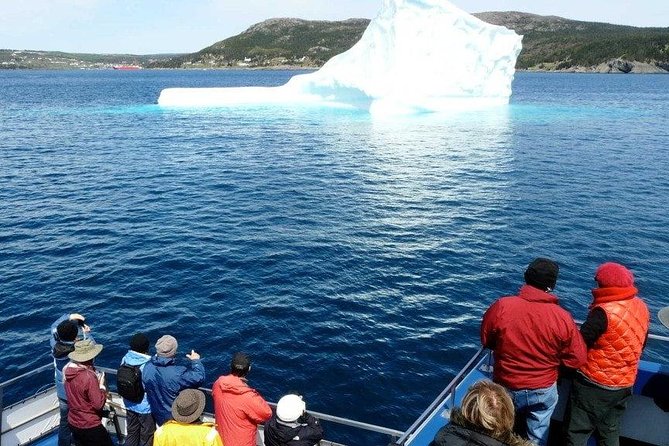
In spring and early summer, the cruise may reach part of Iceberg Alley. Icebergs drift south along the coast from Greenland, and by the time they reach this region, the sea, sun, waves, and rocky shoreline have reshaped them.
The ice can appear in many forms, from clean white walls to blue-green chunks with strange curves and holes. The exact number and size change from day to day, so you should treat icebergs as a seasonal possibility rather than the main guarantee of the trip.
May and June are the best months to combine seabirds with ice. The trade-off is that whale activity is generally stronger from mid-June through mid-August. If whales are your top priority, the middle of summer gives you better odds. If icebergs are the dream, an earlier departure may make more sense.
The cruise operator cannot control the ice or weather. A change in sea conditions may affect the route, and the captain can adjust the sailing for safety. Dress for the water, not the parking lot. A warm jacket and extra layers are sensible even on a bright day.
More Boat Tours in St Johns:
- Boat Tours from Quidi Vidi Marina
★ 5.0 · 63 reviews - St. John’s Small Group Tour with Iceberg Quest Boat Cruise
★ 3.0 · 21 reviews - Late Season Puffin & Scenic Coastal Cruise
★ 5.0 · 18 reviews - Niagara Falls: Premium Tour, Boat & Journey Behind the Falls
★ 4.8 · 4,207 reviews
Witless Bay Ecological Reserve and Gull Island
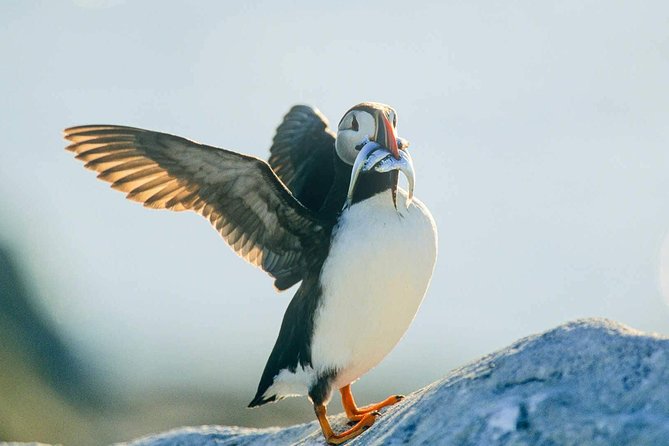
The main wildlife area is the Witless Bay Ecological Reserve, a protected group of islands at the end of Iceberg Alley. The reserve supports more than 2.5 million seabirds and some of the largest whale populations in the North Atlantic.
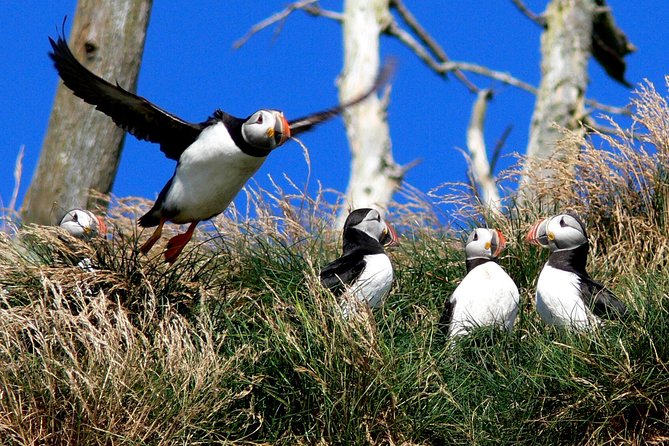
The boat stops near sheltered areas of the islands, including Gull Island, so you can watch birds around their nesting sites. You do not walk on the islands. That keeps the colonies protected and lets you see the birds in their natural setting from the water.
Atlantic puffins are the stars for many people. They are smaller than you may expect, which makes binoculars especially useful. You might see them perched near burrows, flying overhead, or skimming across the water. Their compact shape and bright bill make them easy to recognize, but distance and boat movement can make close detail tricky.
The reserve is home to far more than puffins. You might see:
- Common murres
- Black guillemots
- Northern gannets
- Greater shearwaters
- Northern fulmars
- Black-legged kittiwakes
- Razorbilled auks
The scale of the colonies is the real attraction. Even when a puffin refuses to pose, the combined sound and movement of thousands of seabirds create a memorable scene. I would give the reserve plenty of attention instead of treating it as filler between whale sightings.
Whales, Dolphins, and the Luck Factor
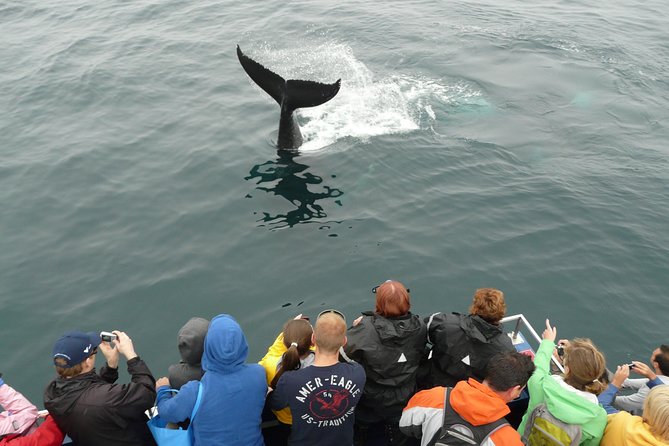
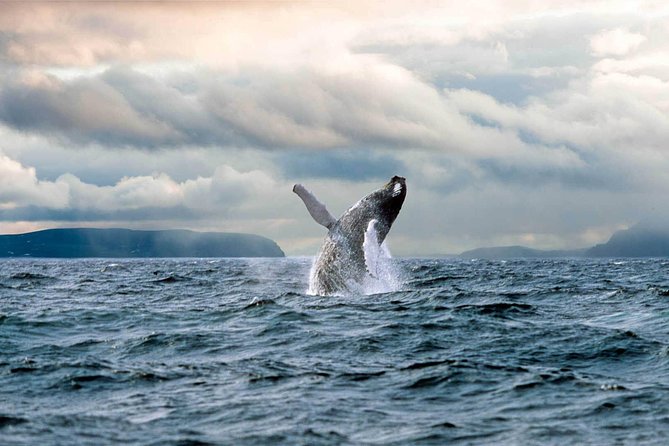
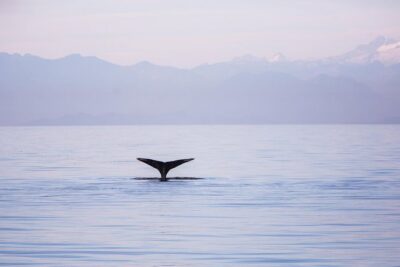
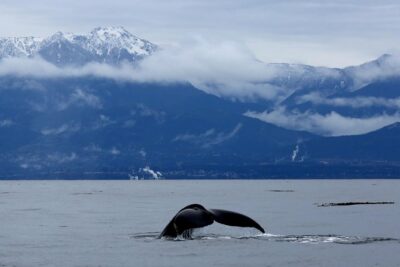
Whale sightings peak from mid-June through mid-August. Humpback whales are the species most often highlighted in the available trip details, but exceptional days have included dolphins and even a rare sperm whale.
On a lucky sailing, you might see a mother and calf with a male escort, or whales staying near the boat for an extended period. One reported encounter lasted about 20 minutes. Other trips have produced several humpbacks, dolphins, and a sperm whale in the same outing.
Those are extraordinary results, not a promise. A different sailing may produce no whales at all, even in peak season. The crew has decades of experience spotting marine life, but it cannot direct an animal to the surface. This is the central choice you make when booking a wildlife cruise: you pay for access to a good habitat, not a guaranteed animal performance.
The crowded-deck issue matters most during whale sightings. A quick surfacing can be missed if you are behind other passengers. The crew tries to help people get a view, but the boat’s capacity of up to 100 people means you should expect company. If you want a quieter, more private outing, this may not be the right format.
Still, the whale experience can be powerful. Seeing a humpback rise beside the boat, even briefly, is very different from seeing one in a photograph. The uncertainty is part of the experience, though I would not book this trip on whales alone.
Commentary, Music, and Newfoundland Hospitality
The crew gives talks about the animals, geology, and local heritage throughout the journey. The commentary adds useful context to what you are seeing, especially if you are not familiar with seabirds or the seasonal movement of ice.
Music and storytelling are part of the atmosphere. Several crew members have been praised by name, including Jane, Rebecca, Cole, Janice, and Joanne. Captain Al has also received warm comments for his calm handling of the boat. The team’s friendliness is one of the strongest reasons this tour receives such high marks.
Some departures feature a screech-in ceremony, a playful Newfoundland tradition that can involve songs, participation, and plenty of joking. It is not essential to the wildlife portion, but it gives the outing a stronger sense of place. You are not simply riding out to a colony, taking photos, and returning. You get a taste of local culture along with the birds and sea.
The tone will not suit everyone. If you prefer quiet naturalist narration with no music or group activities, the entertainment may feel like extra noise. If you enjoy a friendly, social boat ride, it is a welcome part of the day.
Is CA$94.06 a Good Value?
At $94.06 per person, the cruise is reasonably priced for a marine wildlife outing of about 90 minutes. You are paying for a boat with outdoor viewing space, an enclosed cabin, washrooms, safety equipment, a captain, local guides, and access to the reserve.
The value improves if you already have a car, since parking is free and the dock is a short drive from St. John’s. Add the optional shuttle fee if you do not want to drive. That extra cost can be worthwhile because the departure point is outside the city, but it changes the total price enough to factor into your planning.
The advertised 90-minute duration should also be treated as an approximate figure. One passenger reported spending close to two hours aboard, particularly because the boat stayed near wildlife. The exact length can depend on sightings, sea conditions, and the captain’s route.
I consider the price fair for the setting and boat capacity, especially during a successful wildlife encounter. The value is less certain if you book outside the best season and expect whales or icebergs. The puffins and seabird colonies remain the more dependable reason to go from mid-May through mid-September.
Who Will Enjoy This Cruise Most?
I would recommend this outing to families, couples, birdwatchers, and anyone who wants a short but memorable excursion from St. John’s. Children can take part, but they must be accompanied by an adult. The mix of wildlife, music, and stories works well for different ages.
It is also a good choice if you want flexibility. Multiple departure times make it easier to fit the cruise around other St. John’s plans. The enclosed cabin gives you a retreat if the wind picks up, although you should still expect some boat movement.
You may want to reconsider if you have severe motion sickness, dislike crowded decks, or need a guaranteed whale sighting. The vessel is large and social, not a private charter. The crew can help if you feel ill, but no boat can remove the motion of the North Atlantic.
For photography, bring a camera with a useful zoom and binoculars if available. Keep your clothing practical. A warm outer layer is more important than a sunny forecast, and waterproof protection is sensible because the cruise operates in all weather conditions unless conditions force a cancellation.
Booking, Schedule Changes, and Cancellation
You receive confirmation at booking, and the operator may cancel or change a departure for weather or safety reasons. If poor weather cancels the cruise, you can choose another date or receive a full refund.
You can cancel for a full refund up to 24 hours before the scheduled start time. Changes made inside that 24-hour window are not accepted under the stated policy. If your departure time changes, keep your phone available and check your arrangements carefully, since direct contact may be used to notify you.
Should You Book the Newfoundland Puffin and Whale Watch Cruise?
Yes, if you want an accessible introduction to Newfoundland’s coast and can accept nature’s uncertainty. The puffin colonies, huge seabird numbers, Iceberg Alley, and local crew make this worthwhile even on a whale-free day.
Choose mid-June through mid-August for the best whale odds, or May and June if icebergs are your priority. Drive to Bay Bulls if possible, confirm any hotel shuttle well ahead, and bring warm layers and binoculars.
I would book this for the full package, not for a guaranteed animal checklist. When the whales appear, you may get an extraordinary encounter. When they do not, the reserve, seabirds, scenery, songs, and Newfoundland welcome still give you a solid reason to be out on the water.
FAQ
Where does the cruise depart?
The cruise departs from a private dock in Bay Bulls, about 25 minutes from downtown St. John’s by car.
How long is the cruise?
The scheduled duration is approximately 1 hour and 30 minutes. The time aboard can vary with wildlife sightings and sea conditions.
What wildlife might I see?
Possible sightings include Atlantic puffins, humpback whales, dolphins, common murres, black guillemots, northern gannets, greater shearwaters, northern fulmars, black-legged kittiwakes, and razorbilled auks.
When are puffins visible?
Puffins are generally seen from mid-May through mid-September.
When is the best time to see whales?
Peak whale watching runs from mid-June through mid-August. Sightings are not guaranteed on any departure.
When can I see icebergs?
Icebergs are most likely in May and June, when ice drifting from Greenland reaches the coast.
Is hotel pickup available?
Transportation is available from select hotels for an additional fee. It must be confirmed in advance, and you should contact Gatherall’s early to arrange it.
Is the boat equipped for poor weather?
The cruise operates in all weather conditions unless conditions make a departure unsafe or unsuitable. The catamaran has an enclosed cabin that can accommodate all passengers and is equipped with a washroom.
Can I cancel for a refund?
You can cancel for a full refund at least 24 hours before the experience begins. If poor weather cancels the cruise, you can choose a different date or receive a full refund.
Just added around St Johns
- St. John’s Local Pub Tour & History Lesson★ 5.0 · 11 reviews
- St. John’s, Quidi Vidi Village & Signal Hill Small Group Tour★ 4.0 · 34 reviews
- St. John’s Small Group Tour with Iceberg Quest Boat Cruise★ 3.0 · 21 reviews
- St. John’s 3 Hour Newfoundland Food Tour★ 5.0 · 132 reviews
- Late Season Puffin & Scenic Coastal Cruise★ 5.0 · 18 reviews
- Explore St. John’s Scenic Bus Tour to Cape Spear and Quidi Vidi★ 5.0 · 48 reviews
- Irish Loop to Ferryland Tour★ 5.0 · 17 reviews
- Newfoundland Beer Tour in St. John’s★ 5.0 · 15 reviews
Whale Watching, compared.
Vancouver Half-Day Whale Watching Adventure with Free Photos
Read our review →
Tadoussac/Charlevoix: Whale Watching Zodiac Tour
Read our review →
Covered Whale Watching Adventure with Free Photos
Read our review →
Victoria Half-Day Whale Watching Adventure with Free Photos
Read our review →
Tadoussac/Charlevoix: 3-Hour Whale Watching Boat Tour
Read our review →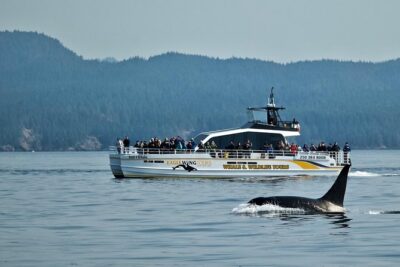
Browse the lists this tour appears in