Reviewed · RAFTING
Kicking Horse River: Whitewater Rafting Experience
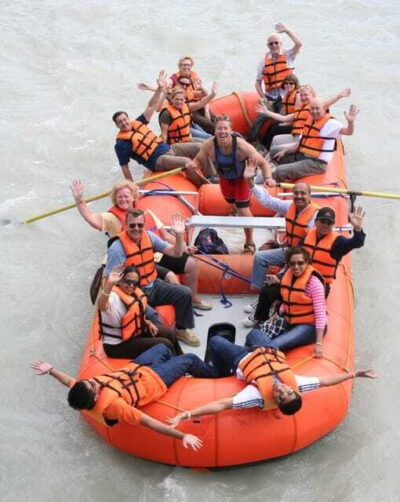
Hold on tight, the canyon comes fast. This four-hour trip takes you 12 miles down British Columbia’s Kicking Horse River, combining mountain views with serious Class IV rapids. I like the calm training stretch, which lets first-timers learn paddle commands before the river gets rough, and I like that the $116 price includes a wetsuit, helmet, booties, life vest, spray jacket, fleece, raft, paddles, and a qualified guide. The main catch is simple: this is a demanding, wet outing, not a gentle float.
I also like the clear rhythm of the trip. You meet at River Base, get fitted out, practice with your crew, then face named rapids such as Shot Gun, Man Eater, and Roller Coaster. Guides have earned especially strong praise for their careful explanations and quick responses, including a guide named Vern on one recent trip. Still, you need to be comfortable with cold water, teamwork, and a few hard jolts.
In This Review
- Key Points Before You Book
- Meeting at River Base in Golden
- Getting Fitted for the River
- A Calm Start on the Upper Kicking Horse
- When the Canyon Narrows
- The Guides Make the Difference
- What the $116 Price Really Covers
- After the Final Rapid
- Who Should Choose This Trip
- Smart Ways to Prepare
- Should You Book the Kicking Horse River Rafting Trip?
- FAQ
- Where does the rafting trip meet?
- How long does the experience last?
- How far do you raft?
- Are previous rafting skills required?
- What equipment is included?
- What should I bring?
- Does the trip run in bad weather?
- Who cannot join the trip?
Key Points Before You Book
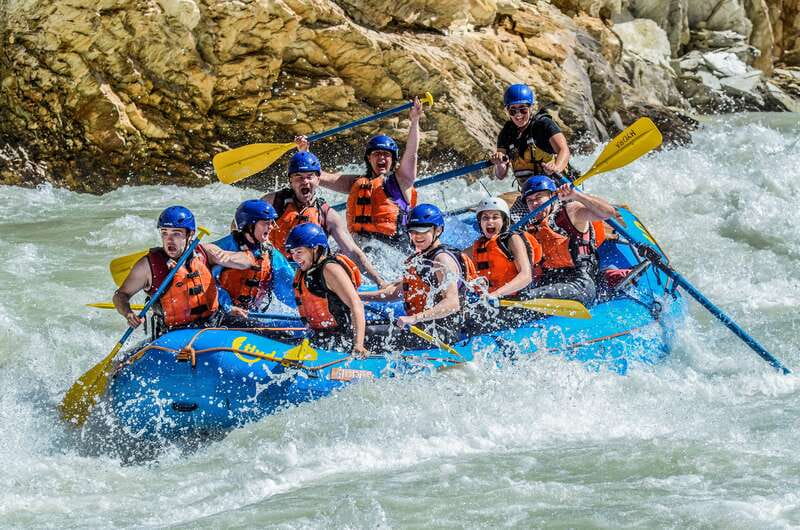
- Class IV white water: The main section delivers powerful rapids, splashes, and plenty of teamwork.
- 20 kilometers on the river: You spend a substantial part of the four-hour outing actually rafting, not just getting ready.
- A useful warm-up: The trip begins on calmer water so you can learn commands, paddle technique, and boat movement.
- Full river clothing included: Wetsuit, booties, helmet, life vest, spray jacket, and fleece are provided.
- Mountain scenery between rapids: The upper river offers quiet views before the canyon narrows and the action begins.
- Good for first-timers, with limits: No previous rafting skill is required, but the trip is not suitable for children under 12, pregnant women, people with mobility impairments, or anyone under 88 pounds, or 40 kilograms.
Meeting at River Base in Golden
Your day begins at River Base, 2936 Kicking Horse Road, Golden, British Columbia. Plan to arrive at least 15 minutes before departure. Hotel pickup and drop-off are not included, so you need to arrange your own way to the base.
That detail matters in a mountain town. Do not treat the meeting address as a minor footnote. Give yourself time to find the base, park, and get organized before the check-in window closes. You also need to bring swimwear, a towel, sunscreen, snacks, drinks, and a daypack.
The trip lasts about four hours from start to finish, though the river portion is only one part of that time. You will spend time meeting the guides, changing into river gear, receiving instructions, rafting 20 kilometers, riding the shuttle back, rinsing off, and changing again.
The operator offers free cancellation up to 24 hours before departure, and you can reserve now and pay later. That is helpful when weather and mountain plans are still shifting. The trip runs rain or shine, though, so book it with the understanding that ordinary wet weather will not automatically stop the outing.
More Rafting Trips in Canada:
- Wet and Wild Elaho Exhilarator Rafting
★ 5.0 · 625 reviews - Rafting Adventure on the Kicking Horse River
★ 5.0 · 590 reviews - Half-Day Whitewater Rafting in Revelstoke
★ 5.0 · 410 reviews
Getting Fitted for the River
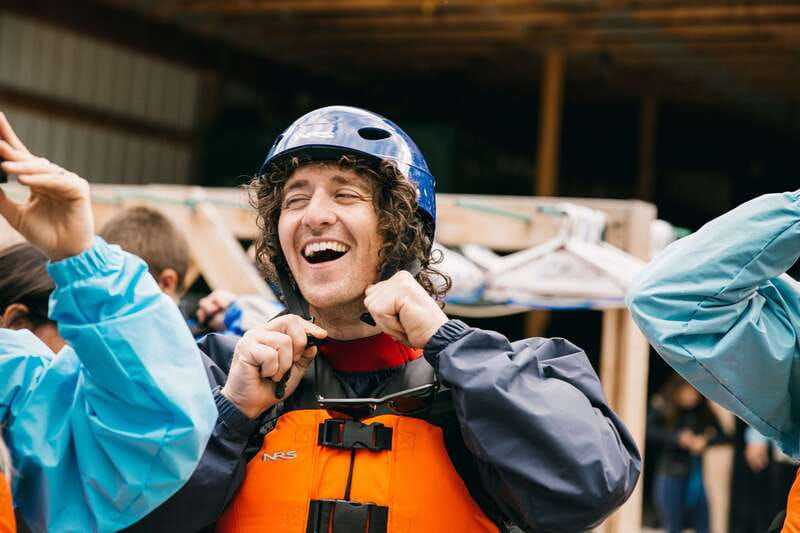
Before you reach the water, the guides provide the equipment you need. That includes a wetsuit, helmet, booties, life vest, spray jacket, fleece, raft, and paddle. The clothing is not just a nice extra. The Kicking Horse River is cold enough that proper gear makes a long wet ride far more comfortable.
You should wear swimwear under the wetsuit and bring a dry towel for afterward. Pack sunscreen and water or another drink, since food and drinks are not included. Snacks are available to buy, but bringing something small is sensible for a four-hour activity that requires steady effort.
The pre-river orientation is one of the strongest parts of the setup. The guides explain what to expect, introduce the commands, and help you understand how your paddle fits into the crew’s work. That is especially valuable if this is your first whitewater trip.
You are not expected to arrive with rafting skills. You do need to listen closely and respond when told. In a raft, the guide directs the group, but every person still has a job. The best part of the preparation is that it turns a group of strangers into a working crew before the difficult water arrives.
A Calm Start on the Upper Kicking Horse
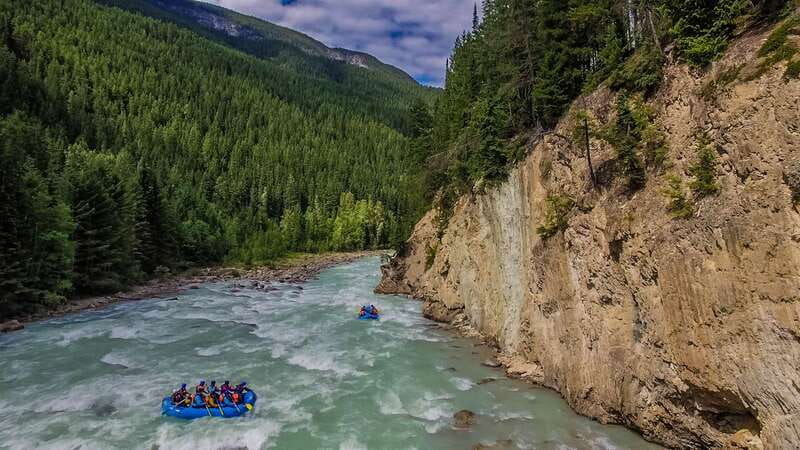
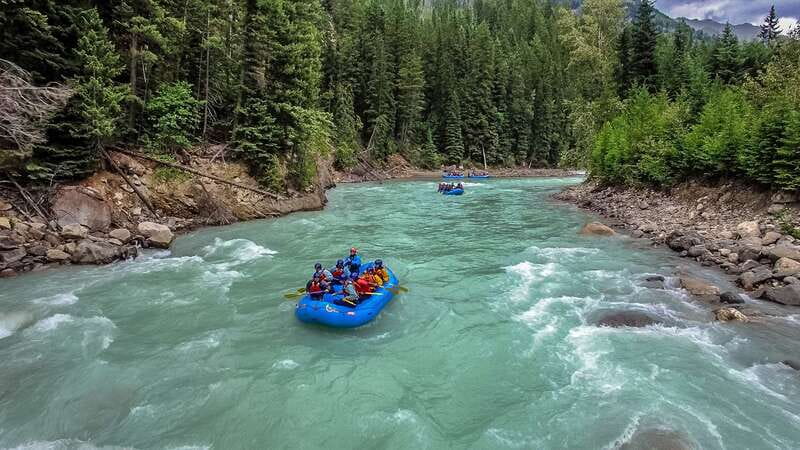
The first section is relatively calm. Think of it as your practice ground, not wasted time. You get used to the paddle, the boat, the guide’s commands, and the movement of the river without immediately being thrown into its biggest waves.
This quieter stretch also gives you time to look up. The Kicking Horse River runs through the Canadian Rocky Mountains, and the early views provide a useful contrast to the rough water ahead. The scenery is not merely something to glance at between splashes. It gives the trip a strong sense of place.
The guides also share fun facts about the river during this early portion. That can make the experience feel more connected to the setting rather than just a sequence of thrills. Pay attention here, because once the canyon tightens and the rapids begin, your focus will turn to the paddle in your hands.
For first-timers, this progression is important. You are not asked to perform at full speed from the first minute. You get a chance to learn the basic rhythm, hear how commands work, and figure out how much effort each stroke takes.
When the Canyon Narrows
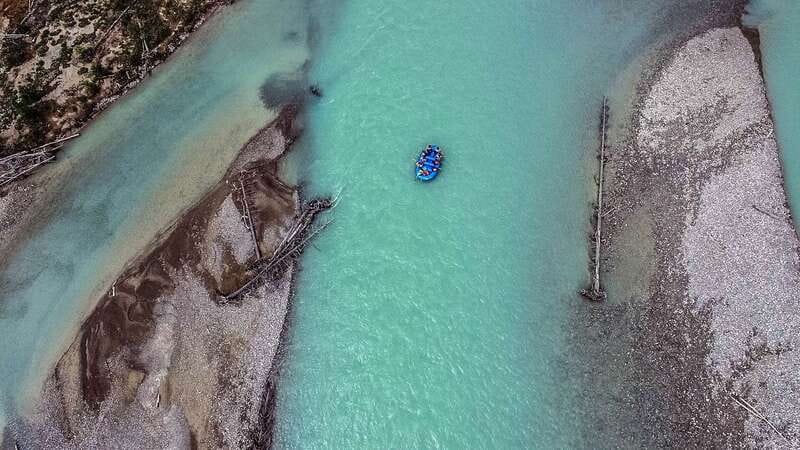
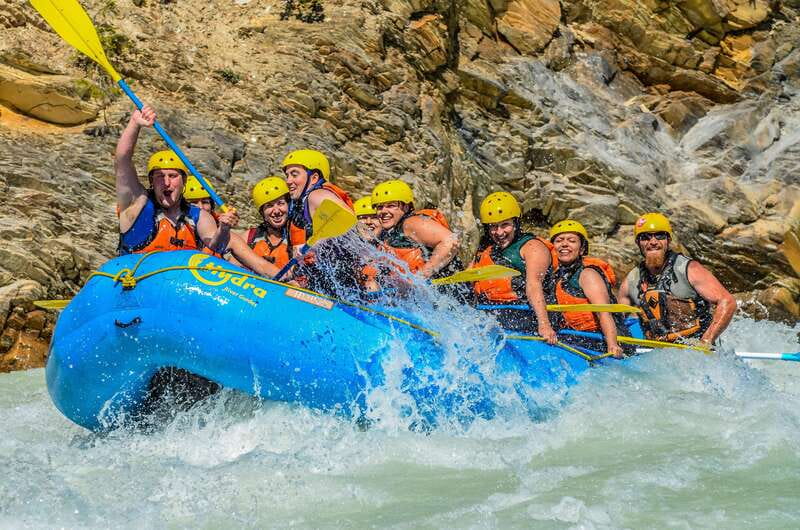
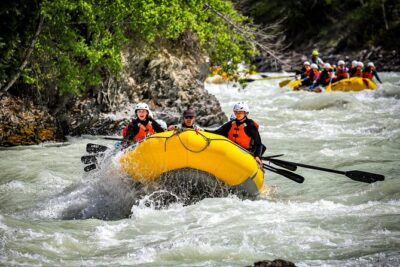
The tone changes as the canyon narrows. The calm introduction gives way to the main event, a Class IV section with strong rapids and repeated bursts of action. This is where the outing earns its reputation as one of the more serious rafting options in the Rockies.
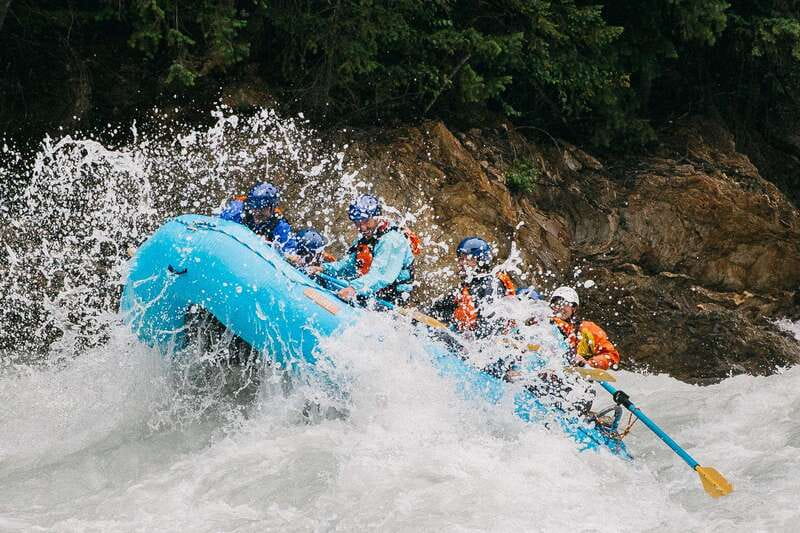
Class IV water is not a mild ride. You can expect big splashes, sharp movement, and moments when the entire raft must work together. You will get soaked, even with the spray jacket and other equipment. The clothing keeps you warmer, but it does not keep you dry.
The named rapids give the run a memorable structure. Shot Gun, Man Eater, and Roller Coaster each become markers in the journey, and the crew has to follow the guide’s directions as the raft approaches them. The fun comes from the mix of anticipation, physical effort, and relief when the boat clears each rapid.
The teamwork is real. You paddle when instructed, brace yourself, and help keep the raft moving in the right direction. A strong guide can make a major difference here. The guide’s job is not simply to steer. It is also to explain, set the pace, keep the group focused, and react if someone loses their position or goes overboard.
One recent outing included two people overboard, with the guide and other rafters responding quickly. That detail shows both the nature of the activity and the value of paying attention during the safety briefing. An unexpected swim can happen in Class IV water. The right response is calm, fast, and coordinated.
More horseback rides around Canada:
- Stanley Park Horse Drawn Tour in Vancouver
★ 4.5 · 550 reviews - Banff National Park: 1-Hour Bow River Horseback Ride
★ 4.6 · 518 reviews - Banff National Park: 1-Hour Spray River Horseback Ride
★ 4.7 · 315 reviews - Whitewater Rafting Adventure | Kicking Horse River
★ 5.0 · 291 reviews
The Guides Make the Difference
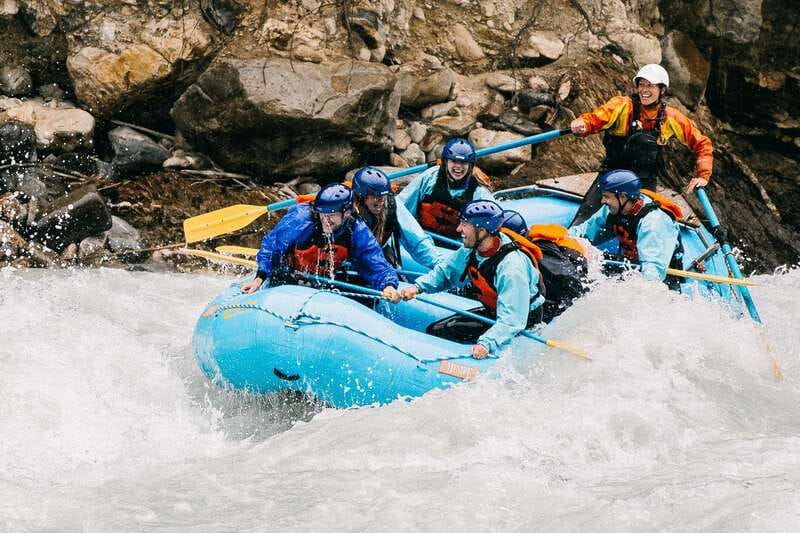
The guides receive the highest praise in the available feedback, and that makes sense. For a first-time rafter, a clear guide can change the whole day from confusing to exciting.
Isaiah specifically appreciated how thoroughly the guides explained the process for people who had never rafted before. That is a useful sign for beginners. You are not left to guess what a command means just as the raft reaches a difficult rapid.
A guide named Vern also received a personal mention after a particularly enjoyable trip. Since guide assignments can change, you should not book on the assumption that Vern will lead your raft. Still, the mention adds a human touch to the operation and suggests that the guide team plays a major role in the experience.
The group dynamic matters, too. One German-speaking group found communication easier because all six rafters spoke German, but the listed instruction language is English. If you are not comfortable following English safety and paddle commands, consider that before booking.
The guide does not remove the challenge. Instead, a good guide makes the challenge manageable. You still have to paddle, listen, and hold on. That balance is part of the appeal.
What the $116 Price Really Covers
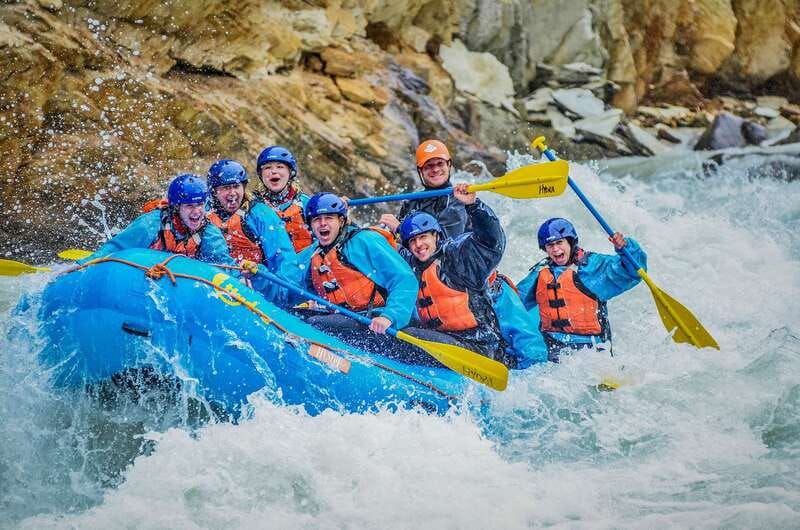
At $116 per person, this trip offers solid value if you want a full river outing rather than a short scenic float. The price covers the qualified guide, raft, paddles, and a complete set of river clothing. You are not expected to own or rent a helmet, wetsuit, life vest, or booties separately.
The 20-kilometer route also helps justify the cost. You are on the river for a meaningful distance, with a calm opening section, mountain views, and a long Class IV run. The four-hour schedule includes the practical parts of the outing, but it is still a substantial half-day activity.
The price does not cover food, drinks, or transportation to and from River Base. Snacks are available to purchase, but you should budget for those separately if you tend to get hungry during active outings. You also need to bring a towel and arrange your own return to your accommodation.
I would call the price fair for a properly equipped, guided whitewater trip. It is less attractive if you are looking for a low-cost scenic activity or a relaxed family float. The value comes from the equipment, instruction, distance, and access to the named Class IV rapids.
After the Final Rapid
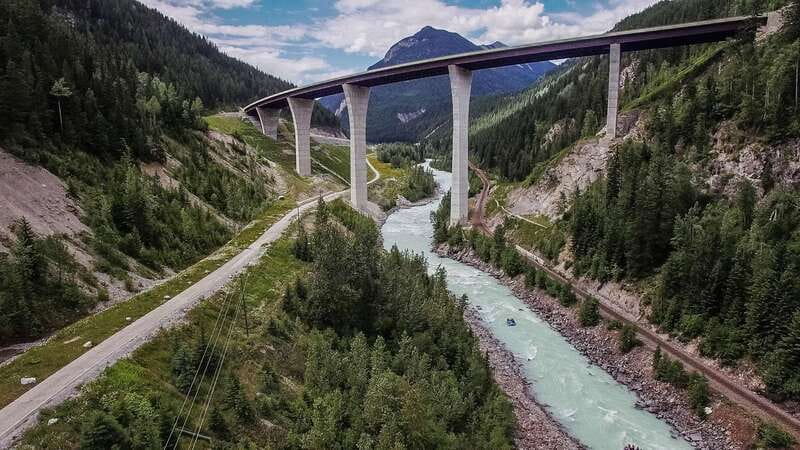
The rafting ends 12 miles, or 20 kilometers, downstream. You disembark there and board a shuttle back to Hydra River Base. The return ride is practical rather than a sightseeing stop, but it saves you from arranging separate transportation from the end of the river.
Back at the base, beach-style showers let you rinse off and change. This is why the towel belongs in your daypack, not buried somewhere in your vehicle. You can also use the time afterward to swap stories with the rest of your crew and think back over the rapids that felt biggest.
Do not expect a polished spa-style finish. This is a working river base, and the appeal is the adventure rather than luxury. The showers and changing time are enough to help you move on with the rest of your day.
Since the trip operates rain or shine, your post-rafting routine may involve dealing with wet weather as well as wet river gear. Pack your daypack sensibly and keep your dry clothing protected.
Who Should Choose This Trip
This outing suits adults and older children who want an active Rocky Mountain experience and are ready for Class IV water. It is a good choice if you want to learn the basics while still getting a serious dose of whitewater.
It also works well for first-timers who like clear instruction. The calm start gives you a chance to learn the boat and commands, and the guides provide the equipment and safety preparation. You do not need previous rafting experience.
You should think twice if you dislike cold water, cannot swim comfortably in an active river setting, or want a quiet float with minimal physical work. The supplied information does not list swimming ability requirements, so do not assume the trip is passive simply because beginners are welcome.
The outing is not suitable for children under 12, pregnant women, people with mobility impairments, or people under 88 pounds, or 40 kilograms. These restrictions are worth checking before you pay, especially when booking for a mixed-age group.
The activity is conducted in English. That includes the guide’s commands, which are central to safety and teamwork. You should be able to understand those instructions quickly.
Smart Ways to Prepare
Arrive early, wear swimwear, and bring a towel. Those are the basic steps, but they prevent the most common practical annoyances.
Bring sunscreen even though much of your attention will be on the water. The trip includes exposed time before and after the rafting, and mountain sun can catch you by surprise. Pack drinks and snacks as well, since they are not included.
A daypack is useful for carrying your personal items, but keep it simple. You do not need to bring much into a wet, active setting. The supplied gear covers the main safety and warmth needs.
Listen carefully during the orientation. The calm water is your chance to learn the guide’s commands, test your paddle, and understand how the raft responds. If you wait until the first major rapid to ask what to do, you have waited too long.
Finally, expect to get soaked. That is not a small possibility or a technical detail. It is part of the trip. Go in ready for cold spray, hard paddling, and a wet finish, and you will have a much better time.
Should You Book the Kicking Horse River Rafting Trip?
I would book this trip if you want a genuine whitewater challenge with strong mountain scenery and a guide-led introduction for beginners. The $116 cost is reasonable because it includes the key gear, a qualified guide, a 20-kilometer route, and the shuttle back to base.
I would skip it if you want a gentle river ride, need hotel transportation, or are uncomfortable with Class IV rapids. For everyone else, the combination of careful preparation, memorable rapids, and enthusiastic guide support makes this one of Golden’s strongest active outings.
FAQ
Where does the rafting trip meet?
Meet at River Base, 2936 Kicking Horse Road, Golden, BC V0A 1H0, Canada. You should arrive at least 15 minutes before the scheduled tour time.
How long does the experience last?
The experience lasts four hours. This includes preparation, rafting, the shuttle back to the base, rinsing off, and changing.
How far do you raft?
You raft 12 miles, or 20 kilometers, downstream on the Kicking Horse River.
Are previous rafting skills required?
No. The tour does not require previous rafting experience or special skills. The guides provide an orientation and teach you the commands before the larger rapids.
What equipment is included?
The tour includes a wetsuit, helmet, booties, life vest, spray jacket, fleece, whitewater raft, paddles, and a qualified guide.
What should I bring?
Bring swimwear, a towel, snacks, drinks, sunscreen, and a daypack. Food and drinks are not included, though snacks are available to purchase.
Does the trip run in bad weather?
Yes. The tour departs rain or shine.
Who cannot join the trip?
The trip is not suitable for children under 12, pregnant women, people with mobility impairments, or people under 88 pounds, or 40 kilograms.
Just added around Canada
- Vancouver Rainforest Hike with Waterfalls, Suspension Bridge, Old Growth Forest★ 5.0 · 94 reviews
- Vancouver Signature Highlights Open Air Roadster Tour★ 5.0 · 7 reviews
- Shore Excursion: Vancouver & Granville Island City Sights Tour★ 5.0 · 7 reviews
- Private Tour: Vancouver Sightseeing and Capilano Suspension Bridge★ 4.5 · 42 reviews
- Vancouver Old Town Treasure Hunt: Self-Guided Walking Game★ 4.5 · 12 reviews
- Vancouver 1-Day Tour (Granville Island/Stanley Park) (Chn&Eng)★ 4.5 · 9 reviews
- Vancouver Local Taste Trail★ 5.0 · 33 reviews
- Vancouver Lookout Admission Ticket★ 4.0 · 185 reviews
Rafting, compared.
Clearwater, BC, Rafting, Finish in Canadas waterfall capital!
Read our review →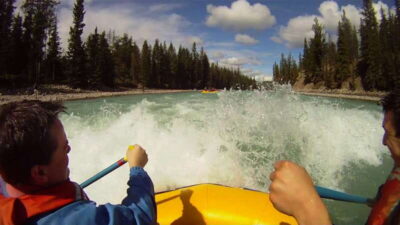
Jasper National Park: 2-Hour Whitewater Rafting
Read our review →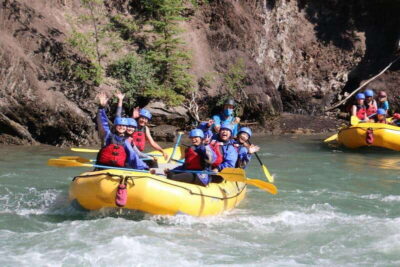
Afternoon Kananaskis River Whitewater Rafting Tour
Read our review →