
Reviewed · CANOES & KAYAKS
Kayak/Paddleboard Rouge River – Self Guided Descent
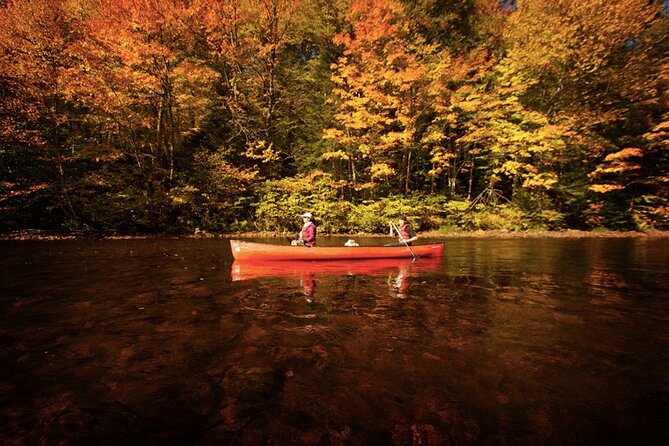
Slow water, sandy shores, no guide shouting directions. The Rouge River descent gives you a relaxed half-day on calm, shallow water, with public beaches for swimming and picnics along a rural stretch near Mont-Tremblant. I like the freedom to set your own pace, and I like that the upstream shuttle is included. The main consideration is that you still need some stamina for 12 kilometers, and a canoe can become awkward if you try to fit too many people inside.
I also like the practical setup for families and mixed groups. You can choose a canoe, single or double kayak, or paddleboard, while the sturdy boats and easy river conditions suit beginners. The tradeoff is comfort: canoes have only two seats, and a third person, usually a child, must sit on the often-wet floor.
In This Review
- Key Points Before You Paddle
- The Rouge River Route Near Mont-Tremblant
- Why the Calm, Shallow Water Helps Beginners
- Sandy Beaches, Swimming, and Picnic Stops
- What the Self-Guided Format Feels Like
- Choosing Between Canoes, Kayaks, and Paddleboards
- How Much Time and Effort to Plan For
- The Value of $52.18 Per Group
- Who Will Enjoy This River Descent Most
- Practical Packing Advice for the Rouge
- Should You Book the Rouge River Descent?
- FAQ
- Where does the Rouge River activity begin?
- Where does the activity end?
- How long is the river route?
- Is the Rouge River suitable for beginners?
- What equipment is included?
- Can a canoe hold three people?
- Are paddleboards available to everyone?
Key Points Before You Paddle
- A calm 12-kilometer route: The Rouge River is generally shallow and easy to navigate, with no need for whitewater skills.
- Sandy beaches along the way: Stop for a swim, stretch your legs, or eat lunch on public river shores.
- A self-guided outing: You choose your own rhythm, with no guide-led schedule once you begin.
- Several boat choices: Rent a canoe, single kayak, double kayak, or paddleboard based on your group.
- Good value for small groups: The listed price is $52.18 per group of up to five people, not per person.
- A family detail that matters: Canoes have two seats, so a third rider sits on the floor and may get wet.
The Rouge River Route Near Mont-Tremblant
The activity begins at Le Centre d’Activites Mont Tremblant, at 2123 Pl. des Tulipes in La Conception, Quebec. From there, the included shuttle takes you upriver, setting up the one-way descent back toward the activity center.
That arrangement makes the day easy to understand. You do not paddle upstream, and you do not need to arrange a second vehicle at the end. Once you are dropped off, you make your way down the Rouge River at your own speed.
The route covers about 12 kilometers, which is a useful distance for a half-day outing. The water is calm, and most sections are very shallow, so this is not a technical paddling trip. Still, 12 kilometers is not nothing. You will use your arms for several hours, especially if you choose a paddleboard or if your canoe partner is not keen to paddle the whole way.
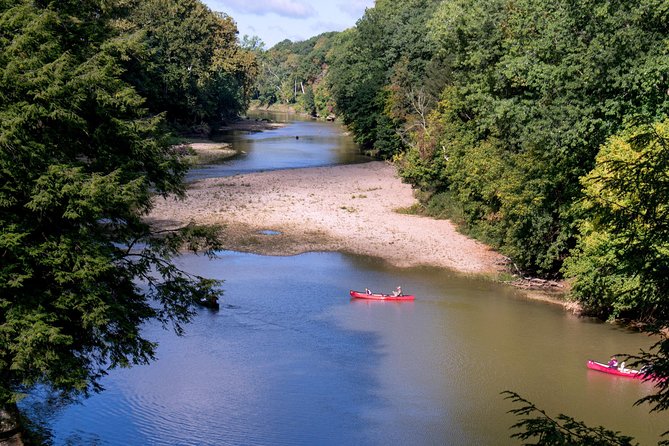
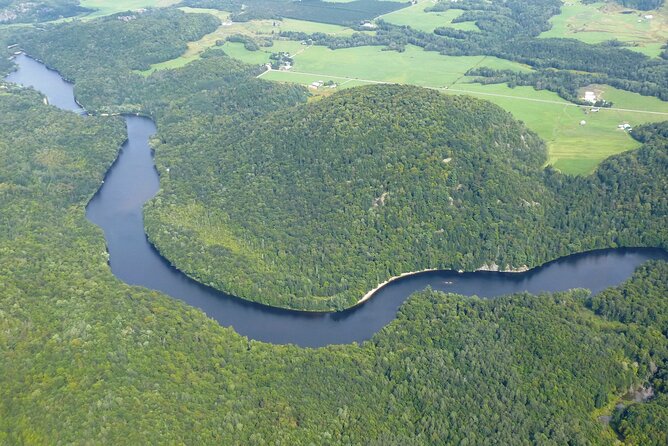
The river passes through a rural setting with farms and cottages. That gives the trip a quiet, open feel rather than the polished atmosphere of a resort attraction. You should expect natural riverbanks, sandy stopping places, and stretches where the main pleasure is simply moving with the current.
More Canoeing and Kayaking in Quebec:
- Half-Day Orleans Island Small-Group Sea Kayaking Tour
★ 4.0 · 24 reviews - Quebec: Rafting or kayaking – Jacques-Cartier Canyon
★ 5.0 · 17 reviews - Sunset Sea-Kayaking Excursion on St. Lawrence River
★ 4.5 · 15 reviews
Why the Calm, Shallow Water Helps Beginners
If you are new to paddling, the Rouge River is a sensible place to start. Calm water gives you time to learn how your boat turns, how strongly to paddle, and how to correct yourself if you drift toward the bank. Shallow water can also feel reassuring, though you should still wear the supplied lifejacket and follow the operator’s instructions.
The equipment choice matters. Kayaks are easier to control and more stable than canoes and paddleboards, according to the supplied guidance. For a first outing, a single or double kayak is likely the least fussy option.
A double kayak can work well for two adults who want to stay together. A single kayak gives you more independence, but it also means you do all the paddling yourself. Paddleboards offer a different challenge and require more balance, so they are best for participants who already feel comfortable standing and paddling on moving water.
Canoes are roomy but less simple than they look. They are designed for two people and have two seats. A third person can ride if that person is a child, but the child sits on the floor, which may be wet from paddle spray and water draining into the canoe.
The operator does not recommend putting four people in one canoe. A practical setup is one adult per canoe, with no more than two adults or two adults and one child in each boat. If your group includes young children who may stop paddling after a while, place them with an adult or use a kayak that can be towed if needed.
Sandy Beaches, Swimming, and Picnic Stops
The best feature of this descent may be the freedom to stop. Several sandy beaches line the river, and most are public land. You can pull over for a swim, rest in the sun, or spread out a picnic without needing to keep up with a guide.
Bring lunch and drinks if you want to turn this into a full half-day outing. The river is rural, so do not count on finding food along the route. There is a small canteen at the activity center for light snacks, but the supplied details do not suggest a full meal service.
Pack food in sealed plastic bags or, better still, a waterproof bag. Water from the paddles can collect in the bottom of a kayak or canoe, and anything left loose may get soaked. The same warning applies to phones, cameras, wallets, and car keys. Waterproof bags can be purchased on site if you need one.
A beach stop also breaks up the 12-kilometer distance. You do not need to race from the launch point to the finish. One particularly useful timing detail is that a 12:30 departure may allow a return as late as 7 p.m., depending on sunset. That leaves room for a relaxed pace and several well-timed breaks, though you should not treat the late return time as unlimited.
What the Self-Guided Format Feels Like
This is not a guided nature trip with commentary or a fixed series of stops. The staff handles the equipment and the ride upriver, then you manage the descent yourself.
That independence is a real plus for groups with different energy levels. Strong paddlers can move ahead, while children or less experienced adults can take longer breaks. You can also decide how much time to spend at the sandy beaches rather than being called back to the boats.
The downside is that you need to pay attention to your own time. The maximum return time is 7 p.m., depending on sunset. If you stop often, paddle slowly, or spend a long time swimming, keep an eye on the clock.
A self-guided trip also means you should be comfortable making basic choices on the water. The river is calm and suitable for beginners, but you still need to steer, share the boat sensibly, and help your group keep moving. The maximum group size is 15 people, so the outing remains fairly small rather than feeling like a crowded river fleet.
A few more Quebec trips worth comparing
- Quebec City – Guided E-Bike Tour & Tastings – Ile d’Orléans
★ 5.0 · 177 reviews - 1.5-Hour Guided Snowmobiling Adventure
★ 5.0 · 68 reviews - ATV Side by Side Guided 4×4 Tour
★ 5.0 · 13 reviews - Quebec City – Scooter Guided Tour on Ile d’Orléans
★ 5.0 · 6 reviews
Choosing Between Canoes, Kayaks, and Paddleboards
Your group’s boat choice will shape the day more than the scenery does.
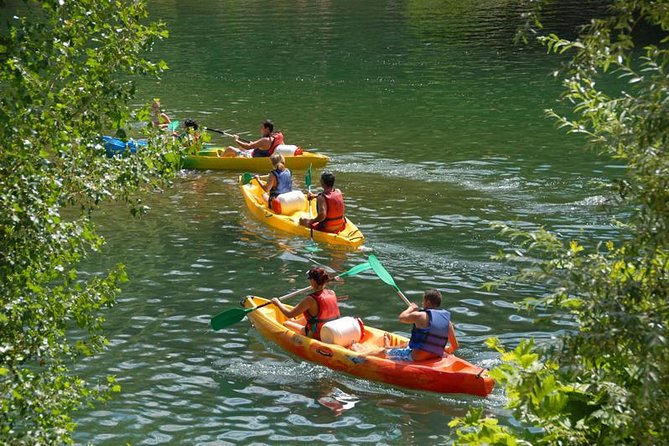
Choose a kayak if you want the easiest handling. A single kayak gives an adult control over their own pace. A double kayak lets two people share the work, though both paddlers need to coordinate. Kayaks are also the better choice for beginners who want a stable, manageable craft.
Choose a canoe if you want more room for a small family group. A canoe can carry up to two adults and one child, but the child sits on the floor rather than in a proper third seat. That can work for a younger passenger, yet the child may become uncomfortable during a long stretch.
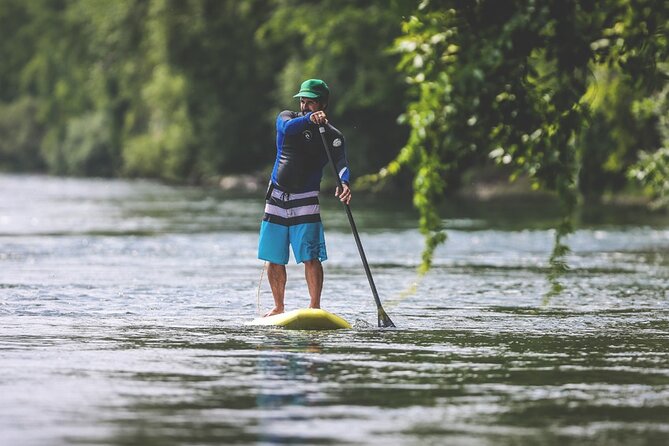
Choose a paddleboard if balance and standing paddling are part of the appeal. Paddleboards have stricter requirements: participants must be at least 13 years old and weigh no more than 250 pounds, or 113 kilograms. Paddleboard users should also expect a more physical outing than people sitting in a kayak.
Children must weigh at least 20 pounds, or 10 kilograms. Anyone aged 15 or younger must be accompanied by an adult aged 18 or over. These rules make group planning important, especially if you are bringing several children.
How Much Time and Effort to Plan For
The stated duration is about four hours, but the operating details allow a later return, especially for a 12:30 departure. Treat four hours as an approximate half-day framework rather than a strict stopwatch schedule.
The route is calm, but the distance calls for reasonable endurance. One useful approach is to plan a few short breaks instead of waiting until everyone is tired. A swim or snack stop can make the river feel much easier, while a long beach stay may require you to paddle more steadily afterward.
Rain does not automatically ruin the outing. The activity operates in all weather conditions, and a rainy spell can make the river feel more peaceful and scenic. You should dress for changing conditions, bring clothing that can get wet, and protect anything valuable in waterproof storage.
The weather policy is slightly different from the general all-weather operation. If poor weather forces the activity to be canceled, you are offered another date or a full refund. If you cancel for your own reasons, the booking is non-refundable and cannot be changed.
The Value of $52.18 Per Group
At $52.18 for a group of up to five, the price is attractive if you can fill the booking. Split five ways, the cost is close to $10.44 per person before any optional extras. Even a smaller group may find the price reasonable because it includes the boat equipment, paddles, lifejackets, and the shuttle upriver.
The group pricing is especially helpful for families or friends who want a shared outdoor activity without paying a separate full rate for every person. You are paying for access to several hours on the river rather than a short guided session.
The value depends on what you want. If you expect a guide, organized commentary, or a catered picnic, this is not that kind of outing. If you want a simple boat rental with transport to the starting point and freedom to stop at beaches, the price is strong.
Food, drinks, and hotel pickup are not included. You need to reach the meeting point at 2123 Pl. des Tulipes in La Conception yourself. The activity ends back at that same meeting point, which keeps the transportation plan straightforward once you arrive.
Who Will Enjoy This River Descent Most
I would recommend this for families with older children, couples, groups of friends, and beginners who want a quiet outdoor break near Mont-Tremblant. It suits people who like to set their own pace and do not need constant instruction.
It is also a good fit for mixed groups. One person can paddle a single kayak, two can share a double kayak, and others can use canoes or paddleboards. That flexibility lets you match the boat to each person’s confidence and strength.
You may want to choose another activity if you dislike getting wet, have limited stamina, or want a completely effortless sightseeing ride. Canoe floors can become wet, and the paddleboard option demands balance. Even in calm water, you are participating in a physical activity rather than sitting on a motorboat.
Calm dogs on a leash are allowed, which can help if you are traveling with a well-behaved pet. Service animals are also allowed. The operator notes that most people can participate, but you should still consider the 12-kilometer distance before booking.
Practical Packing Advice for the Rouge
Keep your packing simple and water-safe. Bring lunch, drinks, sun protection, and clothing suited to the forecast. A swimsuit makes sense if you plan to use the swimming spots, while a light extra layer can help if the weather shifts.
Use waterproof storage for valuables. The bottom of a canoe or kayak can get wet from paddle water, even when the river itself is calm. Put snacks and drinks in sealed plastic bags, as one practical group did, and avoid bringing anything you cannot afford to splash.
Arrive ready for a self-directed outing. You will receive the required lifejacket and paddle, then take the shuttle upriver. Once on the water, your group is responsible for its own pace, stops, and return before the 7 p.m. limit.
Should You Book the Rouge River Descent?
Book it if you want an affordable, low-pressure day on calm water with beaches, swimming, and picnic options. The included shuttle removes a major hassle, and the group price is particularly good for up to five people.
Choose a kayak if you are uncertain about handling a boat. Choose a canoe only when your group understands the two-seat layout and the wet-floor issue for a third rider. Paddleboards are best for participants who meet the age and weight rules and are comfortable with extra balance work.
I would skip it if you want a fully guided tour or a very short, purely scenic ride. For everyone else, the Rouge River offers a pleasant mix of easy paddling, rural views, and genuine freedom to make the afternoon your own.
FAQ
Where does the Rouge River activity begin?
It begins at Le Centre d’Activites Mont Tremblant, located at 2123 Pl. des Tulipes, La Conception, Quebec J0T 1M0, Canada.
Where does the activity end?
The descent ends back at the meeting point.
How long is the river route?
The route covers about 12 kilometers and takes approximately four hours, depending on your pace and stops.
Is the Rouge River suitable for beginners?
Yes. The river is calm and most sections are very shallow. Kayaks are easier to control and more stable than canoes and paddleboards.
What equipment is included?
Lifejackets, paddles, and the shuttle upriver are included.
Can a canoe hold three people?
A canoe can hold up to two adults and one child. The canoe has only two seats, so the third person, usually a child, must sit on the floor, which may be wet. Four people are not recommended in one canoe.
Are paddleboards available to everyone?
Paddleboard users must be at least 13 years old and weigh no more than 250 pounds, or 113 kilograms. Participants aged 15 and under must be accompanied by an adult aged 18 or over.
Just added around Quebec
- 1.5-Hour Guided Snowmobiling Adventure★ 5.0 · 68 reviews
- Walking tour of Old Lévis, Quebec with tasting★ 4.5 · 7 reviews
- ATV Side by Side Guided 4×4 Tour★ 5.0 · 13 reviews
- Ultimate Dog Sledding Tour – Day trip from Ottawa & Gatineau★ 5.0 · 26 reviews
- Petite Nation Wine & Cider Tour – Day Trip From Ottawa & Gatineau★ 5.0 · 15 reviews
- Quebec City – Tandem Bike Rental on Ile d’Orléans★ 5.0 · 10 reviews
- Sunset Sea-Kayaking Excursion on St. Lawrence River★ 4.5 · 15 reviews
- Half-Day Orleans Island Small-Group Sea Kayaking Tour★ 4.0 · 24 reviews
Canoes & Kayaks, compared.
Banff National Park: Big Canoe River Explorer Tour
Read our review →
Snorkel, Kayak, and Seal Adventure: Vancouver Boat Tour
Read our review →
Wild Current Canoe Adventure Join a small group
Read our review →
River Explorer | Big Canoe Tour in Banff National Park
Read our review →
Browse the lists this tour appears in