
Reviewed · CANADA
Intro Survival Course Rockies
Learn to stay calm when plans go wrong. This two-day Rocky Mountain survival course takes you from Nordegg into the backcountry near Abraham Lake, where you practice fires, shelters, navigation, knots, and basic bushcraft instead of simply hearing a lecture about them. I like the private format, which lets the instructor shape the course around your group, and I like that equipment, camping, and meals are included. The main drawback is that you must arrange your own transportation to Nordegg, and the overnight conditions are deliberately basic.
The course costs $205.56 per person and requires at least four people per booking. It is a good fit for beginners, families with older children, and anyone who wants more confidence before heading into the Rockies. You should arrive ready for outdoor work, changing weather, and a night that may involve sleeping in a survival shelter rather than a comfortable cabin.
In This Review
- Key points to know before booking
- From Nordegg to the Kootnay Plains training site
- Day one: safety, priorities, and practical bushcraft
- Spending the night in your own survival shelter
- Day two: navigation and the wider backcountry picture
- What the $205.56 price really covers
- Who will get the most from this course
- The most important practical details
- Should you book the Intro Survival Course Rockies?
- FAQ
- Where does the course begin?
- Where does the course end?
- How long does the experience last?
- What is the price?
- Is the course private?
- Is transportation included?
- Where does the training take place?
- What equipment is provided?
- Are meals included?
- Can children participate?
Key points to know before booking
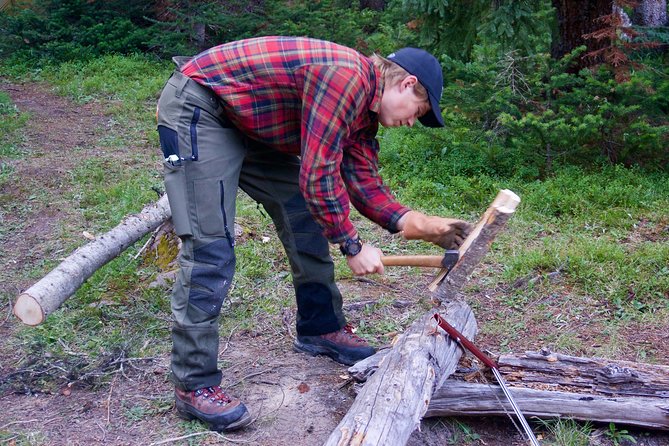
- Practice replaces theory: You learn to build fires, shelters, cordage, and improvised tools with guidance from an instructor.
- The setting is part of the lesson: Training takes place around Kootnay Plains and Abraham Lake, about 40 kilometres from Shunda Creek.
- The course is private: Only your own group participates, with a minimum booking of four people.
- A survival shelter may be your bed: One night of camping is included, with the chance to sleep in the shelter you build.
- Meals and equipment are supplied: Tents, hatchets, knives, compasses, GPS units, and course gear are included, along with breakfast, lunch, and dinner.
- The course suits beginners: The instruction covers useful basics first, then adds navigation, plants, traps, rope making, and other optional topics if time allows.
From Nordegg to the Kootnay Plains training site
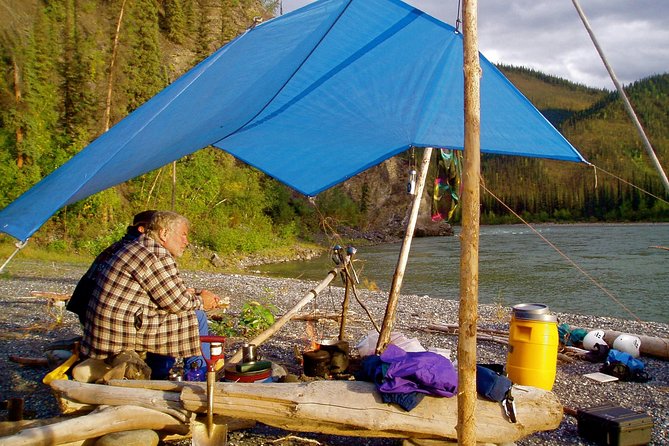
Your course begins at HI Nordegg Shunda Creek Wilderness Hostel at 9:30 a.m. That meeting point matters because you need to get there independently. Transportation to and from the program is not included, although the group then drives roughly 40 kilometres from Shunda Creek to the training area in the Rocky Mountains.
The opening drive helps shift the mood from ordinary sightseeing to practical backcountry learning. Once you leave the hostel, the focus turns to the conditions you may face outdoors and the choices that can keep a small problem from becoming a serious one.
The private setup is useful here. You are not joining a large public class with a fixed script and a long line of people waiting to try each task. The instructor can spend time answering questions and adjusting the pace to suit your group. That matters if some people have never camped before while others already know their way around basic outdoor gear.
Past feedback gives the instructors strong praise for being friendly, approachable, and able to explain skills clearly. Mark, Joel, and Marc are named in the course feedback, although the exact instructor assigned to your date may vary. The important point is that you should expect an instructor-led class with plenty of practical work, not a self-guided camping trip.
Other ways to spend a day around Alberta:
- Wild Water Adventures
★ 5.0 · 581 reviews - Abraham IceBubble/Sunwapta, Athabasca Falls, Peyto, Bow Lake
★ 5.0 · 298 reviews - Moraine Lake, Lake Louise Johnston Canyon Banff National Park
★ 4.5 · 243 reviews
Day one: safety, priorities, and practical bushcraft
The main teaching session runs from about 10:30 a.m. until 5 p.m. at Kootnay Plains near Abraham Lake. The first lessons cover precautions, common dangers, equipment, and priorities during emergencies.
This part can sound basic, but it is where a useful survival course earns its keep. In an emergency, you need to decide what matters first. The course is designed to help you think through those priorities before you are cold, tired, or worried. You also get a chance to handle the equipment rather than simply being told what each item does.
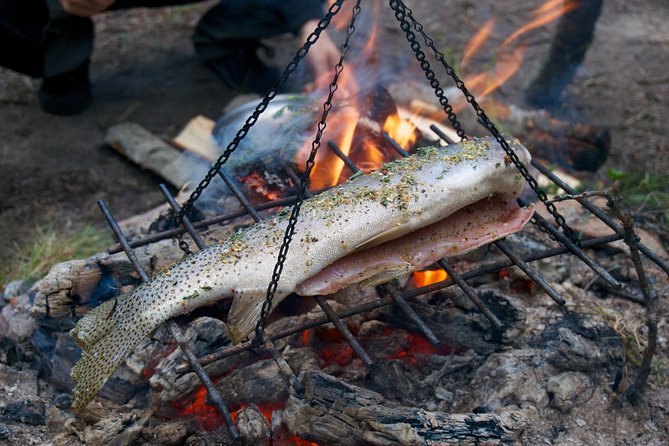
The course then moves into fire making under difficult conditions. You practice the process of creating a useful fire when conditions are not ideal, an exercise that asks for patience and care. The goal is not a dramatic television-style flame. It is learning a repeatable skill that can help with warmth, cooking, morale, and basic camp needs.
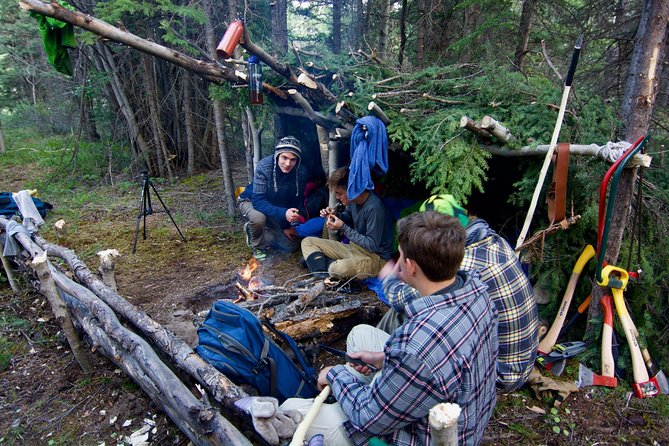
Shelter building is another central lesson. You work on ways to make shelter under adverse conditions, using the available setting and the supplied tools. I like this emphasis because it connects directly to backcountry travel. A shelter is not just a clever project. It can protect you from cold, wind, and wet ground while you work out your next move.
Useful knots are included as well. Knots are easy to ignore until you need one for a shelter, a load, or a repair. Practicing them in camp gives the lesson a clear purpose and makes it easier to remember later.
The afternoon is active and hands-on, so do not treat this as a gentle sightseeing day beside the lake. You will spend time working with your group and testing new skills. That is a big reason the course suits people who learn by doing.
Spending the night in your own survival shelter
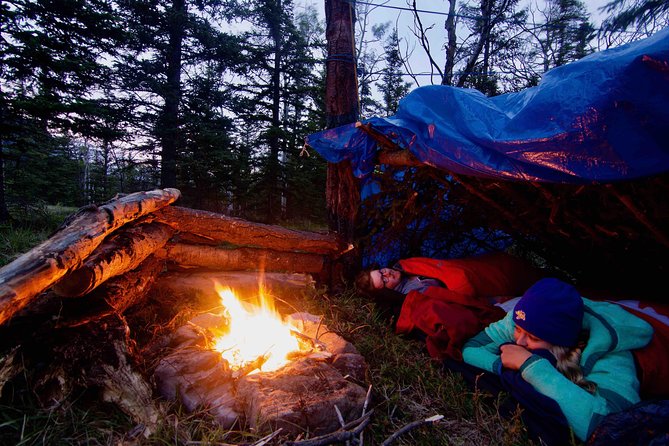
One night of camping is included, and you have the opportunity to sleep in the survival shelter you build. The supplied equipment includes tents, so the course has camping gear available, but the shelter exercise is clearly an important part of the experience.
You should clarify the overnight arrangement with Bow Valley Canyon Tours before departure if sleeping in the improvised shelter is a deciding factor for you. The description presents it as an opportunity, not a requirement, and conditions or group choices may affect how the night works.
This is also where expectations matter most. The course is meant to build confidence in outdoor situations, not to provide a polished campground stay. You should be comfortable with basic camping and prepared for a simple night outdoors. The reward is a stronger sense of what your equipment and judgment can do when comfort is limited.
Meals are included during the course. The food details list breakfast, lunch, and dinner, including two lunches, and vegetarian meals are available if requested in advance. Dietary requirements should also be provided when booking. One past account praised the meals, including honey garlic sausages, while another found the food disappointing and described it as wet sandwiches and pasta. That difference is useful to note: food is supplied for convenience and fuel, but you should not book this as a gourmet camping weekend.
Day two: navigation and the wider backcountry picture
The second morning begins around 9 a.m. and continues until 11 a.m. at Abraham Lake. The instructor revisits topics from the first day and builds on them while the skills are still fresh.
This return to the previous day’s material is valuable. Survival skills become useful through repetition, not through a single demonstration. You may find that a fire, knot, or shelter technique makes more sense after you have slept outdoors and thought about where it worked well or where it could be improved.
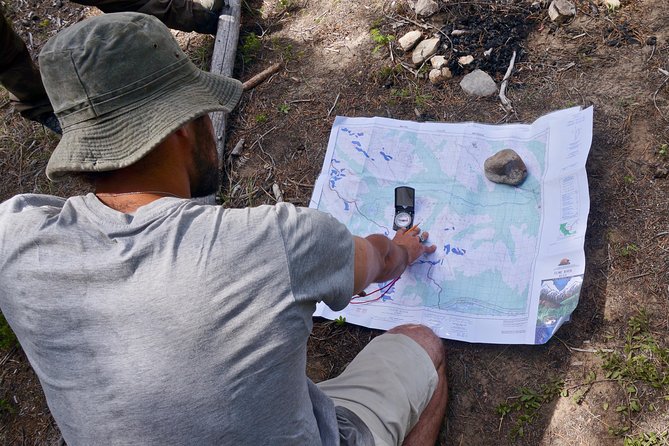
The course then moves to Cline River for an afternoon hike. Navigation is the main focus. You work with tools such as compasses and GPS units, both of which are included in the course equipment. This combination is practical because electronic tools can be helpful, but a compass gives you a backup when batteries, signal, or screens become a problem.
The navigation lesson also gives the day a natural purpose. You are not simply walking for scenery. You are learning how to pay attention to direction and position while moving through the outdoors. For backcountry beginners, that can be one of the most useful parts of the weekend.
Plant identification is included, with attention to useful and medicinal plants. This topic can add a strong local connection to the hike, but you should treat it as an introduction rather than permission to eat or use unknown plants on your own. The supplied information does not promise a full botany course, and plant safety always requires care.
If the schedule allows, the instructor may add more advanced subjects:
- Finding alternative food sources
- Basic traps and snares
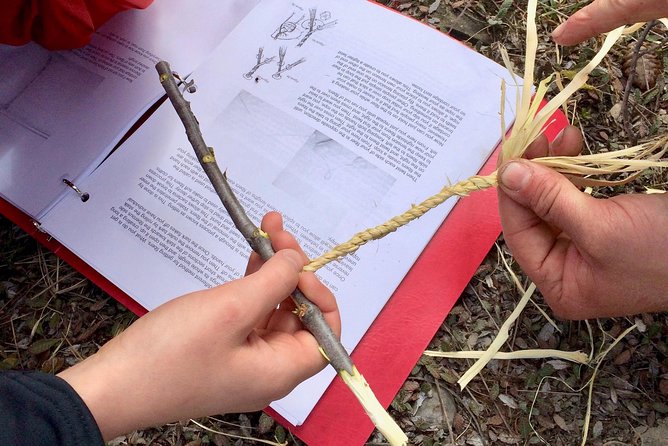
- Improvised rope or cordage
- Survival saws
These subjects are optional additions based on time. You should not assume every topic will receive the same amount of instruction. Weather, group pace, and the time spent on the core skills will shape the final afternoon.
The course ends in the late afternoon or early evening and returns to the original meeting point. That makes the second day longer than a simple morning class, so plan your onward schedule with room to spare.
Still Alberta, at a slower pace:
- Icefields Parkway: a Smartphone Audio Driving Tour
★ 4.0 · 118 reviews - Lake Louise Summer Gondola Experience
★ 4.0 · 65 reviews - Calgary Airport Shuttle to Banff & Lake Louise
★ 4.5 · 54 reviews - Adrenaline Canyoning Tour
★ 5.0 · 39 reviews
What the $205.56 price really covers
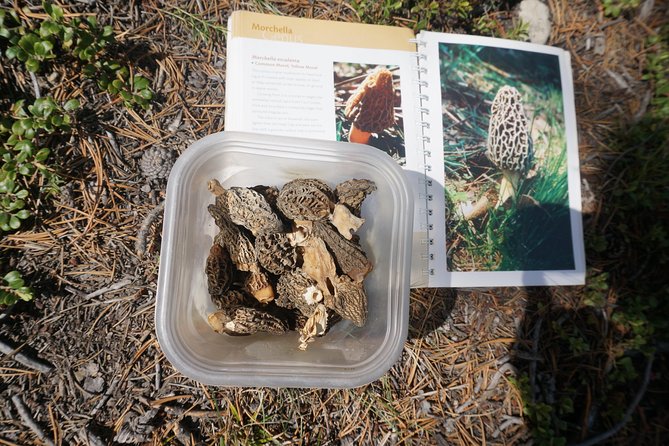
At $205.56 per person, the course is not just a two-day guided hike. The fee includes an experienced instructor, one night of camping, meals, and the equipment needed for the course. That equipment list is unusually helpful for beginners: tents, hatchets, knives, compasses, GPS units, and other necessary course gear are supplied.
I see real value here if you do not already own outdoor tools or do not want to buy a large kit before deciding if bushcraft is for you. The private format also means you are paying for instruction focused on your own group rather than joining a crowded public activity.
The price looks less attractive if you already have strong survival skills, your own gear, and experience navigating the Rockies. In that case, the introductory material may feel too easy, especially if your group moves quickly through the basics.
You also need to add the cost and effort of getting to Nordegg. The operator does not provide transportation to or from the program, and you drive to the training location as part of the course. If you are coming from elsewhere in Alberta, check your driving plan before booking. The course itself ends back at the meeting point, but it does not solve the transport problem for you.
The four-person minimum is another cost factor. This is easiest to arrange with friends or family. If you are a solo visitor or a pair, you may need to bring another group of paying adults, and the private format is not designed as a drop-in class.
Who will get the most from this course
I would recommend this course most strongly to outdoor beginners who want clear instruction and real practice. It is especially useful if you are preparing for backcountry camping and want to understand what to do when a trip becomes uncomfortable or plans change.
Families can also find it rewarding. One especially positive account described a parent attending with a young son and praised the fun training, good organization, and the instructor’s willingness to answer questions. Children must be accompanied by an adult, and the child rate applies only when sharing with paying adults.
You should also consider it if you already camp but want to improve your confidence with navigation, fire making, shelters, and knots. The lessons are broad rather than highly specialized, so you leave with a useful foundation instead of one narrow skill.
This may not suit you if you want luxury, effortless transport, or a tightly controlled schedule. It may also disappoint experienced bushcrafters who expect advanced instruction throughout both days. The course is called an introduction for a reason.
The physical demands are not described in detail, but the program includes outdoor work, camping, and a hike. Most people can participate, and service animals are allowed. If your group has specific needs, ask the operator before booking rather than assuming the remote setting will accommodate every situation.
The most important practical details
The experience is offered in English and uses a mobile ticket. Confirmation is provided when you book. The operating period listed for the course runs from July 9, 2021, through January 3, 2027, with operating hours shown as 9 a.m. to 6 p.m. daily.
The published overall rating is 4 out of 5 from five ratings. The strongest praise centers on the instructors, the practical lessons, the scenic setting around the Rockies and Abraham Lake, and the fact that beginners can learn a lot in a short time.
There is also one sharply negative account, focused on a missed long-weekend campsite arrangement, self-driving, food, and doubts about the instruction. The operator’s response points out that transportation and reservation of sites on Crown land are not included or may not be possible, and it explains that food preparation changed during public health restrictions.
The lesson for you is simple: read the inclusions carefully and ask questions before the course begins. Confirm what transportation you must handle, what the camping setup will be, and what meals and shelter options are planned for your date. Most problems on a basic outdoor course come from mismatched expectations, not from the fire-making lesson itself.
Free cancellation is available if you cancel at least 24 hours before the start time. Cancellations made later are not refunded, and poor weather may lead to a different date or a full refund. Since the course depends on outdoor conditions, that flexibility is worth noting.
Should you book the Intro Survival Course Rockies?
Book it if you want a friendly, private introduction to backcountry survival and you enjoy learning with your hands. The combination of fires, shelters, knots, navigation, plant identification, camping, and a Rocky Mountain setting gives you a useful weekend foundation for future trips.
I would be more cautious if you expect a luxury camp, included transportation, guaranteed advanced subjects, or restaurant-quality meals. Bring realistic expectations, arrange your own ride to Nordegg, and confirm the overnight and food details in advance.
For a group of four or more beginners, the value is good. You get instruction, gear, meals, and a real chance to test basic skills instead of merely watching someone else demonstrate them. That is the strongest reason to book.
FAQ
Where does the course begin?
It begins at HI Nordegg Shunda Creek Wilderness Hostel, 321 Shunda Creek Road, Nordegg, Alberta.
Where does the course end?
The activity ends back at the original meeting point.
How long does the experience last?
The course lasts approximately two days, beginning at 9:30 a.m. on the first day and finishing in the late afternoon or early evening on the second day.
What is the price?
The listed price is $205.56 per person.
Is the course private?
Yes. Only your own group participates, and a minimum of four people per booking is required.
Is transportation included?
No. Transportation to and from the program is not included. The course does include a drive of about 40 kilometres from Shunda Creek to the training location.
Where does the training take place?
Training takes place around Kootnay Plains near Abraham Lake, with the second-day hike taking place around Cline River.
What equipment is provided?
The course provides necessary equipment, including tents, hatchets, knives, compasses, GPS units, and other course gear.
Are meals included?
Yes. Breakfast, lunch, and dinner are included during the course, with two lunches listed among the included meals.
Can children participate?
Yes. Children must be accompanied by an adult, and the child rate applies only when sharing with paying adults.
Just added around Alberta
- Official SkiByk Rentals in Banff & The Canadian Rockies★ 5.0 · 9 reviews
- Discover the Lake Agnes Tea House Trail with an Audio Nature Tour★ 4.0 · 7 reviews
- Smartphone Audio Driving Tour between Lake Louise and Calgary★ 4.0 · 15 reviews
- Nikka Yuko Japanese Garden Winter Light Festival★ 5.0 · 6 reviews
- Moraine Lake and Lake Louise Sightseeing Half Day Tour★ 5.0 · 23 reviews
- Icefields Parkway: a Smartphone Audio Driving Tour★ 4.0 · 118 reviews
- Lake Louise to Jasper One-Way Tour★ 5.0 · 17 reviews
- Lake Louise Summer Gondola Experience★ 4.0 · 65 reviews