Reviewed · BANFF TOURS
Ice Climbing Adventure in Banff: Beginner
The ice is calling. This seven-hour Banff outing gives you a real taste of waterfall ice climbing, with professional instruction, full climbing gear, and time to swing tools into a frozen wall. I like the chance to learn a genuine mountain skill and the way the experience can be adjusted for complete beginners or stronger climbers. The main drawback is that you must arrange private transportation to the climbing site, and extreme cold can shorten the day.
I also like the small-group limit of 12 people and the chance to climb near places such as Johnston Canyon. Guide Shea has earned praise for clear teaching and careful safety work, while Nolan handled a bitterly cold day with commitment. Still, the meeting arrangement can feel unclear, and the office sits below an indoor mall, so allow time to find it.
In This Review
- Key points before you book
- What this Banff ice climbing day is really like
- Learning to walk on crampons and swing ice tools
- Johnston Canyon, Grassi Lakes, and changing icefall locations
- Guides, safety, and the value of expert instruction
- What you can learn beyond the beginner basics
- The equipment included, and what you still need
- Is $194.36 a fair price?
- The biggest risk is not the climbing
- Who will enjoy this experience most?
- Should you book this Banff ice climbing tour?
- FAQ
- Where does the ice climbing experience start?
- What time does the tour begin?
- Where does the experience end?
- How long does the activity last?
- Is the tour suitable for complete beginners?
- What climbing gear is included?
- Do I need to arrange transportation?
- Is lunch included?
- How many people can join the activity?
- Can I cancel for a full refund?
Key points before you book
- A true beginner start: You learn site safety, crampon walking, belaying, knots, and basic movement on steep ice.
- Johnston Canyon may be your ice wall: One outing included about a 20-minute hike to a climbing area near the canyon.
- Professional mountain guides: ACMG and IFMGA guides provide instruction and manage the rope systems.
- Bring transport and lunch plans: Private transportation to the climbing site and lunch are not included.
- Cold matters: A day at minus 24 Celsius was cut short, so weather can affect both comfort and climbing time.
- Good value for a full day: At $194.36 per person, the price covers climbing equipment and expert instruction, not transport or food.
What this Banff ice climbing day is really like
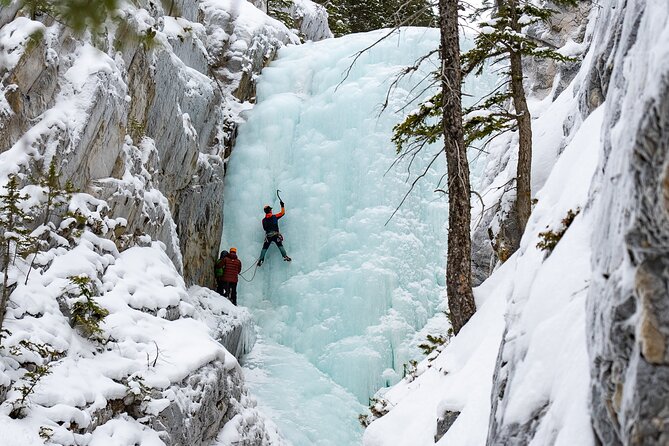
This is not a quick photo stop with a few token swings of an ice tool. The program is built around learning the basics of waterfall ice climbing, then getting you off the ground and onto the frozen wall.
You meet at 7:45 a.m. at 229 Bear Street in Banff. From there, the climbing site may vary. Banff National Park, Johnston Canyon, and Grassi Lakes are listed as points connected with the outing, but you should not assume you will spend equal time at all three.
The day lasts about seven hours. That gives your guide time to fit equipment, explain safety, organize the rope system, teach movement, and let you climb more than once. For a first attempt, that extra time matters. You need a few tries to stop fighting the crampons and tools and start using them as a coordinated system.
The climbing style here is top-rope climbing. That means the rope is already secured above you while you climb, with a guide or partner managing the belay below. It is a sensible way to learn because you can concentrate on footwork, balance, and tool placement rather than leading a route.
A few more Banff trips worth comparing
- Banff: Banff Gondola Admission Ticket
★ 4.7 · 3,698 reviews - Banff Gondola Ride Admission
★ 4.5 · 2,688 reviews - Columbia Icefield Tour with Glacier Skywalk
★ 4.5 · 1,860 reviews
Learning to walk on crampons and swing ice tools
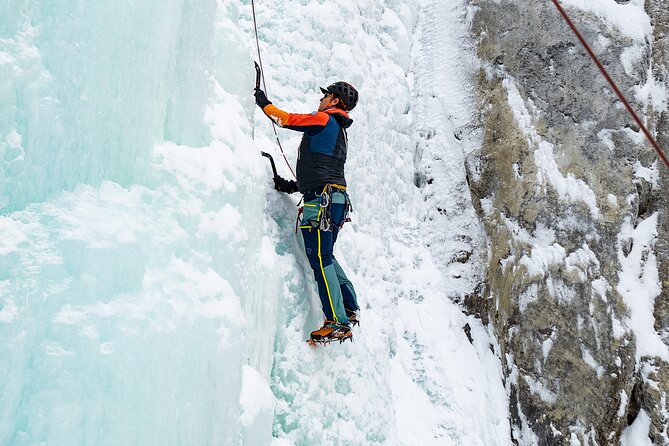
The first challenge is simply moving in the gear. Crampons give your boots sharp points for gripping the ice, but walking in them requires care. You learn how to place your feet and avoid catching one point on the other boot or clothing.
The ice tools take practice, too. You swing them into the wall, look for solid placements, and pull upward while pressing your crampon points into the ice. Beginners often try to muscle their way up with their arms. A good guide will help you use your feet and keep your movements controlled.
Basic instruction includes site safety and awareness, walking in crampons, belaying top-rope climbers, and moving on steep ice. You also learn how to tie the required knots. One highly praised outing with Shea included belay instruction and knot work before the climbing began.
That order is useful. You are not simply handed sharp tools and pointed toward the wall. You get the safety system first, then practice the climbing technique with supervision.
Johnston Canyon, Grassi Lakes, and changing icefall locations
Johnston Canyon is the clearest example of what the day may involve. One group hiked about 20 minutes to an ice wall near the canyon before beginning the climbing session. That short approach adds a small mountain outing to the day, but it also means you need clothing and footwear suitable for walking before you climb.
The canyon area can make the experience feel more like a Canadian Rockies day out than a gym lesson. You are working with real frozen water, real weather, and an icefall chosen for current conditions and group ability.
Grassi Lakes is also listed as a possible point connected with the experience. The information provided does not promise a fixed stop there, so treat it as part of the broader area rather than a guaranteed sightseeing visit. The icefall location may change, which is normal for this kind of activity. Conditions, safety, and suitable climbing terrain come first.
That flexibility is a strength for the climbing itself. It allows the guide to choose a site that fits the weather and ability of the group. It can be a weakness if you are expecting a fixed sightseeing itinerary or one famous waterfall.
Guides, safety, and the value of expert instruction
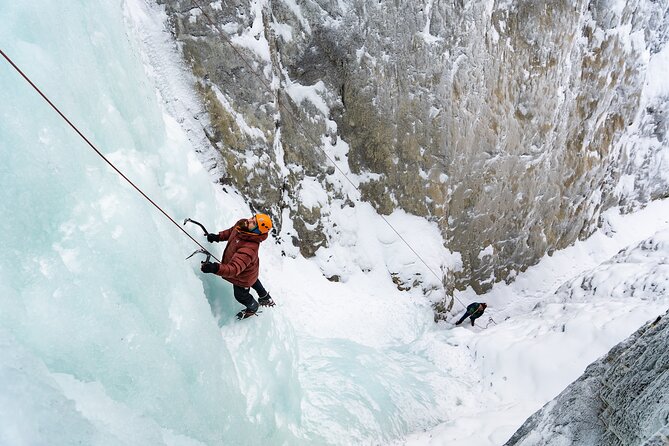
The guides are professional mountain guides with ACMG or IFMGA credentials. Their job is not only to show you where to swing the tools. They fit the gear, explain the safety systems, set up the climbs, manage the rope work, and adjust the instruction to the group.
Shea received especially strong praise from a beginner who felt safe and well taught. That person was able to choose between location options, learn belaying and knots, and complete the climb. For a first ice climbing day, feeling secure is as important as reaching the top.
Nolan also received warm praise after guiding in severe cold. The guide worked hard, but the conditions eventually shortened the day. That detail is worth noting because even excellent guiding cannot make minus 24 Celsius feel comfortable for long.
The maximum group size is 12. That is not a private lesson, so individual attention will depend on the group and the guide. Still, a limit of 12 is more manageable than a large commercial outing, especially when people are learning rope systems and climbing movement.
Still Banff, at a slower pace:
- Emerald Lake, Moraine, Louise, Johnston Canyon & Banff Town
★ 4.9 · 1,554 reviews - Lakes Moraine, Louise, Emerald, Johnston Canyon & Yoho Tour
★ 4.8 · 1,083 reviews - Banff: Louise & Moraine Lake or Johnston Canyon 1/2 Day Tour
★ 4.9 · 861 reviews - Lake Louise, Moraine Lake and the Icefields Parkway Full-Day Tour
★ 5.0 · 836 reviews
What you can learn beyond the beginner basics
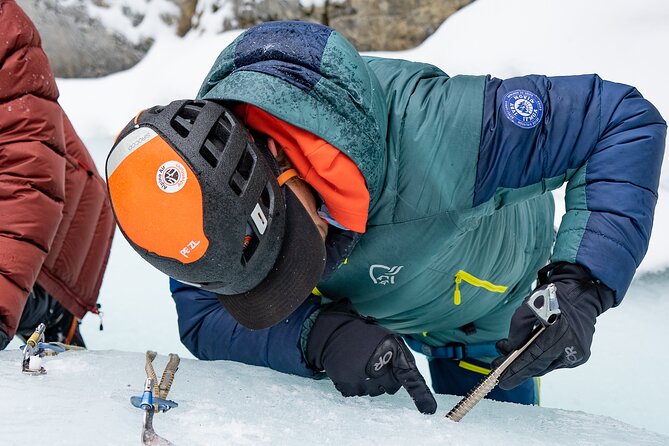
The basic program covers enough to give you a proper first look at the sport. If you already climb or handle mountain equipment, the guide may be able to add more advanced work.
Possible advanced skills include movement on steeper ice, placing ice screws, building V-threads, mock leading, and rappelling. These are not beginner requirements, and the information does not promise that every person will cover all of them in a single seven-hour session.
The full-day format gives more room to advance than a shorter introduction. A two-day version can offer still more time and more waterfall options, but the experience described here is the approximately seven-hour beginner program. If your main goal is a first climb and a memorable mountain story, that should be enough. If you want technical progression, ask in advance how much advanced practice fits your date and group.
The equipment included, and what you still need
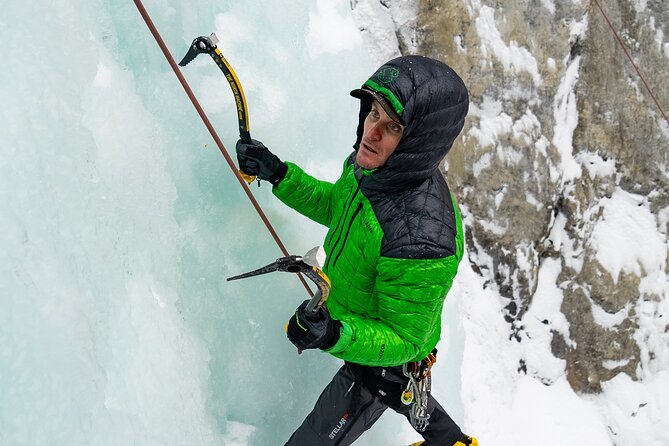
The tour includes the core climbing gear:
- Helmet
- Harness
- Ice tools
- Crampons
- Climbing boots
That is a major part of the price. Renting or buying this equipment separately would add cost and hassle, and you would still need instruction on how to use it.
Lunch is not included. Bring your own food plan, but do not assume the day will offer a convenient meal stop. Private transportation is also not included, and you need a way to reach the chosen climbing site from Banff.
The meeting point is easy to state but not necessarily easy to spot. The office is at 229 Bear Street, in the lower floor of an indoor mall. One participant had trouble finding it, so arrive early rather than trying to locate the office at 7:44 a.m.
The tour is offered in English and is near public transportation. Most people can take part, but ice climbing still requires physical movement, balance, and comfort in winter conditions. The available information does not provide a detailed fitness or age requirement, so contact the provider if you have a concern.
Is $194.36 a fair price?
At $194.36 per person, this is not a cheap activity, but it covers a full day of guided instruction and specialized gear. You are paying for access to an ice climbing setup, professional rope management, equipment fitting, and a guide who can choose a suitable wall.
The price makes more sense if you are starting from zero. Buying ice tools, crampons, boots, and a helmet for one holiday activity would cost far more. You also avoid the risk of trying to work out a frozen waterfall without proper training.
The value is less clear if you already have all the equipment and solid ice climbing skills. In that case, the guide’s route choice, instruction, and safety management are still useful, but the included gear is not as important.
Remember the extra costs. You need private transportation to the climbing site, and lunch is on you. The transport issue is more than a minor footnote because the climbing area can change. Confirm how the group will reach the site before the morning of your booking.
The biggest risk is not the climbing
For most beginners, the technical skills are manageable with patient instruction. The bigger uncertainty is winter weather. At minus 24 Celsius, one session ended early because the cold made it hard to enjoy the climb.
That is not a sign that the guide failed. It is a reminder that ice climbing depends on conditions. Cold can affect your hands, comfort, concentration, and time on the wall. You should be prepared for the possibility that the day may not run exactly as planned.
The climbing site can also vary. That protects safety and gives the guide options, but it means you should not book this expecting one fixed waterfall or a guaranteed sightseeing route.
The customer service record is mixed. One complaint described difficulty reaching the company, while the provider responded that it has office staff and ACMG and IFMGA guides. The practical lesson is simple: confirm the meeting details, transportation plan, and weather expectations before you go.
Who will enjoy this experience most?
I would recommend it to you if you want a physical Banff activity with a real skill at its center. It suits a complete beginner who likes the idea of climbing outdoors rather than practicing indoors.
It is also a good match if you already climb and want to try ice. The program can be adjusted for stronger participants, and the full-day format may allow work on more advanced movement or rope skills.
You may want to skip it if you dislike cold, are hoping for a relaxed sightseeing day, or do not want to arrange private transportation. It is also not ideal if reaching a particular named waterfall matters more to you than the activity itself.
Plan on wearing proper winter clothing, arriving early at the Bear Street meeting point, and keeping your schedule flexible. The climbing is the focus. The scenery is a fine bonus, but the ice wall gets the starring role.
Should you book this Banff ice climbing tour?
Book it if you want a supervised first taste of waterfall ice climbing and value expert instruction more than a predictable sightseeing route. The strongest part of the experience is the chance to learn real basics, use quality gear, and climb a natural ice wall under professional care.
I would book with three checks in place: confirm how you will reach the climbing site, ask about the expected weather, and understand that the icefall location may change. If the forecast calls for extreme cold, ask about rescheduling before you commit to a day that may be cut short.
For a beginner who wants an unusual Banff adventure, $194.36 is reasonable for the equipment and full-day guidance. Just bring patience, warm clothing, lunch, and a willingness to let mountain conditions set the timetable.
FAQ
Where does the ice climbing experience start?
It starts at 229 Bear Street, Banff, Alberta, T1L 1C3, Canada.
What time does the tour begin?
The start time is 7:45 a.m.
Where does the experience end?
It ends back at the meeting point on Bear Street.
How long does the activity last?
The experience lasts approximately seven hours.
Is the tour suitable for complete beginners?
Yes. The program is designed for complete beginners and can also be adjusted for people with more climbing experience.
What climbing gear is included?
The price includes a helmet, harness, ice tools, crampons, and climbing boots.
Do I need to arrange transportation?
Yes. Private transportation is needed to reach the climbing site, and it is not included.
Is lunch included?
No. Lunch is not included.
How many people can join the activity?
The maximum group size is 12 people.
Can I cancel for a full refund?
You can cancel up to 24 hours before the experience for a full refund.
Just added around Banff
- Guided E-Bike Tour of Canmore★ 5.0 · 17 reviews
- 2 Day Banff Lake Louise Johnston Canyon Gondola Cave Basin tour★ 4.5 · 8 reviews
- Experience Golden Hour at Moraine and Lake Louise★ 5.0 · 18 reviews
- Rocky mountain – VIP Experience – Private Boat★ 5.0 · 6 reviews
- Sunset at Moraine Lake & Stargazing Tour from Canmore/Banff★ 5.0 · 95 reviews
- Banff/Canmore Moraine Lake & Lake Louise– Hike, Canoe or Sightsee★ 5.0 · 104 reviews
- Canyons and caves in the Rockies: Explore with us; From Calgary★ 5.0 · 27 reviews
- Shared Tour: Lake Louise & Emerald Lake from Canmore/Banff★ 4.5 · 5 reviews
Banff Tours, compared.
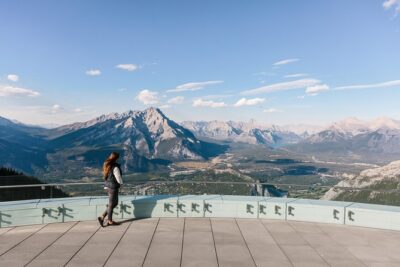
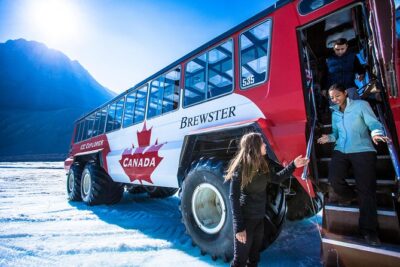
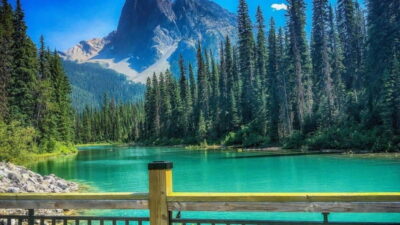
Emerald Lake, Moraine, Louise, Johnston Canyon & Banff Town
Read our review →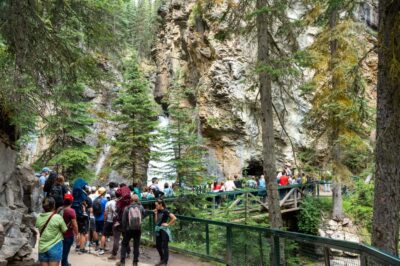
Lakes Moraine, Louise, Emerald, Johnston Canyon & Yoho Tour
Read our review →
Louise & Moraine Lake or Johnston Canyon 1/2 Day Tour
Read our review →
Lake Louise, Moraine Lake and the Icefields Parkway Full-Day Tour
Read our review →