
Reviewed · NATIONAL PARKS
Banff National Park: Virtual Tour
The Rockies are closer than you think. This six-hour virtual tour brings Banff, Lake Louise, Moraine Lake, and several famous viewpoints to your screen, with local guide Ivan adding the geology, wildlife, railway history, and human stories that scenery alone cannot provide. I especially like the wide route and the strong historical focus. You move from Banff town to Bow Falls, mountain lakes, Lake Louise, and Moraine Lake without spending a day driving between them.
The price is another major plus. At $2.92 per person, this is remarkably cheap for six hours with a live English-speaking guide. The catch is clear: you will not feel the cold air, hear the river beside you, or walk to the lakeshore. Treat it as a guided visual visit and planning tool, not a substitute for standing in the Canadian Rockies.
In This Review
- Key reasons to consider this virtual tour
- What Six Hours Online Actually Gives You
- Banff Town and the Story of a Railway Stop
- Surprise Corner and Fairmont Banff Springs
- Bow River and the Force of Bow Falls
- Vermilion Lakes, Two Jack Lake, and Lake Minnewanka
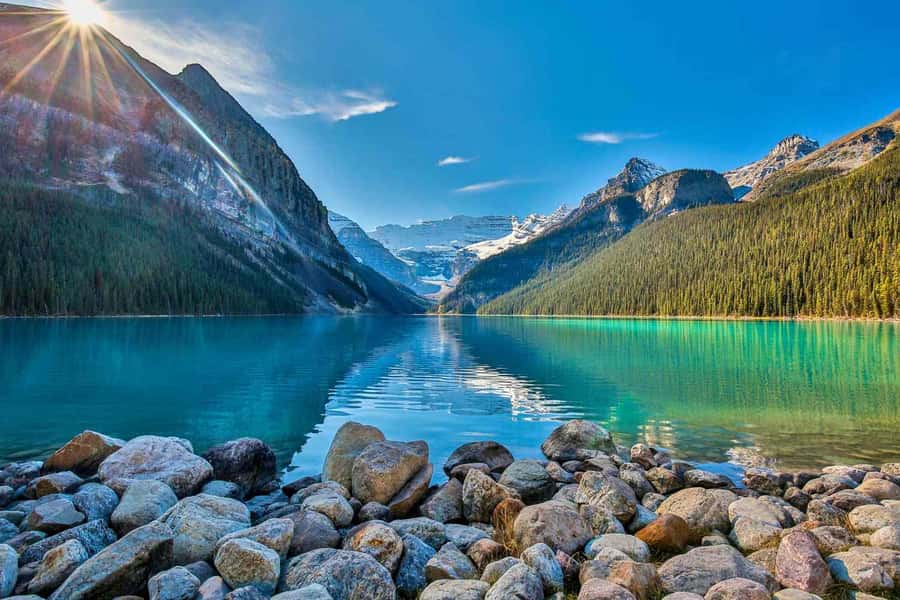
- Lake Louise Village and the Famous Turquoise Water
- Moraine Lake and the Valley of the Ten Peaks
- Ivan’s History, Geology, and Wildlife Stories
- Price, Timing, and Who Gets the Most Value
- What the 4.8 Rating Tells You
- Should You Book This Banff Virtual Tour?
- FAQ
- Is this a physical tour in Banff National Park?
- How long does the virtual tour last?
- Which places are included?
- Is the tour live?
- Who is the guide?
- What device do I need?
- Is the tour suitable for children and people with limited mobility?
- Can I cancel the booking?
- Can I reserve without paying immediately?
Key reasons to consider this virtual tour
- Six hours of Banff coverage: The route includes Banff town, Surprise Corner, Bow Falls, Vermilion Lakes, Two Jack Lake, Lake Minnewanka, Lake Louise, and Moraine Lake.
- Ivan brings the past into view: His explanations connect Banff’s early development, the Canadian Pacific Railway, geology, and the people who explored the Rockies.
- Useful for planning a future visit: You get a sense of how the major sights relate to one another before committing time and money to an Alberta trip.
- No physical travel required: Join from anywhere with a phone, tablet, or computer and a stable internet connection.
- Accessible for all ages and abilities: There is no walking or physical exertion, and the experience is wheelchair accessible.
- Very low cost: At $2.92 per person, it offers unusually strong value if you want context and scenery from home.
What Six Hours Online Actually Gives You
A six-hour virtual tour sounds long, but the route covers much of Banff National Park’s familiar postcard country. The value comes from having one guide shape the day into a connected story instead of handing you a series of disconnected views.
You begin in Banff, then follow the Bow River and visit several lakes before moving toward Lake Louise and Moraine Lake. That order makes sense. You first get the town and river setting, then the wider mountain environment, and finally the famous alpine lakes.
The tour uses a structured route, visual material, and live narration. Content can vary a little with seasonal conditions, visibility, or updates to the featured places. That matters for a virtual experience because the screen presentation may not look identical every time.
You should also set your expectations early. This is not a live camera feed from every viewpoint, and it is not a walking tour in which you control the pace from one trail to the next. It is a guided presentation designed to show you the major sights while explaining why they matter.
That format suits me when I want context. Banff is full of mountain views that look simple at first glance. A guide can point out how glacial water shaped a valley, why the railway mattered, or how the park grew from a small stop into a major Canadian destination.
More National Park Trips in Banff
- Banff National Park Tour with Lake Louise and Moraine Lake
★ 4.5 · 692 reviews - Banff National Park: 1-Hour Bow River Horseback Ride
★ 4.6 · 518 reviews - Banff National Park: 1-Hour Spray River Horseback Ride
★ 4.7 · 315 reviews
Banff Town and the Story of a Railway Stop
The opening section places Banff town against its mountain setting. Historic streets, high peaks, and the Bow Valley create the first sense of place, while Ivan explains how the town developed from a railway stop into one of Canada’s best-known mountain destinations.
This is useful because Banff can otherwise feel like a collection of hotels, shops, and sightseeing stops. The railway story gives the town a reason to exist where it does. It also sets up a larger theme: access changed the Rockies, bringing people to places that had once been difficult to reach.
Ivan’s strongest quality, based on the available feedback, is his ability to connect facts instead of listing them. His explanations about Banff town, the Canadian Pacific Railway, mountain formation, and early exploration give the views a human scale.
If you are preparing for an in-person visit, this opening can help you notice more when you arrive. You may look at Banff’s streets not only as a resort center, but also as part of the story of tourism and railway expansion in western Canada.
Surprise Corner and Fairmont Banff Springs
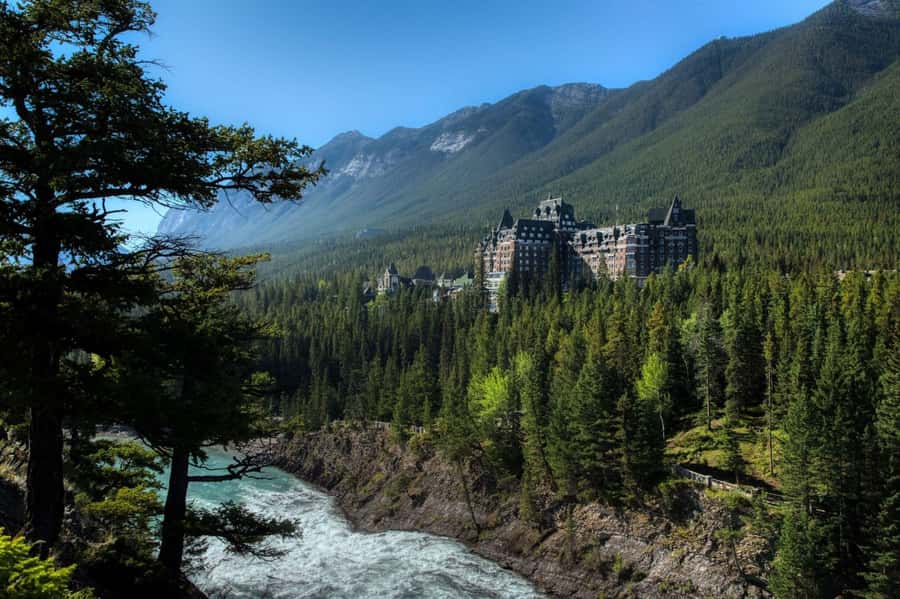
From Banff, the route reaches Surprise Corner, a classic viewpoint over the Bow Valley and the Fairmont Banff Springs Hotel. This is one of the most recognizable views in the park because it brings together river, forest, mountain slopes, and the grand hotel in one frame.
The hotel is not treated as an isolated building. It fits into the larger story of how Banff was presented to the public. The railway helped bring people west, while grand hotels gave them a reason to stay and see the mountains in comfort.
On a screen, a viewpoint like Surprise Corner works well because the composition is broad and easy to understand. You can take in the relationship between town, river, hotel, and peaks without walking or waiting for a clear day at the actual lookout.
The limitation is that you lose scale. A video or displayed image cannot fully show how large the valley feels or how the hotel sits against the mountains. Still, this is a strong early stop because it helps you understand Banff’s layout before the tour moves out toward the water.
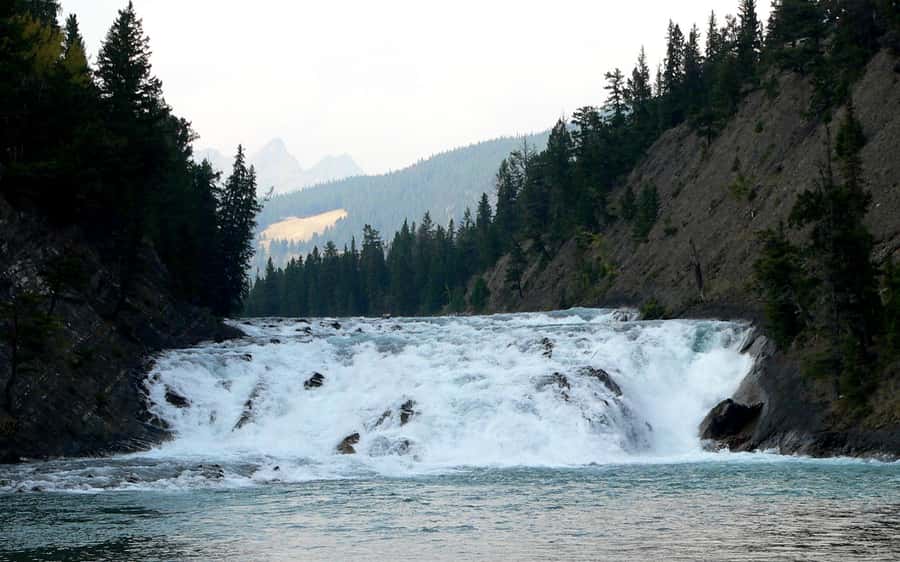
Bow River and the Force of Bow Falls
The Bow River is one of the tour’s most useful connecting features. Its glacial-fed waters run through the area and help explain both the shape of the valley and the early growth of Banff.
At Bow Falls, that calm river energy changes into a powerful set of cascades. The stop gives the tour a little drama and a clear example of moving water at work. You see the river not just as a pretty foreground, but as a force that cuts through and shapes the land.
I like this kind of explanation because it makes the scenery easier to read. Mountains can appear fixed and permanent, but the river shows that the Rockies are also a place of movement: water, ice, erosion, and seasonal change.
The online format is a mixed blessing here. The guide can frame the falls and explain them without asking you to navigate a trail, but you will not hear the full roar of the water or feel its spray. The visual stop is valuable; the physical sensation is missing.
Still Banff, at a slower pace:
- Banff: Banff Gondola Admission Ticket
★ 4.7 · 3,698 reviews - Banff Gondola Ride Admission
★ 4.5 · 2,688 reviews - Columbia Icefield Tour with Glacier Skywalk
★ 4.5 · 1,860 reviews - Emerald Lake, Moraine, Louise, Johnston Canyon & Banff Town
★ 4.9 · 1,554 reviews
Vermilion Lakes, Two Jack Lake, and Lake Minnewanka
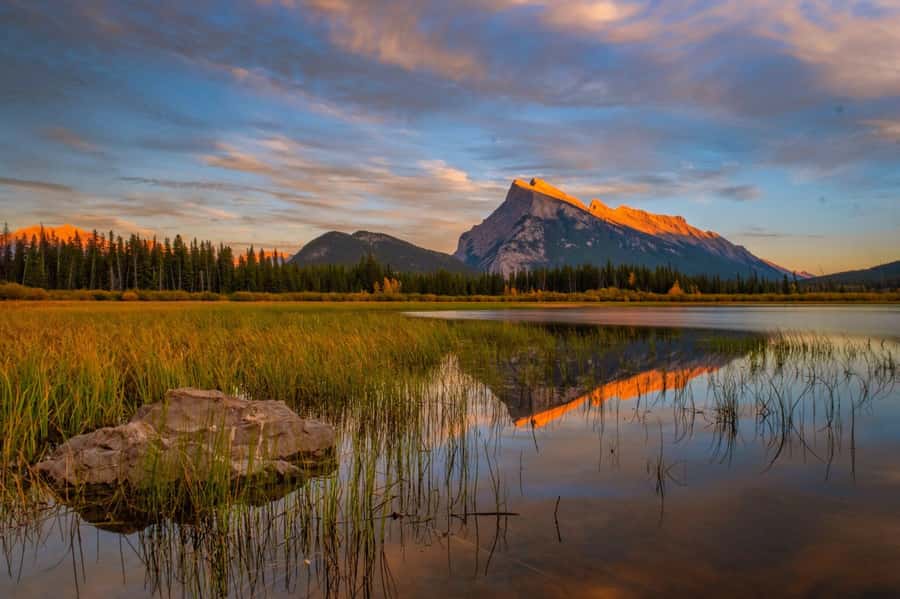
The lake section broadens the tour beyond the famous names. Vermilion Lakes are shallow bodies of water known for reflections, wildlife sightings, and mountain backdrops. Their calm surfaces can produce some of the most polished views in the Banff area, especially when the peaks mirror across the water.
This is also a good place for photography advice. The guide shares tips about viewing and photographing the Rockies, which can help you understand why a quiet lake can be as effective in a photograph as a dramatic peak.
Two Jack Lake offers another kind of mountain-water scene. Its calm reflections and open views make it a natural pause in the route. I would pay attention here if you are planning an actual visit and want scenic stops that feel different from the major attractions.
Lake Minnewanka is the largest lake in the park and reaches far into the Rockies. Its scale gives the tour a change of mood. Vermilion Lakes feel shallow and reflective, while Lake Minnewanka feels more expansive and connected to the mountain interior.
Together, these stops show why a Banff visit should not be reduced to Lake Louise alone. The park’s appeal comes from contrasts: quiet water and rushing falls, town history and open valleys, close views and distant peaks.
Lake Louise Village and the Famous Turquoise Water
The route then shifts toward Lake Louise Village, the gateway to one of the world’s best-known mountain lakes. This change matters because the village is more than a name on a road sign. It is the practical entry point for seeing the lake and the surrounding peaks.
Lake Louise itself is presented with its turquoise water, glaciers, and high mountains. The color is one of the first things you notice, but the guide’s geology and glacier commentary gives the view more substance. The lake is not simply blue for no reason. The surrounding ice and mountain geology help explain its appearance.
For trip planning, this section is especially useful. You get an early look at the difference between arriving in a village gateway and reaching the lake itself. The virtual format cannot tell you how crowded a real viewpoint may feel at a particular moment, and it cannot replace checking current access information before an in-person visit. It can, however, help you decide how important Lake Louise is to your own itinerary.
The popular image of Lake Louise can also create unrealistic expectations. A screen presents the lake in a clean, focused way, while an actual visit includes weather, changing light, other people, and practical decisions. The tour gives you the beauty and the explanation, but not the full logistics of being there.
Moraine Lake and the Valley of the Ten Peaks
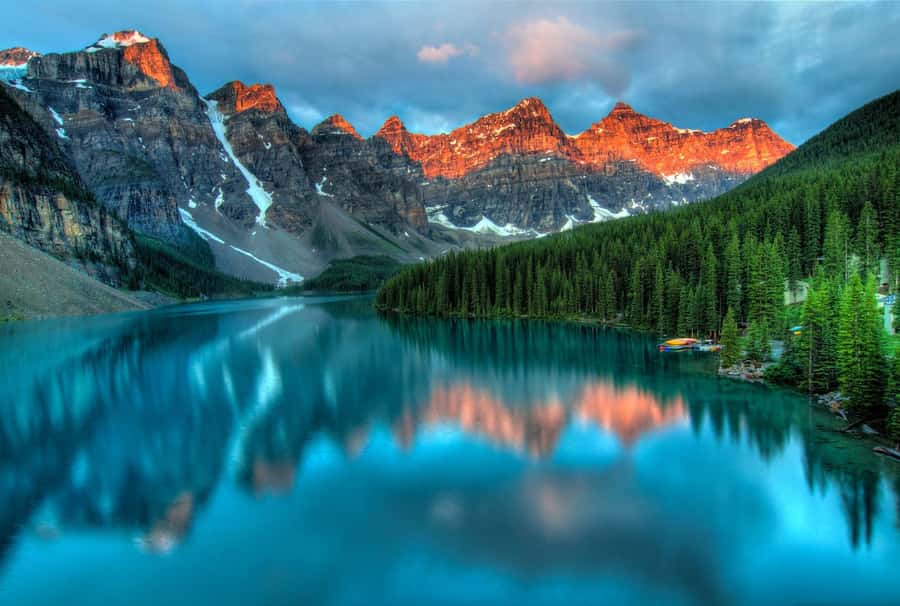
Moraine Lake is the final major stop, set below the dramatic Valley of the Ten Peaks. It is an effective ending because the scenery becomes grander and more alpine as the route reaches its final viewpoint.
The lake’s setting is the main attraction: intense water color, steep peaks, and a broad mountain bowl. A guide can help you look beyond the famous image and understand the geological setting that gives Moraine Lake its distinct character.
This is also the point where the virtual format reaches its greatest limit. Moraine Lake is a place people often remember through its sense of scale. A screen can show the shape and color, but it cannot give you the full feeling of standing beneath the peaks.
Still, the final stop works well as a preview. If Moraine Lake is high on your future list, you will come away with a clearer sense of why it matters and how it differs from Lake Louise. The two lakes are often grouped together, but their settings and visual character are not identical.
Ivan’s History, Geology, and Wildlife Stories
The most praised part of the experience is not a single viewpoint. It is Ivan’s guiding. He is repeatedly described as friendly, engaging, easy to follow, and able to connect Banff’s scenery with its past.
That combination is important. A guide who only names peaks adds little to a virtual tour. Ivan’s approach appears to go further, linking the mountains to geology, wildlife, early exploration, Banff town, and the Canadian Pacific Railway.
The historical material seems to be a particular strength. Stories about the people who first explored the Rockies and the railway’s role in opening the area give the tour a sense of direction. You are not simply moving from one beautiful image to another.
The geology also helps. The Rockies can look like a wall of rock from a distance, but explanations about how the mountains and valleys formed make the scenery more readable. Wildlife stories add another layer, even though the virtual format cannot promise an actual animal sighting.
Several comments describe the experience as surprisingly engaging and more informative than expected. That is a good sign for anyone who worries that an online tour will feel flat. The guide’s personality carries much of the presentation.
Price, Timing, and Who Gets the Most Value
At $2.92 per person, the price is the clearest selling point. Six hours of live guiding at that cost is far less than the expense of reaching Banff, arranging accommodation, paying for transport, and visiting the sights in person.
Of course, low cost does not erase the central compromise. You are paying for access to views and explanations, not transport, meals, park entry, or a physical excursion. If you are already in Banff, this virtual tour is not a replacement for going outside.
I think the price works best in three situations:
- You are planning a future trip and want background before choosing what to see.
- You cannot currently travel to Alberta but still want a guided experience.
- You are introducing children, older relatives, or a group of friends to Banff without physical demands.
The six-hour duration may suit people who want a full presentation, but it is also a long time to spend in front of a screen. Use headphones or external speakers for clearer sound, and join from a stable internet connection. You can use a phone, tablet, or computer, though a larger screen will make the scenery easier to appreciate.
The experience is in English, suitable for all ages, wheelchair accessible, and requires no physical activity. You receive the online joining details after booking, and there is no physical meeting point in Banff.
Free cancellation is available up to 24 hours before the start time, and you can reserve now and pay later. Those policies are helpful if your plans are still taking shape.
What the 4.8 Rating Tells You
The overall rating is 4.8 from 18 reviews, with especially strong praise for Ivan’s presentation. The repeated themes are useful: history, geology, clear instructions, relaxed pacing, good value, and scenery that made people want to visit Banff in person.
The feedback also suggests that the tour works as inspiration. Several people came away wanting to take an actual Rockies trip. That is a benefit if you are still deciding where to go, but it can also sharpen your wish to see the real places.
One detail worth noting is that some comments describe discussion of nearby sights such as Emerald Lake and Natural Bridge. The core route provided here centers on Banff, Lake Louise, and Moraine Lake, with the listed Banff viewpoints and lakes. If a particular extra stop matters to you, confirm the current route before booking.
Should You Book This Banff Virtual Tour?
Book it if you want a low-cost, guided introduction to Banff with strong historical and geological context. Ivan’s clear, friendly style appears to be the main reason the experience feels more substantial than a slideshow, and the route covers the major names most people want to recognize.
Skip it if you are already in Banff and your only goal is outdoor time. No virtual presentation can replace the sound of Bow Falls, the air beside Lake Louise, or the scale of the Ten Peaks.
For most people, I see it as a useful preview rather than a substitute. At $2.92, the risk is small, the route is broad, and the information can help you plan a future visit with better eyes.
FAQ
Is this a physical tour in Banff National Park?
No. This is a live, guided virtual tour that you can join from anywhere. It does not require physical attendance in Banff or travel to a meeting point.
How long does the virtual tour last?
The stated duration is six hours. Starting times depend on availability.
Which places are included?
The route includes Banff town, Surprise Corner, Bow Falls, Vermilion Lakes, Two Jack Lake, Lake Minnewanka, Lake Louise Village, Lake Louise, and Moraine Lake.
Is the tour live?
Yes. It includes a live English-speaking tour guide. Joining instructions and access details are provided after booking confirmation.
Who is the guide?
The guide highlighted in the available information is Ivan. His presentation includes Banff history, geology, wildlife stories, railway context, and photography insights.
What device do I need?
You can join with a phone, tablet, or computer. A stable internet connection is recommended, and headphones or external speakers can improve the audio.
Is the tour suitable for children and people with limited mobility?
Yes. The experience is suitable for all ages, requires no physical activity, and is wheelchair accessible.
Can I cancel the booking?
Yes. You can cancel up to 24 hours in advance for a full refund.
Can I reserve without paying immediately?
Yes. The reserve now and pay later option lets you book your spot without paying anything at the time of reservation.
Just added around Banff
- Guided E-Bike Tour of Canmore★ 5.0 · 17 reviews
- 2 Day Banff Lake Louise Johnston Canyon Gondola Cave Basin tour★ 4.5 · 8 reviews
- Experience Golden Hour at Moraine and Lake Louise★ 5.0 · 18 reviews
- Rocky mountain – VIP Experience – Private Boat★ 5.0 · 6 reviews
- Sunset at Moraine Lake & Stargazing Tour from Canmore/Banff★ 5.0 · 95 reviews
- Banff/Canmore Moraine Lake & Lake Louise– Hike, Canoe or Sightsee★ 5.0 · 104 reviews
- Canyons and caves in the Rockies: Explore with us; From Calgary★ 5.0 · 27 reviews
- Shared Tour: Lake Louise & Emerald Lake from Canmore/Banff★ 4.5 · 5 reviews
National Parks, compared.
Jasper National Park: Maligne Lake Cruise With Guide
Read our review →
Explore Banff National Park with Our Premium Day Tour
Read our review →
Banff National Park Tour with Lake Louise and Moraine Lake
Read our review →
Jasper National Park: Evening or Morning Wildlife Watch Tour
Read our review →
Discover Banff National Park – Premium Day Trip
Read our review →
2 Hour Wilderness Adventure Snowmobile Tour in Whistler
Read our review →
Explore Banff National Park & Lake Louise Day Trip
Read our review →Browse the lists this tour appears in