Reviewed · BANFF TOURS
Banff: Introduction to Ice Climbing for Beginners
Ice gives you a new way to see winter. Banff’s Introduction to Ice Climbing for Beginners takes you to a frozen waterfall for a full day of instruction, practice, and steady progress. I like the safety-first teaching and the fact that an ACMG-certified guide supplies the technical equipment. I also like the chance to try both easier and harder climbing routes, a useful option for mixed-ability groups. The main drawback is the cold: one recent outing reached -20°C, so proper clothing is not optional.
This is not a quick photo stop with an ice axe. You spend about seven hours learning crampon technique, body positioning, rope skills, and top-rope belaying in the Banff, Lake Louise, or Field, British Columbia, area. You must drive yourself to the climbing site, and the group needs at least four bookings before the day can go ahead.
In This Review
- Key points at a glance
- What the Banff ice climbing day is really about
- Meeting in Banff and driving to the ice
- Learning to walk on crampons
- Moving up a frozen waterfall
- How the guides shape the experience
- What the $179 price includes
- Staying warm for seven hours outside
- Who should book this beginner course
- Things to consider before you reserve
- Cancellation and booking flexibility
- Should you book Banff’s beginner ice climbing day?
- FAQ
- How long does the ice climbing experience last?
- Where does the climbing take place?
- Where do I meet the guide?
- Do I need to arrange transportation?
- What climbing equipment is provided?
- What should I bring?
- Is the activity suitable for children?
- Can I cancel the booking?
Key points at a glance
- A full winter climbing lesson: Expect roughly seven hours outside, usually from 8 or 9 a.m. until 3 or 4 p.m.
- Frozen-waterfall setting: You climb real ice in the Banff, Lake Louise, or Field BC regions, with the exact site chosen according to conditions.
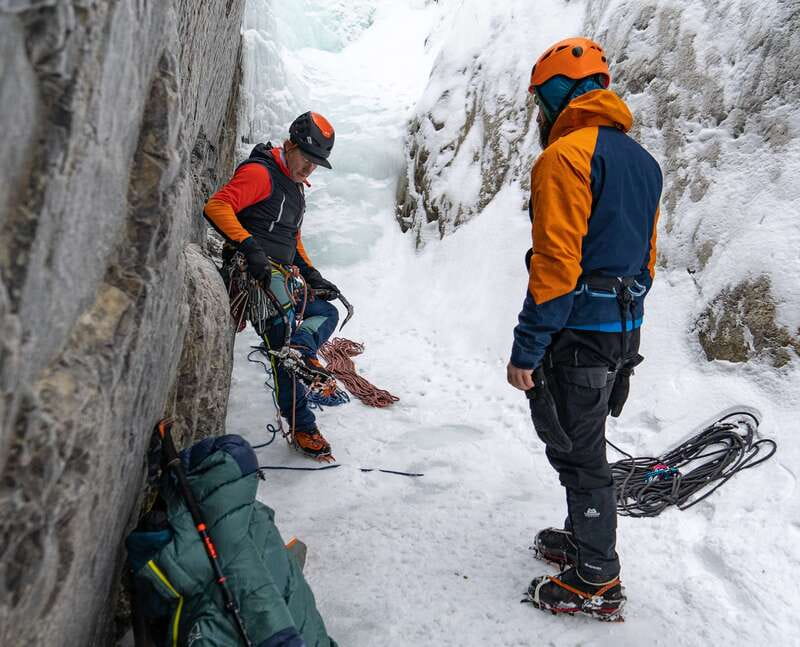
- Technical gear is supplied: Your package includes a helmet, harness, climbing boots, crampons, and an ice axe.
- Designed for first-timers: The instruction begins with basic movement and safety before you climb higher on a top rope.
- Two difficulty options may be available: Guide Shea set up separate easier and more challenging ropes, giving the group more ways to practice.
- You handle transportation and meals: Drive to the office and climbing site, and bring your own food, drinks, warm clothing, jacket, gloves, and snow gear.
What the Banff ice climbing day is really about
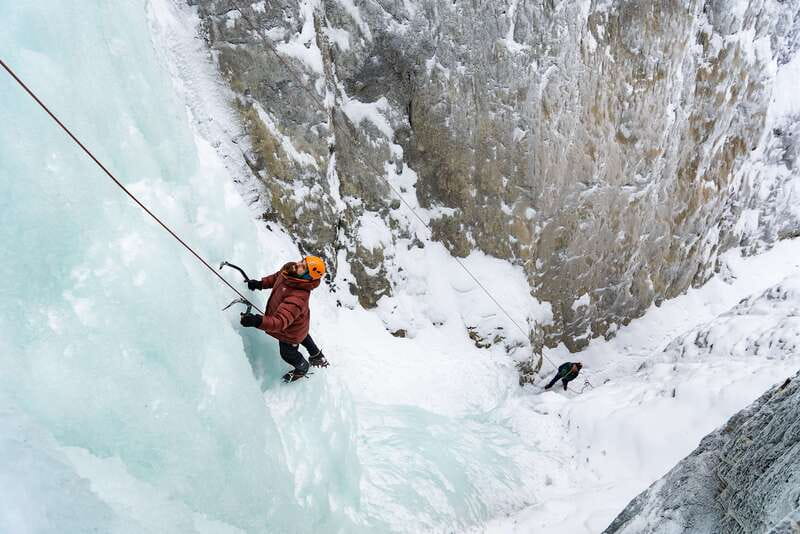
This experience is best understood as a practical introduction to a demanding winter sport. You are not expected to arrive knowing how to swing an ice axe or walk in crampons. The class starts with the fundamentals and builds from there, with safety guiding each stage.
The goal is not simply to reach the top of a frozen waterfall. You learn how your feet, hands, hips, and upper body work together on ice. That body awareness matters because ice climbing feels different from walking on snow or scrambling over rock. Small changes in your stance can affect balance and control.
The course also introduces top-rope belaying. In plain terms, the rope is anchored above you while you climb, giving the guide a way to manage your safety from below. That setup lets beginners focus on movement without having to deal with leading a climb.
I like this format for first-timers because it gives you a real taste of ice climbing without asking you to solve every technical problem at once. You get a structured lesson, real equipment, and time to try the movement repeatedly.
A few more Banff trips worth comparing
- Banff: Banff Gondola Admission Ticket
★ 4.7 · 3,698 reviews - Banff Gondola Ride Admission
★ 4.5 · 2,688 reviews - Columbia Icefield Tour with Glacier Skywalk
★ 4.5 · 1,860 reviews
Meeting in Banff and driving to the ice
Your day begins at Alpine Air Adventures’ office at 229 Bear Street in Banff. The office is on the lower level beneath the movie theatre. From there, you use your own vehicle to reach the climbing area.
This detail deserves more attention than it might receive in a short tour description. The meeting point is not the climbing site, and transportation to the ice is not included. You need to be comfortable driving to the final location, which may be in the Banff or Lake Louise region, or across the provincial border near Field, British Columbia.
The exact climbing area can change with conditions. That is sensible in ice climbing, where temperature, snow, and ice quality affect safety. You receive a detailed course package by email three days before the program starts, and the final logistics message discusses the location and timing.
Plan for an early meeting, usually around 8 or 9 a.m., and an afternoon finish around 3 or 4 p.m. Since the day lasts about seven hours, leave enough time for the drive, gear preparation, instruction, climbing, and breaks.
One practical point: the booking needs at least four participants to proceed. The company does not guarantee the outing until that minimum is reached, so confirm the status with Alpine Air Adventures before building an entire winter day around it.
Learning to walk on crampons
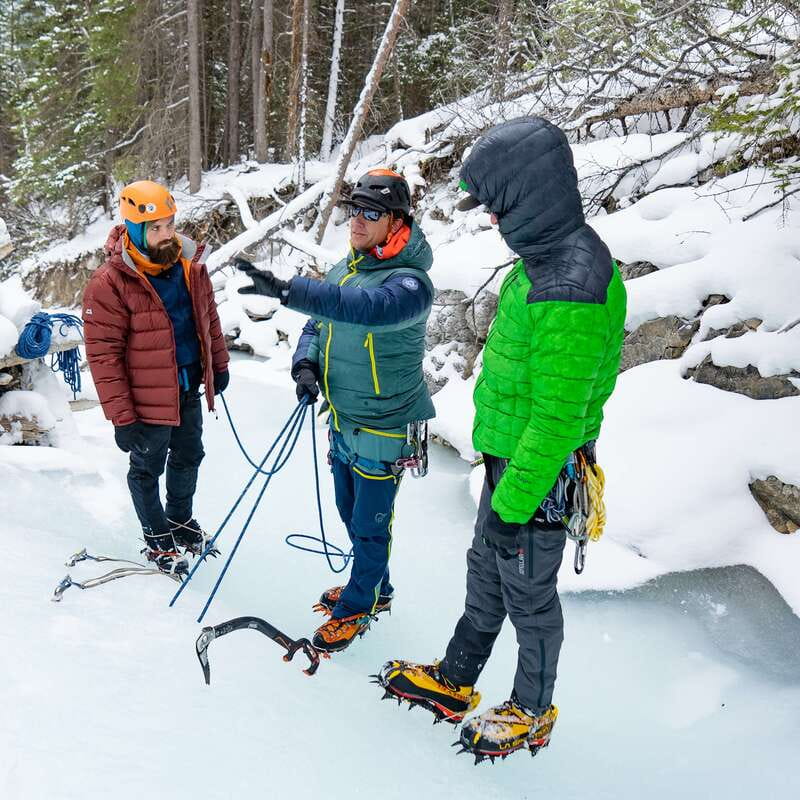
Crampons are metal attachments that fit beneath your climbing boots. They give you grip on hard ice, but they also change the way you walk. Beginners often need time to stop treating them like ordinary footwear.
Your guide teaches the basic footwork and helps you become aware of where your feet are placed. The aim is to use the points of the crampons effectively while keeping your body balanced. This is one of the most useful parts of the day because good footwork makes the climb feel less like a struggle.
You also learn how to handle an ice axe. The course information does not promise a particular number of climbs or a fixed route, so your exact time on the ice depends on conditions and the group. Still, the emphasis is clear: learn the tools, understand the movement, and climb with control.
Expect the instruction to be physical. Even a beginner route asks you to hold positions, place your feet carefully, and repeat movements. The cold adds another challenge. You will want clothing that lets you move while keeping your hands, feet, and core warm.
Moving up a frozen waterfall
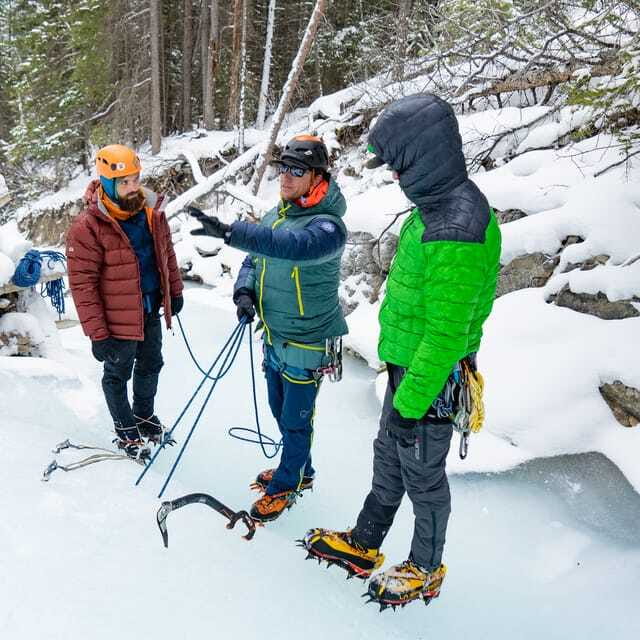
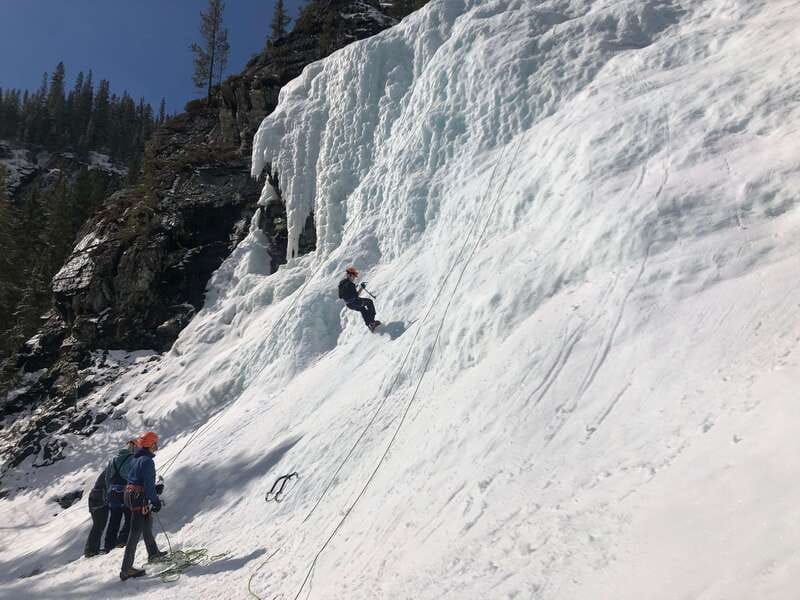
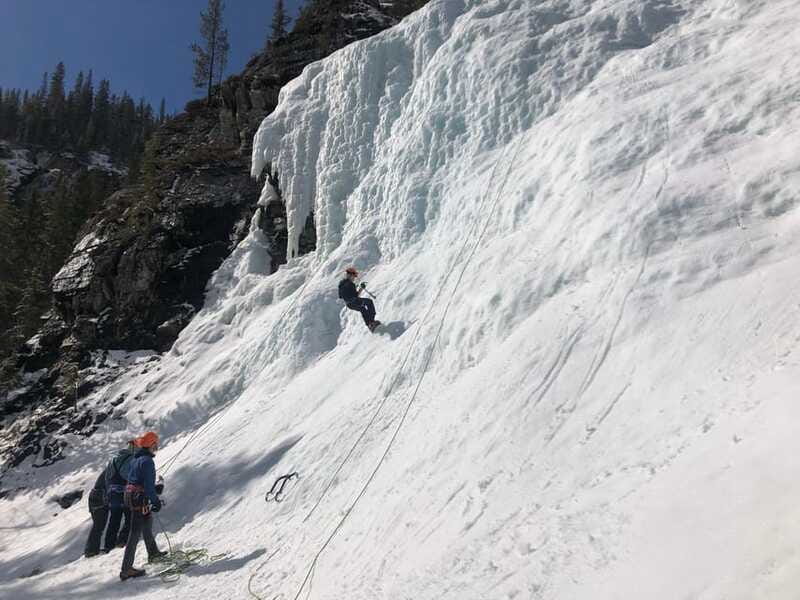
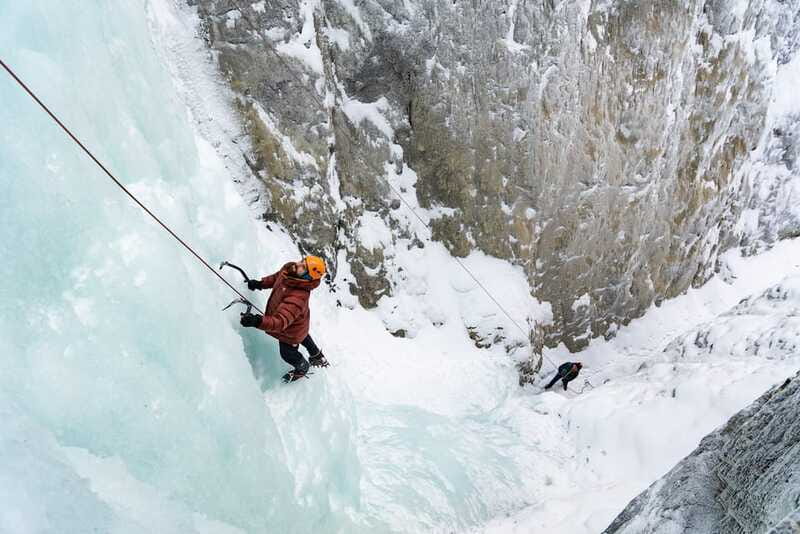
Once the basic skills are covered, you begin climbing on a top rope. This is where the lesson becomes more than a demonstration. You get to test your balance, movement, and body position on actual ice.
The frozen waterfall is the star of the day, but it is also an unpredictable surface. Ice can vary in texture and shape, so the instructor’s advice matters. You learn to pay attention to where your body sits in relation to the wall and how much effort you use with your arms and legs.
The course is built around progress rather than speed. You might start with simple movement exercises and then work higher as your confidence improves. A beginner does not need to arrive strong or athletic, but you should be ready for an active day outdoors.
The arrangement of the ropes can make a large difference for a group. During one exceptionally cold outing, guide Shea set up two routes at different levels. The easier rope helped participants keep moving and stay comfortable, while the harder option offered a bigger challenge. It also meant people could take more turns instead of waiting for one single route.
That is a smart approach for friends or families whose abilities are not identical. It gives stronger climbers room to push themselves without making newer climbers feel left behind.
Still Banff, at a slower pace:
- Emerald Lake, Moraine, Louise, Johnston Canyon & Banff Town
★ 4.9 · 1,554 reviews - Lakes Moraine, Louise, Emerald, Johnston Canyon & Yoho Tour
★ 4.8 · 1,083 reviews - Banff: Louise & Moraine Lake or Johnston Canyon 1/2 Day Tour
★ 4.9 · 861 reviews - Lake Louise, Moraine Lake and the Icefields Parkway Full-Day Tour
★ 5.0 · 836 reviews
How the guides shape the experience
The guides are listed as ACMG and or IFMGA certified, with Canadian Avalanche Association certification as well. Those credentials matter in a winter activity where conditions can shift and technical decisions affect the whole group.
The course has a clear safety focus from the beginning. Your guide explains the equipment, the climbing system, and the basic skills before asking you to move upward. That order helps reduce the feeling of being thrown into a difficult sport without preparation.
I also value the practical care shown by guide Shea during a -20°C day. He worked to keep the group warm and offered tips throughout the climbing session. That kind of attention is important because cold can ruin an otherwise good activity quickly. A guide who watches the group’s comfort can help you stay focused on learning rather than simply enduring the weather.
You should still remember that a guide cannot control the temperature. The experience takes place outside, and winter conditions are part of the bargain. Dress for the cold before you arrive, not after your hands and feet have started to numb.
A tip of 10 to 15 percent is customary if you feel your guide gave you an exceptional day. You can pay in cash or contact the Alpine Air Adventures office to arrange it.
What the $179 price includes
The price is $179 per person. That is a fair amount for a full-day specialist lesson if you want to try ice climbing without buying or renting the main technical kit yourself.
Included equipment covers:
- Helmet
- Harness
- Climbing boots
- Crampons
- Ice axe
You also receive the climbing experience, safety briefing, and instruction from a certified mountain guide. This reduces the number of decisions you need to make before booking. You are not left wondering how to assemble a complete ice climbing kit for one experimental day.
The price does not include transportation to the office or climbing area. It also does not cover food or drinks. Those omissions are easy to manage, but they affect the real cost of the day. You need a vehicle, fuel, a packed lunch, water, and suitable winter clothing.
For someone who already owns winter clothing and has access to a car, the price offers solid value. For someone starting from scratch, add the cost of anything you need to buy before going. The equipment provided is technical gear, not a complete clothing package.
Staying warm for seven hours outside
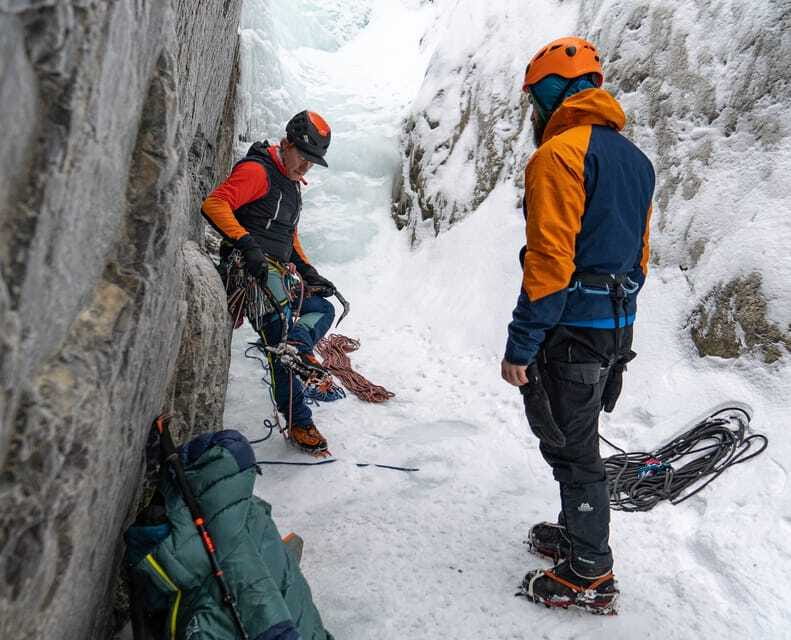
The cold is the biggest practical test. Bring warm clothing, a jacket, gloves, and snow clothing, along with food and drinks. You need layers that let you move your arms and legs without restricting them.
A single pair of gloves may not be enough for a full day in very cold weather, though the supplied information does not specify a particular glove system. The safest advice is to prepare seriously and follow the course package sent before the outing.
Bring enough food and water for the entire day. The tour does not provide meals, and you should not assume that shops or restaurants will be close to the climbing site. A warm drink can be especially welcome, but the key requirement is simply to carry your own refreshments.
The duration also affects your clothing choices. Seven hours outside is very different from a short winter walk. You may spend time standing while another person climbs, so your clothing needs to work during both movement and rest.
Who should book this beginner course
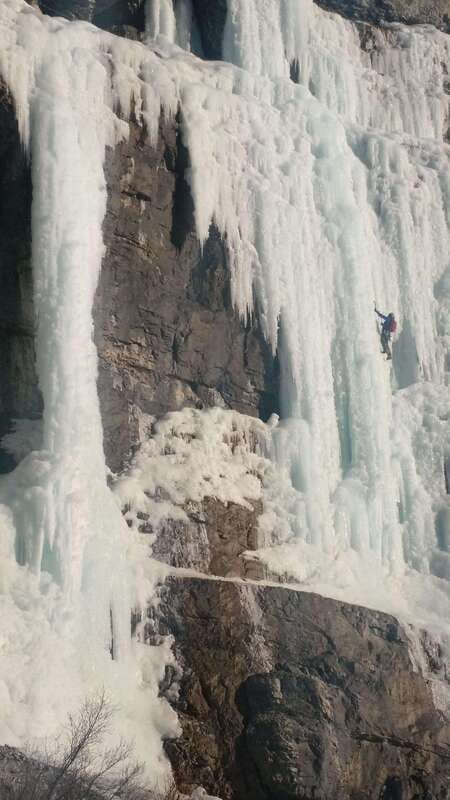
This program suits adults and families with children aged 14 and older who want a real introduction to ice climbing. It also works well for friends looking for a shared winter challenge rather than a passive sightseeing outing.
You do not need previous ice climbing experience. The course is specifically designed to begin with the basics and teach skills in a safety-oriented way.
It is a good match if you:
- Enjoy active outdoor activities
- Want to learn a new winter sport
- Are comfortable spending most of a day outside
- Can drive to the meeting point and climbing site
- Prefer guided instruction to figuring out equipment alone
- Are travelling with a group that includes different ability levels
It is not suitable for children under 14, pregnant women, people with mobility impairments, or wheelchair users. Those limits are worth taking seriously because the activity involves uneven frozen surfaces, climbing equipment, and physical movement.
Things to consider before you reserve
The first question is simple: can you handle a cold, active day? If your idea of winter fun is a warm café followed by a short walk, this may not be the right choice. If you like learning physical skills outdoors, the unusual setting can make the discomfort worthwhile.
The second question is transportation. You need your own way to reach the office and the climbing site. The final location may change, so read the logistics email carefully when it arrives three days before the course.
The third issue is the four-person minimum. A small group can be pleasant for instruction, but the outing only moves forward once at least four bookings are in place. Confirm the status with the company before making inflexible plans.
Finally, keep your expectations realistic. This is an introduction, not a professional certification course. You should finish with a clearer sense of crampon walking, top-rope belaying, ice climbing movement, and your own comfort level. You may want more training afterward, but this day gives you a useful first step.
Cancellation and booking flexibility
You can cancel up to 24 hours before the activity for a full refund. The reserve-now-and-pay-later option also lets you hold a place without paying immediately, which is helpful when winter weather and regional travel plans are still unsettled.
The instructor teaches in English. The detailed course package arrives by email three days before the course, so check your inbox and read it closely. That message is especially important because it provides the final meeting and location information.
Should you book Banff’s beginner ice climbing day?
Book it if you want more than a winter photo opportunity. For $179, you get a seven-hour introduction, a certified guide, technical climbing equipment, and the chance to practice on a frozen waterfall. The strongest reasons to go are the careful beginner structure and the possibility of separate easier and harder ropes, as Shea used during one very cold day.
Skip it if you dislike cold, cannot arrange transportation, or want a short and gentle activity. This is a serious outdoor lesson, and the weather can be harsh.
For the right person, it is a memorable way to spend a winter day near Banff. Dress properly, bring your own food, confirm the final location, and arrive ready to learn rather than simply conquer the ice.
FAQ
How long does the ice climbing experience last?
The experience lasts about seven hours. You should expect to meet around 8 or 9 a.m. and finish around 3 or 4 p.m., depending on the scheduled start time and final logistics.
Where does the climbing take place?
The field day takes place in the Banff, Lake Louise, or Field, British Columbia, regions. The exact location can change because of conditions, and the final location is discussed in the logistics email.
Where do I meet the guide?
You meet the guide at the Alpine Air Adventures office at 229 Bear Street in Banff. The office is on the lower level beneath the movie theatre.
Do I need to arrange transportation?
Yes. You must drive to the meeting location and to the climbing site. Transportation is not included in the activity.
What climbing equipment is provided?
The activity provides a helmet, harness, climbing boots, crampons, and an ice axe. Safety instructions and climbing instruction are also included.
What should I bring?
Bring warm clothing, a jacket, gloves, snow clothing, food, and drinks. The activity does not provide food or beverages.
Is the activity suitable for children?
It is suitable for children aged 14 and older. Children under 14 cannot take part.
Can I cancel the booking?
Yes. You can cancel up to 24 hours in advance for a full refund. You can also reserve now and pay later, which keeps your plans flexible.
Just added around Banff
- Guided E-Bike Tour of Canmore★ 5.0 · 17 reviews
- 2 Day Banff Lake Louise Johnston Canyon Gondola Cave Basin tour★ 4.5 · 8 reviews
- Experience Golden Hour at Moraine and Lake Louise★ 5.0 · 18 reviews
- Rocky mountain – VIP Experience – Private Boat★ 5.0 · 6 reviews
- Sunset at Moraine Lake & Stargazing Tour from Canmore/Banff★ 5.0 · 95 reviews
- Banff/Canmore Moraine Lake & Lake Louise– Hike, Canoe or Sightsee★ 5.0 · 104 reviews
- Canyons and caves in the Rockies: Explore with us; From Calgary★ 5.0 · 27 reviews
- Shared Tour: Lake Louise & Emerald Lake from Canmore/Banff★ 4.5 · 5 reviews
Banff Tours, compared.
Emerald Lake, Moraine, Louise, Johnston Canyon & Banff Town
Read our review →
Lakes Moraine, Louise, Emerald, Johnston Canyon & Yoho Tour
Read our review →
Louise & Moraine Lake or Johnston Canyon 1/2 Day Tour
Read our review →
Lake Louise, Moraine Lake and the Icefields Parkway Full-Day Tour
Read our review →