
Reviewed · CANOES & KAYAKS
3-Day Algonquin Park Canoe Trip
Leave the road behind for real wilderness. This three-day Algonquin canoe trip gives you a manageable first taste of backcountry camping, with a guide, meals, permits, tents, and canoes provided. You paddle into the park, carry your gear over portages, sleep beside the lake, and spend your evenings around a campfire beneath a clear northern sky.
I like the small group of no more than eight people, which gives the guide room to help beginners without turning the outing into a noisy convoy. I also like the practical setup: meals, national park fees, tents, and paddling equipment are included, so you can focus on learning instead of assembling a full camping kit.
The main consideration is physical effort. You need a strong fitness level, and the trip operates in all weather. The 300-meter portage on the first day is not huge, but you will carry canoes and gear, and later options include more portages, water crossings, and a 1.7-kilometer hike.
In This Review
- Key points before you book
- Why three days works well in Algonquin Park
- Meeting in Madawaska at 1:00 pm
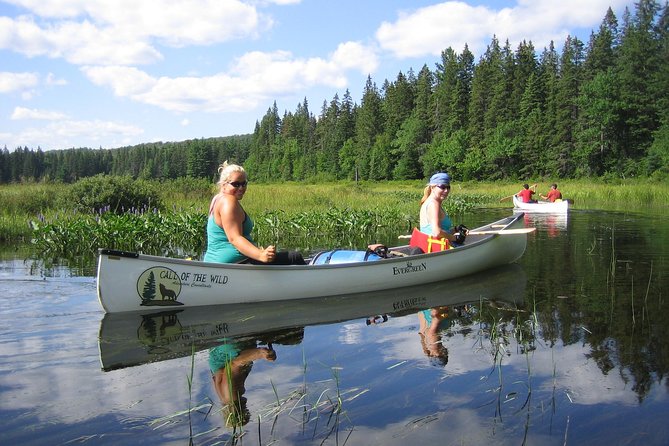
- Paddling into Pen Lake with a Kevlar canoe
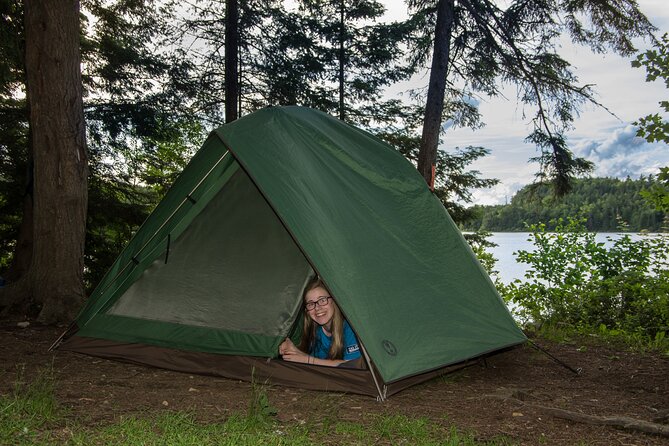
- Setting up a true wilderness camp
- Day two: choose your own level of adventure
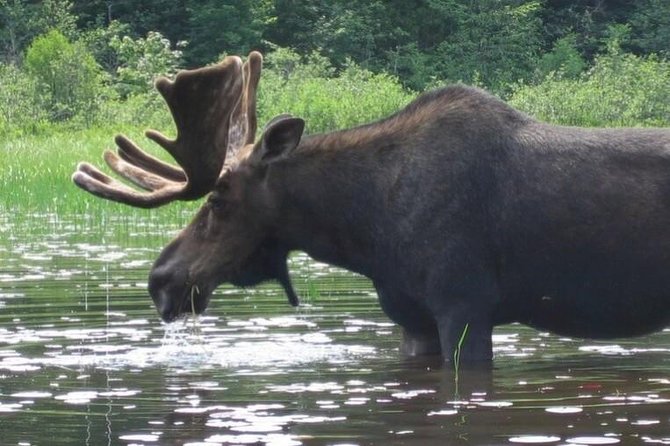
- Watching for moose along the shoreline
- Day three begins before the park wakes up
- What the $493.87 price really covers
- Weather, fitness, and what to bring
- Who will enjoy this canoe trip most?
- Should you book the Algonquin canoe trip?
- FAQ
- Where does the canoe trip start?
- What time does the trip begin?
- Is transportation from Toronto included?
- What is included in the tour price?
- What personal items do I need to bring?
- Can children join the trip?
Key points before you book
- Pen Lake is reached by a three-hour paddle and 300-meter portage, so the first afternoon quickly feels like a real expedition.
- Kevlar canoes keep the load lighter, but you must handle them carefully around rocks because they are more fragile than standard canoes.
- Moose sightings are a real possibility, especially near the water’s edge in the early morning and around the base camp lake.
- Your guide teaches the basics from scratch, including steering, packing, portaging, and safe wilderness camping.
- The price includes the costly essentials, including two nights in tents, meals, permits, equipment, and professional guiding.
- The group is capped at eight people, making this a friendlier choice for families and first-time campers than a large organized outing.
Why three days works well in Algonquin Park
Algonquin Park is a good place to try canoe camping because the canoe is both your transport and your gear hauler. You are not simply dropped at a campsite with a tent already waiting. You carry the shelter, food, paddles, and personal supplies into the interior, then set up camp beside the lake.
That makes the trip feel genuine without requiring you to plan a full wilderness route on your own. A longer expedition may offer more solitude, but it also demands more time, more food planning, and more confidence. Three days gives you enough time to learn the rhythm of camp life while still fitting a short holiday schedule.
The experience is aimed at beginners, but it is not a soft adventure. The guide starts with basic canoe instruction, and you should expect mixed paddling ability within the group. A first-time canoeist can take part, but you need to be ready for several hours on the water and for carrying equipment over uneven ground.
More Canoeing and Kayaking in Ontario:
- 6 Hour Algonquin Park Canoe Trip
★ 5.0 · 86 reviews - Algonquin Park: Deluxe 4-Day/3-night Canoeing/Camping
★ 5.0 · 5 reviews - Banff National Park Big Canoe Tour
★ 5.0 · 303 reviews
Meeting in Madawaska at 1:00 pm
The trip begins in Madawaska, Ontario, at 1:00 pm. That meeting time leaves part of the morning free, but you still need to plan your drive carefully. The optional ride from Toronto is available for an extra payment made directly to the provider, so confirm that arrangement before you count on it.
Parking is not included. You will need to arrange and pay for the required parking permit yourself, an easy detail to miss when comparing the advertised cost with your final trip budget.
Once the group meets, the guide goes over canoe handling and basic safety. This is where the trip earns its family-friendly reputation, at least for families with older children who are comfortable outdoors. The minimum age is eight, but every child must be accompanied by an adult.
You will learn how to steer, work with a canoe partner, and manage the boat in conditions that may feel slightly awkward at first. The goal is not to turn you into a polished canoe racer. By the end, you should know how to pack a canoe, move it over a portage, and keep it pointed in the right direction.
Paddling into Pen Lake with a Kevlar canoe
The first route leads toward Pen Lake, with about three hours of paddling and a 300-meter portage. That timing includes the transition between water and trail, though the exact pace will depend on the group’s ability and the weather.
The canoes are expedition-weight Kevlar models. Their biggest advantage is weight. When you are lifting a canoe onto shore or carrying it along a portage, a lighter boat matters. You will also appreciate their speed on the water, especially when you still have camping gear to move.
The tradeoff is care. Kevlar canoes are more fragile than heavier canoes, so you cannot casually drag one over rocks or bump it along the shore. Listen to the guide when landing, lifting, and loading. A little attention protects the boat and keeps the group moving.
For a beginner, this first section may be the hardest part of the trip. You are learning a new skill while managing a boat full of equipment. The guide’s role is important here. Robin, the guide named in the feedback, is described as relaxed and able to lead a group with different skill levels through mildly challenging conditions. That calm approach can make a big difference when your steering is still more hopeful than accurate.
Setting up a true wilderness camp
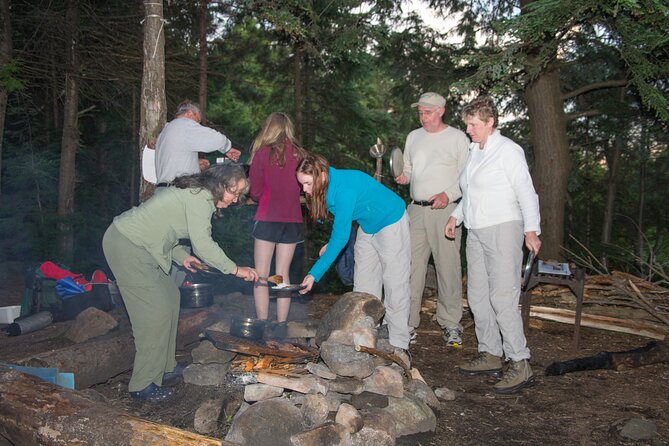
When you reach camp, everything has arrived by canoe, including the tents. You help establish the site with the guide, rather than simply walking into a prepared campground. That extra work is part of the point. You learn what it takes to create a temporary home far from a road.
Two nights of tent accommodation are included. You still need to bring personal items such as a sleeping bag and flashlight, so read the packing instructions closely before departure. The provided equipment covers the main camp and paddling needs, but it does not replace your own warm, dry clothing and sleep gear.
After camp is set, you have time to explore the lake. Large rapids in the area were once used as log chutes, giving you an unusual reminder of the park’s working past. The old chutes are interesting to see, but treat the water with care and follow the guide’s instructions.
The first evening is built around fresh food prepared on site and eaten beside a campfire. This is one of the strongest parts of the trip for anyone who wants Canadian camping rather than a basic outdoor skills course. As night arrives, the clear sky may reveal the Milky Way and passing satellites. If luck is on your side, you may hear wolves in the distance.
Those details are not guaranteed, and that is worth remembering. Wildlife sightings and nighttime sounds depend on conditions, timing, and chance. The value is in being in a place where these things can happen, not in receiving a scheduled animal show.
Still Ontario, at a slower pace:
- 3-Hour 1000 Islands Cruise from Gananoque with views of Boldt Castle
★ 4.0 · 388 reviews - Boldt Castle and Thousand Islands Helicopter Tour
★ 5.0 · 255 reviews - 5-Hour 1000 Islands Boldt Castle Stopover Cruise from Gananoque
★ 4.0 · 236 reviews - Wine Tasting and Pairing Afternoon Tour
★ 5.0 · 126 reviews
Day two: choose your own level of adventure
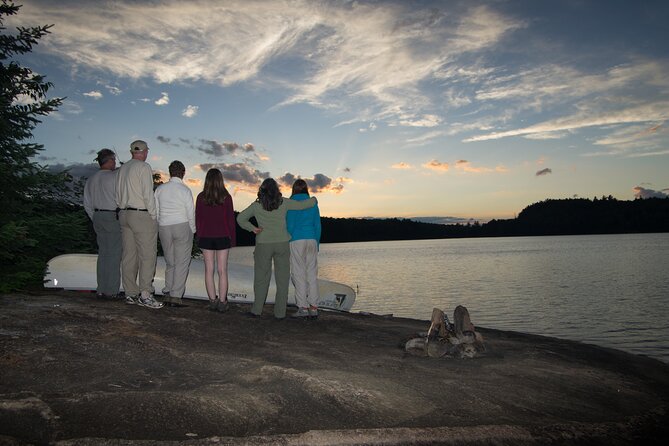
The second day is the trip’s flexible center. You can explore the base lake by canoe, search the shoreline for moose, or take on another route with extra portaging.
One option leads toward the South Madawaska River. You make a short portage, then paddle slow-moving water. The route includes several beaver dams where you may need to leave the canoe and pull it across. Bring shoes or sandals that can get wet. This is a small but important packing tip, since ordinary dry footwear will be unpleasant during a water crossing.
Another option involves paddling partway down the lake, completing a couple of portages, and finishing with a 1.7-kilometer hike to Welcome Lake. This is described as one of the prettiest lakes in Algonquin Park, with a sandy beach that works well for a picnic on a sunny day.
The choice matters because you are not locked into the same effort level all day. If your arms are tired from the first day, staying near camp and exploring the lake may be the wiser plan. If your group wants more movement, the river route or Welcome Lake outing offers extra scenery and activity.
Do not mistake flexibility for ease. More portages mean more lifting, and the river route involves wet feet. The guide can help the group decide what fits the weather, the water, and everyone’s ability.
Watching for moose along the shoreline
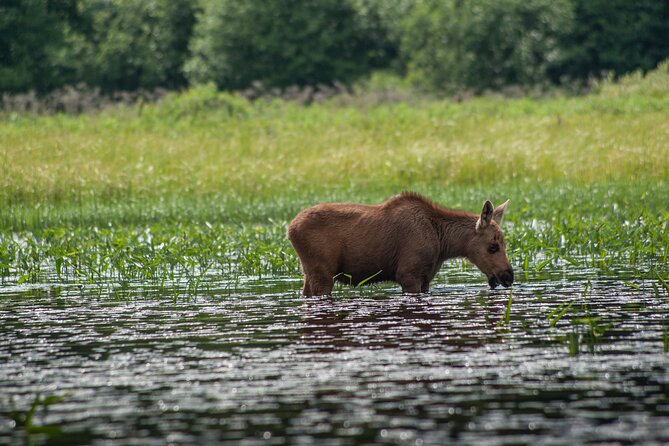
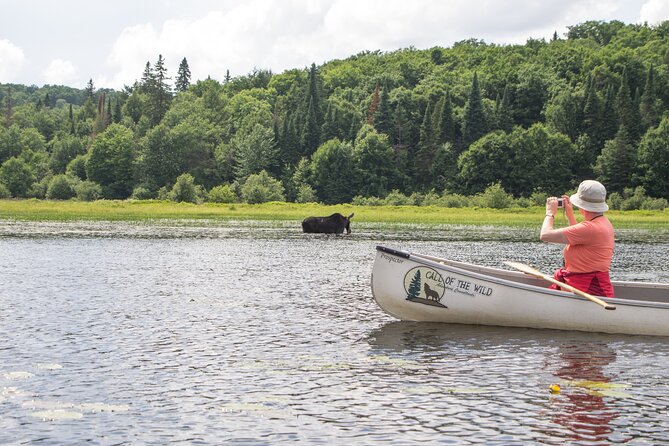
Moose are one of the most appealing reasons to choose this trip, but you need to approach the possibility with patience. The area around camp is known for moose grazing near the lake edge, and early morning is especially promising because animals may come to the shore to drink.
Canoeing quietly along the shoreline gives you a better chance than rushing from point to point. Keep your eyes on the reeds, shallows, and tree line. You may also see deer near the water during the early start on the final morning.
There is no promise of a sighting, and the guide cannot control wildlife. That uncertainty is part of a proper wilderness experience. You are sharing the setting with animals, not visiting a managed enclosure.
The trip also includes a stop at ancient pictographs painted by Indigenous people centuries ago. These markings add a cultural layer to the route. Pay close attention to the guide’s instructions at the site and treat the images with respect. They are not simply another photo stop.
Day three begins before the park wakes up
After an early breakfast, you pack camp, load the canoes, and begin paddling back. The early start takes effort, especially after a night in a tent, but it also gives you a better chance of seeing moose or deer at the shoreline.
Packing the canoes is part of the learning. You will see how food, tents, and personal items need to be arranged so the boats remain balanced and manageable. This practical knowledge is more useful than a lecture because you are applying it immediately.
The return paddle includes the stop at the ancient pictographs. Depending on the group’s pace and conditions, the day may feel full. You should be ready to help with loading and portaging rather than expecting a passive ride back to the meeting point.
The activity ends where it began in Madawaska. There is no separate finish point to arrange, which keeps the final logistics simple.
What the $493.87 price really covers
At $493.87 per person, this is not a bargain in the basic camping sense. You could spend less by bringing your own canoe, permits, food, tents, and route plan. But that comparison misses what you are buying.
The price includes:
- Two nights in tents
- A professional guide
- National park fees
- Meals listed in the itinerary
- Canoes and necessary group equipment
- Instruction in paddling and wilderness camping
You still need to pay for parking and possibly Toronto transportation. You also supply personal items such as a sleeping bag and flashlight. Even with those extras, the package offers solid value if you do not already own backcountry equipment or feel ready to plan an interior route alone.
I see the best value in the guidance. A first canoe trip can become stressful when you are unsure how to load the boat, cross a portage, cook at camp, or handle changing weather. Here, you get a guide who can keep a mixed-skill group moving and help you learn by doing.
Meals also reduce the planning burden. A vegetarian option is available, but you must request it at booking through the special requirements field. Make that request early rather than hoping it can be arranged at the meeting point.
Weather, fitness, and what to bring
The trip runs in all weather, so clothing matters as much as enthusiasm. You should be prepared for rain, cool evenings, sun, and wet feet. The provided equipment does not remove the need for suitable personal clothing.
The operator states that you should have a strong physical fitness level. Take that seriously. You will paddle for hours, carry a canoe and gear over a 300-meter portage, set up camp, pack it away, and possibly add more portages or a 1.7-kilometer walk.
Bring a sleeping bag and flashlight, since those personal items are not supplied. For the South Madawaska River option, pack water-friendly shoes or sandals. You should also use the booking form to note a vegetarian meal requirement.
A small group helps, but it does not make the work disappear. The group size is limited to eight, which allows more direct instruction and makes shared camp tasks easier to organize. You still need to contribute.
Who will enjoy this canoe trip most?
I would recommend this trip to you if you want a first taste of wilderness camping but have only three days available. It suits active families with children aged eight or older, couples, friends, and solo participants who are comfortable joining a small group.
It is also a good fit if you want a guide without giving up the feeling of doing things yourself. You paddle the canoe, carry the gear, help set camp, and choose how much to explore on day two.
I would hesitate to recommend it if you want a relaxed boat ride with little physical work. The route includes portaging, and the weather may be wet or cold. You should also think twice if sleeping in tents, carrying gear, or sharing camp duties sounds unpleasant.
The experience received a five-star rating from eight reviews, with particular praise for the scenery, the guide’s relaxed handling of mixed abilities, and the sense of real Canadian camping. Those strengths match the tour’s design: it is structured enough for beginners, but still feels like a true trip into the interior.
Should you book the Algonquin canoe trip?
Book it if you want to learn the basics of canoe camping without buying a full set of equipment or planning a route yourself. The small group, included meals, guide, permits, tents, and equipment make the $493.87 price reasonable for a short, supported wilderness outing.
Before booking, confirm your transport to Madawaska, budget for parking, and make sure your fitness level matches the portages and paddling time. Cancel at least six full days before the start for a full refund. Cancellations two to six full days ahead receive a 50 percent refund, while cancellations less than two full days before departure are not refunded.
For the right person, this is a fine introduction to Algonquin Park: moose along the shore, old pictographs, campfire meals, clear stars, and enough canoe work to make the experience feel earned.
FAQ
Where does the canoe trip start?
The trip starts in Madawaska, Ontario, at the meeting point listed as Madawaska, ON K0J 0C3, Canada.
What time does the trip begin?
The scheduled start time is 1:00 pm.
Is transportation from Toronto included?
No. Optional transportation from Toronto is available, but it must be paid directly to the provider.
What is included in the tour price?
The price includes two nights in tents, a professional guide, national park fees, meals listed in the itinerary, and the necessary canoe trip equipment.
What personal items do I need to bring?
You need to bring personal items such as a sleeping bag and flashlight. Shoes or sandals suitable for water are also recommended if you choose the South Madawaska River route.
Can children join the trip?
Yes. The minimum age is eight, and children must be accompanied by an adult.
Just added around Ontario
- Toodle Tour in Port Hope Ontario★ 5.0 · 6 reviews
- Thousand Islands Helicopter Tour★ 5.0 · 100 reviews
- Wine Tasting and Pairing Afternoon Tour★ 5.0 · 126 reviews
- Private Singhampton Caves Hiking Tour, Collingwood/Blue Mountain★ 5.0 · 32 reviews
- Private Singhampton Caves Snowshoe, Collingwood/Blue Mountain★ 5.0 · 7 reviews
- Guided Craft Beer Tour in Niagara★ 4.5 · 6 reviews
- Thousand Islands Two Castle Helicopter Tour★ 5.0 · 52 reviews
- Private Boat Tour at Fathom Five National Marine Park★ 5.0 · 24 reviews
Canoes & Kayaks, compared.
Banff National Park: Big Canoe River Explorer Tour
Read our review →
Snorkel, Kayak, and Seal Adventure: Vancouver Boat Tour
Read our review →
Wild Current Canoe Adventure Join a small group
Read our review →
River Explorer | Big Canoe Tour in Banff National Park
Read our review →
Browse the lists this tour appears in